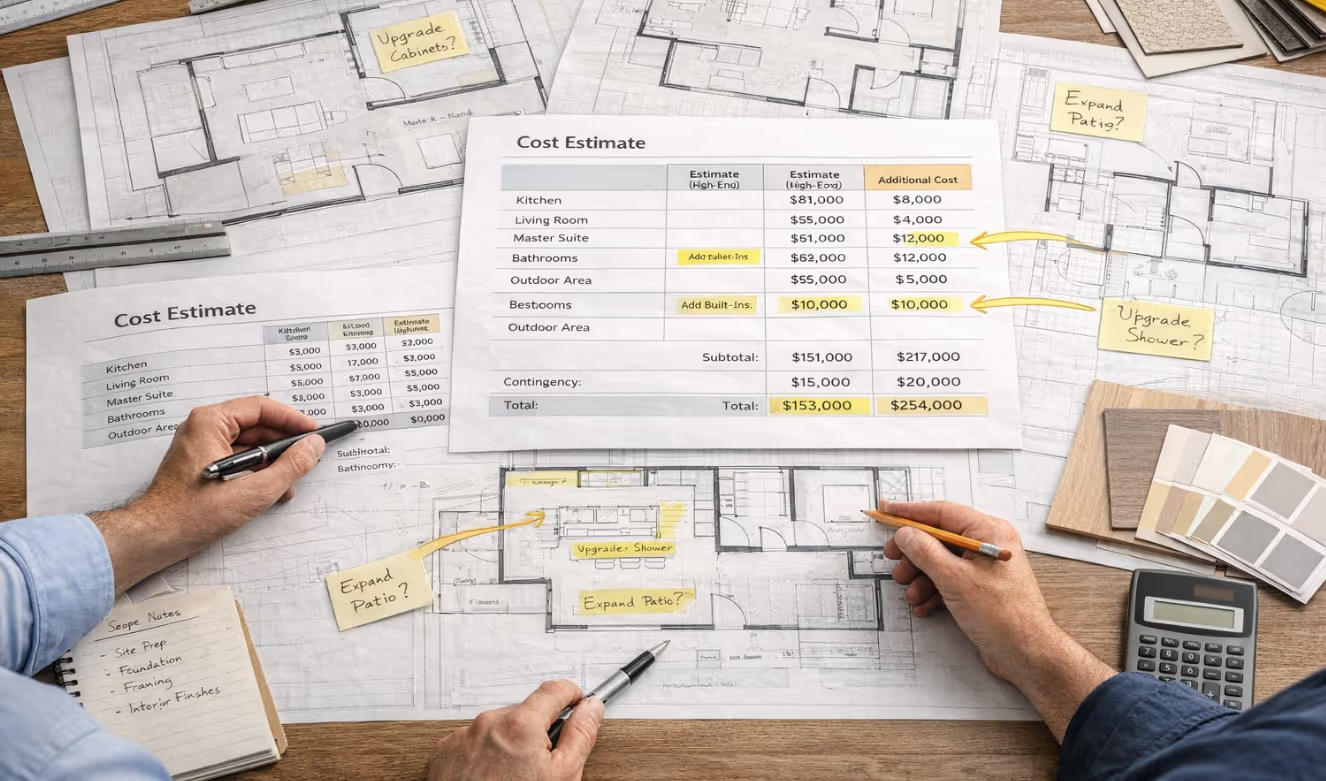
Why construction projects go over budget
The most common causes of cost overruns

Construction budget overruns are one of the most common concerns for homeowners. While they are often treated as unpredictable, most overruns follow clear and identifiable patterns.
Understanding the root causes helps shift the conversation from reacting to cost increases to preventing them through better process and visibility.
In this article
- Why budgets increase during construction
- The most common causes of overruns
- How poor tracking creates surprises
- How to reduce risk before and during construction
Context
Budgets are often established before all project details are fully defined. As construction progresses, new information emerges, and decisions are made that affect cost.
In well-managed projects, these changes are tracked and communicated in real time. In less structured processes, they accumulate quietly and appear later as unexpected increases.
The difference is not whether changes occur, but how they are managed.
The short answer
Projects go over budget due to missing scope, unrealistic allowances, delayed subcontractor bidding, and lack of real-time cost tracking.
These issues often compound over time, leading to large cost increases late in the project.
Most overruns can be reduced with a structured and transparent process.
Why this happens
Budget overruns typically begin with uncertainty. When scope is not fully defined, builders must rely on assumptions to complete an estimate.
These assumptions may be optimistic, incomplete, or based on limited information. Early numbers may appear reasonable, but they are not fully grounded in actual scope or pricing.
As the project progresses and real decisions are made, these assumptions are replaced with actual costs.
If this transition is not managed carefully, the budget begins to shift.
- Incomplete scope: Missing details at the start.
- Assumptions: Estimates based on limited information.
- Design evolution: Decisions made during construction.
- Delayed clarity: Real costs emerge later.
Common causes of overruns
One of the most significant causes is the use of unrealistic allowances. Builders may include low placeholder numbers for items that are not fully defined, making the overall budget appear more competitive.
Another common issue is delaying subcontractor bidding until construction begins. Without real bids during preconstruction, initial budgets are not tied to actual market pricing.
Estimating quality also plays a role. If details are overlooked or not fully developed, important costs may be missing from the original estimate.
These factors create a gap between the initial budget and the final cost.
- Low allowances: Placeholder values that do not reflect reality.
- Late bidding: Real costs discovered after construction starts.
- Missed scope: Items not included in the estimate.
- Incomplete detail: Lack of thorough estimating.
The hidden risk: poor cost tracking
One of the most challenging issues occurs when changes are not tracked in real time. During construction, many small decisions and adjustments are made.
Individually, these changes may seem minor. However, if they are not documented and communicated as they happen, they accumulate over time.
At the end of the project, when final invoices are received from subcontractors, these incremental changes are reflected all at once. This can result in a large and unexpected increase in the final cost.
This is often where homeowners feel the most frustration, as the cost impact was not visible along the way.
- Incremental changes: Small decisions add up over time.
- Lack of updates: Budget not adjusted regularly.
- Delayed visibility: Costs appear at the end.
- Surprise invoices: Final costs exceed expectations.
What this means in practice
Budget overruns are rarely caused by a single event. They are usually the result of multiple small issues that compound over the life of the project.
A project may start with an optimistic estimate, encounter adjustments during construction, and lack consistent tracking along the way.
By the time the project is complete, the gap between the original budget and the final cost can be significant.
This is why process and communication are as important as the initial estimate.
How to reduce risk
Reducing the risk of overruns starts with defining scope as clearly as possible during preconstruction. The more detail included upfront, the fewer assumptions are required.
Obtaining subcontractor bids before construction begins helps align the budget with real market conditions.
Equally important is ongoing cost tracking. Budget updates should reflect changes as they occur, not after the fact.
Clear communication ensures that homeowners understand the impact of decisions before costs are incurred.
- Detailed scope: Reduce uncertainty early.
- Early bidding: Use real pricing before construction.
- Ongoing updates: Track changes in real time.
- Clear approvals: Confirm costs before proceeding.
The Clarity perspective: how Clarity Building Group handles this
At Clarity, budget control is built around transparency and continuous tracking. Detailed bid packages are developed during preconstruction, and subcontractor pricing is obtained before construction begins.
During construction, budget updates track both current costs and projected final cost, incorporating changes as they are discussed and approved.
This process ensures that incremental changes are visible in real time, rather than accumulating unnoticed.
The goal is to eliminate surprises by making cost impacts clear before they are incurred, creating a more predictable and controlled project outcome.