
How to evaluate whether your budget aligns with your design goals
Bridging the gap between vision and financial reality
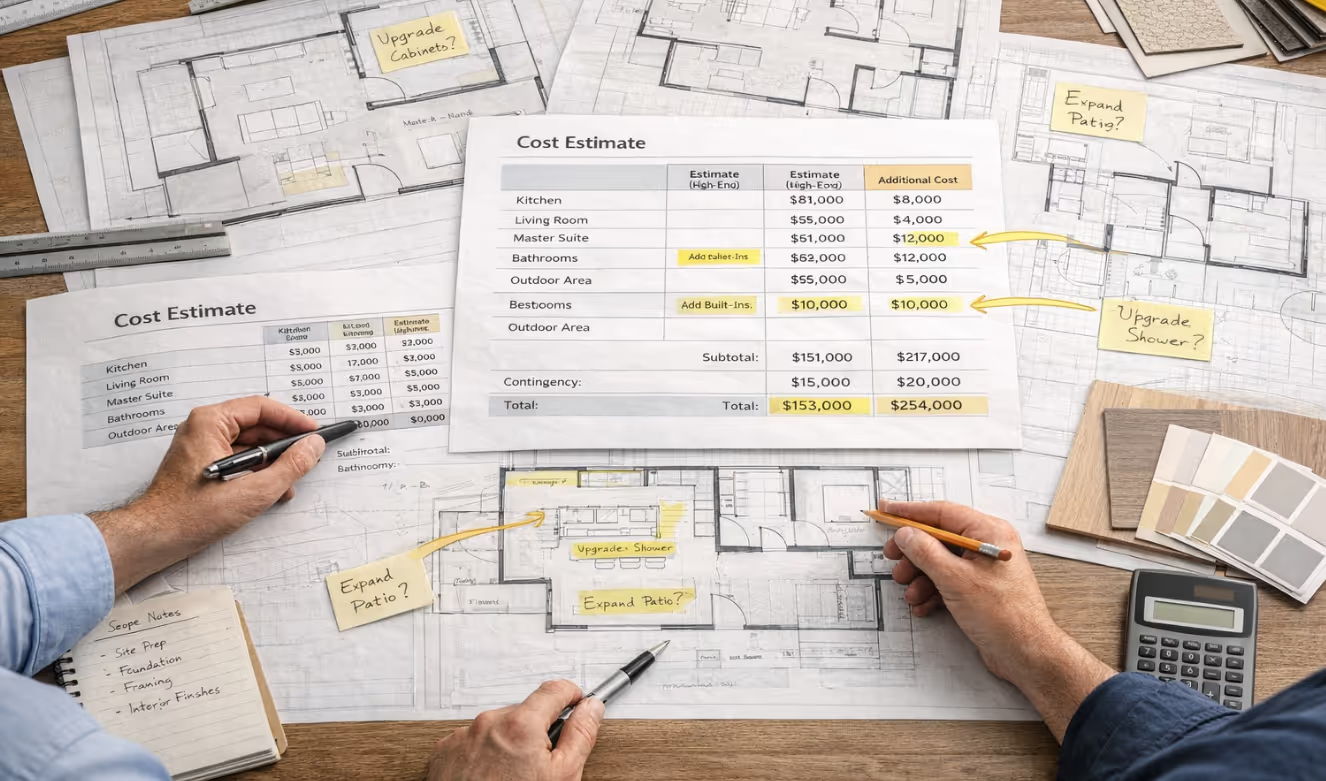
Budget and design alignment is about ensuring that what you want to build is financially achievable. It is not just about having a number that works. It is about making sure the design decisions driving that number match your priorities.
When alignment is off, projects often face difficult tradeoffs later. These can include redesign, scope reduction, or unexpected cost increases during construction.
In this article
- What budget and design alignment actually means
- Why misalignment happens early in projects
- How to identify gaps between vision and cost
- How to make informed adjustments before construction
Context
Most projects begin with a vision. Homeowners work with architects to define layout, style, and overall intent. At the same time, there is usually a target budget based on initial expectations or financial constraints.
The challenge is that design decisions directly influence cost, often in ways that are not immediately obvious. Structural systems, window configurations, material choices, and detailing all carry cost implications that may not be fully understood early on.
Without a structured way to test the design against the budget, it is easy for the two to drift apart. The result is often a design that exceeds the budget once real pricing is introduced.
The short answer
Budget and design are aligned when the cost of building the design matches your financial expectations without requiring major compromises later.
Misalignment occurs when the design assumes a level of complexity or finish that the budget does not support. This gap often becomes visible only when detailed pricing or subcontractor bids are introduced.
The goal is to identify and resolve that gap early, when changes are easier and less disruptive.
Who it is for
This process is most important for homeowners pursuing architect-led or highly customized projects. In these cases, design flexibility is high, which also means cost variability is high.
It is especially relevant when the project includes complex structural work, detailed finishes, or significant renovation of an existing structure. These factors increase the likelihood that early assumptions will differ from actual costs.
Homeowners who want to actively manage tradeoffs between design and budget will benefit the most from this approach.
- Custom home clients: Projects with unique design elements and high variability.
- Renovation projects: Existing conditions introduce uncertainty and cost variability.
- Detail-driven designs: High-end finishes and custom elements require careful budgeting.
- Budget-conscious clients: Those who want to actively manage financial outcomes.
Who it is not for
This level of evaluation may be less critical for highly standardized or production-style projects where design options are limited and costs are more predictable.
It is also less applicable when the budget is highly flexible and not a primary constraint. In those cases, design decisions may proceed with less need for cost validation at each step.
However, for most custom residential work, some level of alignment process is still beneficial to maintain clarity and control.
What it requires
Aligning budget and design requires transparency and a willingness to evaluate tradeoffs. It involves reviewing the project not just as a set of drawings, but as a series of cost decisions.
This means understanding where money is being allocated and how different elements contribute to the overall budget. It also requires identifying which parts of the design are essential and which are flexible.
Early and ongoing pricing input is critical. Without it, design decisions may be made without a clear understanding of their cost impact.
It also requires collaboration between the homeowner, architect, and builder. Each party brings a different perspective that helps balance design intent with financial reality.
- Clear priorities: Understanding what matters most in the design.
- Transparent budgeting: Visibility into how costs are structured.
- Ongoing pricing input: Regular updates as the design develops.
- Collaborative process: Alignment between homeowner, architect, and builder.
How to decide
The first step is to compare the design against a realistic budget. This typically starts with a conceptual estimate that reflects the overall scope and quality level of the project.
If the budget and design do not align, the next step is to identify where the gap exists. This could be driven by size, complexity, material choices, or specific design features.
From there, decisions can be made about how to adjust. This may involve modifying the design, changing material selections, or increasing the budget. The right approach depends on priorities and constraints.
The key is to make these decisions early. Adjustments made during design are generally more efficient and less costly than changes made during construction.
A structured process that includes iterative budgeting and design review helps ensure that alignment is achieved before construction begins.
The Clarity perspective: how Clarity Building Group handles this
At Clarity, budget and design alignment is addressed early through a structured preconstruction process. Initial conceptual budgets provide a starting point, but they are tested and refined as the design develops.
Budget transparency is central to this approach. Costs are broken down into clear categories so homeowners can see how design decisions impact the overall budget.
Multiple trade bids and detailed scopes of work are used to validate pricing as the project moves toward a control estimate. This helps ensure that the budget reflects real market conditions and defined scope.
Ongoing tracking continues through construction, allowing adjustments to be evaluated in real time. This structured approach reduces the risk of late-stage surprises and helps maintain alignment between vision and financial reality.


