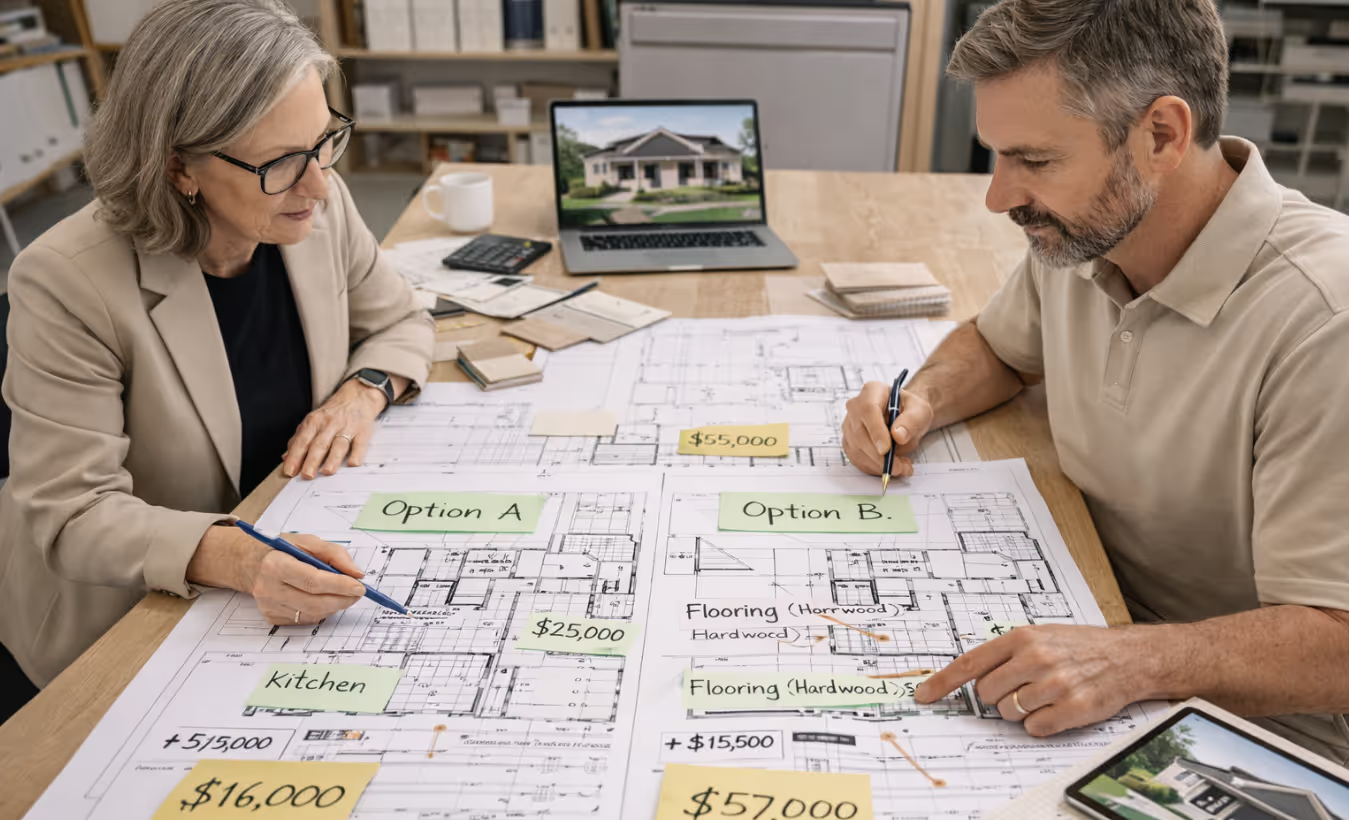
What happens when design and construction are not aligned
The risks of disconnected teams

Successful construction projects depend on alignment between design and execution. When the architect and builder are not working in coordination, problems emerge quickly.
This disconnect creates gaps between what is designed and what is built, leading to cost increases, delays, and a less predictable outcome.
In this article
- Why misalignment occurs
- How it impacts cost and schedule
- Where problems typically show up
- How to create alignment between teams
Context
Design and construction are often treated as separate phases, but in custom residential projects, they are deeply interconnected.
When these phases are not coordinated, decisions made during design may not translate effectively into construction.
This creates a reactive process where issues are resolved in the field instead of being planned in advance.
The short answer
Misalignment between design and construction leads to missing scope, rework, and cost increases.
It disrupts scheduling and reduces the quality of the final outcome.
Alignment is essential for a controlled and predictable project.
Why this happens
Misalignment typically occurs when the builder is not involved early in the design process or when communication between the architect and builder is limited.
Design decisions may be made without input on cost or constructability, creating challenges when construction begins.
In some cases, documentation may not fully capture the intent, leaving room for interpretation.
These gaps create friction as the project moves forward.
- Late builder involvement: No cost or constructability input.
- Limited communication: Teams not aligned.
- Incomplete documentation: Details open to interpretation.
- Separate workflows: Design and construction not integrated.
Where problems show up
The effects of misalignment are most visible during key transition points, such as moving from design to construction or coordinating between trades.
Scope gaps may appear where design intent was not fully translated into construction documents.
Coordination issues can arise when different systems are not aligned, leading to conflicts in the field.
These issues often require adjustments that increase cost and delay progress.
- Scope gaps: Missing or unclear work.
- Trade conflicts: Systems not coordinated.
- Field decisions: Made without full context.
- Rework: Corrections required after installation.
Impact on cost and schedule
Cost increases occur because resolving misalignment often requires changes after work has begun. This includes additional labor, material adjustments, and coordination efforts.
Schedule delays result from disruptions in the construction sequence. Work may need to pause while issues are resolved or be redone to match the intended design.
These impacts are rarely isolated and often affect multiple parts of the project.
The overall result is a less efficient and more expensive process.
- Rework costs: Fixing misaligned work.
- Delays: Waiting for clarification or redesign.
- Coordination issues: Multiple trades affected.
- Compounding impact: Problems build over time.
Common mistakes
A common mistake is treating design and construction as separate responsibilities without sufficient overlap. This limits the ability to coordinate effectively.
Another issue is delaying collaboration until construction begins, when changes are more difficult and costly.
Some projects also rely on incomplete drawings, increasing the likelihood of interpretation differences.
These patterns increase the risk of misalignment.
- Separated processes: Lack of integration between teams.
- Late collaboration: Builder not involved early.
- Vague drawings: Open to interpretation.
- Reactive decisions: Issues addressed after the fact.
How to reduce risk
Aligning design and construction starts with early collaboration between the architect and builder. This ensures that design decisions are informed by cost and constructability.
Clear and detailed documentation reduces ambiguity and improves coordination.
Regular communication between all parties keeps the project aligned as it progresses.
A structured process helps maintain consistency from design through construction.
- Early collaboration: Align design and construction from the start.
- Detailed documentation: Reduce interpretation gaps.
- Ongoing communication: Maintain alignment.
- Structured process: Coordinate decisions and execution.
The Clarity perspective: how Clarity Building Group handles this
At Clarity, alignment between design and construction is established during preconstruction. The team works closely with the architect to develop detailed scope and ensure that design intent is clearly defined.
Bid packages translate drawings into actionable scope for subcontractors, reducing ambiguity and improving consistency.
During construction, regular meetings and documentation maintain alignment between all parties.
This approach ensures that the project moves forward with a shared understanding, reducing risk and supporting a more predictable outcome.