How cost feedback is integrated into the design process
Keeping design aligned with budget
In custom residential construction, design and cost are closely connected. When cost feedback is integrated into the design process, decisions can be made with a clear understanding of their financial impact.
This approach reduces uncertainty and helps ensure that the project remains aligned with the homeowner's budget from the beginning.
In this article
- How cost feedback works during design
- Why real-time input matters
- How options and alternates are evaluated
- What happens without cost integration
Context
Design is often thought of as a creative process, while budgeting is seen as a separate step. In reality, the two must work together, especially in custom projects.
Without cost feedback, design decisions may exceed the intended budget, requiring revisions later.
Integrating cost input early creates a more informed and efficient process.
The short answer
Cost feedback during design allows the team to evaluate decisions as they are made, keeping the project aligned with budget.
It replaces assumptions with real-time information.
This leads to fewer surprises and a more controlled outcome.
How this works step by step
The process begins during early design, where the builder provides high-level cost ranges based on initial concepts. This establishes a financial framework for the project.
As the design develops, the builder refines these numbers, identifying key cost drivers and helping guide decisions.
Detailed scope is then developed through bid packages, allowing subcontractors to provide real pricing for specific elements.
This progression moves the project from conceptual estimates to defined costs.
- Concept phase: High-level cost ranges established.
- Design development: Ongoing cost refinement.
- Scope definition: Detailed bid packages created.
- Real pricing: Subcontractor bids inform final budget.
Why real-time cost input matters
Real-time cost feedback allows decisions to be evaluated when they are easiest to adjust. This is typically during design, before construction begins.
When cost is considered alongside design, the team can prioritize elements that matter most and adjust others as needed.
This avoids the need for major revisions later, which are more disruptive and expensive.
It also creates a clearer understanding of tradeoffs.
- Early adjustments: Changes made before construction.
- Priority alignment: Focus on key design elements.
- Reduced rework: Fewer late-stage changes.
- Informed decisions: Clear understanding of cost impact.
How options and alternates are used
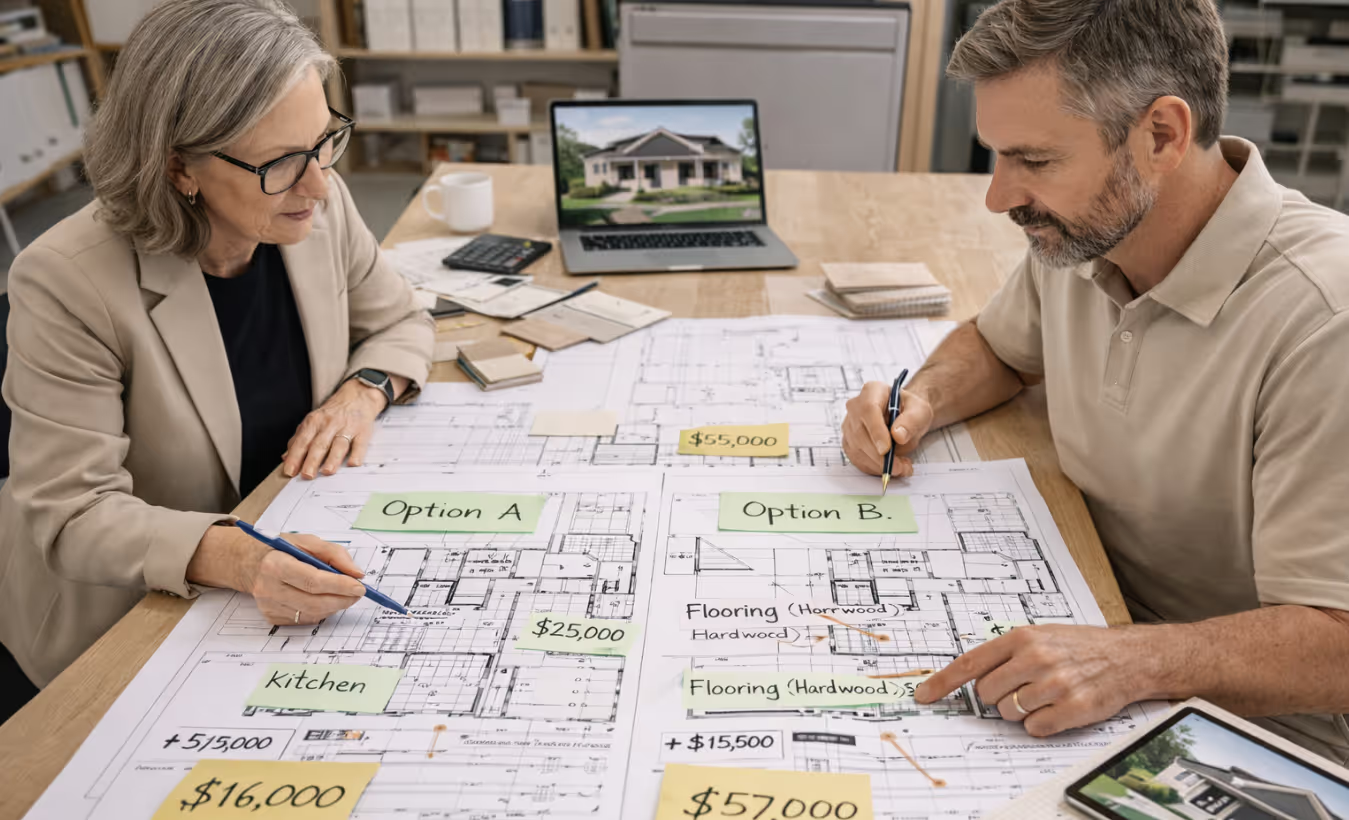
Cost feedback is most effective when paired with clearly defined options and alternates. This allows the team to explore different approaches and understand their cost implications.
For example, material selections, system upgrades, or layout variations can be priced and compared side by side.
These options are documented in a structured way, making it easier for homeowners to make decisions.
This process turns abstract ideas into measurable choices.
- Defined options: Clear scope for each alternative.
- Side-by-side comparison: Evaluate cost differences.
- Decision support: Data-driven choices.
- Flexibility: Adjust design within budget.
What happens without cost integration
When cost feedback is not integrated into design, projects often move forward with assumptions rather than data. This can lead to budgets that do not reflect the actual scope.
As pricing is introduced later, significant adjustments may be required. This can delay the project and create frustration.
Design intent may also be compromised if changes are made under pressure to meet budget constraints.
The process becomes reactive rather than proactive.
- Budget misalignment: Design exceeds financial limits.
- Late revisions: Changes required after design is complete.
- Reduced clarity: Decisions made without cost data.
- Reactive process: Adjustments made under pressure.
What to prepare
Homeowners should be prepared to engage in discussions about cost during the design phase. This includes reviewing options, understanding tradeoffs, and making decisions based on both design and budget.
It is also important to work with a builder who provides clear and consistent cost feedback throughout the process.
Being open to adjusting design elements helps maintain alignment.
This preparation supports a more efficient and predictable project.
The Clarity perspective: how Clarity Building Group handles this
At Clarity, cost feedback is integrated throughout preconstruction. The team works alongside the architect to provide ongoing budget guidance as the design evolves.
Detailed bid packages are developed to define scope and generate real subcontractor pricing. Options and alternates are clearly outlined and priced, allowing informed decision-making.
This process results in a control estimate that reflects both design intent and actual market conditions.
The goal is to ensure that the project enters construction with a clear, aligned understanding of both scope and cost.