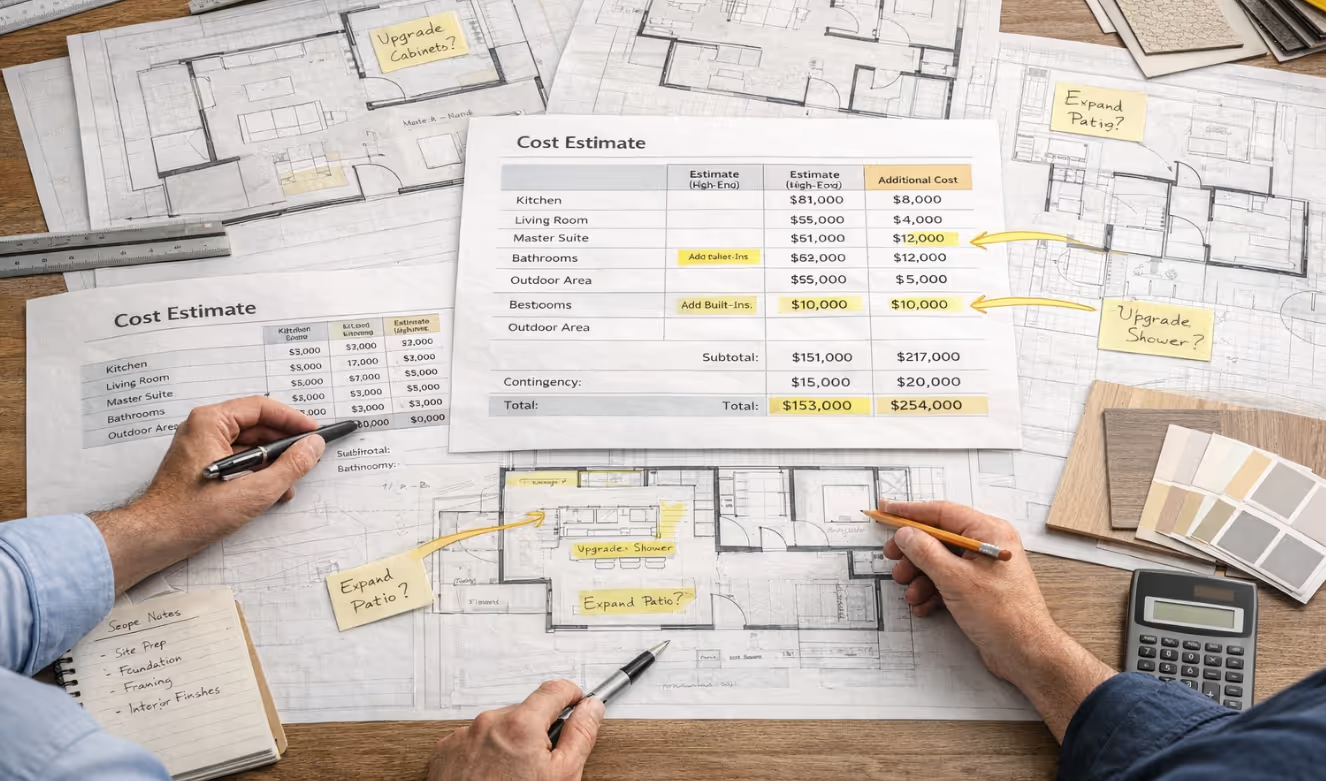
How late design changes impact cost and schedule
The compounding effect of delayed decisions

Late design changes are one of the most significant drivers of cost increases and schedule delays in construction. While changes are a natural part of custom projects, their timing determines their impact.
The later a decision is made or changed, the more it affects work already completed, creating a compounding effect across the project.
In this article
- Why late changes create larger impacts
- How cost and schedule are affected
- Where these issues typically occur
- How to reduce the impact of changes
Context
Custom homes evolve throughout design and construction. It is normal for homeowners to refine decisions as they see the project take shape.
However, construction is a sequential process. Each phase builds on the one before it, and changes made after work is completed can require undoing that work.
This is where cost and schedule begin to shift in meaningful ways.
The short answer
Late design changes increase cost due to rework and additional labor, and they extend schedules by disrupting the planned sequence of construction.
The impact grows as the project progresses.
Early, consistent decisions are the most effective way to control both cost and timeline.
Why this happens
Construction is planned in a specific sequence, with trades scheduled in coordination. When a design change occurs late, it often affects work that has already been completed or scheduled.
This creates a need to remove, adjust, or redo existing work. It also requires rescheduling trades and coordinating new work.
These effects are not isolated. A single change can impact multiple parts of the project.
The later the change, the more systems and finishes are affected.
- Completed work: May need to be removed or modified.
- Trade coordination: Schedules must be adjusted.
- Material changes: New items must be ordered.
- Ripple effect: One change impacts multiple areas.
Impact on cost and schedule
Cost increases occur because work is performed more than once. Materials may be wasted, and additional labor is required to make adjustments.
Schedule delays happen because construction must pause or shift to accommodate the change. This can affect not only the current task but also downstream activities.
Even small changes can have disproportionate effects when they occur late in the process.
These impacts are cumulative, especially when multiple changes are made over time.
- Rework costs: Removing and replacing completed work.
- Labor increases: Additional effort to implement changes.
- Schedule disruption: Delays in sequencing.
- Compounding effect: Multiple changes add up.
Where this shows up most
Late changes are most impactful in areas where work is layered or interconnected. This includes structural elements, mechanical systems, and finished surfaces.
For example, changing the location of a fixture after walls are closed may require adjustments to framing, electrical, and finishes.
Similarly, altering finish selections after installation has begun can lead to material waste and additional labor.
These situations highlight how interconnected construction decisions are.
- Framing and layout: Structural adjustments are complex.
- Mechanical systems: Plumbing and electrical coordination.
- Finishes: Installed materials may need replacement.
- Built elements: Custom work is difficult to modify.
Common mistakes
A common mistake is assuming that changes can be made at any time without significant impact. While changes are possible, their cost and schedule implications increase over time.
Another issue is delaying decisions until construction forces them. This often leads to rushed choices or late revisions.
Some projects also underestimate how small changes can accumulate into larger impacts.
These patterns contribute to both cost overruns and extended timelines.
- Delayed decisions: Waiting too long to finalize choices.
- Underestimating impact: Small changes have larger effects.
- Frequent revisions: Repeated adjustments increase cost.
- Reactive process: Decisions made under pressure.
What to prepare
Homeowners should aim to make and confirm key design decisions during preconstruction whenever possible. This reduces the need for changes during construction.
It is also important to understand the schedule and when decisions are required. Builders typically provide timelines for selections to help guide this process.
When changes are necessary, evaluating their impact before proceeding helps maintain control.
Clear communication ensures that decisions are implemented efficiently.
The Clarity perspective: how Clarity Building Group handles this
At Clarity, design decisions are aligned with the construction schedule through a structured preconstruction process. This helps reduce the need for late changes.
During construction, changes are tracked and evaluated before being approved, ensuring that cost and schedule impacts are understood in advance.
Budget updates reflect these changes in real time, maintaining visibility into the overall project.
This approach helps manage the natural evolution of a custom project while minimizing disruption and maintaining control.