

Cost-Plus & Budget Clarity
Why the Cost-Plus Model Exists
Because one-of-a-kind homes require flexibility and clear communication.

Custom residential construction is not a repeatable product. Every project is shaped by its architecture, site conditions, existing structures, and the decisions made along the way.Cost-plus exists because custom building is a process, not a predefined product.
1) Custom Homes Are Inherently Complex
A custom home involves thousands of decisions, large and small. Some homeowners prefer to make many of those decisions early, while others need to see spaces take shape before committing to finishes or details.
Both approaches are normal. Life, work, and family demands don’t always allow every decision to be made in advance, even with careful planning. Cost-plus accommodates this reality by allowing decisions to be made when they matter most, without forcing premature commitments.
2) Fixed-Price Contracts Offer False Certainty
Fixed-price models attempt to reduce uncertainty by locking in a construction cost at the start.
Instead of focusing on building the best home, decisions start revolving around staying within a preset number. To remain competitive, some fixed-price proposals are intentionally priced to win the job, with the expectation that quality or detailing may later be reduced in ways homeowners may not immediately see.
3) Transparency Aligns the Team
In a fixed-price project, the builder must protect the number they originally proposed. If that number turns out to be too low, the pressure shifts to finding ways to make it work, often through change orders or adjustments that homeowners experience as unexpected costs.
Because the underlying pricing is hidden, it can be hard to tell what is truly changing and why. Discussions that should feel like teamwork can begin to feel like negotiations.
Cost-plus changes the relationship. When costs and fees are transparent, decisions are made openly, expectations stay aligned, and the focus remains on building the right home, not managing surprises.
4) Collaboration Requires an Open Model
Architect-led projects depend on open communication and shared accountability across a broader design team. In addition to the architect, projects often involve interior designers, engineers, landscape architects, and specialty consultants, each contributing ideas that shape the final home.
Those ideas must be reviewed, priced, and evaluated before moving forward. Rarely is the first idea the final one. There is refinement, comparison, and back-and-forth as design intent, cost, and constructability are aligned. Cost-plus supports this process by allowing subcontractor proposals and pricing to be shared openly and discussed as a team. This creates space for informed decisions and collaboration
The point of Cost-Plus is to provide Clarity
Cost-plus is not about paying more, it is about understanding what you are paying for.
By separating construction costs from builder compensation and sharing real-time financial information, cost-plus provides clarity where it matters most.
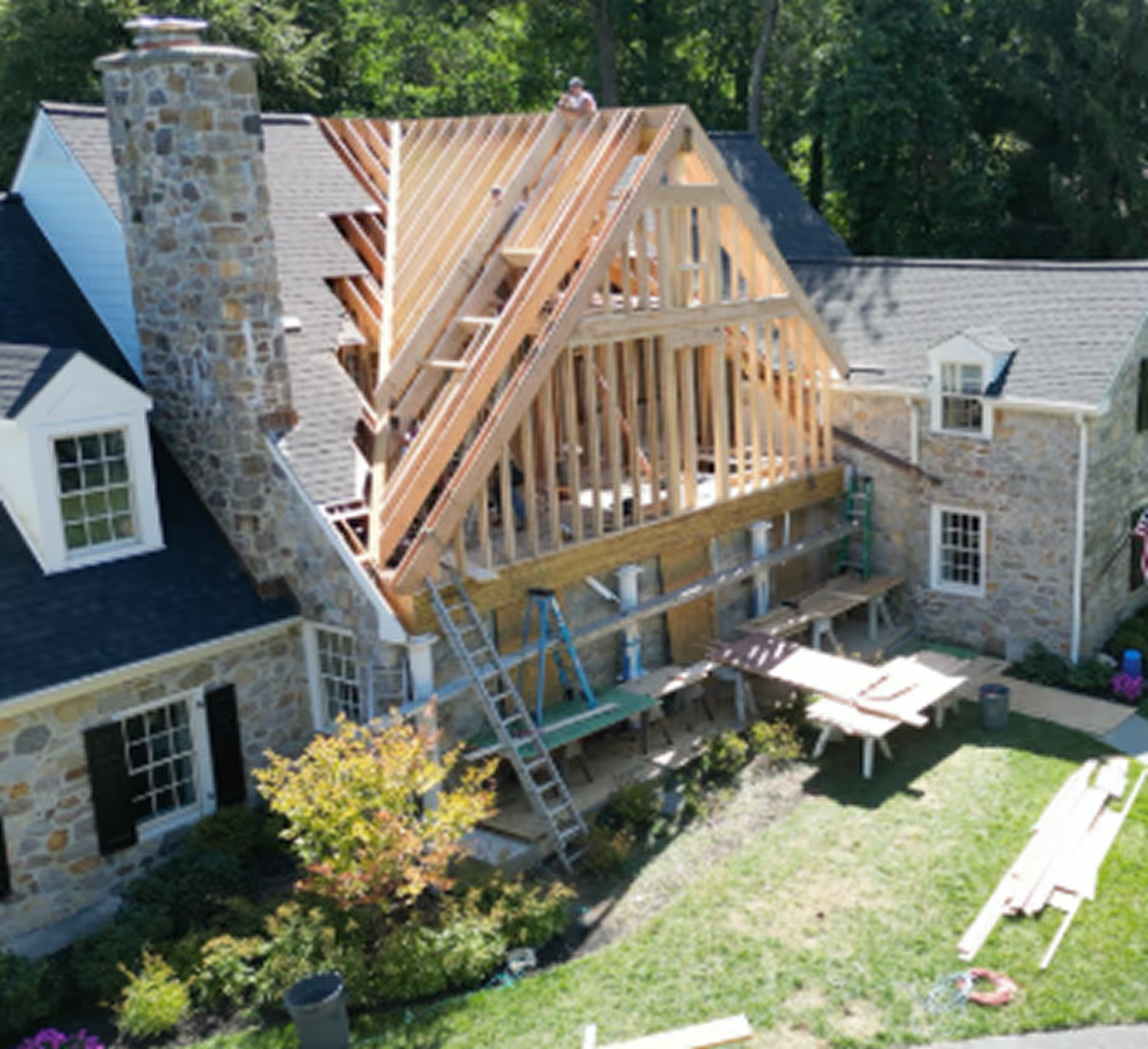
How Much Do I Pay Clarity To Manage My Project
Management and onsite supervision fees, clearly defined and transparently billed
Custom residential construction involves thousands of decisions, dozens of trade partners, and constant coordination between design intent, field conditions, schedule, and cost.
Our fee structure is designed to make that complexity manageable, with transparency, accountability, and aligned incentives.
Clarity’s compensation is separated into two distinct components, each tied to a specific responsibility.
1. Management of the Project
12% to 15% of the cost of the project
Planning, Coordination, Financial Oversight
Managing a custom residential project extends well beyond scheduling trades. It includes preconstruction planning, budgeting, bid coordination, contract administration, cost tracking, change management, and ongoing communication with the design team and owner. This work continues throughout the project, whether or not active construction is occurring on site.
How Clarity’s Management Fee Is Calculated
Clarity charges a management fee of 15% for renovation projects and 12% for new home construction, applied to construction costs and material purchases. For projects exceeding $5 million, a sliding scale is applied.
Why Renovation Projects Require a Higher Fee
Renovation projects require more intensive management because subcontractor bids and material purchases must be carefully tailored to existing conditions, with clear definitions around what is included, what is excluded, and how new work integrates with the home. These details are refined as conditions are uncovered, requiring additional coordination to avoid gaps, overlaps, or assumptions.
The management fee applies to:
- Subcontracted trade work
- Vendor costs and material purchases
- General conditions such as dumpsters, permits, and temporary facilities
- Approved changes to the project scope
The management fee does not apply to:
- Field Manager employee cost
- Project labor and cleanup employee cost
- Owner-supplied materials or owner-hired contractors
- General liability insurance
- Builder’s risk insurance, if applicable
This structure replaces hidden markups and blended overhead with a clear, predictable, and fully disclosed fee tied directly to the scope being managed.
2. Onsite Supervision by a Field Manager
Billed at a rate of $90 per hour
Day-to-Day Execution and Quality Control
While management establishes the framework, successful projects are built in the field, one day at a time. Onsite supervision reflects the time required for the Field Manager to coordinate trades, resolve issues, protect the design intent, and ensure work is performed correctly.
What Influences Supervision Time
Project duration
Longer projects require more cumulative oversight, coordination, and follow-through.
Project complexity
Renovations, phased construction, and architecturally detailed homes require closer supervision.
Frequency of design or scope changes
Each change introduces additional coordination, sequencing adjustments, and communication.
Timing of owner decisions
When decisions are delayed, additional site visits and re-coordination are often required to keep the project moving responsibly.
How Clarity's Field Managers are Billed
Onsite Field Managers are billed at $90 per hour, based on actual time spent managing the jobsite. Time is tracked using GPS-verified check-ins and documented in timesheets that are reviewed and reported with each billing cycle.
The Field Manager is responsible for:
- Serving as the day-to-day point of contact
- Sequencing and scheduling the work
- Ordering and coordinating materials and deliveries
- Monitoring workmanship and quality standards
- Ensuring drawings and specifications are followed
- Coordinating inspections and compliance
- Maintaining a safe working environment
How Onsite Field Managers are staffed
Projects over $1,200,000 typically warrant a dedicated, full-time Field Manager assigned exclusively to the site.
Projects under $1,200,000 are generally supported by a Field Manager who oversees multiple projects and travels between sites as needed. This approach ensures the appropriate level of oversight based on project scale and complexity.
Why the Fees Are Structured This Way
Separating management from onsite supervision reflects how custom residential projects are actually executed and avoids confusion about what work is being performed.
This structure:
- Ties fees directly to specific responsibilities and real work performed
- Keeps supervision costs visible rather than embedded or blended
- Scales appropriately based on project duration, complexity, and scope
- Allows owners to see how decisions, changes, and timing affect both cost and oversight
What Clients Can Expect
Clients working with Clarity can expect a consistent, transparent approach to cost and oversight from the start of the project through completion.
That includes:
- No hidden markups or embedded contingencies
- No blended fees or unclear scope boundaries
- Clear documentation, timesheets, and invoicing
- Budget reporting that distinguishes original scope from approved changes
- Consistent application of the same fee structure across every project
Transparency only works when it is complete and applied consistently. This is how expectations are set, protected, and reported on throughout the life of the project.
What Cost-Plus Is
You can see the costs, understand the fees, and know how decisions are made.
Open-Book Accounting
Every invoice and material cost is documented and shared. We take this a step further by using a dedicated bank account for each project, giving you visibility into payments to subcontractors and vendors.
Actual Cost + Clearly Defined Fee
You pay the true cost of construction plus a clearly defined management fee. There are no hidden markups, padded allowances, or embedded contingencies.
Shared Financial Visibility
Owners, architects, and builders work from the same information. This shared visibility supports informed decisions and keeps expectations aligned throughout the project.
Collaborative Problem-Solving
When questions or challenges arise, the focus stays on resolving them in a way that protects the design intent and long-term performance of the home.
What Cost-Plus Is Not
Not a blank check, Not unmanaged spending
Not a Blank Check
Every cost is reviewed and approved before it is incurred. Spending is tracked against a clearly defined control budget established at the outset of the project.
Not Unmanaged Spending
Costs are monitored continuously and reported through regular budget updates. Changes in scope are tracked separately from the original budget, so increases are clearly attributed to decisions made along the way.
Not a Lack of Accountability
We measure performance against the original budget that set expectations at the start of the project. That baseline is protected and reported on throughout the lifecycle, ensuring accountability for our estimating, planning, and execution.
Not Without Financial Structure
Projects are guided by detailed control budgets, with forecasts updated as work progresses and scope evolves. This allows owners to understand both where the project started and how decisions affect the final outcome.
Why Don't All Builders Use Cost-Plus
Why some builders choose simpler pricing models instead of cost-plus
Cost-plus is more prevelant in commercial construction, but it is less frequently offered by builders serving the broader residential market. That is not because the model is flawed. It is because it requires a different level of operational discipline, transparency, and client engagement.
It Requires Open Financial Systems
Cost-plus only works when a builder has systems in place to track costs accurately and share them clearly. Every invoice, purchase, labor hour, and change must be documented, categorized, and reported in a way that is understandable to clients and the design team.
Many builders operate with simpler accounting structures that are not designed for this level of visibility. Bundled pricing and fixed contracts allow costs to be managed internally without the need to explain every transaction.
It Requires Comfort With Transparency
In a cost-plus environment, the builder’s fee is visible and defined. There are no embedded margins, hidden contingencies, or blended numbers. This level of openness requires confidence in both pricing and process.
Not every builder is comfortable exposing how they make money or how decisions affect cost in real time. Fixed pricing allows those mechanics to remain behind the scenes.
It Requires Ongoing Budget Management
Cost-plus does not mean setting a budget once and revisiting it only when there is a problem. It requires continuous forecasting, separation of original scope from approved changes, and regular reporting throughout the life of the project.
This level of financial management takes time, attention, and experience. Many builders prefer models that limit ongoing administrative responsibility, even if that means less clarity for the homeowner.
It Changes the Builder-Client Relationship
Fixed-price contracts are transactional by nature. The builder is responsible for delivering a scope at a price, and changes are addressed as exceptions.
Cost-plus is more collaborative. Homeowners and architects are involved in understanding cost drivers, evaluating options, and making informed decisions as the project evolves. That requires engaged clients and a builder willing to spend time explaining trade-offs rather than simply enforcing a number.
Not every client wants that level of involvement, and not every builder wants to support it.
It Is Not the Right Fit for Every Project or Client
Some projects benefit from early certainty, even if that certainty comes with limitations. Some clients prefer a single number and minimal engagement with cost decisions. Fixed-price models can serve those situations well.
Cost-plus is best suited to projects where the design is intentional, the scope is complex, and the goal is to manage uncertainty openly rather than suppress it.
Why We Choose to Work This Way
We use cost-plus because it aligns with the type of projects we build and the way we believe custom homes should be delivered. It allows us to collaborate effectively with architects, manage complexity responsibly, and provide clients with clear, timely information throughout the process.
It is not the easiest model to operate. It is simply the one that best supports clarity, accountability, and well-executed custom work.
How Much Will My Project Cost?
How conceptual budgets turn into real numbers over time
This is the most common question that we hear.
The honest answer is that custom residential projects cannot be priced with precision at the outset, because critical information is still being developed. At the same time, it is neither helpful nor fair to avoid the question entirely.
Our approach is to provide useful pricing context early, then replace assumptions with real data as the project becomes defined. That is why we use a two-stage budgeting process, beginning with conceptual, order-of-magnitude costs and ending with verified costs.
Why Pricing Evolves as Information Improves
Every custom home or renovation is shaped by variables that are resolved over time, including:
- How far along the design is
- What is discovered once we start investigating the existing home
- Site constriants and complexity
- Selection of fixtures and appliances
- Scope decisions made during design and planning
Until these factors are understood, a single fixed number creates the appearance of certainty without the foundation to support it. Early pricing can be helpful, but only when it is presented honestly and in context.
How Cost Is Established Over Time

1) Conceptual Budget (Determining order-of-magnitude costs after an initial meeting)
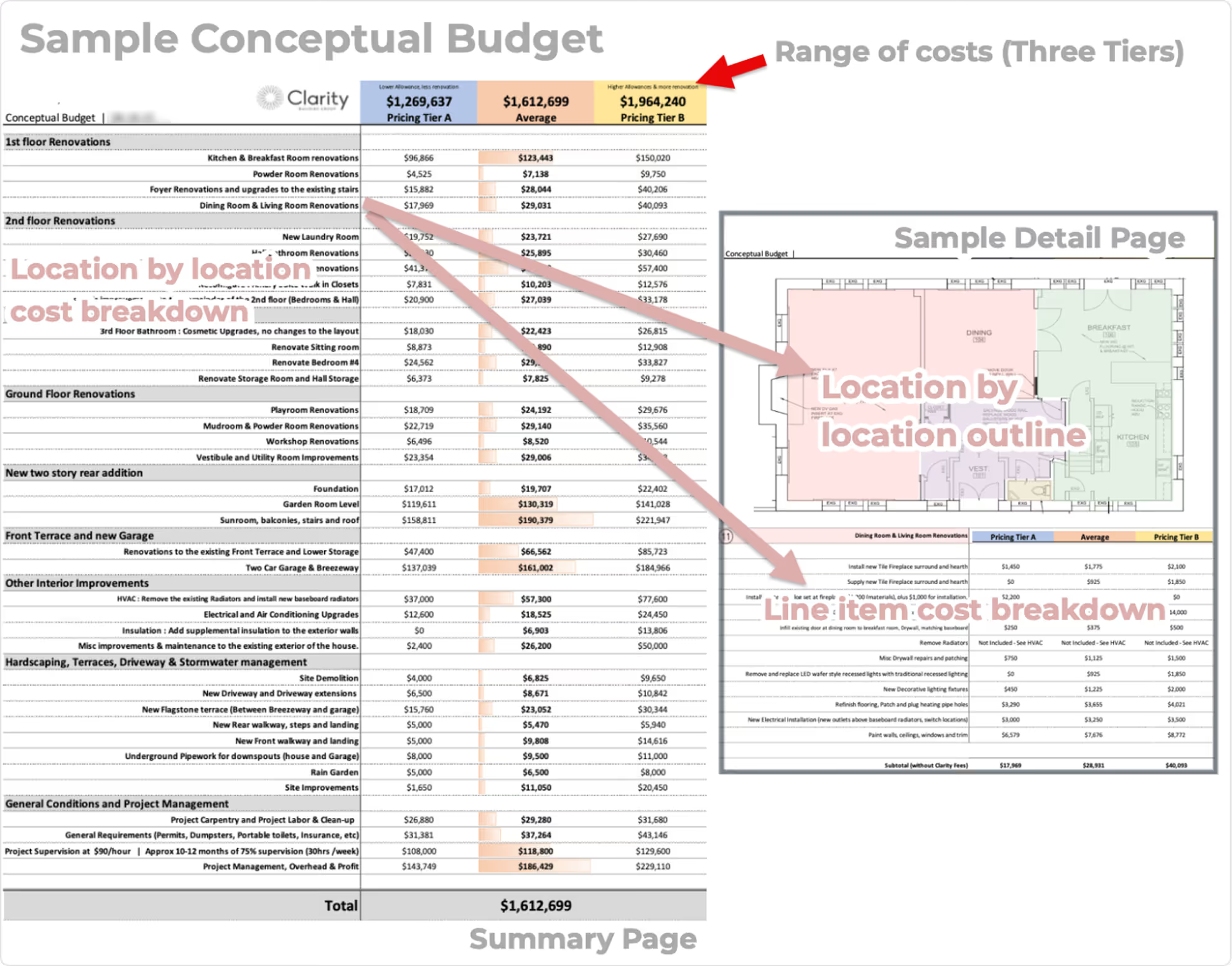
We begin with a Conceptual Budget, developed from our internal historical pricing and experience. This budget is intentionally expressed as a range and is structured as a location by location breakdown of costs. (bathrooms, kitchens, roof areas, etc). It does not rely on subcontractor bids, because scope and details are not yet finalized.
See a sample of what a Conceptual Budget looks like
What the Conceptual Budget Is Used For
The Conceptual Budget helps answer a few critical early questions:
That process leads to a Control Estimate, built from confirmed scope, prepared bid packages, and real subcontractor pricing.
- Are the costs of project broadly aligned with your expectations?
- Where are the major cost drivers likely to be?
- Which parts of the project carry the most financial weight?
- Does it make sense to move forward with Clarity and into detailed preconstruction work?
If the Conceptual Budget feels broadly aligned with your expectations, the next step is a preconstruction deposit that allows us to begin replacing assumptions with verified information.
By organizing costs by location rather than by abstract categories, homeowners can engage with numbers that are easy to relate to.
How the Ranges Work
Seeing those ranges helps homeowners understand how design choices, finishes, and scope decisions influence cost.
Each major area of the project is shown across three tiers:
In some cases, the difference between low and high can be significant. That spread is intentional. It reflects real uncertainty at the beginning of a custom project and makes clear why early fixed pricing is unreliable. An easy way to think about the structure is that half the costs could land in Tier A and the other half in Tier B.
- A lower range
- A higher range
- An average between the two
What Happens After Alignment
If the Conceptual Budget feels broadly aligned with your expectations, the next step is a preconstruction deposit that allows us to begin replacing assumptions with verified information.
That process leads to a Control Estimate, built from confirmed scope, prepared bid packages, and real subcontractor pricing.

2) Control Estimate (Detailed pricing after a formal deposit, based on real bids)
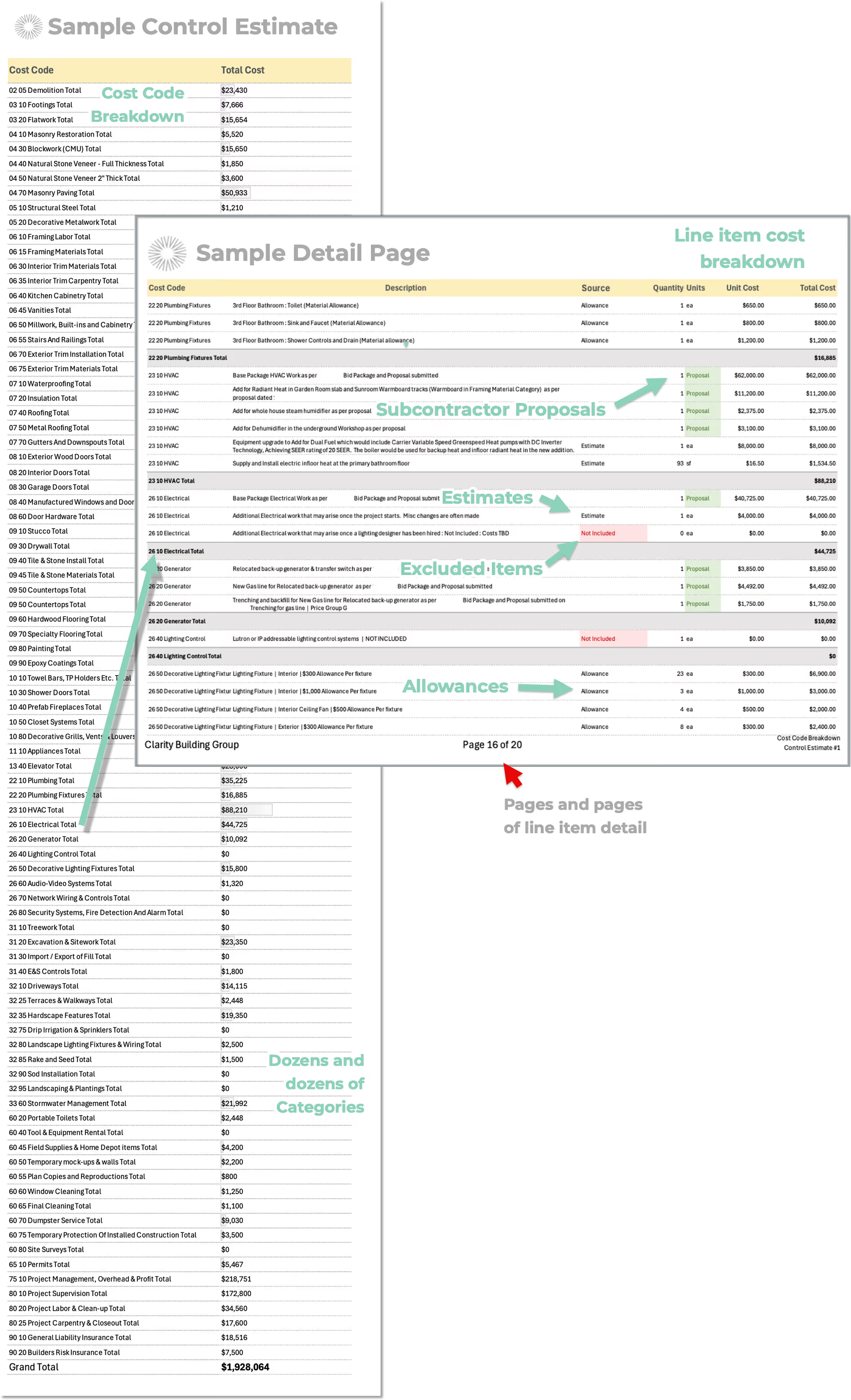
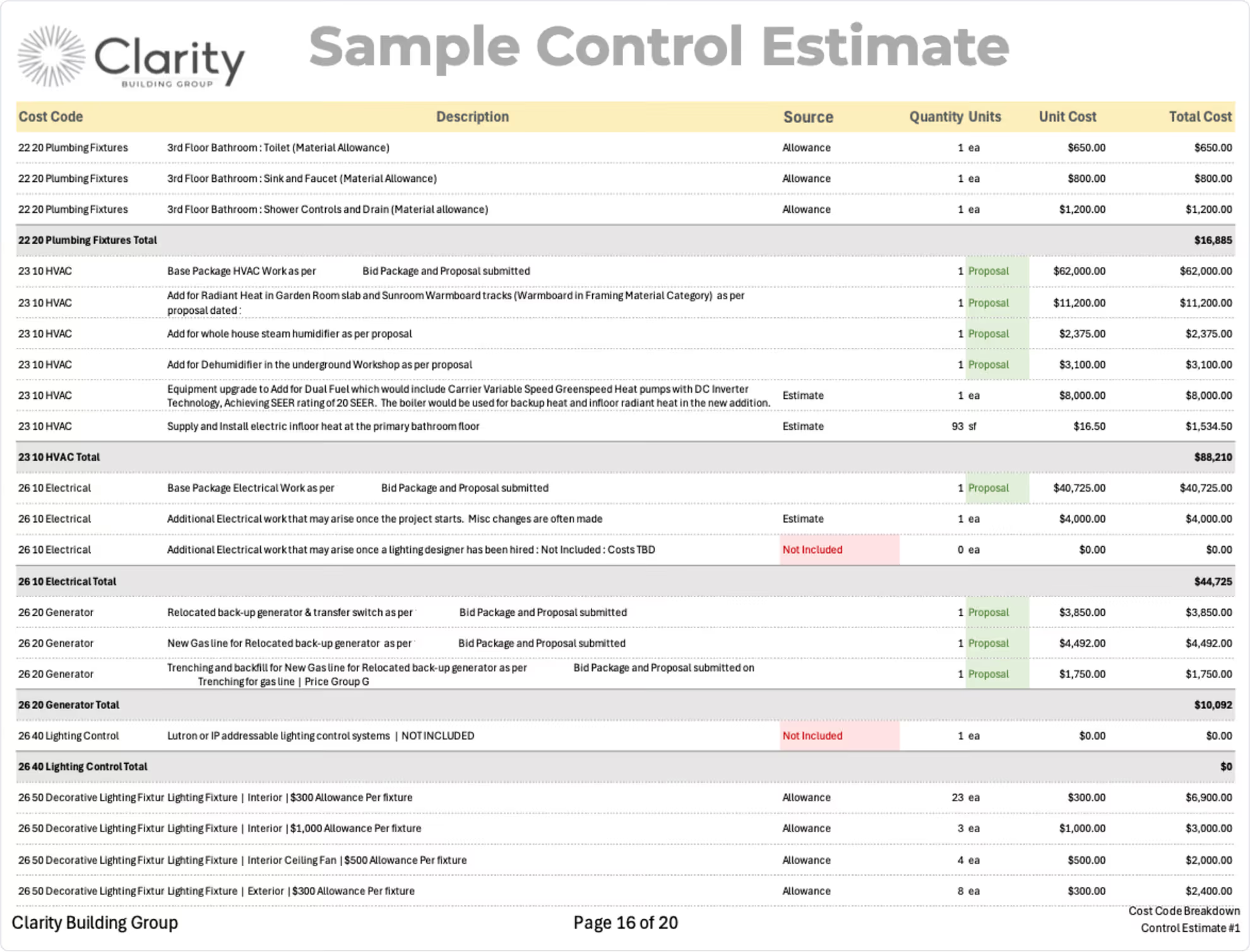
Once there is alignment around that range, we move into preconstruction and build a Control Estimate. This is a detailed, line-item budget based on confirmed scope, prepared bid packages, and real subcontractor pricing. The Control Estimate provides significantly greater cost certainty because it is grounded in actual bids for your specific project.
See a sample of what a Control Estimate looks like
What the Control Estimate Is Used For
The Control Estimate serves as the financial backbone of the project. It is used to:
- Establish a realistic, buildable budget tied to confirmed scope
- Review and normalize subcontractor proposals
- Clearly define what is included, excluded, or carried as an allowance
- Identify cost drivers before construction begins
- Set expectations for how costs will be tracked during construction
Because it is based on real bids and defined work, the Control Estimate provides a far higher level of cost certainty than any early-stage budget.
How the Control Estimate Is Built
Creating a Control Estimate is a deliberate and time-intensive process. It typically includes:
- Finalizing scope with the homeowner and design team
- Preparing detailed bid packages for each trade
- Soliciting and reviewing subcontractor proposals
- Clarifying inclusions, exclusions, and assumptions
- Separating allowances from fixed-price work
- Building a detailed, cost-code-based budget
This process typically takes three to four months, depending on project complexity and design progress. The outcome is a deeply detailed estimate spanning many pages, with hundreds of line items tied directly to the project.
What the Control Estimate Represents
The Control Estimate is not a guarantee or a fixed price. It is a well-informed forecast built from real pricing, confirmed scope, and clearly documented assumptions.
Once construction begins, this estimate becomes the baseline against which actual costs, changes, and decisions are measured.
So..., How Much Will My Project Cost?
While every project is different, cost-per-square-foot ranges can help you understand the general scale. Square footage alone cannot account for complexity, level of finish, structural requirements, or how new work integrates with existing construction. However, square footage can be a helpful starting point when used correctly. The ranges below are provided to help establish order-of-magnitude expectations, not to predict final cost.
Cost Ranges by Project Type
A starting point, not a final number
The numbers below are meant to help you get oriented. They are not quotes or promises. Every project is different, and actual costs depend on what you build, how it’s designed, and the conditions we uncover along the way. These ranges reflect different ways projects tend to evolve based on how decisions are made over time.
Low Range Cost per square foot
Sticking closely to the plan with careful cost control. $200 to $300
Mid Range Cost per square foot
A middle ground between discipline and flexibility. $300 to $600
High Range Cost per square foot
More upgrades, more changes, and more opportunity to spend. No upper limit. $600 and up.
Why These Ranges Can Vary So Widely
Two projects with similar square footage can differ significantly in cost due to:
- Structural modifications and reinforcement
- Level of architectural detailing and custom work
- Existing conditions uncovered during construction
- Custom versus standardized assemblies
- Site access, staging, and sequencing constraints
This is why early ranges can span widely, and why moving too quickly to a single number often creates problems later.
What Happens Next If This Feels Aligned
If these ranges feel broadly aligned with your expectations, the next step is a Conceptual Budget. This is an early, no-charge exercise we use to determine whether a project is a good fit before anyone commits significant time or resources.
At this stage, we ask homeowners to share what they have so far, whether that is drawings, sketches, or an existing home we can walk through. We then schedule a working conversation to better understand your goals, priorities, and constraints.
The Conceptual Budget allows us to:
- Translate your drawings and ideas into cost ranges for each of the important rooms and areas
- Identify the decisions that will have the greatest impact on cost, while options are still flexible
- Confirm whether the overall scope of the project fits within the overall budget
This step is not about locking in numbers. It is to allow both parties to get comfort and decide whether it makes sense to move into the next phase of the work.
This is how cost-plus delivers clarity, not by simplifying a complex process, but by replacing guesswork with real information at the right time.
How Budgets Are Managed
How complex project costs are translated into clear monthly updates
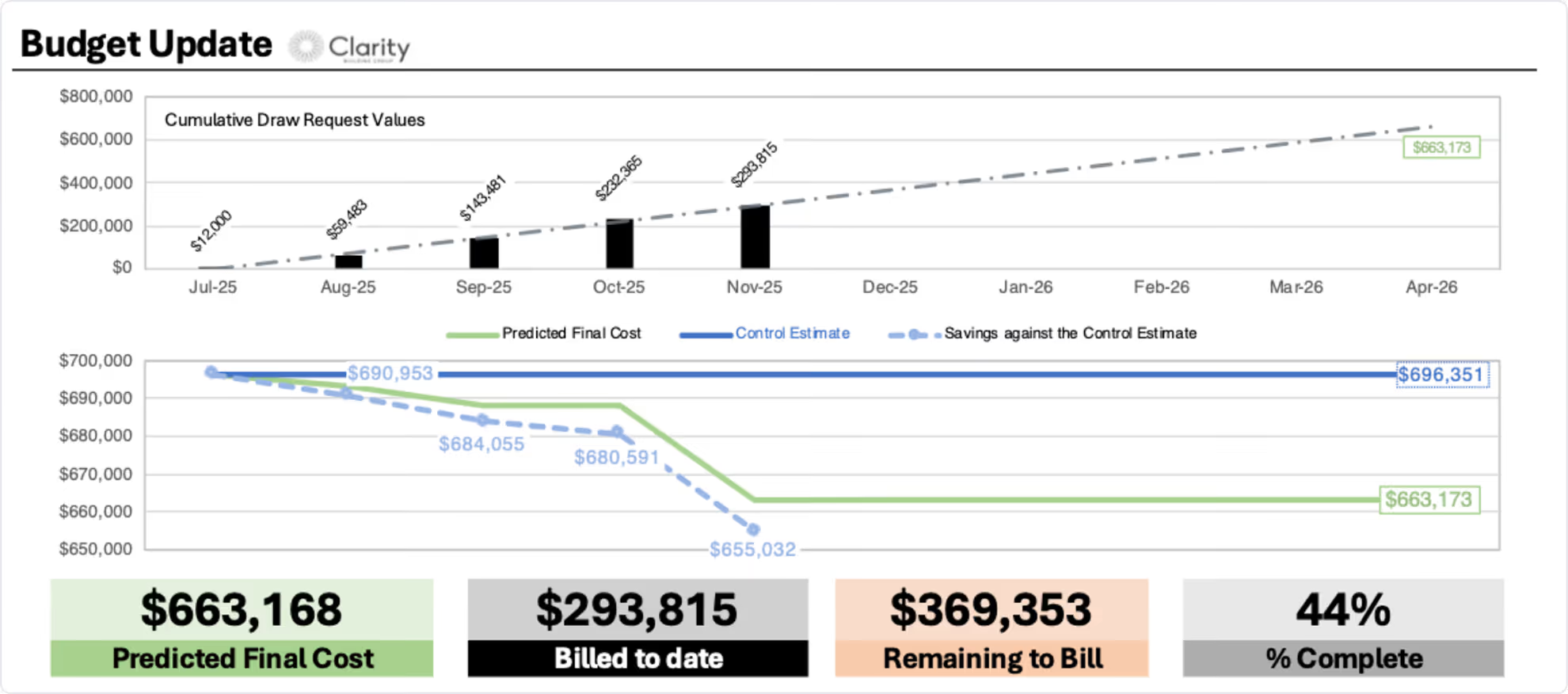
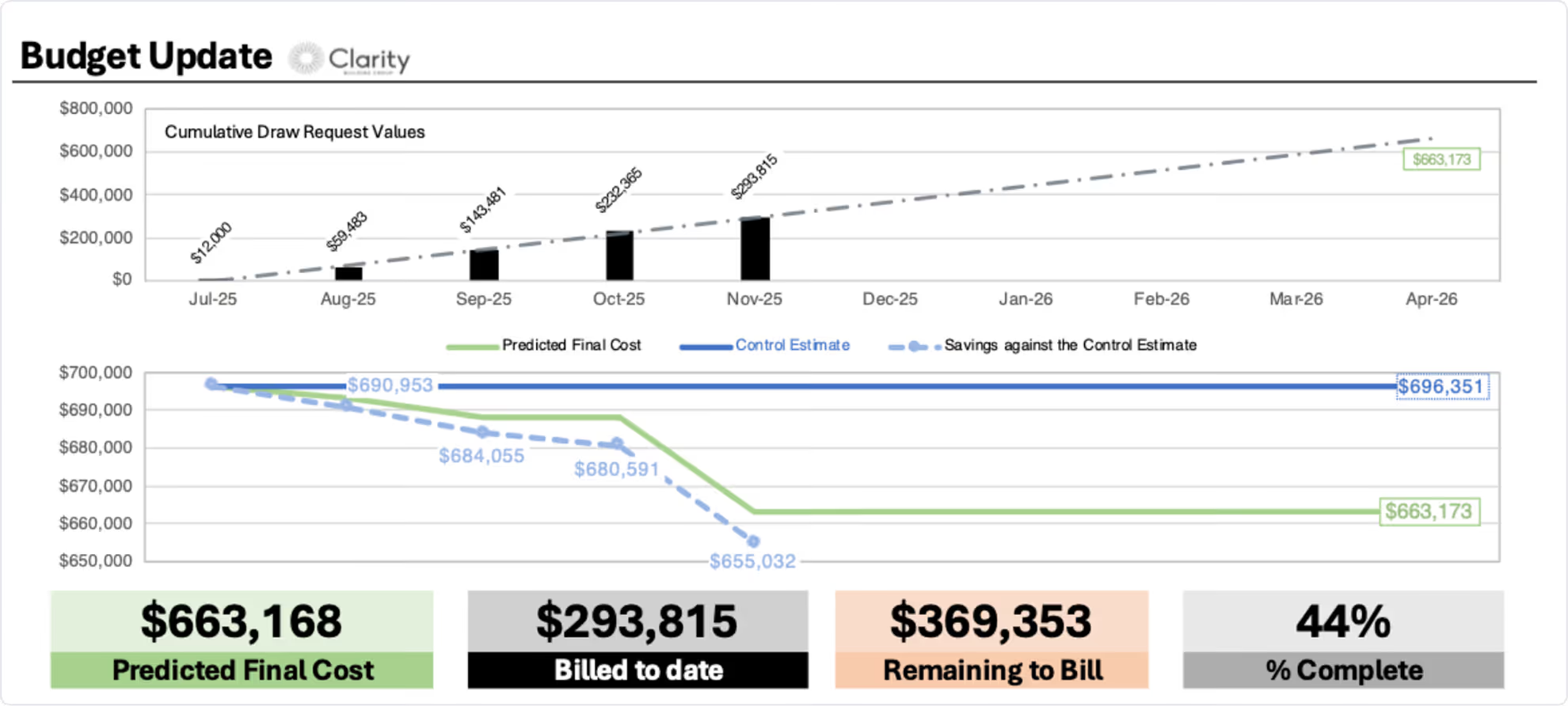
Each month, clients receive a Budget Update that answers the most important questions at a glance: where the project stands, how costs are tracking, and what remains.
The Monthly Budget Update (At a Glance)
The summary coversheet clients review each month.
The Budget Update is the top-level snapshot clients see each month. It summarizes predicted final cost, billed-to-date amounts, remaining balance, and overall progress.
This page is designed to be read in minutes, not hours. It does not replace detail. It points to it. Every number shown here is supported by underlying tracking that is updated consistently throughout the project.
The Control Estimate Sets the Baseline
The original benchmark everything is measured against.
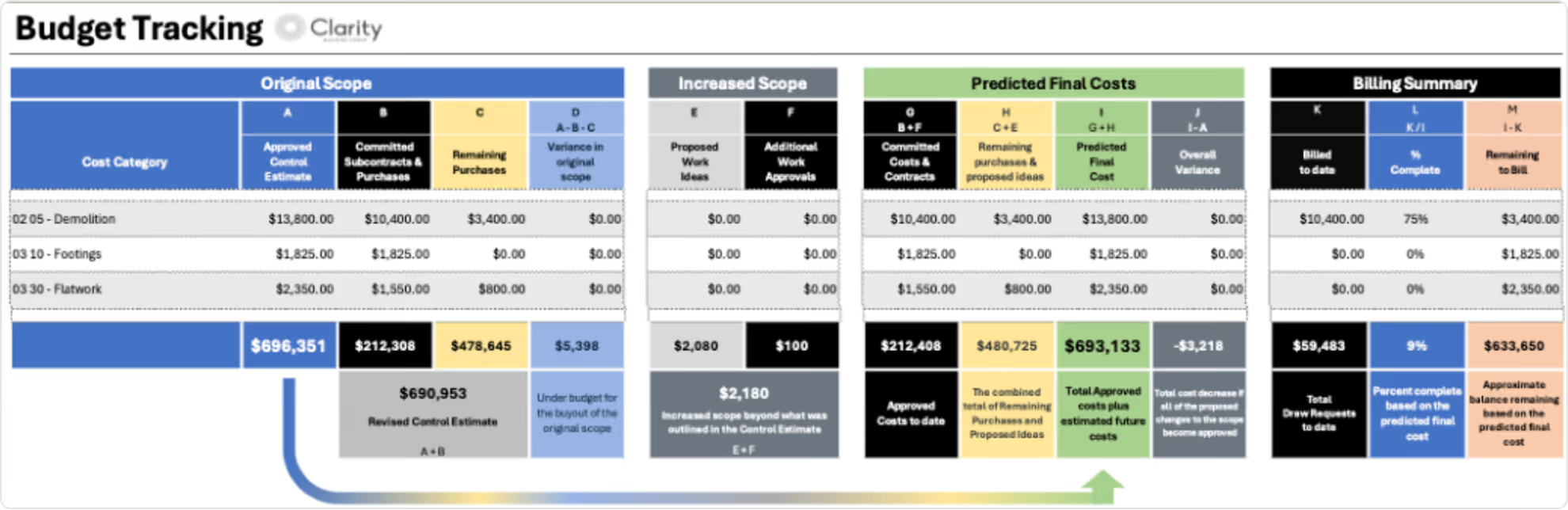
Before construction begins, we establish an Approved Control Estimate. This represents the agreed scope of work at the start of the project and becomes the financial baseline.
All future reporting references this number so homeowners can always distinguish between:
- How the original scope is performing, and
- What has changed since the project began
This baseline is protected and reported on throughout the life of the project.
What’s Been Bought vs. What’s Still Pending
A clear separation between fixed costs and open decisions.
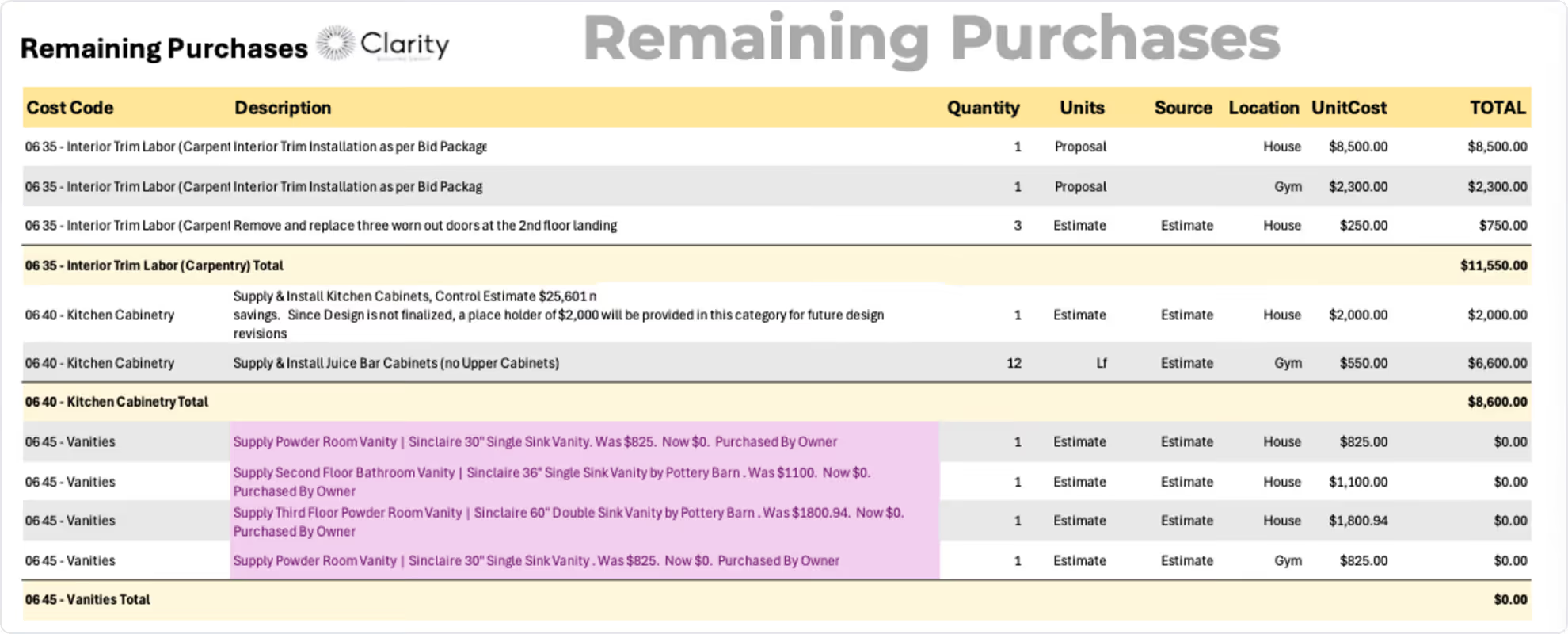
Once construction starts, the budget is divided into two simple categories:
Committed Costs
Items that have been purchased or contracted. These are fixed, known values.
Remaining Purchases
Items that have not yet been finalized or purchased. This functions as the project’s active shopping list.
This separation allows homeowners to see, at any moment, how much of the project is locked in versus still evolving.
How Changes Are Tracked (Without Losing the Original Scope)
Ideas and approvals are tracked separately, on purpose.
Changes are a normal part of custom projects. What matters is how they are documented.
We track changes in two distinct lists so nothing is hidden or blended.
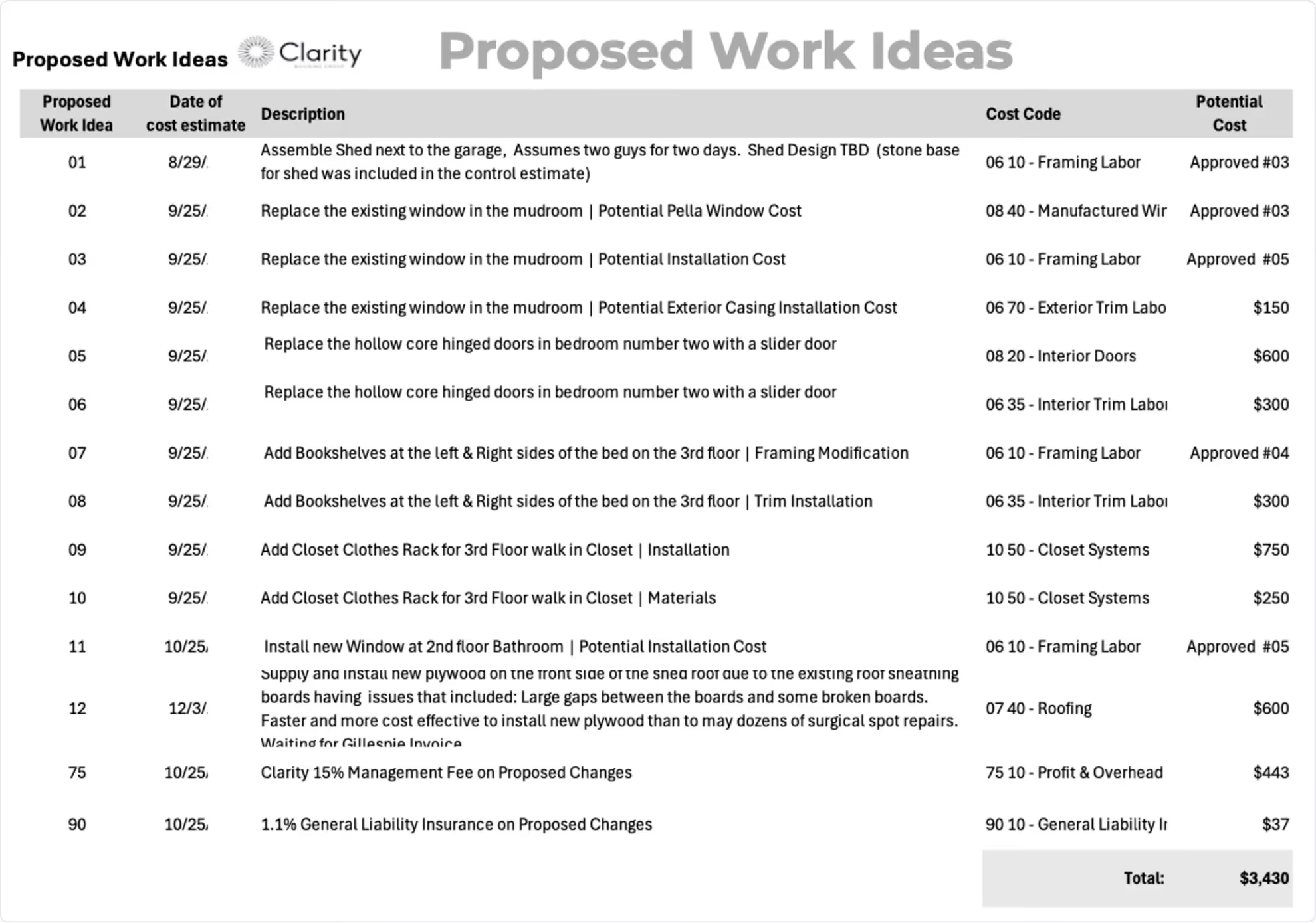
Proposed Work Ideas
Potential changes under consideration.
New ideas begin here. Early pricing may be rough and refined over time as details emerge. Some ideas move forward. Others do not.
The purpose of this list is visibility, not commitment.
Additional Work Approvals
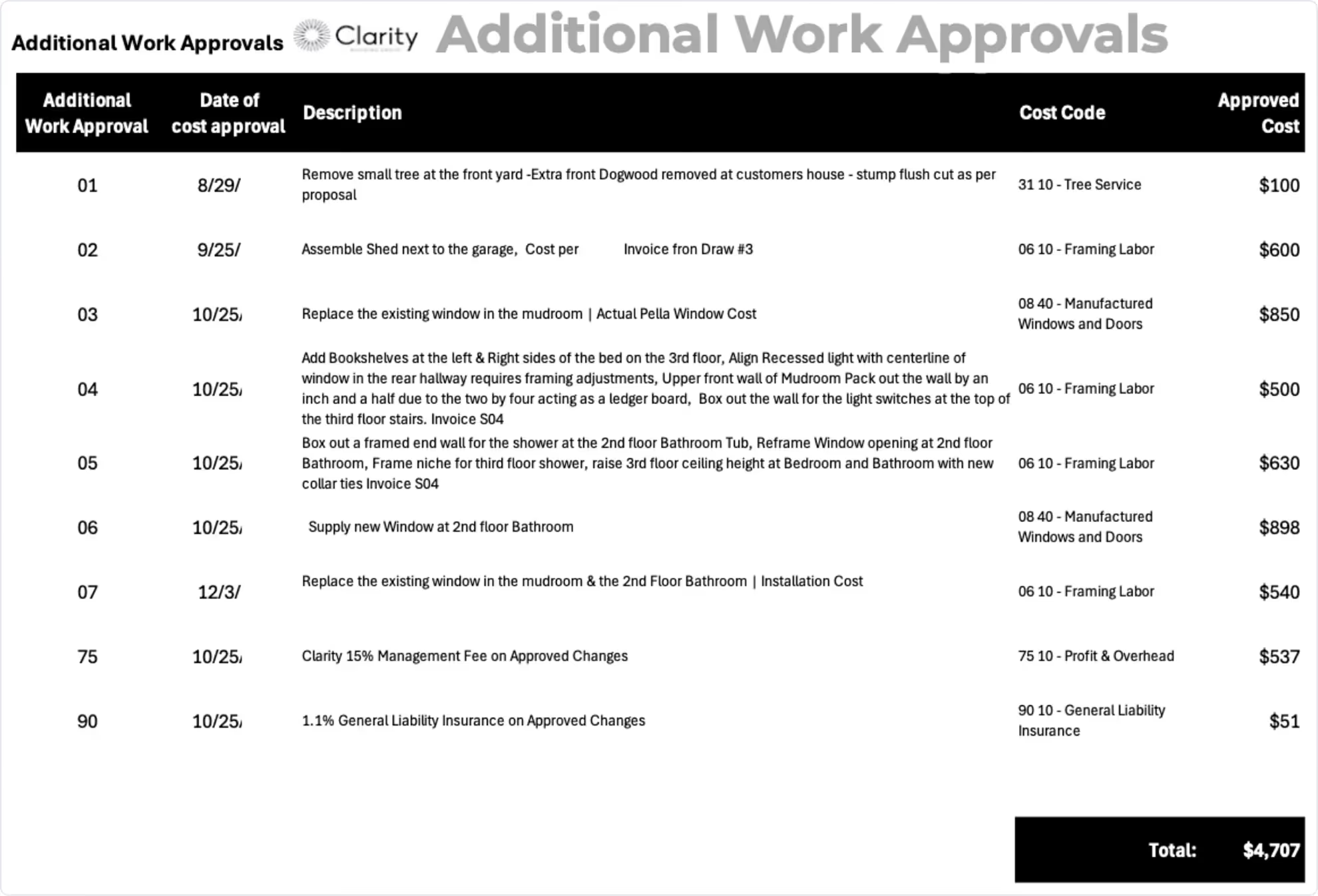
Changes that have been approved and fixed.
Once a change is approved, it moves here and becomes a known cost.
This separation makes it easy to see what was part of the original scope and what was added later.
Predicting the Final Cost
This is where all of the tracking comes together.
By combining fixed, known costs (Black and white columns) with remaining decisions that still need to be made, we arrive at a single, forward-looking number called the Predicted Final Cost.
That number is built from four parts working together:
Original Scope
- Costs that are already committed within the original scope
- Remaining purchases for the original scope that have not yet been bought
Changes to the Project
- Approved additional work that has been formally authorized
- Proposed changes that are still being evaluated and refined
Some of these numbers are firm and finalized. Others are still estimates. That mix is intentional. It reflects the reality of a custom project that is actively unfolding.
When those elements are added together, the result answers the most important question homeowners ask during construction:
“Based on what we know today, how much is this project likely to cost?”
The Predicted Final Cost is updated every month as information improves and decisions are made. That ongoing refinement allows trends to be seen early and discussed openly, rather than discovered at the end.
Knowing What Remains to Be Paid
How billed-to-date and remaining balances are calculated.
Alongside the Predicted Final Cost, we track Billed to Date, which reflects payments made so far.
Subtracting the two answers a straightforward question:
“How much remains to complete the project?”
This information is updated monthly and summarized clearly, without requiring homeowners to interpret spreadsheets.
Why This System Works
Clarity through structure, not simplification.
This system does not remove complexity. It organizes it.
By consistently separating:
- Original scope from added scope
- Fixed costs from estimated costs
- Ideas from approvals
Homeowners always know where the project stands and why.
You do not need to understand construction accounting to stay informed. You need a system that respects your time and makes information readable. This is how we do that.
Common Misconceptions
What is often misunderstood about cost-plus construction
Myth: "Cost-plus means runaway budgets"
Reality: Cost-plus with rigorous pre-construction and change management provides better budget control than fixed-price for complex projects.
Myth: "There's no incentive to control costs"
Reality: Our reputation and future business depend on delivering value. We're incentivized to be efficient, transparent, and proactive.
Myth: "It's just a blank check"
Reality: Every cost is documented, justified, and tracked against a detailed budget with your approval required for changes.
Who Cost-Plus Is Right For
The types of projects and clients this model serves best
Cost-Plus Is Right For
- Clients who value transparency and collaboration
- Clients working with architects on custom designs
- Complex projects with inherent unknowns
- Homeowners who want a partner, not just a contractor
Cost-Plus Is Not Right For
- Lowest-bid seekers focused solely on price
- Projects where the scope is fully defined and simple
- Clients uncomfortable with shared decision-making
- Production or spec home construction
Does Cost-Plus Make Sense for You?
A simple way to assess fit before moving forward
Let's discuss whether our approach aligns with your project and values