Why some construction bids are significantly lower than others
What lower pricing often leaves out

When construction bids vary significantly, the difference is rarely just efficiency or savings. More often, it reflects differences in assumptions, workload, or how thoroughly the project was evaluated.
Understanding why a bid is lower is critical. In many cases, the lower number does not represent a lower final cost, but a different interpretation of what is included.
In this article
- Why some bids come in much lower
- Where pricing differences typically originate
- What risks are hidden in low numbers
- How to evaluate bids more accurately
Context
It is common for homeowners to receive multiple bids with a wide range of pricing. This can create confusion, especially when one proposal appears significantly more attractive than the others.
In custom residential construction, these differences are often tied to incomplete information, varying assumptions, and business conditions within each company.
Without understanding these factors, it is easy to misinterpret what a lower bid actually represents.
The short answer
Lower bids are often the result of missing scope, optimistic assumptions, or business-driven pricing decisions rather than true cost savings.
They may appear attractive upfront but can lead to higher costs as the project progresses.
The key is understanding what is included and what is not.
Why this happens
Construction pricing is not created in a vacuum. Each builder approaches a project based on their workload, team structure, and interpretation of the available information.
This leads to different strategies in how bids are assembled and presented. Some are conservative and thorough, while others are aggressive or incomplete.
These differences can result in large variations in total cost.
Understanding the motivations behind a bid is as important as understanding the numbers themselves.
- Workload pressure: Builders adjust pricing based on availability.
- Estimating approach: Experience and oversight affect accuracy.
- Assumptions: Missing information forces interpretation.
- Business strategy: Pricing may reflect desire to win or avoid work.
Common causes of lower bids
One reason a bid may be higher or lower is simple supply and demand. Builders who are busy may price a project higher because they do not need the work. This is sometimes referred to as a capacity premium.
On the other end of the spectrum, builders who need work may intentionally price a project aggressively to secure it. This can result in a lower initial number that does not fully reflect the true cost.
Another factor is estimating quality. Some builders rely on less experienced staff to assemble bids. Without proper oversight, important scope items can be missed or underestimated.
These differences are not always visible in the proposal, but they can have significant implications later.
- Busy builders: May price higher due to limited availability.
- Inexperienced estimating: Scope gaps from missed details.
- Aggressive pricing: Lower bids to win the project.
- Strategic positioning: Pricing reflects business needs.
The biggest risk: assumptions and allowances
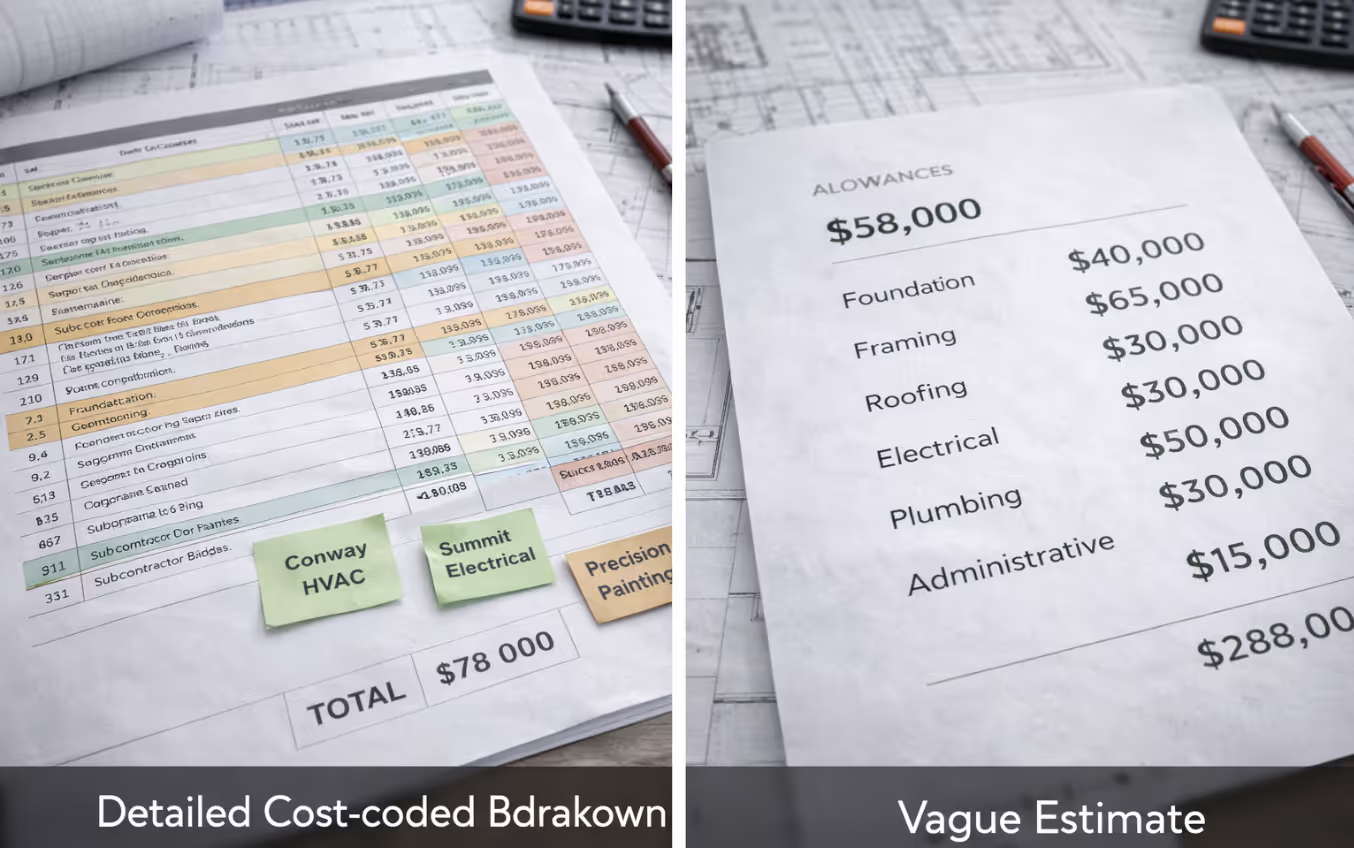
The most significant source of variation in bids is assumptions. When architectural drawings or specifications are incomplete, builders must fill in the gaps.
These gaps can be handled in different ways. A builder may exclude the item, include a low allowance, or include a realistic allowance that reflects expected cost.
Each approach leads to a different total number. Builders who include realistic allowances may appear more expensive, even though their pricing is more accurate.
In contrast, lower bids often rely on optimistic or minimal allowances, which shift cost increases to later in the project.
- Exclusions: Items not included in the price.
- Low allowances: Underestimated placeholder values.
- Realistic allowances: More accurate but higher upfront cost.
- Deferred cost: Differences appear later as changes.
What this means in practice
A lower bid may feel like an opportunity, but it often introduces uncertainty. Costs that are not clearly defined upfront tend to reappear later through changes, upgrades, or corrections.
This can lead to a project that starts with a lower number but ends at a similar or higher total cost compared to more complete proposals.
It can also affect the project experience. Frequent adjustments and cost discussions can create friction and reduce confidence.
Evaluating bids requires looking beyond the total and understanding how each number was built.
How to evaluate
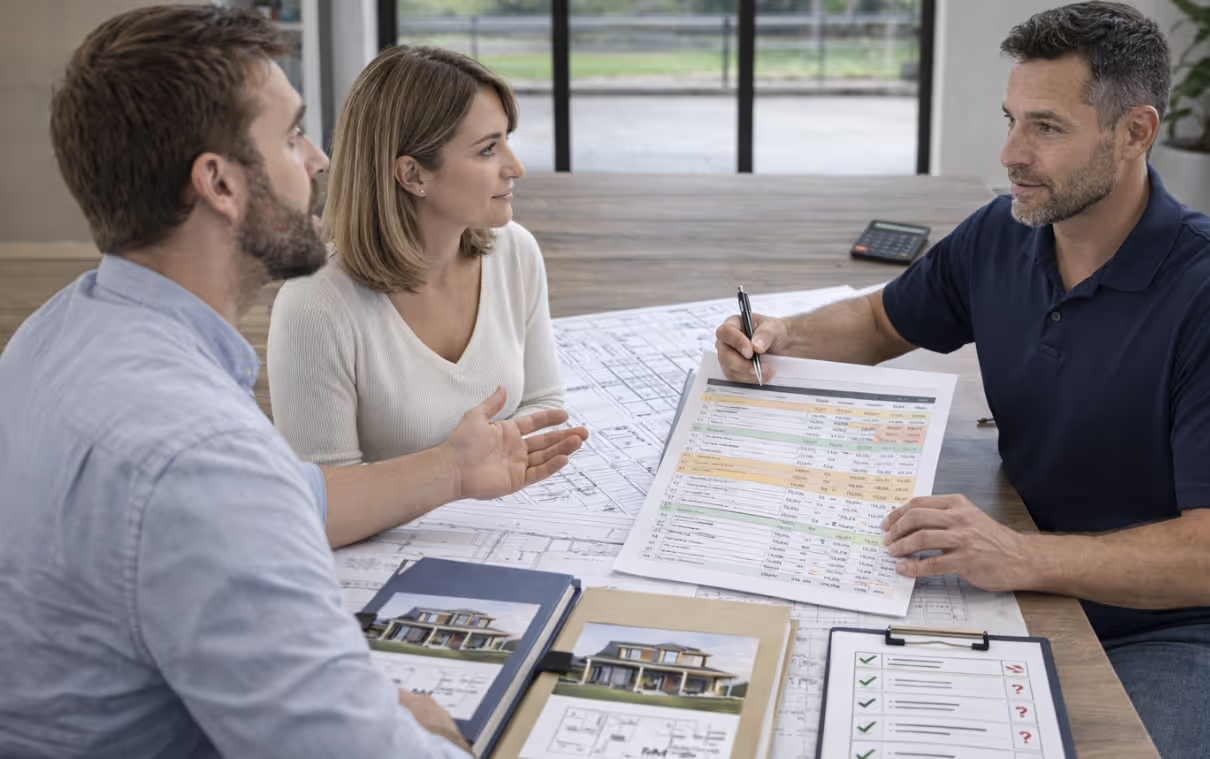
To evaluate bids effectively, focus on scope completeness and clarity. Identify what is included, what is assumed, and what is missing.
Pay particular attention to allowances and exclusions. These are often where the largest differences exist.
It is also important to understand the builder's process. Proposals built from detailed scope and subcontractor input tend to be more reliable.
Finally, consider the context of the builder. Workload, experience, and approach to estimating all influence the final number.
- Review scope: Confirm what is actually included.
- Analyze allowances: Look for unrealistic assumptions.
- Check completeness: Identify missing items.
- Understand context: Consider how the bid was developed.
The Clarity perspective: how Clarity Building Group handles this
At Clarity, pricing is developed through a structured preconstruction process that minimizes assumptions. Detailed bid packages are created and issued to multiple subcontractors, ensuring that scope is clearly defined before pricing is finalized.
Allowances are used carefully and are based on realistic expectations. The goal is to present an accurate picture of cost rather than an optimistic one.
This approach may result in a higher initial number compared to less detailed proposals, but it reduces the likelihood of cost increases later.
By focusing on clarity and completeness, Clarity aims to provide pricing that reflects the true scope of the project and supports informed decision-making.