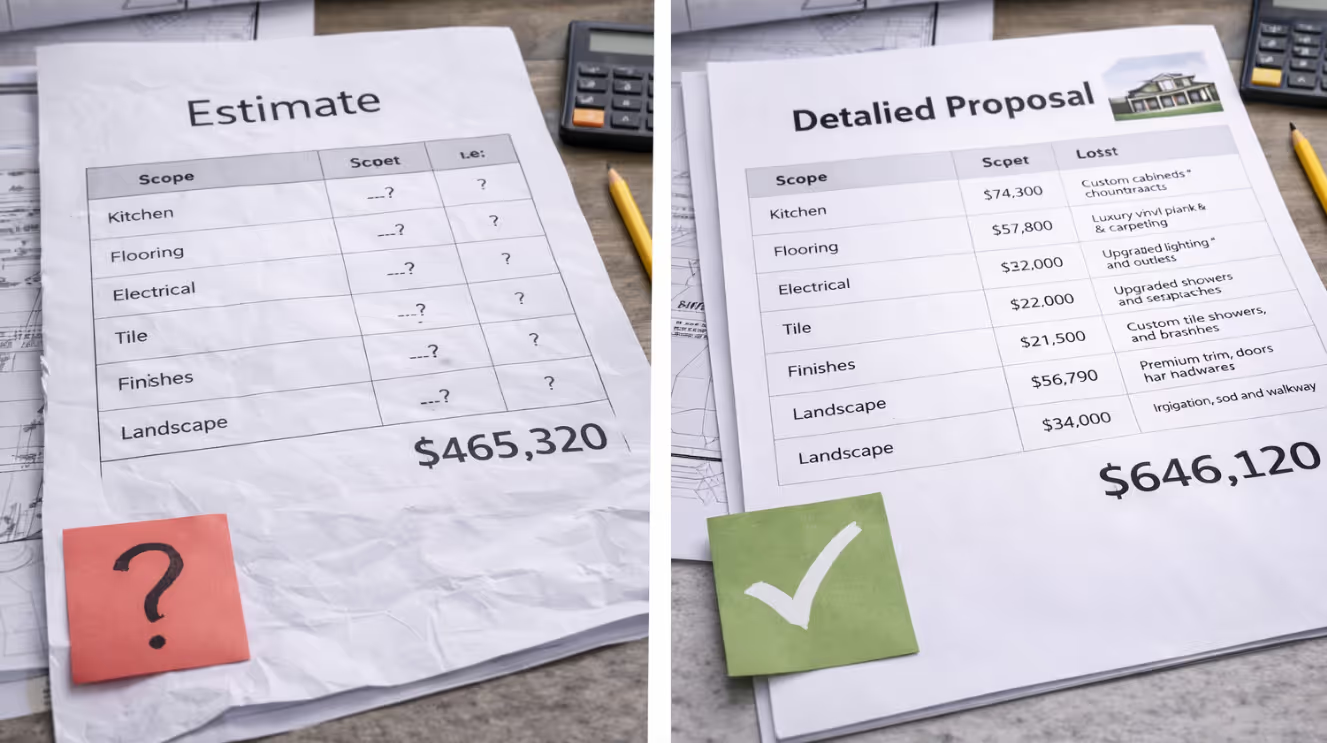
How to evaluate a builder's budgeting process
Looking beyond price to understand process
A builder's budgeting process is one of the clearest indicators of how a project will be managed. It determines how costs are developed, how risks are handled, and how transparent the experience will be.
Focusing only on the final price can miss the bigger picture. The process behind the number is what ultimately drives accuracy and predictability.
In this article
- What defines a strong budgeting process
- How different builders approach budgeting
- Where lack of transparency creates risk
- How to evaluate process over price
Context
Not all builders approach budgeting the same way. Some develop detailed, structured estimates based on defined scope, while others rely more heavily on assumptions or internal approximations.
These differences are not always visible in the final number, but they have a significant impact on how the project unfolds.
Understanding the process behind the budget helps reveal whether the number is reliable or simply an early approximation.
The short answer
A strong budgeting process is transparent, detailed, and based on real scope and subcontractor input.
Weaker processes rely on assumptions, limited detail, or internal estimates that may not reflect actual costs.
The key is to evaluate how the number is built, not just what the number is.
How this works step by step
A structured budgeting process begins in preconstruction, where scope is developed in detail and aligned with the homeowner's goals.
As design progresses, the builder provides cost guidance, helping to steer decisions before they become costly to change.
Once drawings are sufficiently developed, detailed bid packages are created and issued to multiple subcontractors. This replaces assumptions with real market pricing.
The result is a control estimate that reflects actual scope and current conditions, forming a reliable financial baseline.
- Scope development: Detailed definition before pricing.
- Cost guidance: Ongoing input during design.
- Competitive bidding: Multiple subcontractor bids.
- Control estimate: Budget based on real data.
How different builders approach this
In practice, builders approach budgeting with varying levels of structure and transparency. Some follow a detailed, open process, while others rely more on internal estimates.
Less structured approaches may involve limited scope definition, where pricing is based on general assumptions rather than detailed specifications.
In some cases, subcontractor involvement is minimal during early budgeting. Pricing may be developed using historical data or internal guesswork instead of current bids.
There can also be differences in how subcontractors are selected. Some builders rely on a consistent network of trades, which can provide efficiency, but may limit competitive pricing if not regularly tested against the market.
- Structured process: Detailed scope and competitive bidding.
- Assumption-based: Relies on internal estimates.
- Limited bidding: Fewer subcontractors involved.
- Relationship-based trades: May or may not reflect current market pricing.
Where transparency matters most
Transparency is most critical in how scope, assumptions, and pricing are communicated. Without visibility into these areas, it is difficult to understand what is included in the budget.
Key questions include whether subcontractor bids are shared, whether cost categories are clearly defined, and whether assumptions are documented.
A transparent process allows homeowners to see how decisions affect cost and to participate in those decisions.
Without this visibility, costs may only become clear after construction begins.
- Scope clarity: Defined vs assumed work.
- Bid visibility: Access to subcontractor pricing.
- Cost structure: Organized and trackable categories.
- Assumption disclosure: Clear explanation of unknowns.
Common risks in weaker processes
When budgeting is not fully developed, risks tend to surface later in the project. These often appear as cost increases, scope clarifications, or change orders.
One common issue is underdefined scope, where important details are not addressed upfront. This creates gaps that must be filled during construction.
Another risk is limited competition among subcontractors. Without multiple bids, it is difficult to confirm whether pricing reflects market conditions.
These risks are not always intentional, but they can significantly affect the outcome of the project.
- Scope gaps: Missing items lead to added cost.
- Unverified pricing: Limited subcontractor input.
- Late clarity: Costs become known after work begins.
- Reduced control: Fewer opportunities to adjust early.
How to evaluate
To evaluate a builder's budgeting process, focus on how they develop and communicate their numbers. Ask how scope is defined, how subcontractors are involved, and how costs are tracked.
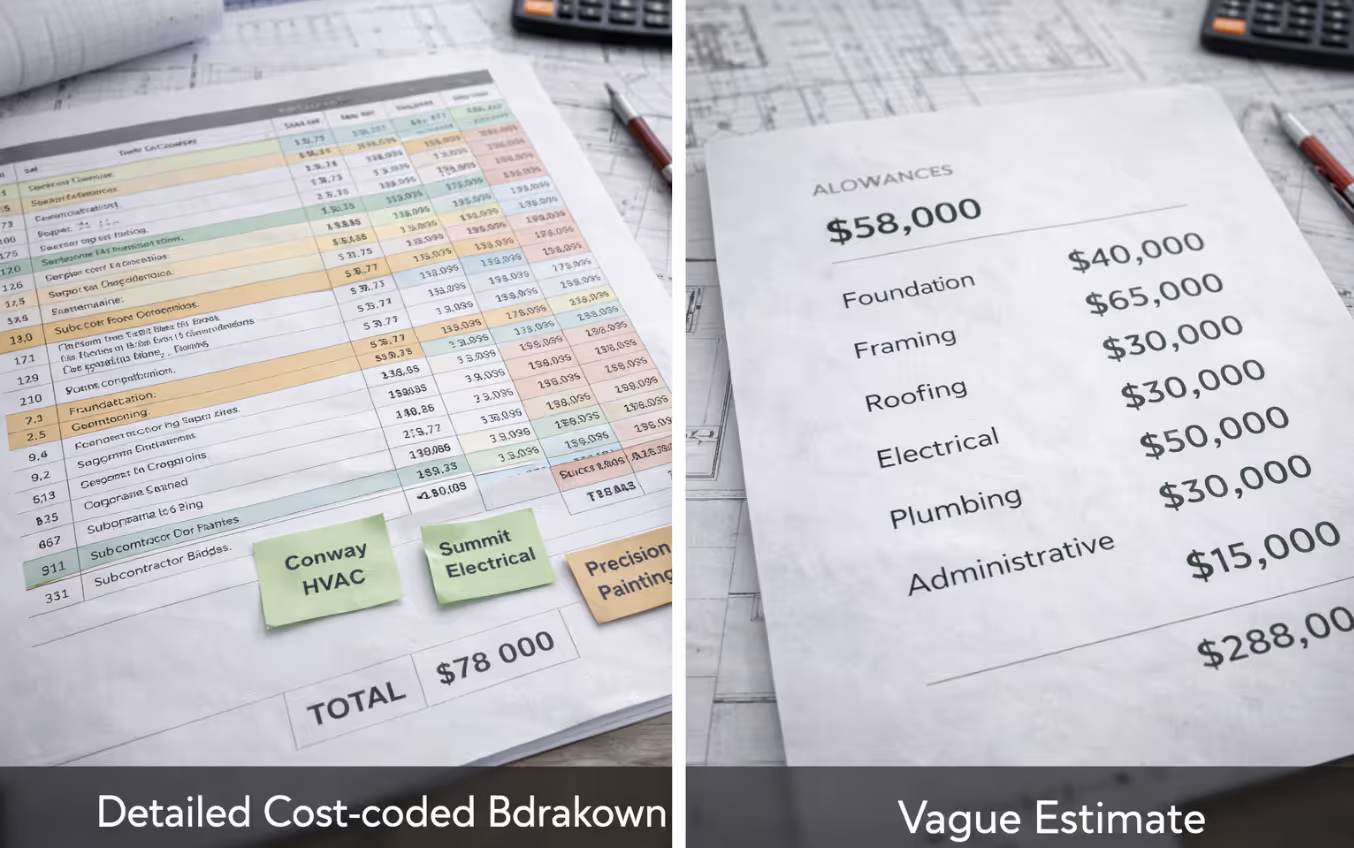
Review the level of detail in their estimates. A more detailed, cost-coded structure typically indicates a more developed process.
It is also important to understand how they handle assumptions. Clear documentation of unknowns is a sign of transparency.
Finally, consider how involved you will be in the process. A collaborative approach allows for better alignment and decision-making.
- Process clarity: Defined steps from concept to estimate.
- Detail level: Granular cost breakdown.
- Subcontractor involvement: Real bids vs internal estimates.
- Client visibility: Access to information and decisions.
The Clarity perspective: how Clarity Building Group handles this
At Clarity, budgeting is developed through a structured preconstruction process that emphasizes transparency and alignment. Scope is defined in detail before pricing is finalized, reducing reliance on assumptions.
Detailed bid packages are issued to multiple subcontractors, ensuring that pricing reflects current market conditions. These bids are shared and reviewed, providing visibility into how costs are built.
The control estimate is organized using standardized cost coding, allowing for detailed tracking throughout construction.
This approach focuses on building the budget collaboratively, ensuring that the final number reflects both the design intent and real-world pricing conditions.