How builder fees work in a cost-plus agreement
Breaking down management fees and supervision costs

In a cost-plus construction contract, the builder is compensated through a combination of a management fee and project supervision costs. These fees are separate from the direct cost of construction and reflect the work required to plan, coordinate, and deliver the project.
Understanding how these fees are structured is important. They are not arbitrary add-ons. They represent the systems, people, and oversight required to manage a complex residential project successfully.
In this article
- What builder fees include in a cost-plus contract
- How management fees and supervision are structured
- Why these costs are necessary for project success
- How to evaluate builder fee proposals
Context
When reviewing a construction budget, homeowners often focus on the cost of labor and materials. Builder fees can feel less tangible because they are tied to management rather than physical construction.
In custom residential work, however, management is a significant part of the project. Coordinating subcontractors, scheduling work, maintaining quality, and managing the budget all require dedicated time and expertise.
Cost-plus contracts separate these responsibilities from construction costs, making them more visible and easier to understand.
The short answer
Builder fees in a cost-plus agreement typically consist of a percentage-based fee applied to construction costs and a separate hourly charge for project supervision.
The percentage fee covers overall project management, coordination, and business overhead. Supervision is billed separately because it reflects the day-to-day effort required on the jobsite.
Together, these components ensure that the project is actively managed, not just priced.
How this works step by step
The management fee is usually calculated as a percentage of construction cost. This fee applies to subcontracted work, material purchases, and general project expenses.
This portion of the fee covers activities such as budgeting, subcontractor coordination, procurement, financial management, and overall project administration.
In addition to the percentage fee, project supervision is billed at an hourly rate. This is a separate cost and is not included in the percentage-based fee.
Supervision includes the day-to-day presence on the jobsite. This involves scheduling trades, coordinating work sequences, ensuring quality, resolving issues, and maintaining safety.
- Management fee: Percentage applied to construction costs for overall project management.
- Supervision cost: Hourly billing for on-site coordination and oversight.
- Separate structure: Supervision is not included in the percentage fee.
- Ongoing billing: Both components are tracked and reported throughout the project.
Impact on cost and schedule
Builder fees have a direct impact on how well the project is executed. Effective management and supervision help keep the project organized, reduce delays, and maintain quality.
Project supervision, in particular, is a meaningful cost. It reflects consistent, hands-on involvement in the jobsite. While it adds to the budget, it also plays a critical role in preventing errors, coordinating trades, and keeping work aligned with the design.
Without adequate supervision, projects are more likely to experience miscommunication, scheduling conflicts, and quality issues. These problems can ultimately increase cost and extend the schedule.
When viewed in context, supervision is not just an expense. It is a key component of project control and outcome.
Common misunderstandings
One common misunderstanding is that the builder�s percentage fee covers all aspects of management, including jobsite supervision. In most cost-plus structures, this is not the case.
Supervision is separated because it represents a different type of work. It is time-based, varies by project complexity, and requires consistent presence throughout construction.
Another misconception is that reducing supervision can lower cost without consequence. In practice, less oversight often leads to coordination issues, rework, and inefficiencies that can increase overall cost.
It is also important to understand what is included and excluded from the management fee. Different builders may structure these components differently.
- Not all-inclusive: Management fee and supervision are separate components.
- Supervision matters: Reduced oversight can increase risk and cost.
- Varies by builder: Fee structures may differ in scope and detail.
- Transparency is key: Clear definitions prevent confusion.
What to prepare
Homeowners should be prepared to review and understand how builder fees are structured in their contract. This includes both the percentage fee and the hourly supervision rate.
It is helpful to understand what activities are covered under each component and how they are tracked over time.
Evaluating the level of supervision is also important. Projects with higher complexity typically require more on-site coordination, which should be reflected in the budget.
Finally, consider how fees align with the overall process. A well-structured fee arrangement supports transparency, accountability, and consistent project management.
The Clarity perspective: how Clarity Building Group handles this
At Clarity, builder fees are structured to separate management and supervision clearly. A percentage-based fee is applied to construction costs to cover project management, coordination, and administrative functions .
Project supervision is billed separately at an hourly rate. This reflects the real time required to manage the jobsite, coordinate trades, and ensure quality execution. It is a significant but essential component of the overall cost structure.
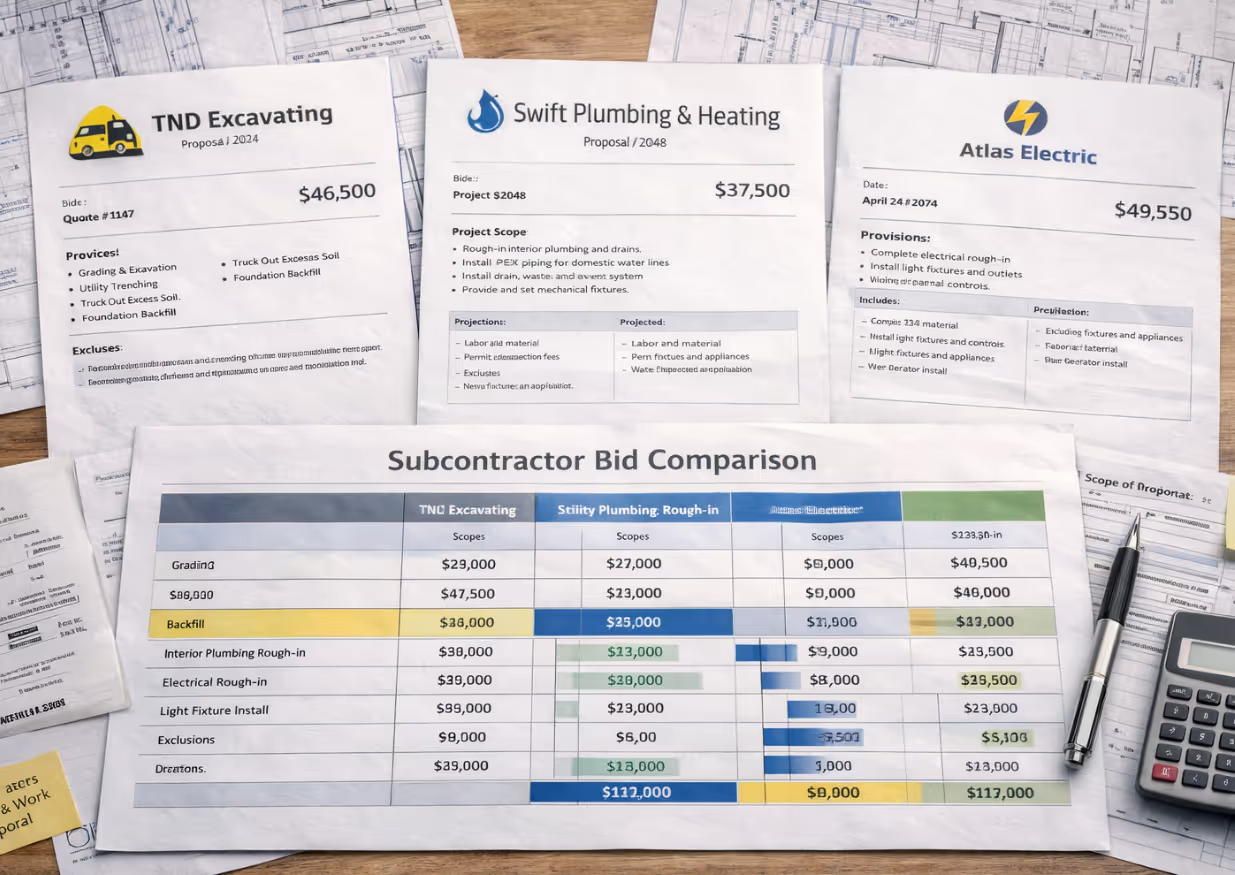
Multiple trade bids and detailed budgeting during preconstruction help define costs before construction begins. This ensures that both construction costs and builder fees are based on clear scope and real pricing.
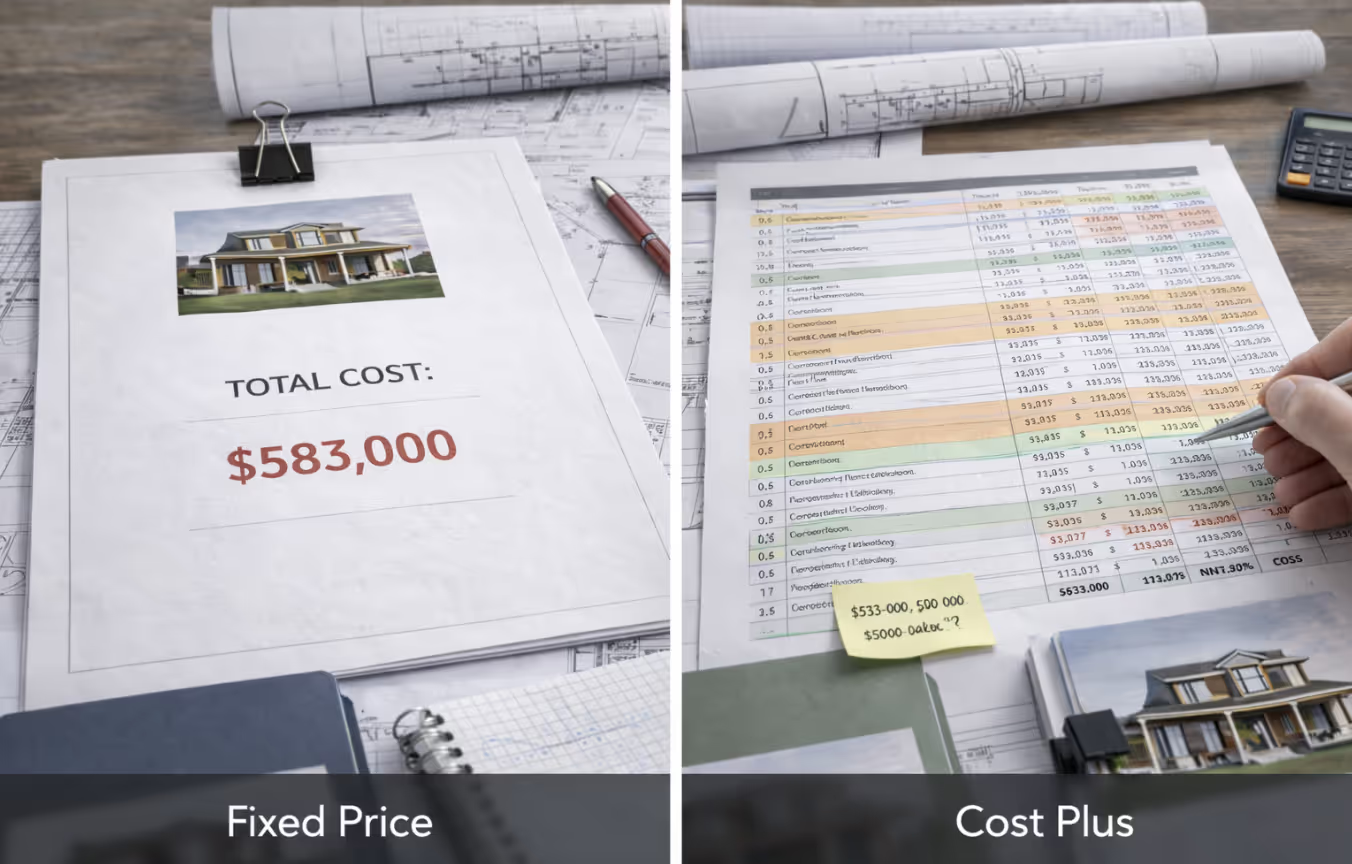
During construction, ongoing tracking provides visibility into all cost components, including management fees and supervision time. This allows homeowners to understand how resources are being allocated and how the project is being managed in real time.