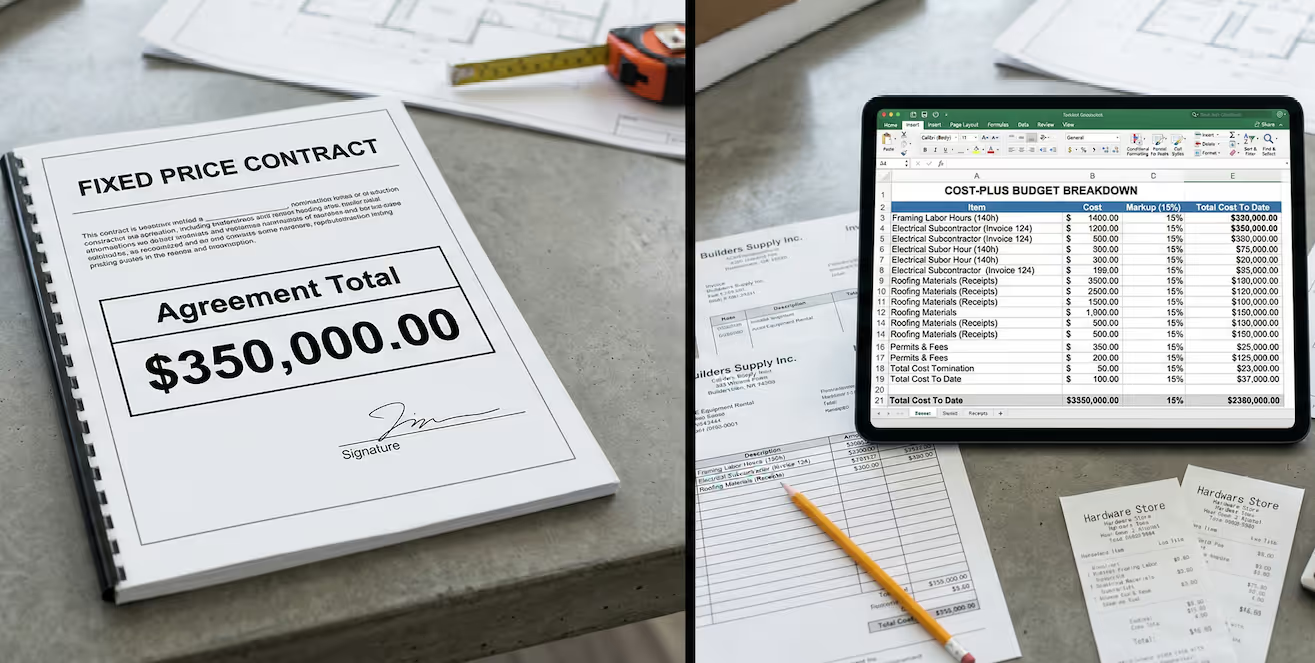
Fixed price vs cost-plus proposals: how to compare them fairly
Normalizing different pricing structures
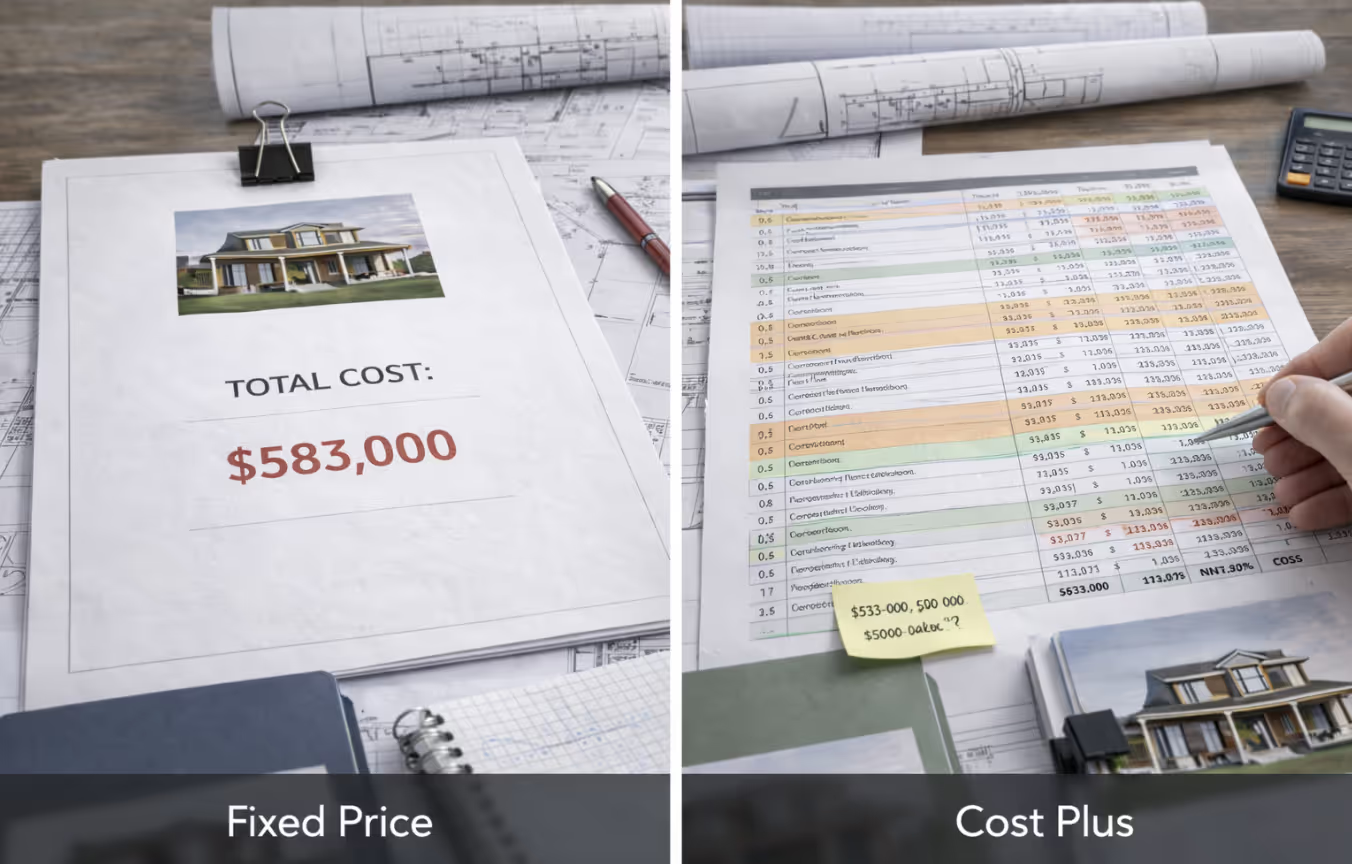
Fixed price and cost-plus proposals are often compared side by side, but they are fundamentally different structures. Treating them as directly comparable can lead to misleading conclusions.
To evaluate them fairly, the focus must shift from total price to how each proposal is built, what is included, and how costs are structured.
In this article
- Why fixed price and cost-plus are different
- Where comparisons break down
- How to normalize proposals for evaluation
- What to look for in each structure
Context
It is common for homeowners to receive both fixed price and cost-plus proposals for the same project. At first glance, comparing them seems straightforward.
In reality, these proposals are built on different assumptions and pricing models. One is a single committed number, while the other reflects actual cost plus a fee.
Without understanding these differences, comparisons can create confusion rather than clarity.
The short answer
Fixed price and cost-plus proposals are apples to oranges. They should not be compared solely on total price.
A fair comparison requires breaking down scope, understanding assumptions, and aligning cost categories.
The goal is to compare structure and completeness, not just the final number.
How these options differ
A fixed price proposal presents a single number for the entire project. That number includes the builder's estimate of costs, risk, and margin.
A cost-plus proposal separates these elements. Costs are tracked in real time, and the builder's fee is applied transparently.
This difference affects how risk is handled. In fixed price, risk is embedded in the number. In cost-plus, risk is managed through transparency and ongoing decision-making.
Because of this, the two proposals are structured differently from the outset.
- Fixed price: Single number with embedded assumptions and risk.
- Cost-plus: Open structure with actual costs and defined fee.
- Risk handling: Built into price vs managed through process.
- Transparency: Limited vs full visibility.
Where each breaks down
Comparisons break down when a fixed price proposal lacks detail. A single number at the bottom of the page provides little insight into what is included.
Cost-plus proposals can also be misunderstood if the underlying scope is not clearly defined. Without detailed scope, even a transparent structure can be difficult to evaluate.
The biggest issue arises when one proposal is highly detailed and the other is not. This creates an uneven comparison.
In these cases, the lower number often reflects missing information rather than true savings.
- Limited breakdown: Fixed price lacks detail.
- Undefined scope: Cost-plus without structure is unclear.
- Uneven detail: One proposal is more complete than the other.
- False comparison: Totals do not reflect equal scope.
How to evaluate
The first step in comparing these proposals is to normalize the structure. A fixed price proposal should be broken down into standard cost-coded categories.
Ideally, this breakdown includes at least 50 distinct categories, covering all major trades and cost areas. This level of detail allows for meaningful comparison.
Once both proposals are organized similarly, scope and assumptions can be reviewed side by side. This helps identify gaps, overlaps, and differences in approach.
The focus should be on understanding what each number represents, not just comparing totals.
- Cost coding: Break proposals into consistent categories.
- Minimum detail: At least 50 line items for clarity.
- Scope alignment: Ensure both include the same work.
- Assumption review: Identify hidden differences.
What to look for in practice
In a fixed price proposal, look for clarity in how the number was developed. A detailed breakdown indicates a more thoughtful estimate.
In a cost-plus proposal, focus on how scope is defined and how costs will be tracked. Transparency and structure are key indicators of reliability.
In both cases, allowances and exclusions should be reviewed carefully. These often represent areas where costs can change.
Understanding these elements provides a clearer picture of the true cost of the project.
The Clarity perspective: how Clarity Building Group handles this
At Clarity, comparisons are approached by aligning scope and structure before evaluating cost. Cost-plus proposals are developed with detailed cost coding, allowing for clear tracking and transparency.
When reviewing fixed price proposals, Clarity encourages breaking the estimate into comparable categories to better understand what is included.
The focus is on creating an apples-to-apples comparison at the category level, rather than comparing overall totals.
This approach provides clarity, reduces risk, and supports more informed decision-making when evaluating different pricing structures.