Is cost-plus more expensive than fixed price?
Understanding where cost differences actually come from
Cost-plus construction is often perceived as more expensive than fixed price, but that perception is usually based on how costs are presented rather than the actual cost of the work.
In reality, both contract types can result in similar total costs for the same project. The difference is how those costs are structured, tracked, and revealed over time.
In this article
- Why cost-plus is often perceived as more expensive
- Where cost differences actually come from
- How each contract type handles pricing
- How to evaluate real cost across both approaches
Context
Homeowners are naturally drawn to fixed price contracts because they provide a single number upfront. This creates a sense of certainty and makes it easier to compare proposals.
Cost-plus contracts feel less certain because the final number is not fixed at the start. Instead, costs are tracked as the project progresses, which can create the impression that the total may continue to increase.
This difference in perception often leads to the assumption that cost-plus is more expensive, even when the underlying project cost may be similar.
The short answer
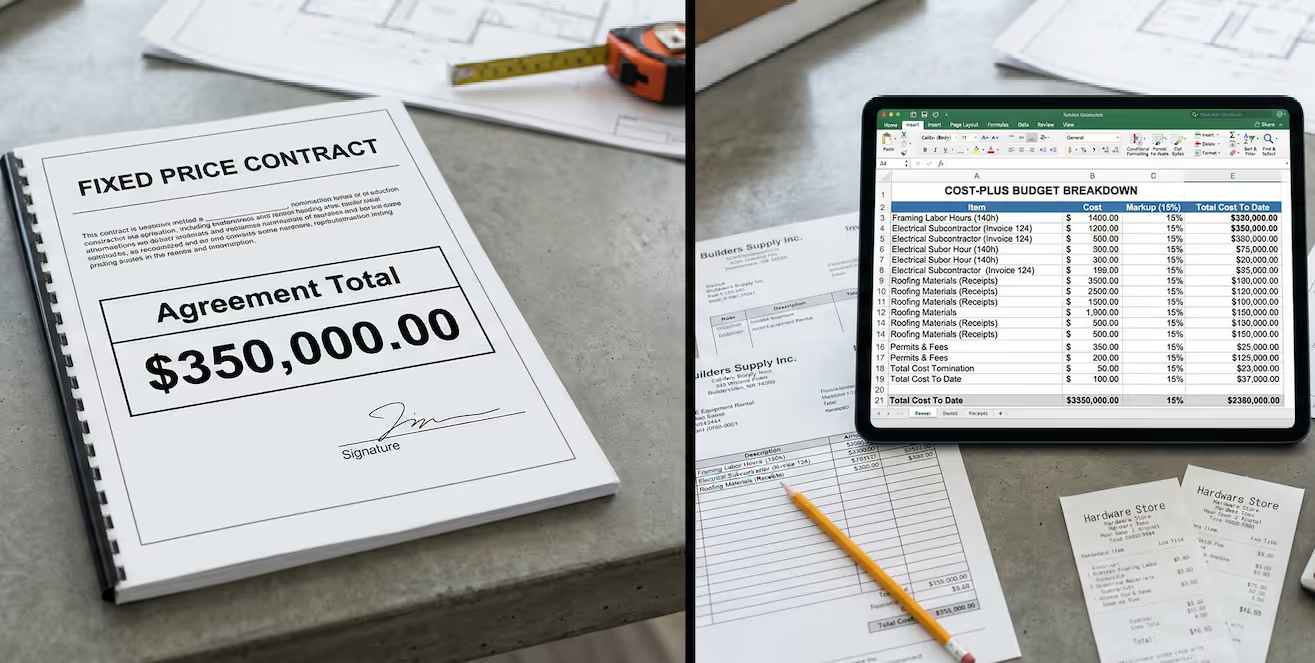
Cost-plus is not inherently more expensive. The total cost of a project is driven by design, scope, materials, and market conditions, not the contract type.
Fixed price contracts may appear lower upfront because they rely on assumptions, allowances, or simplified scope that can change later.
The key difference is visibility. Cost-plus exposes actual costs as they occur, while fixed price packages them into a single number.
Why this perception exists
The perception that cost-plus is more expensive often comes from transparency. In a cost-plus project, every cost is visible, including subcontractor pricing, material purchases, and project expenses.
In a fixed price contract, these individual costs are not typically broken out. The builder includes them within a single number, along with contingencies and assumptions.
As a result, cost-plus can feel more expensive because the details are exposed, even if the total cost is comparable.
Another factor is timing. Cost-plus reflects real-time decisions and changes, which can make cost increases more noticeable as they occur.
- Transparency effect: Detailed cost visibility can make spending feel higher.
- Upfront assumptions: Fixed price may include optimistic or simplified early numbers.
- Timing of information: Cost-plus reveals changes as they happen.
- Psychological framing: A single number feels more certain than a tracked total.
Where cost differences actually come from
Real cost differences are usually tied to scope and decision-making, not the contract structure. Material selections, level of detail, structural complexity, and site conditions all have a direct impact on cost.
Allowances also play a role. A fixed price contract with low allowances may appear more competitive, but actual costs can increase as selections are made.
Contingencies are another factor. Builders may include additional margin in fixed price contracts to account for unknowns. In cost-plus, these unknowns are managed as they arise rather than embedded in the initial number.
Market conditions also influence cost. Subcontractor pricing, material availability, and labor conditions affect both contract types equally.
- Design and scope: The biggest driver of total cost.
- Allowance levels: Placeholder values can distort early comparisons.
- Contingency approach: Fixed price often embeds risk into the number.
- Market pricing: External factors affect all projects regardless of contract type.
How to evaluate
To evaluate whether cost-plus is more expensive, it is important to compare projects on a like-for-like basis. This means aligning scope, assumptions, and allowance levels.
Looking only at the total number can be misleading. A lower fixed price may exclude items or rely on assumptions that will change later.
It is also helpful to understand how costs will be tracked. Cost-plus provides ongoing visibility, which allows for more informed decision-making during the project.
Finally, consider how changes will be handled. In fixed price contracts, changes often require formal change orders. In cost-plus, they are incorporated into the ongoing budget tracking.
The goal is to understand the full cost of the project, not just the initial number.
The Clarity perspective: how Clarity Building Group handles this
At Clarity, cost-plus is used to provide transparency and align cost with actual decisions. Early budgets are developed during preconstruction and refined through detailed design and subcontractor bidding.
Multiple trade bids are obtained to validate pricing and ensure competitiveness. This helps establish a realistic financial baseline before construction begins.
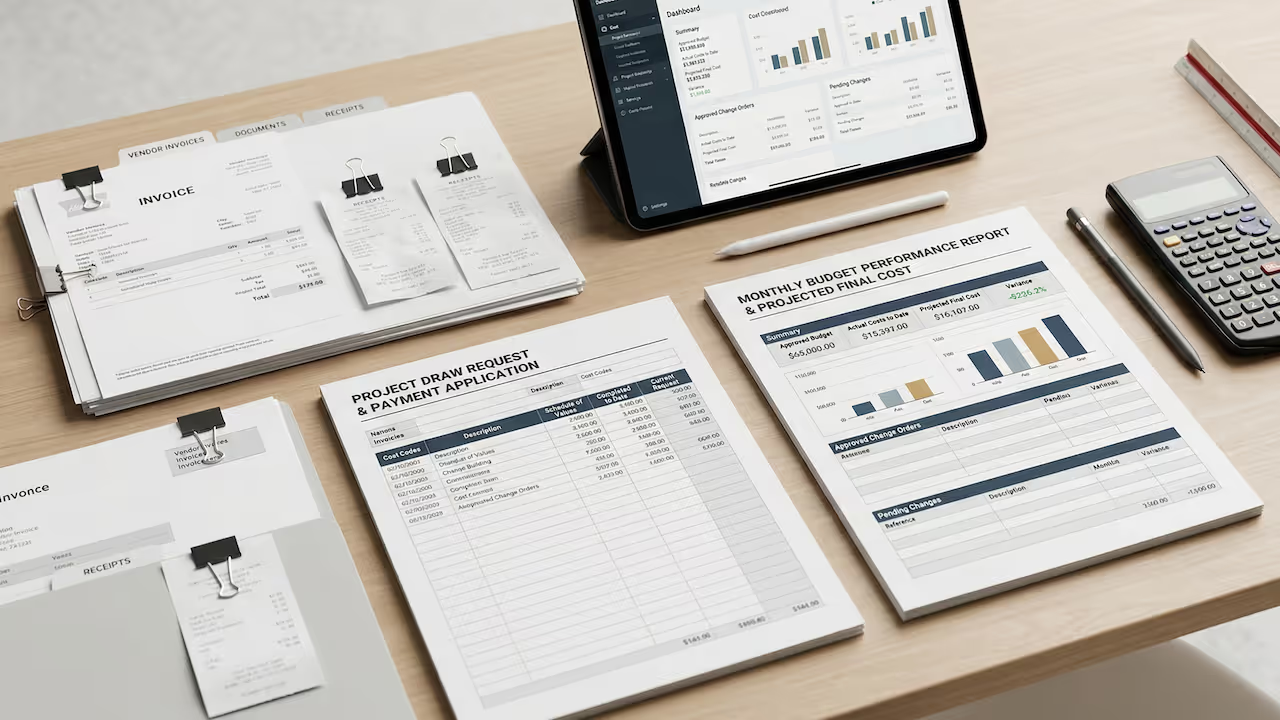
Open-book accounting provides access to invoices, receipts, and detailed budget updates, allowing homeowners to see exactly where money is being spent .
Ongoing tracking shows committed costs, remaining scope, and projected final cost. This allows the project to adapt while maintaining control over financial outcomes.