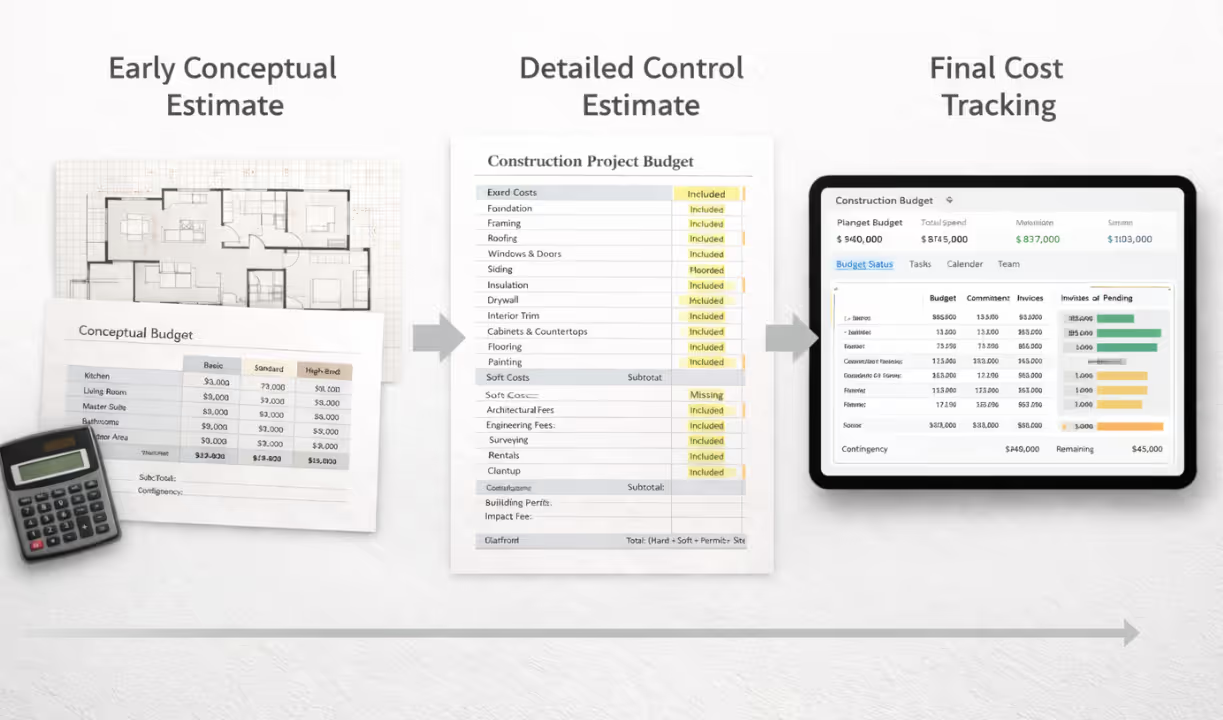
What financial reporting looks like in a cost-plus project
How Clarity tracks spending and forecasts final cost
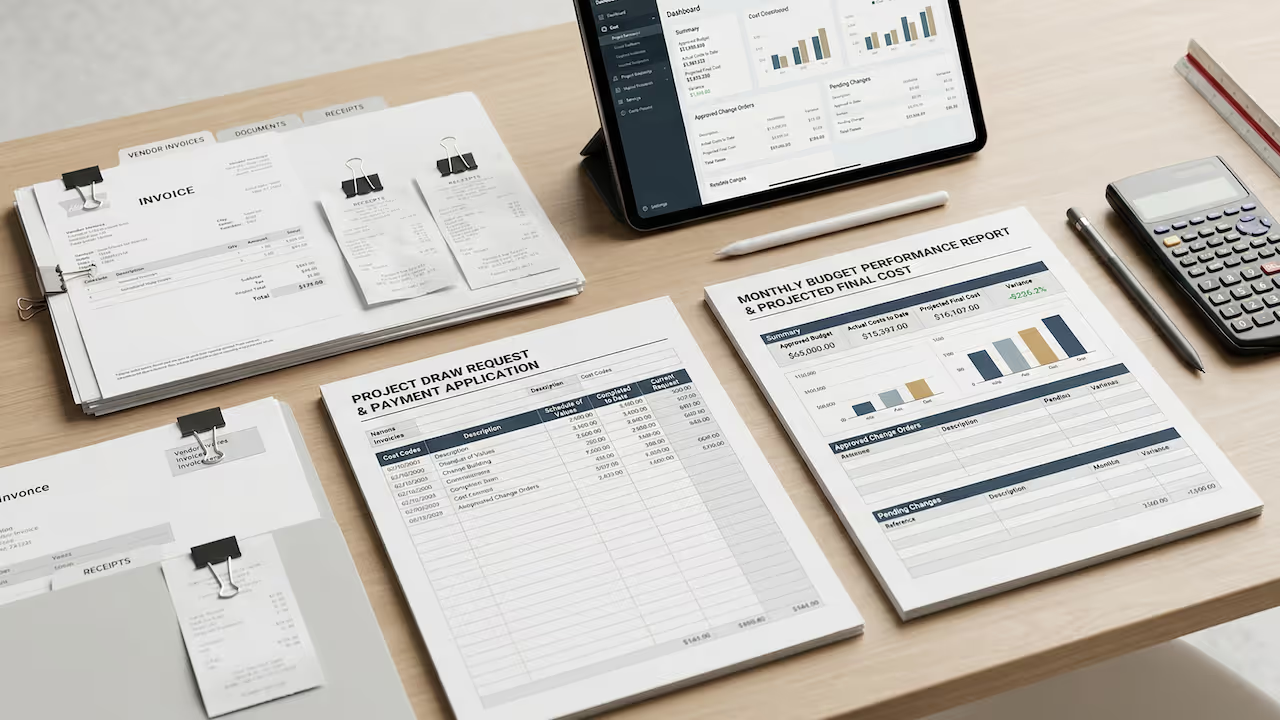
Financial reporting in a cost-plus project is designed to provide continuous clarity, not just periodic updates. It tracks what has been spent, what has been committed, and where the total project cost is expected to land.
The goal is simple. A homeowner should always understand the financial position of the project. There should be no surprises when invoices are issued because all costs have already been reviewed and approved.
In this article
- How monthly budget updates track project cost
- How predicted final cost is calculated and updated
- What a draw request includes
- How transparency prevents billing surprises
Context
In many construction projects, financial visibility is limited to invoices or occasional summaries. This can make it difficult to understand how the project is performing until after costs are incurred.
Cost-plus projects take a different approach. Financial reporting is ongoing and structured, allowing homeowners to see how decisions, changes, and progress impact the overall budget in real time.
This level of visibility requires systems, discipline, and consistent communication. It is not just about providing documents. It is about maintaining a clear financial picture throughout the project.
The short answer
Financial reporting in a cost-plus project includes monthly budget updates, detailed draw requests, and continuous tracking of predicted final cost.
Costs are documented, reviewed, and approved before they are billed. The reporting process ensures that homeowners understand spending before it appears on an invoice.
The result is a proactive system that supports decision-making rather than reacting to completed costs.
How this works step by step
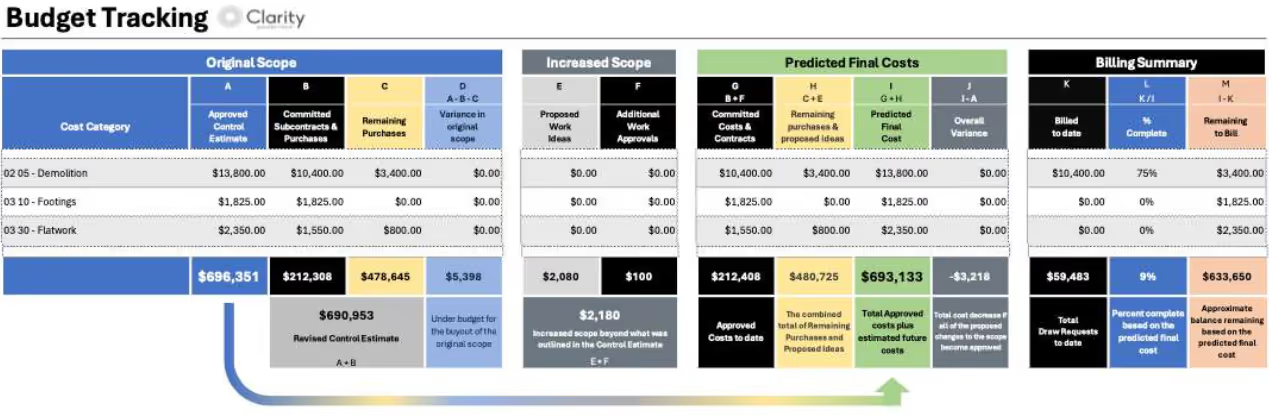
The process is anchored by monthly budget updates. These updates show the current state of the project, including committed costs, remaining scope, and a predicted final cost.
The predicted final cost is not static. It is updated every month based on new information, including subcontractor commitments, approved changes, and evolving project conditions.
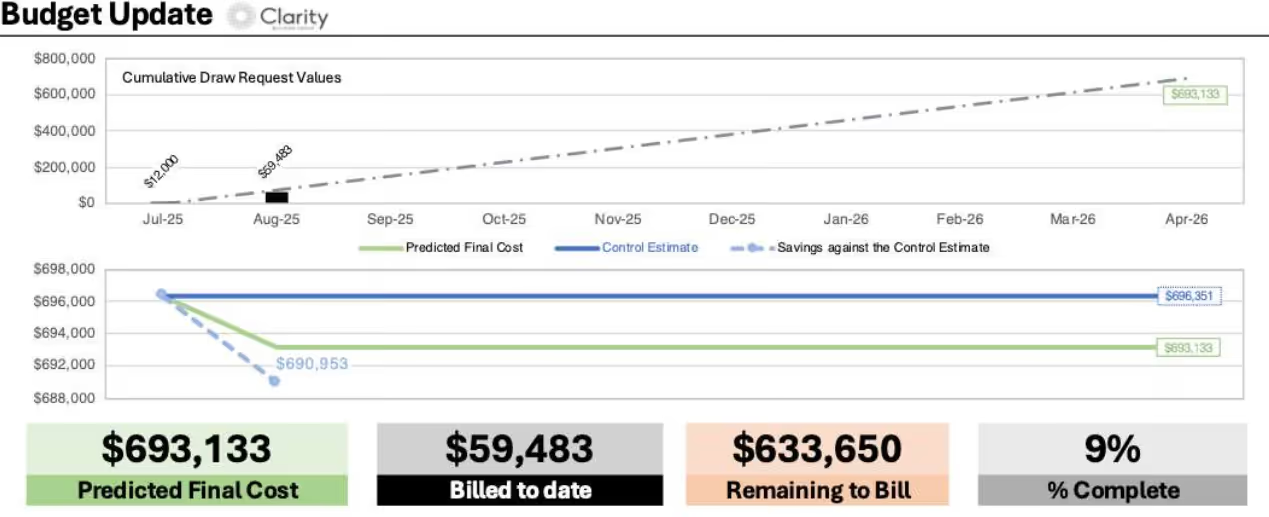
This ties directly into the change management process. As ideas are introduced, priced, and approved, they move through defined stages and ultimately affect the projected final cost.
By updating this projection regularly, the budget becomes a forward-looking tool rather than a historical record.
- Monthly updates: Regular reporting of budget status and cost changes.
- Predicted final cost: Continuously updated based on real project data.
- Integrated changes: Approved changes are reflected in projections.
- Forward visibility: Focus on where the project is going, not just where it has been.
What a draw request includes
Draw requests are the formal billing mechanism in a cost-plus project. They are detailed and structured to show exactly what is being billed and why.
A typical draw request includes a cost-coded breakdown of expenses, allowing each cost to be tied to a specific category or scope item. This makes it easier to understand how spending aligns with the budget.
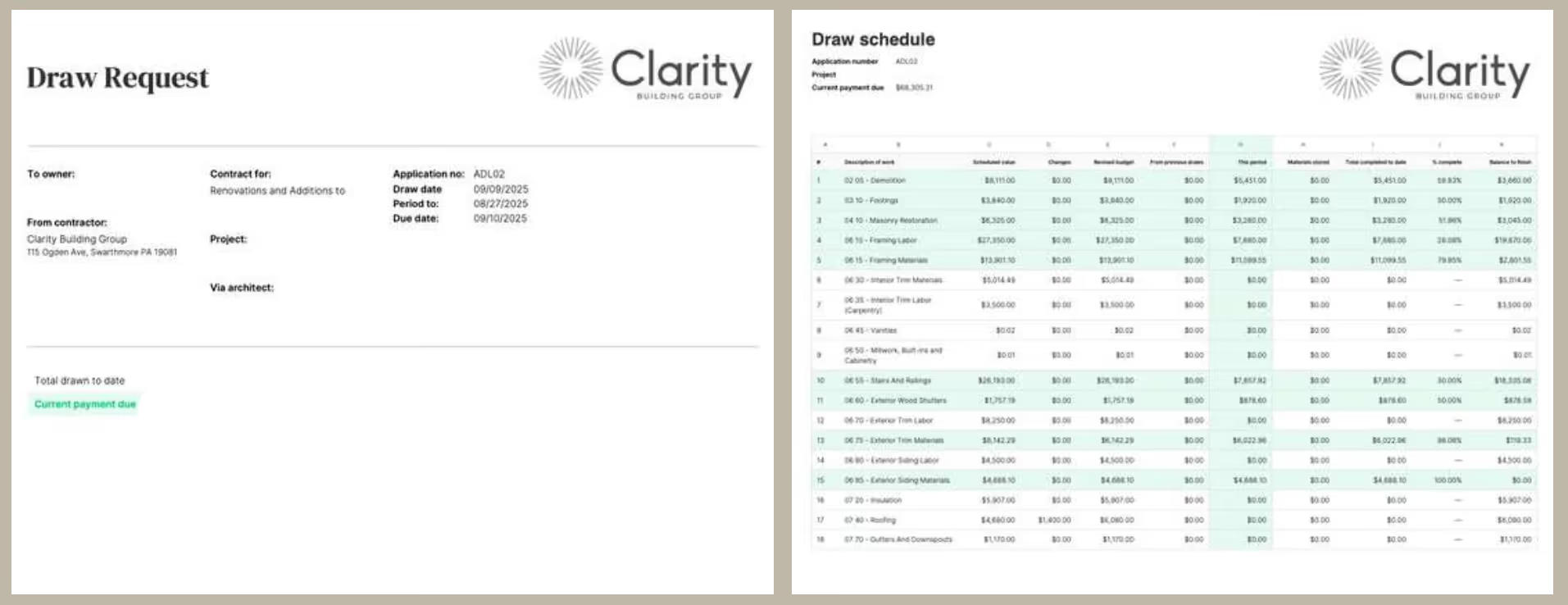
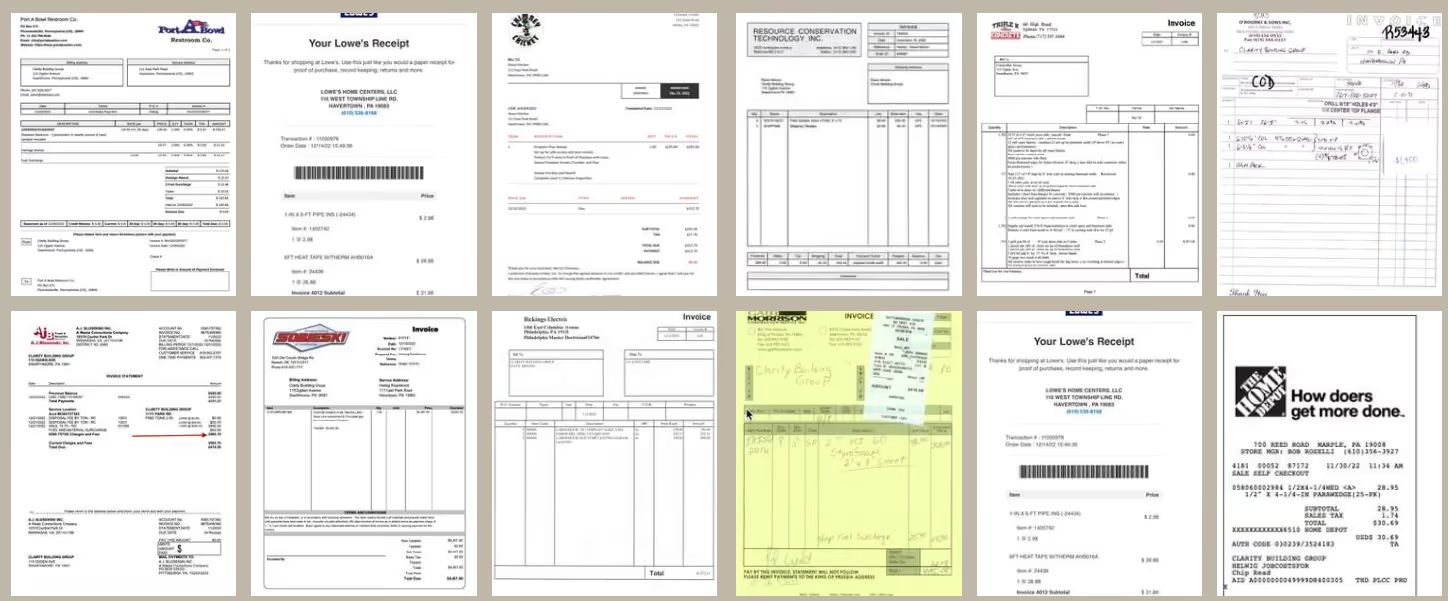
Supporting documentation is a key part of the process. Copies of invoices and receipts are included so that each cost can be verified.
This level of detail ensures that billing is not abstract. It is directly connected to actual project activity and documented expenses .
- Cost-coded breakdown: Each expense is tied to a defined budget category.
- Invoices and receipts: Supporting documentation for all billed costs.
- Clear alignment: Billing matches tracked project expenses.
- Structured format: Consistent presentation for review and approval.
How transparency prevents surprises
The most important outcome of this reporting system is predictability. Costs are discussed, reviewed, and approved before they reach the billing stage.
Because budget updates track changes and predicted final cost continuously, homeowners are not seeing new information for the first time in an invoice. They are seeing costs that have already been introduced and understood.
This is reinforced through documentation. Daily logs capture new ideas as they arise, budget updates track their progression, and draw requests reflect only approved and committed costs.
The expectation is clear. A client should never be surprised by an invoice because every cost has already been part of an ongoing conversation.
Common misunderstandings
One common misunderstanding is that financial reporting is simply a summary of past spending. In a well-structured cost-plus project, it is a forward-looking system that helps guide decisions.
Another misconception is that detailed reporting creates complexity. In practice, structured reporting simplifies understanding by organizing information clearly.
Some also assume that invoices are the primary source of financial information. In reality, invoices are the final step in a process that begins with planning and approval.
Understanding this sequence is key to understanding how cost control is maintained.
- Not just historical: Reporting includes forward-looking projections.
- Not overly complex: Structure improves clarity.
- Not invoice-driven: Costs are known before billing occurs.
- Process-based: Reporting reflects a continuous system.
The Clarity perspective: how Clarity Building Group handles this
At Clarity, financial reporting is built around transparency and consistency. Monthly budget updates track committed costs, remaining scope, and a predicted final cost that is updated as new information becomes available.
This predicted final cost reflects the full change process, from initial ideas documented in daily logs to proposed changes and finally approved costs. Each step is visible and contributes to the overall financial picture.
Draw requests are detailed and fully documented, including cost-coded breakdowns and supporting invoices and receipts. This ensures that every billed cost is traceable and aligned with the budget.
The expectation is that no cost reaches the billing stage without prior discussion and approval. This approach ensures that homeowners are always informed and that financial reporting serves as a tool for clarity and control rather than surprise.