How construction budgets evolve from concept to completion
Tracking cost changes across each phase of the project
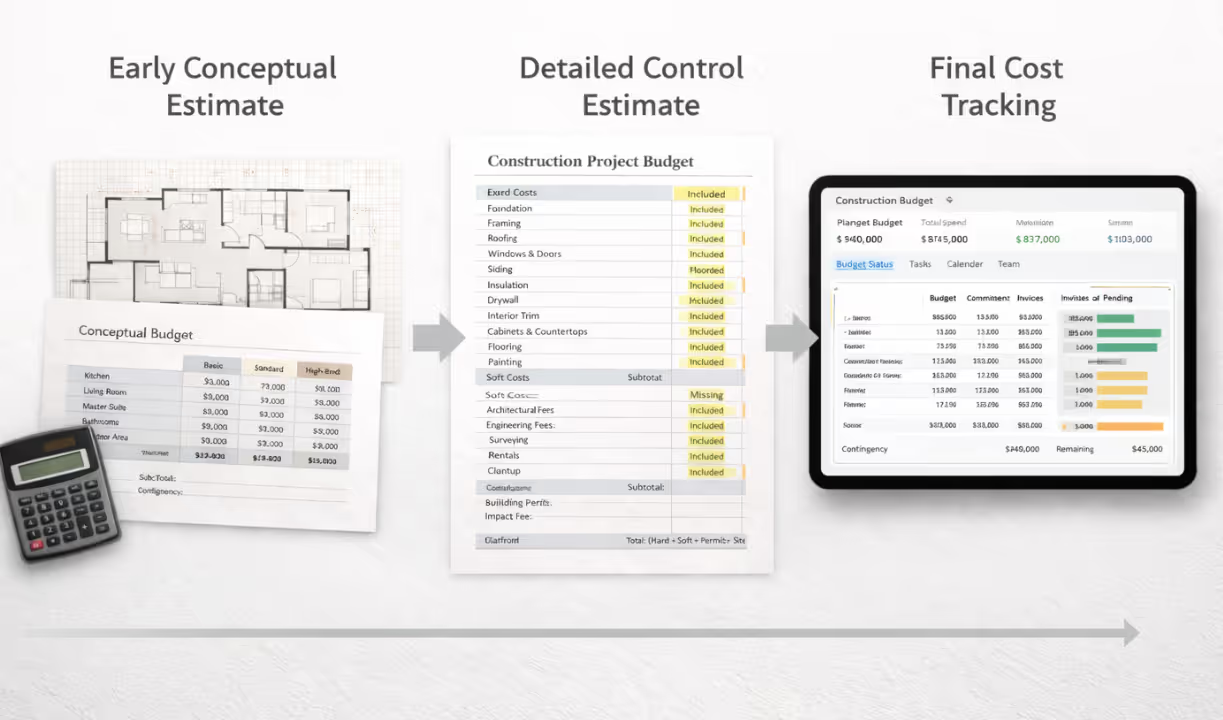
Construction budgets are not static. They evolve as a project moves from early concept through design, bidding, and construction. Each phase replaces assumptions with more specific information, improving accuracy while also revealing real costs.
Understanding this progression is critical. Budget changes are not necessarily a sign of failure. In most cases, they reflect better information, more defined scope, and real decisions being made.
In this article
- How budgets develop across each project phase
- Why early numbers are less precise
- What causes budgets to change over time
- How cost control is maintained throughout
Context
Homeowners often expect a single, stable number early in the process. That expectation comes from industries where pricing is fixed before work begins. Custom residential construction operates differently because design, scope, and conditions are still being defined during early budgeting.
Architect-led projects involve a series of decisions that directly impact cost. Materials, systems, structural solutions, and detailing are refined over time. As those decisions are made, the budget must adjust to reflect them.
The goal is not to avoid change, but to manage it. A well-structured process allows the budget to evolve in a controlled and transparent way rather than shifting unexpectedly.
The short answer
Construction budgets evolve from broad, assumption-based estimates to detailed, data-driven cost tracking.
Early budgets provide direction. Mid-stage budgets improve accuracy through design development and bidding. Final budgets track actual commitments and forecast final cost.
The key is that each stage reduces uncertainty. The more defined the project becomes, the more reliable the budget becomes.
How this works step by step
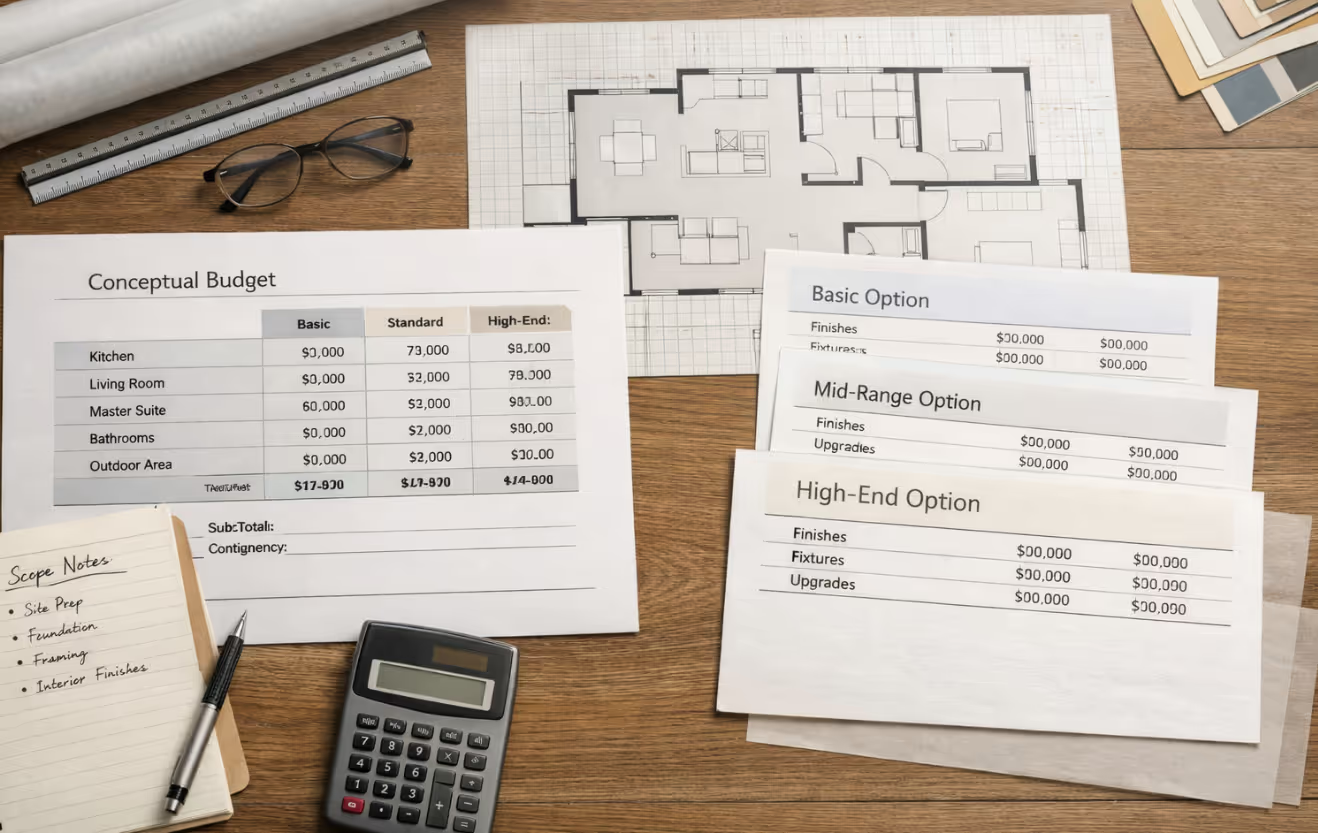
The first stage is the conceptual budget. This is typically created early in the design process using historical cost data and general assumptions. It provides a rough framework to determine whether the project is financially feasible.
At this stage, many items are still undefined. Allowances and estimated values are common, and the level of detail is limited. The purpose is not precision, but direction.
The second stage is preconstruction and design development. During this phase, drawings become more detailed, selections begin, and the scope is clarified. Subcontractors may start reviewing documents and providing preliminary input.
The third stage is the control estimate. This is a more detailed and reliable budget built using actual subcontractor bids, vendor pricing, and clearly defined scopes of work. It reflects current market conditions and is used as the working financial baseline for construction .
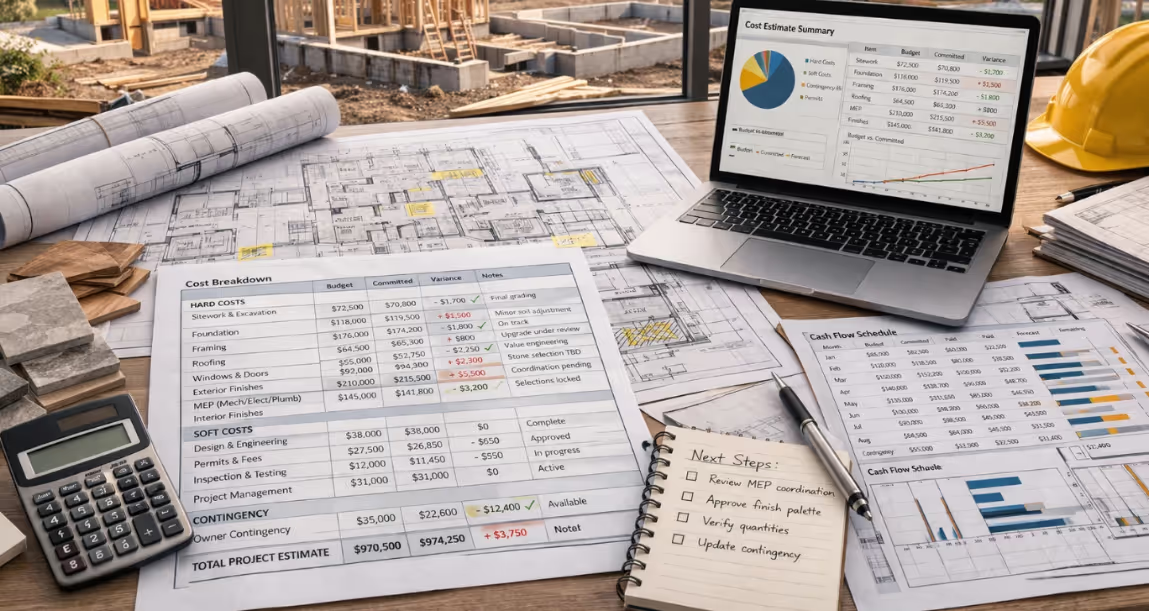
The final stage is construction tracking. As work progresses, costs are committed, invoices are processed, and the budget is updated to reflect actual spending and projected final cost.
- Conceptual budget: Early estimate based on assumptions and historical data.
- Design development: Increasing detail and early pricing input.
- Control estimate: Detailed budget built from real bids and defined scope.
- Construction tracking: Ongoing updates based on actual costs and changes.
Impact on cost and schedule
As the budget evolves, both cost and schedule become more predictable. Early in the process, uncertainty is higher because decisions are still being made. This can create a wider range of possible outcomes.
As selections are finalized and subcontractor bids are received, that range narrows. The project moves from a flexible planning phase to a more structured execution phase.
However, changes made later in the process can have a greater impact. Adjusting scope after contracts are in place or work is underway may affect both cost and schedule due to rework, coordination, or material lead times.
This is why early decision-making is valuable. It allows more of the budget to be defined before construction begins, reducing the likelihood of disruptive changes later.
Common delays
Delays in budget development are often tied to delayed decisions or incomplete information. When selections are postponed or drawings remain unresolved, the budget cannot fully transition from assumptions to actual pricing.
Another source of delay is waiting on subcontractor input. Detailed bids require clear drawings and defined scope. Without that, pricing may remain provisional or incomplete.
Changes during construction can also slow progress. While some changes are expected, frequent or late-stage adjustments can require re-pricing, re-coordination, and schedule adjustments.
Clear communication and timely decisions help keep both the budget and the schedule aligned as the project progresses.
- Delayed selections: Keeps allowances in place longer and delays accurate pricing.
- Incomplete drawings: Limits the ability to obtain reliable subcontractor bids.
- Late changes: Can increase cost and extend the schedule.
- Coordination gaps: Misalignment between design and construction teams slows progress.
What to prepare
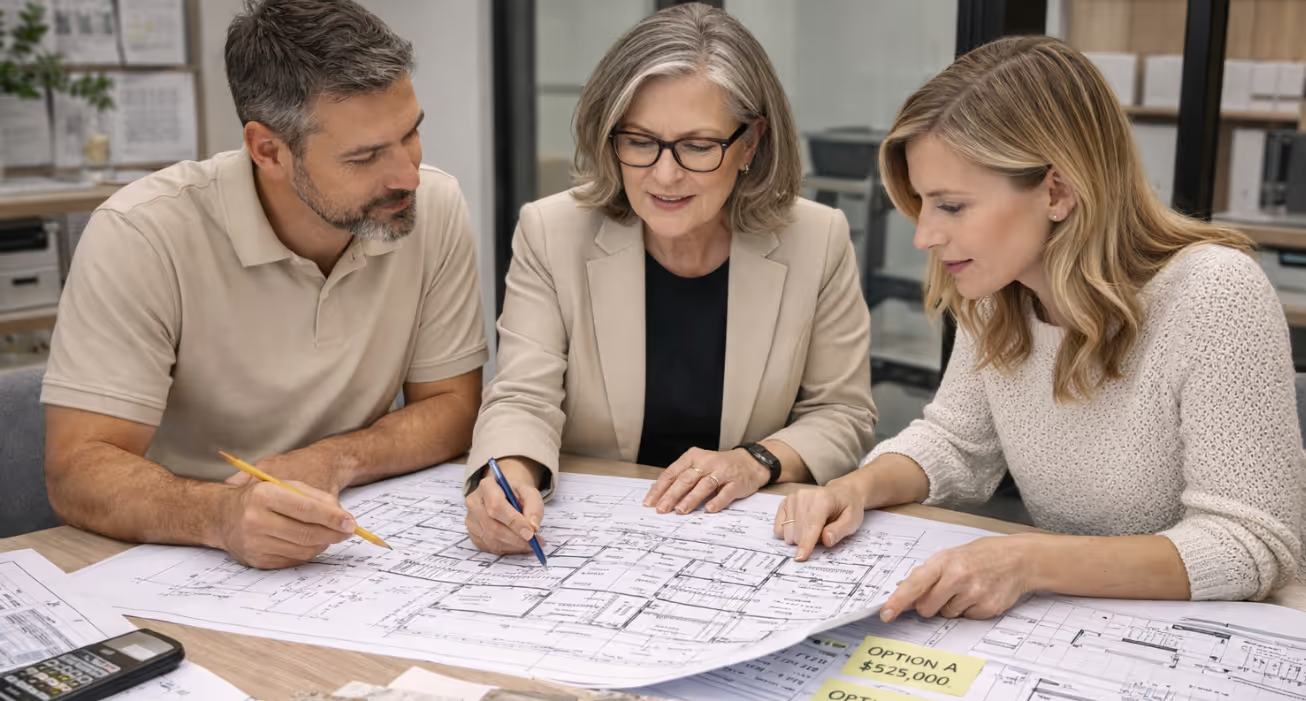
Homeowners can play an important role in how smoothly the budget evolves. Being prepared to make decisions and engage in the process helps reduce uncertainty and improve accuracy.
Understanding that early numbers will change is also important. This allows for more productive conversations about tradeoffs, priorities, and scope adjustments as the project develops.
It is helpful to focus on major cost drivers early. Kitchens, bathrooms, windows, structural systems, and exterior materials often have a significant impact on the budget. Clarifying these areas early improves overall control.
Finally, working within a structured process ensures that each stage builds on the previous one. This creates a clear path from concept to completion rather than a series of disconnected estimates.
The Clarity perspective: how Clarity Building Group handles this
At Clarity, the budget is intentionally developed in stages to reflect how custom projects actually progress. Early conceptual budgets provide a starting point based on historical data, but they are clearly identified as preliminary.
During preconstruction, the focus is on replacing assumptions with real information. Subcontractor bids, vendor pricing, and detailed scopes of work are used to build a control estimate that serves as the financial foundation for the project.
Multiple trade bids are obtained to validate pricing and ensure accuracy. This step is critical in transitioning from a theoretical budget to one grounded in current market conditions.
Once construction begins, ongoing tracking provides continuous visibility. Budget updates show committed costs, remaining scope, and predicted final cost, allowing homeowners to understand how the project is performing in real time .