
How long preconstruction should take and why
Setting realistic expectations for planning timelines
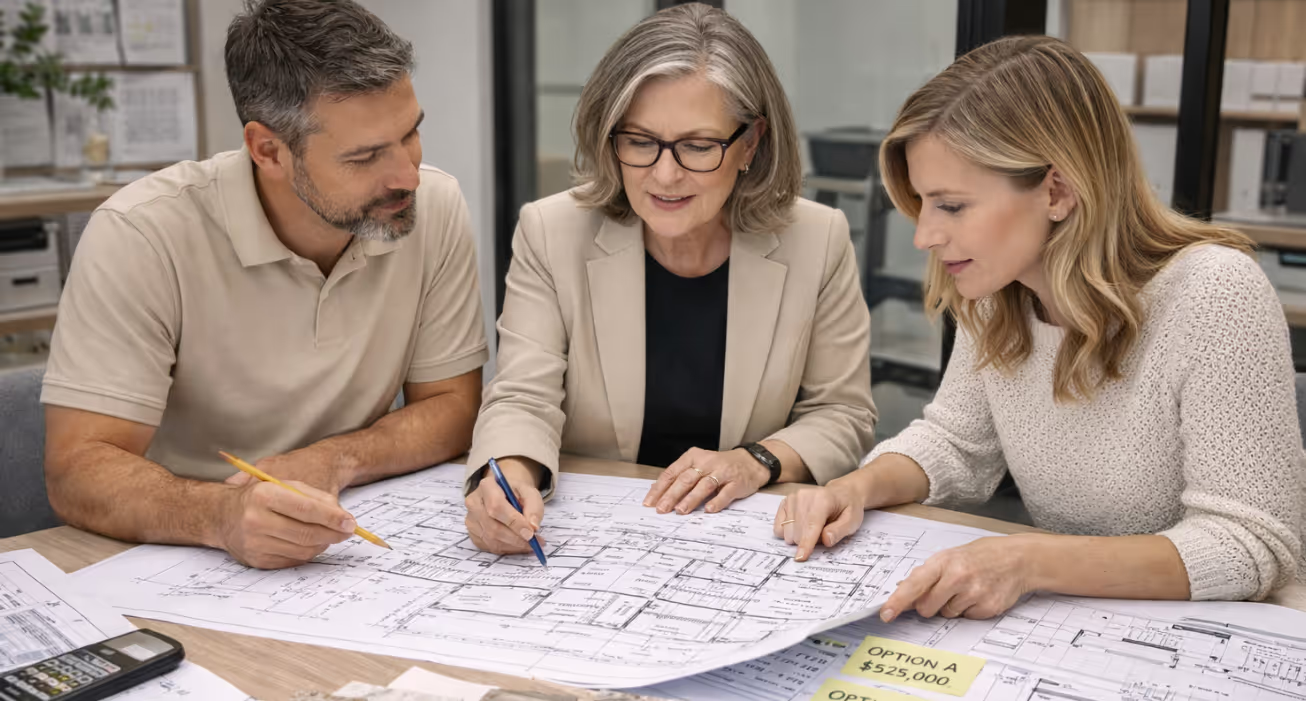
Preconstruction does not follow a fixed timeline. The duration depends on the complexity of the project, the number of decisions required, and how quickly those decisions are made.
While many projects fall within a general range, it is more useful to understand what drives the timeline than to focus on a specific number.
In this article
- Why preconstruction timelines vary
- Key factors that influence duration
- How revisions impact schedule
- Where delays typically occur
- How to plan realistically
Homeowners often expect preconstruction to move quickly once design begins. In reality, this phase involves coordination between multiple parties and a series of decisions that take time to resolve.
The timeline is shaped less by the process itself and more by how complex the project is and how efficiently decisions are made.
The short answer
Preconstruction can take a few months or significantly longer depending on the project. There is no single standard timeline.
The duration is driven by design development, consultant coordination, permitting requirements, and the number of revisions required to reach a final, buildable scope.
How this works step by step
Preconstruction progresses through a series of stages, each requiring input from different team members.
- Initial design development: Architectural concepts are refined into buildable drawings
- Consultant coordination: Engineers, designers, and specialists contribute to the project
- Budget alignment: Pricing is developed and compared to expectations
- Revisions and refinement: Adjustments are made to align scope, cost, and design
- Permitting: Documents are submitted and reviewed by the municipality
Each stage introduces opportunities for iteration, which directly affects the timeline.
Impact on cost and schedule
The length of preconstruction is closely tied to decision-making and alignment.
- Fewer revisions: Faster progression and earlier start of construction
- Multiple redesign cycles: Extended timeline as pricing and drawings are repeatedly updated
One of the most significant factors is what happens after initial pricing is delivered. If the project aligns with the budget, it can move forward quickly. If not, redesign and value engineering may be required, which adds time.
This iterative process is normal, but it should be expected and planned for.
Common delays
Delays in preconstruction are usually tied to complexity and coordination rather than inefficiency.
- Number of consultants: Structural engineers, site engineers, interior designers, and others all contribute to the timeline
- Design revisions: Multiple iterations to reach a final version of the project
- Site conditions: Additional analysis required for grading, drainage, or subsurface issues
- Permitting challenges: Zoning reviews, variances, and municipal approval processes
- Decision changes: Adjustments made after pricing is completed
These factors compound. A complex site combined with multiple revisions and permitting hurdles can significantly extend the timeline.
What to prepare
While timelines cannot be fixed, they can be managed by setting expectations and preparing accordingly.
- Engage the full team early: Architects, engineers, and designers working in coordination
- Make decisions promptly: Delays often come from unresolved selections or scope questions
- Expect iteration: Budget alignment may require one or more rounds of revision
- Understand permitting risk: Some municipalities require additional approvals that extend timelines
A well-prepared project does not eliminate time, but it reduces unnecessary delays.
The Clarity perspective: how Clarity Building Group handles this
Preconstruction is treated as a structured, multi-stage process with defined checkpoints. The goal is to move from broad assumptions to detailed, reliable information.
Early in the process, conceptual budgets are used to establish direction. As the design develops, subcontractor input and detailed scopes are introduced to build a Control Estimate based on real pricing.
Multiple bids are obtained for key trades, and revisions are tracked to understand their impact on both cost and schedule.
Throughout preconstruction, timelines are monitored alongside budget updates. This allows the team to identify when additional time is being introduced and why, creating transparency and control as the project moves toward construction.