What is preconstruction and why it is critical to project success
The phase that defines cost, scope, and risk

Preconstruction is the most important phase of a custom home project, even though no physical construction has started. It is where the project is defined, tested, and aligned before work begins in the field.
This phase determines how well the project will perform in terms of cost, schedule, and overall experience. A well-executed preconstruction process reduces uncertainty and prevents problems later.
In this article
- What preconstruction includes
- Why it has the greatest impact on outcomes
- How scope and cost are defined
- What happens when it is skipped or rushed
Context
Many homeowners assume that construction is the most critical part of a project. In reality, the success of construction is largely determined before it begins.
Preconstruction is where decisions are made, details are defined, and risks are identified. It connects design with execution.
Without this phase, construction becomes a process of reacting to unknowns rather than executing a clear plan.
The short answer
Preconstruction defines the project before building begins by aligning design, cost, and scope.
It reduces reliance on assumptions and replaces them with real information.
This creates a more predictable and controlled construction process.
How this works step by step
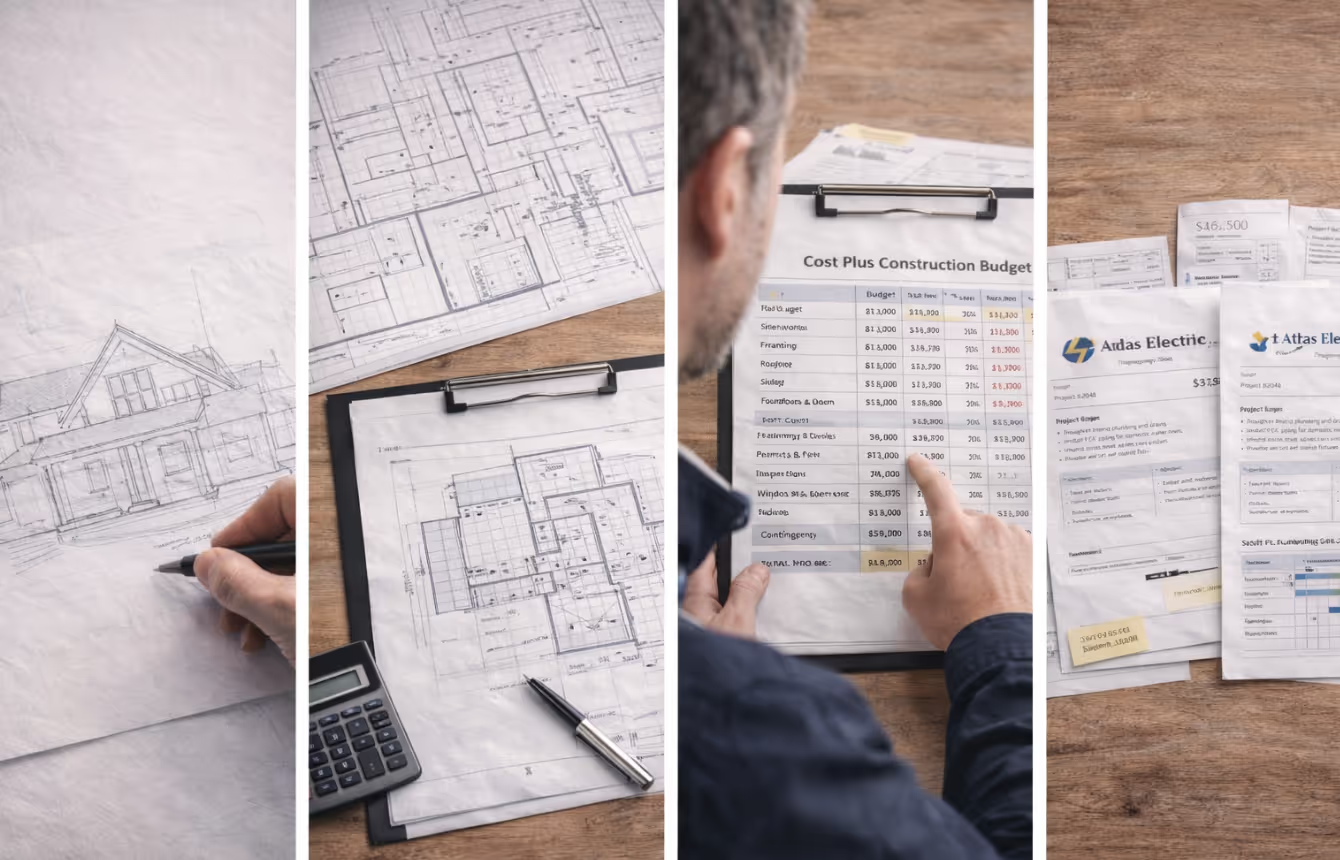
Preconstruction begins with early design and conceptual budgeting, where high-level costs are aligned with the initial vision.
As design develops, scope is expanded and clarified through detailed discussions and documentation.
Bid packages are then created for each trade, allowing subcontractors to price clearly defined work.
The process culminates in a control estimate based on real pricing and defined scope.
- Conceptual budgeting: Establishing early cost ranges.
- Scope development: Defining details and expectations.
- Bid packages: Creating clear instructions for trades.
- Control estimate: Real pricing based on defined work.
Why this phase matters most
Preconstruction is where the majority of decisions are made at the lowest cost of change. Adjustments during this phase are relatively easy and inexpensive.
Once construction begins, changes become more complex and costly. This is why investing time and effort upfront has such a significant impact.
It also allows the team to identify risks early and address them before they affect the project.
The result is a smoother construction phase with fewer surprises.
- Early decisions: Made before work begins.
- Lower cost of change: Easier to adjust during planning.
- Risk identification: Issues addressed proactively.
- Improved clarity: Defined expectations for all parties.
How scope and cost are defined
During preconstruction, scope is developed in detail so that each part of the project is clearly understood. This includes materials, systems, and specifications.
Rather than relying on allowances, the goal is to replace placeholders with real decisions and pricing.
Multiple bids are obtained for each trade, allowing the team to understand market pricing and select the right partners.
This creates a budget that reflects actual conditions rather than assumptions.
- Detailed scope: Clearly defined work for each trade.
- Reduced allowances: Replacing placeholders with decisions.
- Multiple bids: Establishing market pricing.
- Cost alignment: Budget reflects real scope.
What happens when it is rushed
When preconstruction is rushed or incomplete, the project enters construction with unresolved decisions and unclear scope.
This leads to reliance on allowances, assumptions, and reactive problem-solving.
Cost increases and schedule delays become more likely, as issues are addressed after work has already begun.
The project becomes less predictable and more difficult to manage.
- Missing scope: Undefined work leads to gaps.
- Increased allowances: More uncertainty in budget.
- Reactive process: Decisions made during construction.
- Higher risk: Greater chance of overruns and delays.
What to prepare
Homeowners should be prepared to invest time in the preconstruction phase. This includes engaging in design decisions, reviewing options, and aligning expectations with the team.
It is also important to work with a builder who has a structured process for developing scope and cost.
Understanding that this phase sets the foundation for the entire project helps prioritize it appropriately.
A strong start leads to a smoother finish.
The Clarity perspective: how Clarity Building Group handles this
At Clarity, preconstruction is a structured and detailed process that defines the project before construction begins. The team works closely with the architect and homeowner to develop scope through detailed bid packages.
Subcontractor bids are obtained and compared, creating a control estimate based on real pricing.
Options and alternates are clearly defined and priced, allowing informed decisions before committing to construction.
This approach reduces uncertainty, improves cost accuracy, and sets the project up for a more controlled and predictable build phase.