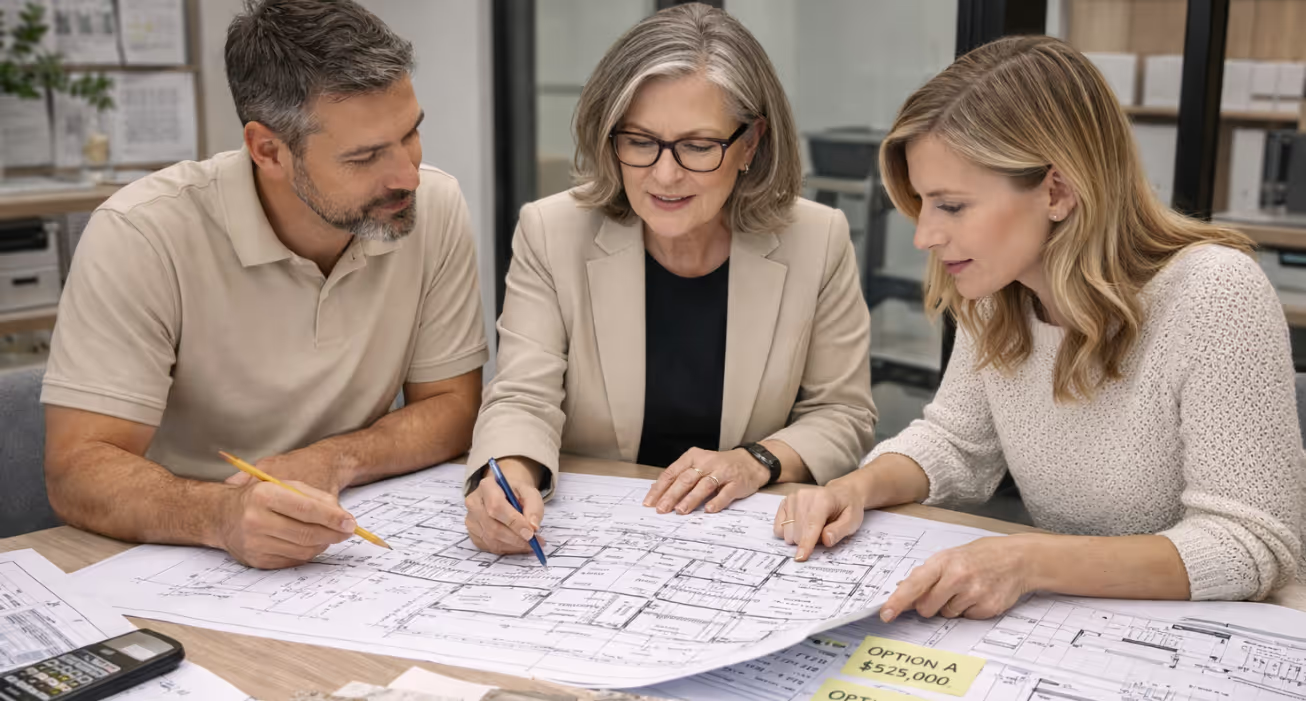
What consultants are needed for a high-end residential project
Engineers, surveyors, and specialists explained

High-end residential projects require more than just an architect and builder. A range of specialized consultants contribute to the design, engineering, and execution of the home.
These consultants add the level of detail needed to move from concept to a fully defined project, improving both pricing accuracy and construction outcomes.
In this article
- Which consultants are typically required
- What each consultant contributes
- How they fit into preconstruction
- Why coordination between them matters
Context
As discussed in the preconstruction process, the success of a project depends on how well scope is defined before construction begins.
This level of detail is not created by a single professional. It is the result of multiple experts contributing their knowledge to different aspects of the project.
The more complex the project, the more important this team becomes.
The short answer
High-end projects require a team of consultants including engineers, designers, and technical specialists who define structure, systems, and detailed design elements.
Each consultant reduces uncertainty and improves the accuracy of pricing and execution.
Coordination between them is essential.
Who is involved
A typical high-end residential project includes a range of consultants beyond the architect and builder. Each plays a specific role in developing the project.
These professionals contribute technical expertise, design input, and system coordination that cannot be captured by a single discipline.
The exact team will vary depending on the scope and complexity of the project.
However, several core roles are consistently required.
- Structural engineer: Designs the structural systems of the home.
- Civil or site engineer: Handles grading, drainage, and utilities.
- Surveyor: Establishes property boundaries and site data.
- Landscape architect: Designs outdoor spaces and site integration.
- Interior designer: Guides finishes, layouts, and selections.
- Lighting designer: Develops lighting plans and fixture integration.
- Audio video and HiFi specialist: Plans integrated technology systems.
What each consultant contributes
Each consultant adds a layer of detail that improves the overall clarity of the project. These contributions reduce assumptions and allow for more accurate pricing.
For example, structural engineers define how the building is constructed, while lighting designers shape how spaces are experienced.
Audio and technology consultants ensure that infrastructure is in place for modern systems, which must often be coordinated early in construction.
These inputs collectively define the full scope of the project.
- Engineering: Structural integrity and site performance.
- Design: Interior and exterior experience.
- Systems: Lighting, audio, and technology integration.
- Documentation: Detailed information for construction.
How this fits into preconstruction
Consultants are most effective when they are involved during preconstruction. This allows their input to be integrated into the design before bidding and construction begin.
As each consultant contributes, the project becomes more defined. This reduces reliance on allowances and improves the accuracy of the budget.
It also allows for coordination between disciplines, preventing conflicts during construction.
The result is a more complete and reliable set of documents.
- Early involvement: Input integrated during design.
- Scope definition: Reducing unknowns.
- Coordination: Aligning multiple disciplines.
- Accurate pricing: Better information for bidding.
Why coordination matters
Having the right consultants is only part of the equation. Their work must also be coordinated to ensure that all systems and design elements align.
For example, lighting design must align with architectural details and electrical systems. Audio systems must be coordinated with framing and finishes.
Without coordination, conflicts can arise that lead to rework or design compromises.
A well-managed team ensures that all contributions work together.
- System integration: Aligning technical components.
- Design consistency: Maintaining a cohesive vision.
- Conflict reduction: Avoiding rework.
- Execution clarity: Clear instructions for construction.
Common mistakes
A common mistake is delaying consultant involvement until after key decisions have been made. This can result in redesign or missed coordination opportunities.
Another issue is selecting consultants without experience in projects of similar scale, which can lead to incomplete or inconsistent documentation.
Some projects also fail to coordinate between consultants, treating each discipline independently.
These patterns increase risk.
- Late involvement: Consultants brought in too late.
- Inexperienced team: Limited exposure to complex projects.
- Poor coordination: Disciplines not aligned.
- Incomplete scope: Missing details in documentation.
What to prepare
Homeowners should be prepared to assemble a team of consultants based on recommendations from the architect and builder. These professionals are typically selected for their experience and ability to collaborate.
It is also important to understand how each consultant contributes to the overall project and when their input is required.
Engaging the full team early supports better outcomes.
This preparation helps ensure that the project is fully defined before construction begins.
The Clarity perspective: how Clarity Building Group handles this
At Clarity, consultant coordination is a key part of the preconstruction process. The team works with architects and consultants to ensure that all aspects of the project are defined before bidding.
Detailed bid packages incorporate input from each discipline, creating a clear and coordinated scope of work.
This reduces ambiguity and allows subcontractors to price the project accurately.
By aligning all consultants early, Clarity helps create a more predictable and well-coordinated construction process.