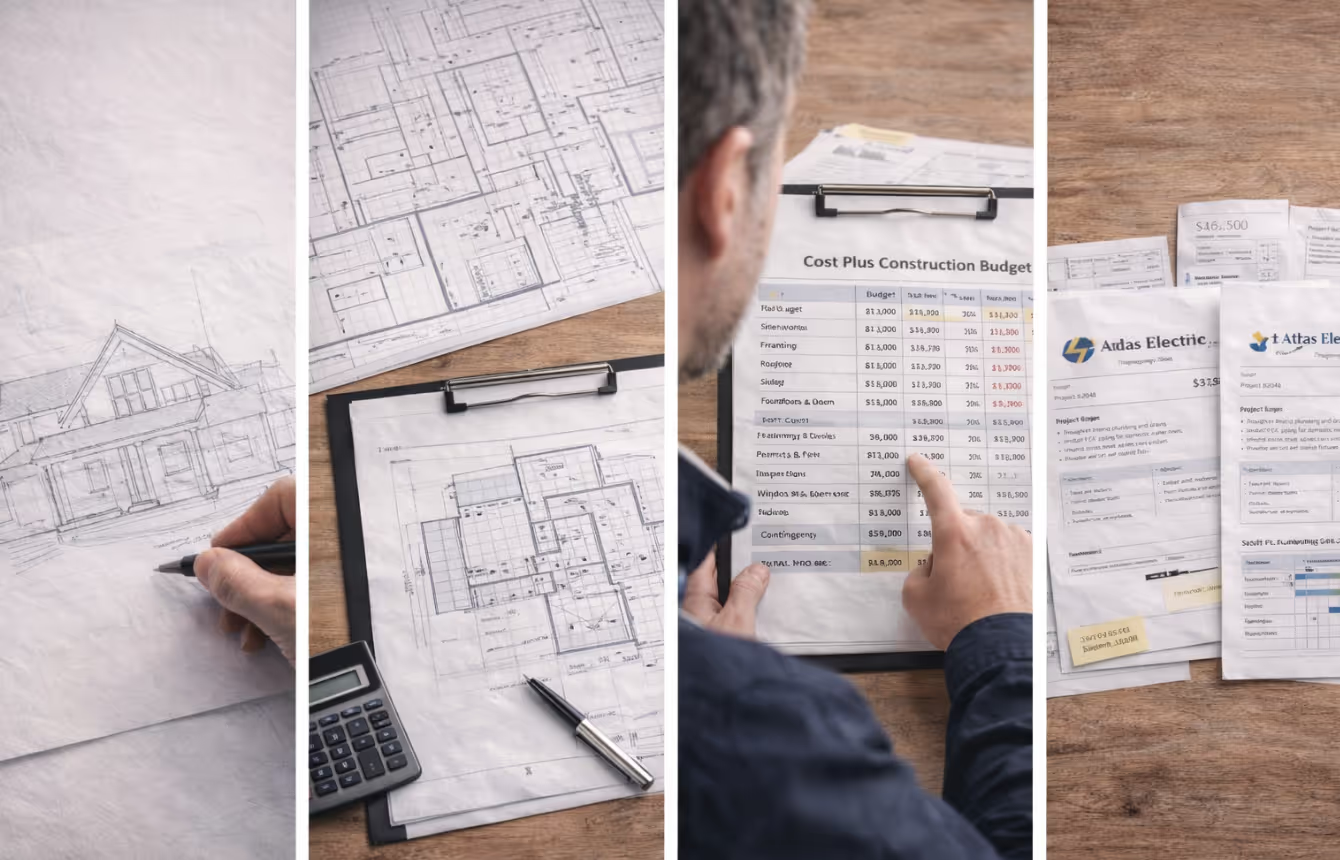
How to prepare your project for accurate pricing
What needs to be defined before bidding

Accurate construction pricing is not achieved by asking for numbers earlier. It is achieved by making more decisions before pricing begins.
The level of detail in your drawings and selections directly determines how reliable your pricing will be. Incomplete information leads to allowances, assumptions, and variability.
In this article
- What defines a "ready to price" project
- Key decisions that impact accuracy
- How incomplete information affects bids
- What to coordinate before bidding
- How to reduce pricing uncertainty
Many projects go out to bid before the design is fully developed. This creates a situation where builders are forced to fill in gaps with assumptions.
The result is inconsistent pricing, hidden risk, and difficulty comparing proposals. Preparing the project properly before bidding changes this dynamic.
The short answer
A project is ready for accurate pricing when the design, selections, and site conditions are clearly defined. This allows builders to price the same scope of work with minimal assumptions.
Without this level of clarity, pricing will vary widely and require ongoing adjustment during construction.
How this works step by step
Preparing for accurate pricing is a structured process that aligns design decisions with documentation.
- Complete architectural drawings: Detailed plans, sections, and specifications that define the full scope
- Coordinated engineering: Structural, mechanical, and site systems fully integrated
- Defined selections: Fixtures, finishes, and equipment identified rather than assumed
- Site planning: Grading, drainage, and layout resolved before pricing
Each of these steps reduces ambiguity and allows subcontractors to provide more precise bids.
Impact on cost and schedule
The level of preparation directly affects both pricing accuracy and project timeline.
- Well-defined projects: More consistent bids, fewer allowances, smoother construction phase
- Poorly defined projects: Wide bid ranges, frequent changes, ongoing budget adjustments
When selections and details are not finalized, builders must include contingencies or allowances. These placeholders often shift later, making the initial budget less reliable.
Detailed documentation also improves scheduling. With clear information, materials can be ordered earlier and coordination issues are reduced.
Common delays
Delays in pricing and construction often trace back to incomplete preparation.
- Missing selections: Decisions made during construction instead of before bidding
- Unresolved design details: Gaps in drawings that require clarification
- Incomplete site planning: Stormwater or grading issues discovered late
- Lack of coordination: Disconnect between architect, engineer, and consultants
These issues create rework, additional meetings, and revised pricing.
What to prepare
To achieve accurate pricing, key decisions need to be made and documented before the project is sent out for bids.
- Architectural completeness: Work with an architect known for thorough, coordinated construction documents
- Appliance and fixture selections: Visit appliance and plumbing showrooms and have specific models identified in the drawings
- Window systems: Select window types and performance levels early to avoid allowances
- Kitchen design: Develop a detailed kitchen layout with a kitchen designer, including cabinetry and appliance integration
- Interior planning: Create a furniture plan with an interior designer to inform lighting layouts and electrical plans
- Site coordination: Work with a landscape architect and site engineer to resolve grading, drainage, and exterior layout
These steps ensure that the project being priced reflects real decisions, not placeholders.
The Clarity perspective: how Clarity Building Group handles this
Accurate pricing is built during preconstruction, not at the moment bids are received. The focus is on developing a complete and coordinated set of information before pricing begins.
During the conceptual budgeting phase, preliminary assumptions are used to establish a working budget. As design progresses, those assumptions are replaced with real selections and detailed scopes.
In preconstruction, multiple subcontractor bids are obtained based on fully developed drawings and specifications. This allows for true comparison and validation of costs.
Ongoing budget tracking ensures that as decisions are finalized, their impact is reflected immediately. This structured approach reduces surprises and creates a more predictable construction process.