What is a Conceptual Budget and how accurate is it?
How early-stage budgets are built and what they can reliably predict
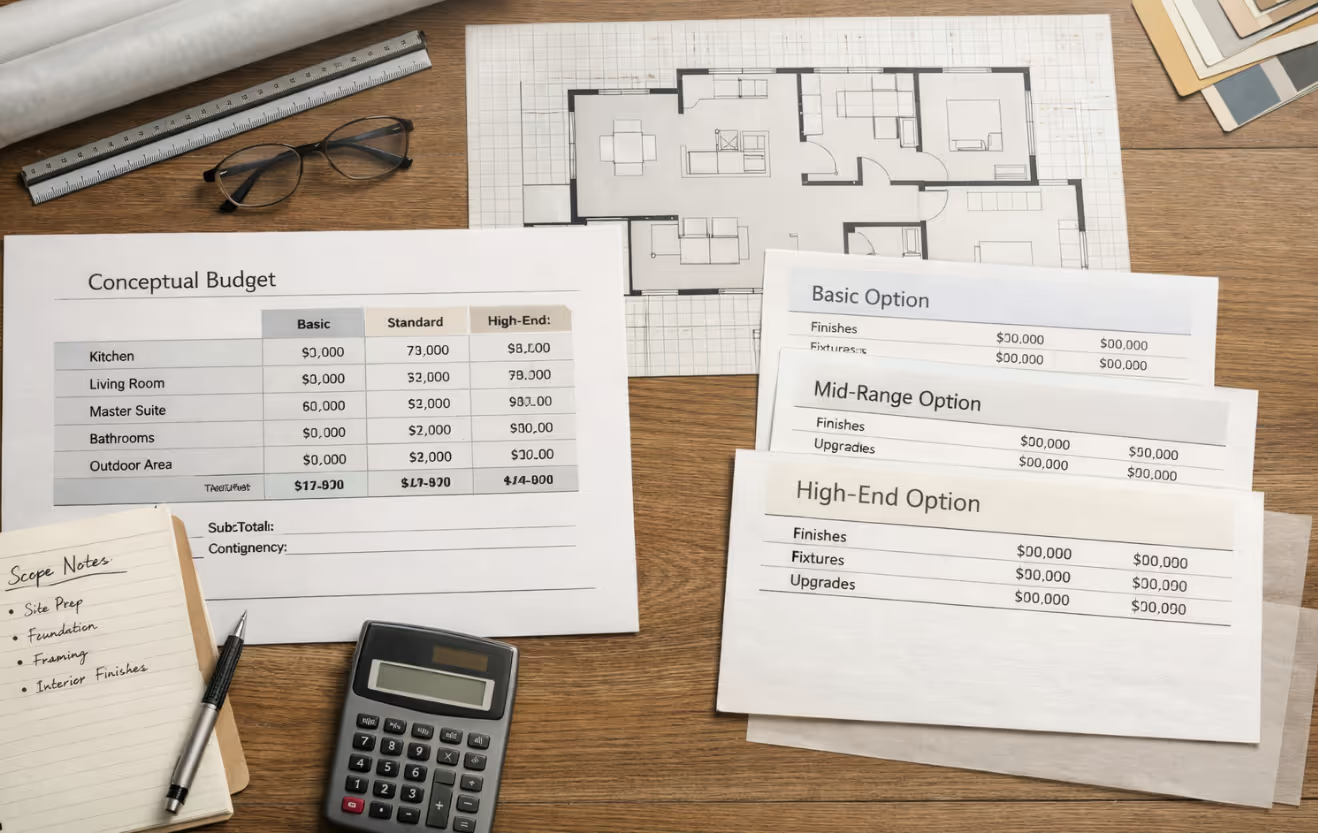
A conceptual budget is an early pricing tool used to test whether a project is broadly aligned with the homeowner's goals before detailed pricing work begins. It is meant to establish direction, not lock in a final construction cost.
Its accuracy depends on how much is known at the time it is prepared. It can reliably indicate whether a project is likely in the right range, but it cannot yet account for every design decision, trade condition, or subcontractor price.
In this article
- What a conceptual budget is designed to do
- What makes early budget ranges more or less reliable
- How to use a conceptual budget without overreading it
- Where owners often misunderstand early pricing
- What should happen before moving to a control estimate
Why this is a common question and why it is complicated
Most homeowners want to understand cost before they commit to a long design and preconstruction process. That is reasonable. The challenge is that meaningful construction pricing usually depends on information that does not fully exist at the beginning of a project.
At the conceptual stage, drawings are often incomplete, selections are still open, and important site or structural questions may not yet be resolved. That means the budget has to be built from prior cost experience, project type, scale, likely quality level, and informed assumptions rather than final trade pricing.
This is why a conceptual budget is valuable but limited. It helps you decide whether to keep moving, pause, simplify, or adjust expectations, but it should not be treated like a guaranteed construction number.
The short answer
A conceptual budget is an early-stage cost model that uses historical pricing, preliminary scope, and assumptions to estimate a probable project range. Its main purpose is to help owners and designers assess feasibility before the project is fully developed.
In practice, it is often accurate enough to show whether a project is generally viable, but not accurate enough to commit contracts, compare final builder proposals, or forecast the exact end cost. The more incomplete the design, the wider the reasonable margin for change.
For a serious architect-led residential project, the conceptual budget is best understood as a planning tool. It gives direction and helps frame decisions, but it does not replace the more detailed work that follows in preconstruction.
What drives the outcome
The usefulness of a conceptual budget depends less on the spreadsheet itself and more on the quality of the assumptions behind it. Early budgets become more reliable when the project scope is clearly described, the level of finish is understood, and the team is realistic about complexity.
They become less reliable when owners assume that square footage alone determines cost, when design details are still highly fluid, or when key project conditions are still unknown. Existing homes add another layer of uncertainty because hidden conditions can materially change scope.
- Scope definition: The clearer the room-by-room or assembly-by-assembly intent, the more grounded the budget can be.
- Quality level: Fixture, finish, window, cabinetry, and detailing expectations can move cost significantly even when the floor area stays the same.
- Project complexity: Structural changes, difficult sequencing, additions to older homes, and custom detailing reduce predictability.
- Allowances and assumptions: Placeholder numbers are useful, but they create movement later if actual selections land above or below those assumptions.
- Site and existing conditions: Renovation work often includes concealed conditions that are not visible during early pricing.
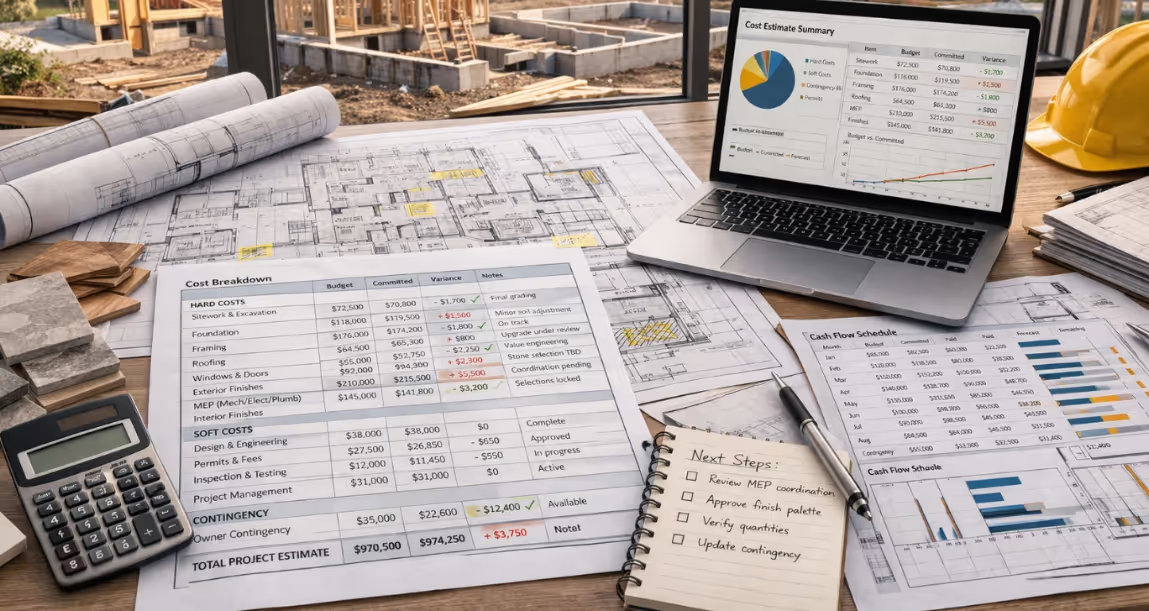
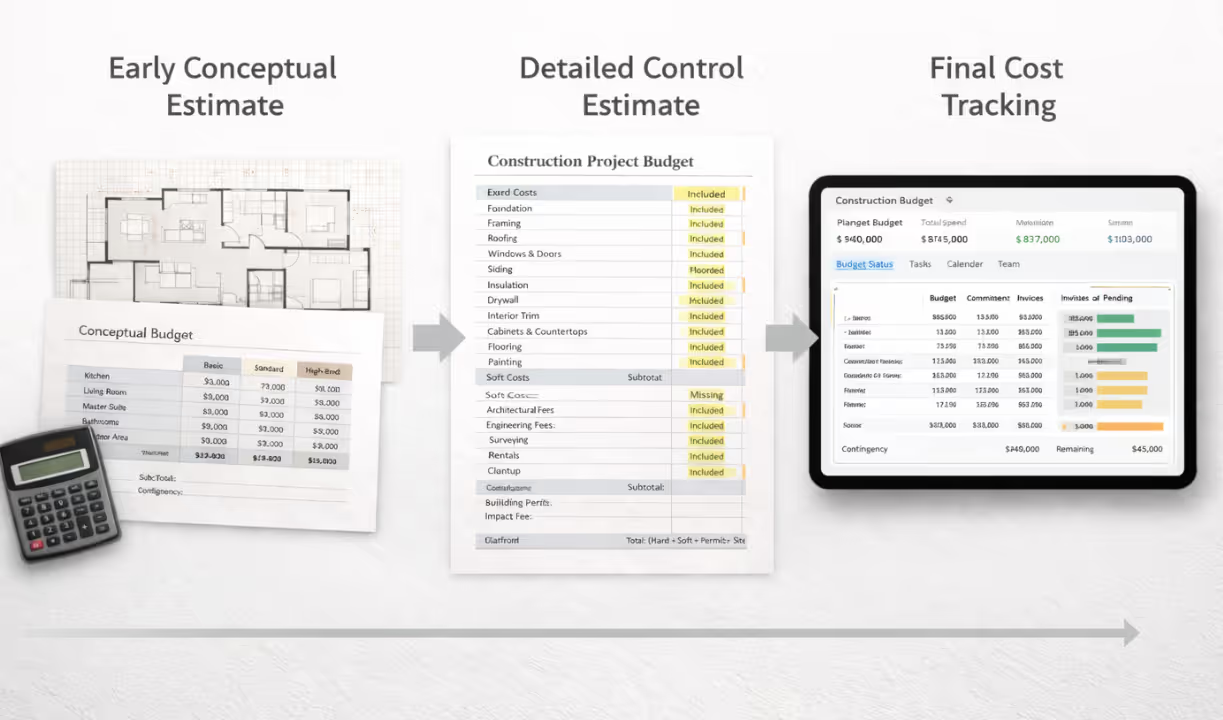
Clarity's own process reflects this distinction. The conceptual budget stage is used to get a sense for cost using historical pricing rather than subcontractor bids, while the more detailed control estimate is built later through formal preconstruction and trade pricing.
What this means in practice
A good conceptual budget should help answer a practical question: is this project direction financially realistic enough to continue developing? That is its job. It is not supposed to answer every pricing question with final precision.
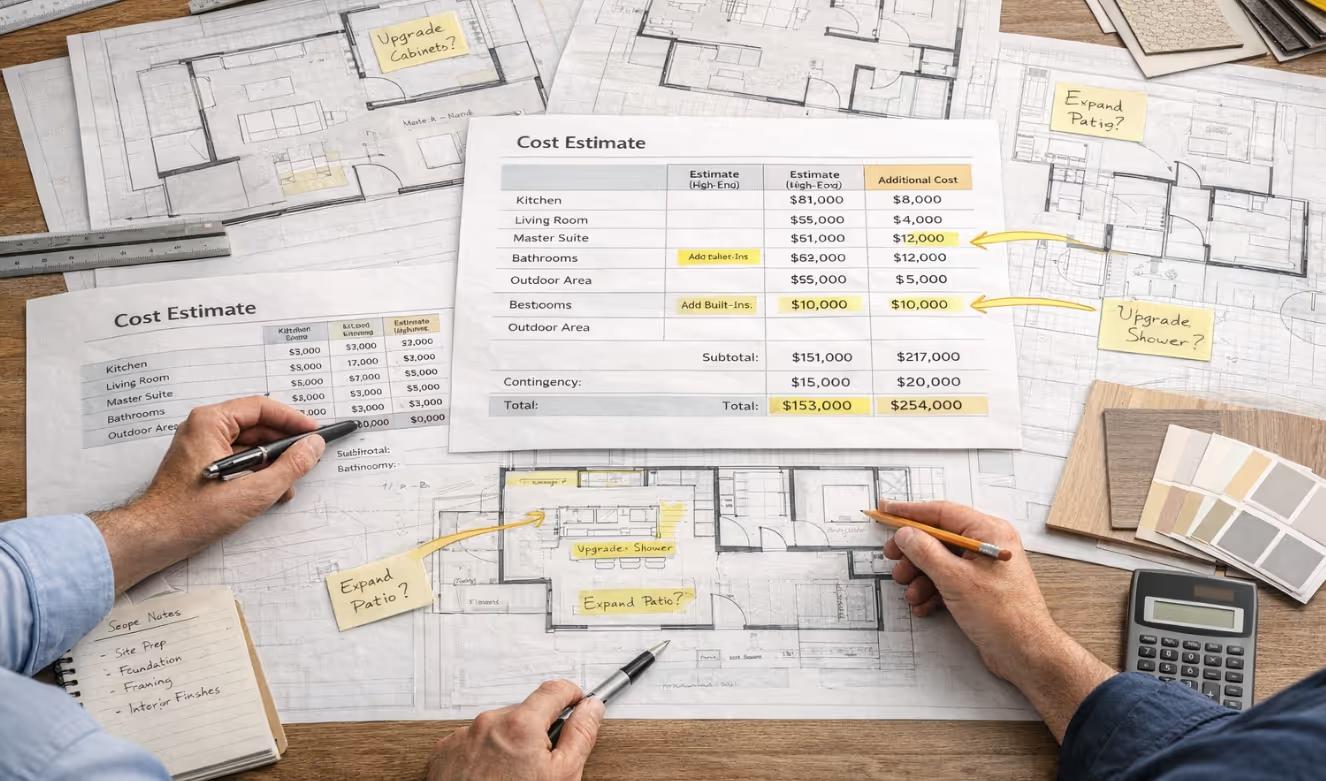
In practice, strong conceptual budgets often present cost in ranges or tiers rather than a single overconfident number. That is a more honest way to show how finish level, customization, and scope choices may affect the outcome. It also helps owners compare a lower-assumption version of the project to a more custom version.
That early range can be very useful for decision-making. It may confirm that the current concept is workable, show that savings need to be found, or indicate that the design intent and available budget are materially out of alignment.
- For owners: Use it to decide whether to proceed, simplify, phase work, or revisit expectations.
- For architects: Use it to pressure-test the design direction before substantial additional drawing time is invested.
- For the builder: Use it to frame likely cost drivers and identify where more detail will matter most in the next stage.
Common mistakes or misconceptions
The most common mistake is treating a conceptual budget as though it were a fixed commitment. That usually leads to frustration later, not because the budget was useless, but because it was asked to do a job it was never designed to do.
Another common problem is comparing one builder's conceptual budget to another builder's detailed estimate as though they are equivalent. They are not. The stage of information, the assumptions, and the pricing method matter just as much as the total.
Homeowners also sometimes focus on the bottom-line number without reviewing what is excluded, eliminated, or assumed. Early budgets can appear comparable while actually covering different scopes, quality standards, or levels of completeness.
- Misreading precision: A detailed-looking spreadsheet can still be based on early assumptions rather than market-tested bids.
- Ignoring exclusions: Missing soft costs, owner-supplied items, site work, or design upgrades can distort the apparent total.
- Assuming all builders budget the same way: Two early budgets may use very different assumptions, which makes direct comparison unreliable.
- Locking in selections too late: The longer major finish and scope decisions remain open, the more likely the budget will move.
What to ask before moving forward
Before relying on a conceptual budget, owners should understand what information it is based on, what is still unknown, and what level of variation should be expected. That conversation is often more useful than debating whether the number is exactly right.
It is also important to ask what the next pricing milestone will be and what must happen to get there. A conceptual budget should lead into a more disciplined preconstruction process, not serve as the final answer indefinitely.
- What assumptions are driving this number? Ask where allowances, historical pricing, and unknowns are carrying the budget.
- What is not included yet? Clarify exclusions, alternates, owner-supplied items, and unresolved design elements.
- How much design detail is still missing? The answer affects how stable or unstable the range really is.
- What will be priced with real bids later? This shows how the project will move from planning numbers to actual market pricing.
- When should a control estimate be prepared? That helps define the transition from early feasibility to true budget control.
The Clarity perspective: how Clarity Building Group handles this
Clarity treats the conceptual budget as an early decision-making tool, not as a substitute for full preconstruction. At this stage, pricing is built from historical cost knowledge and structured assumptions so the owner can understand the likely range before investing in a deeper estimating process.
That approach is paired with preconstruction discipline. As the project moves forward, Clarity shifts from conceptual pricing into a more rigorous process that includes design development, scope clarification, permit coordination, and formal budgeting. The goal is to reduce uncertainty before construction begins.
Budget transparency is central to that transition. Instead of treating cost as a single opaque number, Clarity breaks work into categories, identifies assumptions, and then refines those categories as better information becomes available. Multiple subcontractor bids are obtained during the control estimate stage so pricing reflects actual market conditions rather than historical averages alone.
Once construction begins, ongoing cost tracking continues that same logic. Budget updates, draw requests, and open-book reporting allow the owner to see how committed costs, remaining purchases, and approved changes affect the predicted final cost over time. That is the difference between an early planning budget and an actively managed project budget.