How changes are handled in cost-plus vs fixed price
Managing design changes without losing control of the budget

Changes are a normal part of custom residential construction. The difference is not whether changes happen, but how they are managed, priced, and communicated.
Cost-plus and fixed price contracts handle changes very differently. One uses a structured, transparent process that evolves over time, while the other typically relies on a single-step change order after the fact.
In this article
- How changes are handled in cost-plus projects
- How fixed price change orders typically work
- Why process structure matters for cost control
- How to evaluate change management approaches
Context
In architect-led residential projects, changes are often part of refining the design. Ideas emerge during construction as homeowners see the space take shape, or as new opportunities are identified.
These changes can range from small adjustments to significant scope additions. Without a clear process, they can quickly create confusion around cost and impact.
The way a project handles these moments has a direct effect on budget control, decision-making, and overall experience.
The short answer
In cost-plus projects, changes are tracked through a multi-step, transparent process that moves from idea to conceptual pricing to final approved cost.
In fixed price projects, changes are typically handled as a single-step change order after pricing is determined, often leading to reactive decisions and negotiation.
The difference is not just administrative. It affects how clearly costs are understood and how proactively decisions can be made.
How these options differ
Cost-plus projects treat changes as a progression rather than a single event. Each step is documented and visible, allowing homeowners to understand how an idea evolves into a committed cost.
Fixed price projects tend to compress this process. A change is identified, priced, and presented as a single number, often after the scope has already been discussed or assumed.
This difference impacts timing and clarity. In cost-plus, cost awareness begins early. In fixed price, cost is often revealed later in the process.
It also affects collaboration. A structured process allows for discussion and refinement before commitment, rather than negotiation after pricing is presented.
- Cost-plus approach: Multi-step process with ongoing visibility.
- Fixed price approach: Single-step pricing after scope is defined.
- Timing: Cost-plus introduces cost early, fixed price later.
- Decision style: Cost-plus supports evaluation, fixed price often leads to negotiation.
Where each works best
Cost-plus change management works best in projects where design is evolving and decisions continue during construction. It allows ideas to be explored without immediately committing to cost.
Fixed price change orders work best in projects with limited changes or where scope is tightly controlled from the start.
In complex projects, the ability to evaluate changes before committing can be a significant advantage.
The more dynamic the project, the more valuable a structured change process becomes.
Where each breaks down
Cost-plus processes can break down if they are not consistently documented. Without clear tracking at each stage, it can become difficult to follow how a change developed.
Fixed price change orders can break down when pricing feels disconnected from earlier discussions. Because cost is presented as a final number, there may be limited opportunity to adjust scope before committing.
This can lead to reactive decisions or extended negotiation, particularly if the cost is higher than expected.
Both approaches require discipline, but the structure of the process makes a significant difference in outcomes.
- Cost-plus risk: Requires consistent documentation and tracking.
- Fixed price risk: Can feel reactive and less transparent.
- Limited flexibility: Fixed price changes are harder to refine.
- Process clarity: Strong systems are essential in both models.
How to evaluate
To evaluate how a builder handles changes, look at how early cost information is introduced. A strong process will show cost implications before decisions are finalized.
It is also important to understand how changes are tracked. Clear categories such as proposed, quoted, and approved help maintain visibility.
Ask how documentation is handled. Daily logs, budget updates, and formal approvals should all play a role in tracking changes.
Finally, consider how decisions are made. A process that allows for review and discussion before commitment provides more control than one that presents a final number after the fact.
The Clarity perspective: how Clarity Building Group handles this
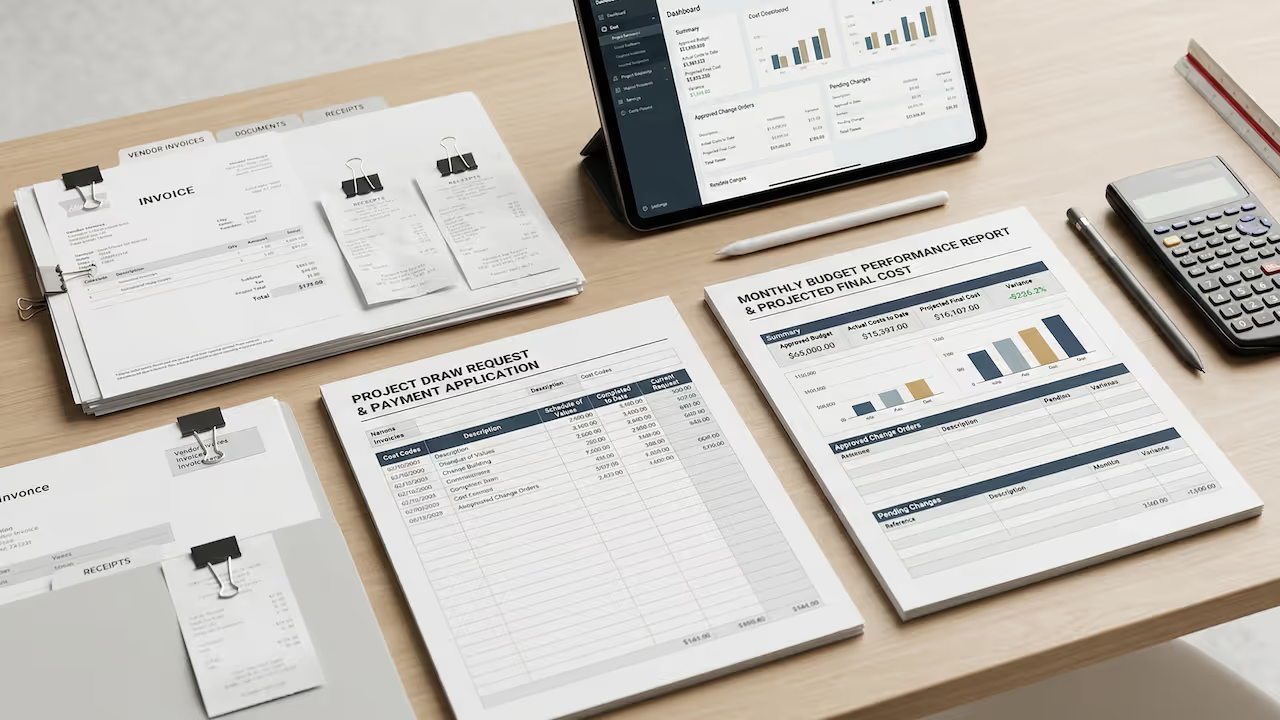
At Clarity, changes are managed through a transparent, multi-step process that is documented from the moment an idea is introduced through final approval. This process is reflected in ongoing budget updates and project reporting .
When a new idea is first discussed, it is documented in the daily log on the same day. This creates an initial record of the concept and ensures that it is visible from the beginning.
As the idea is explored, it is incorporated into the monthly budget update under proposed changes. At this stage, conceptual costs may be included to help evaluate feasibility before committing to a specific solution.
Once the scope is defined, subcontractor bids or vendor quotes are obtained. These provide real pricing based on clearly defined work, moving the change from a concept to a concrete cost.
The proposed cost is then presented for approval. No money is committed until the homeowner reviews and authorizes the change. Once approved, it is moved to the approved changes section of the budget update, where it becomes part of the tracked project cost.
This structured progression from idea to approved cost provides clarity at every step. It allows homeowners to understand how decisions impact the budget before committing, rather than reacting to a single change order after pricing is complete.
Compared to the typical fixed price approach, which often condenses changes into a one-step pricing and approval process, this method provides greater visibility, reduces surprises, and supports more informed decision-making throughout the project.