What is a cost-plus construction contract?
A clear explanation of how cost-plus pricing actually works
A cost-plus construction contract is a pricing model where the homeowner pays the actual cost of building the project plus a defined builder's fee. Instead of a fixed total price, costs are tracked and billed as they occur.
This approach is commonly used in custom residential construction because it allows for flexibility, transparency, and collaboration as the design and scope evolve.
In this article
- What a cost-plus contract is and how it works
- How costs and fees are structured
- Why this model is used in custom construction
- What to expect during the project
Context
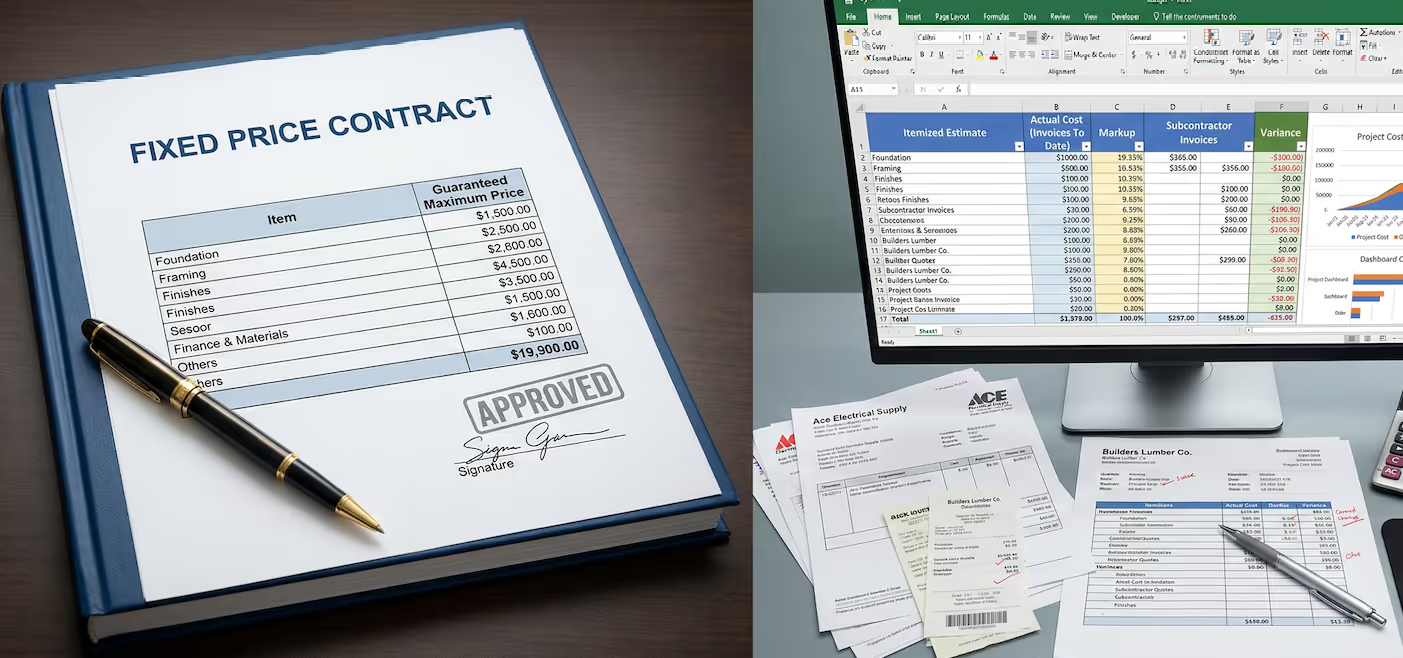
Many homeowners are more familiar with fixed-price contracts, where a builder provides a single number to complete the work. That model works best when scope is fully defined and unlikely to change.
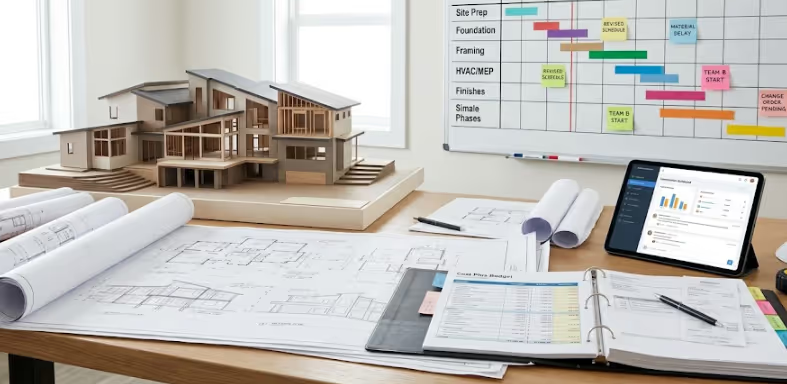
Custom residential projects are different. Design decisions often continue through preconstruction and even into construction. Conditions may evolve, and homeowners may refine selections along the way.
A cost-plus contract is designed to accommodate that reality. It allows the project to move forward while maintaining visibility into actual costs.
The short answer
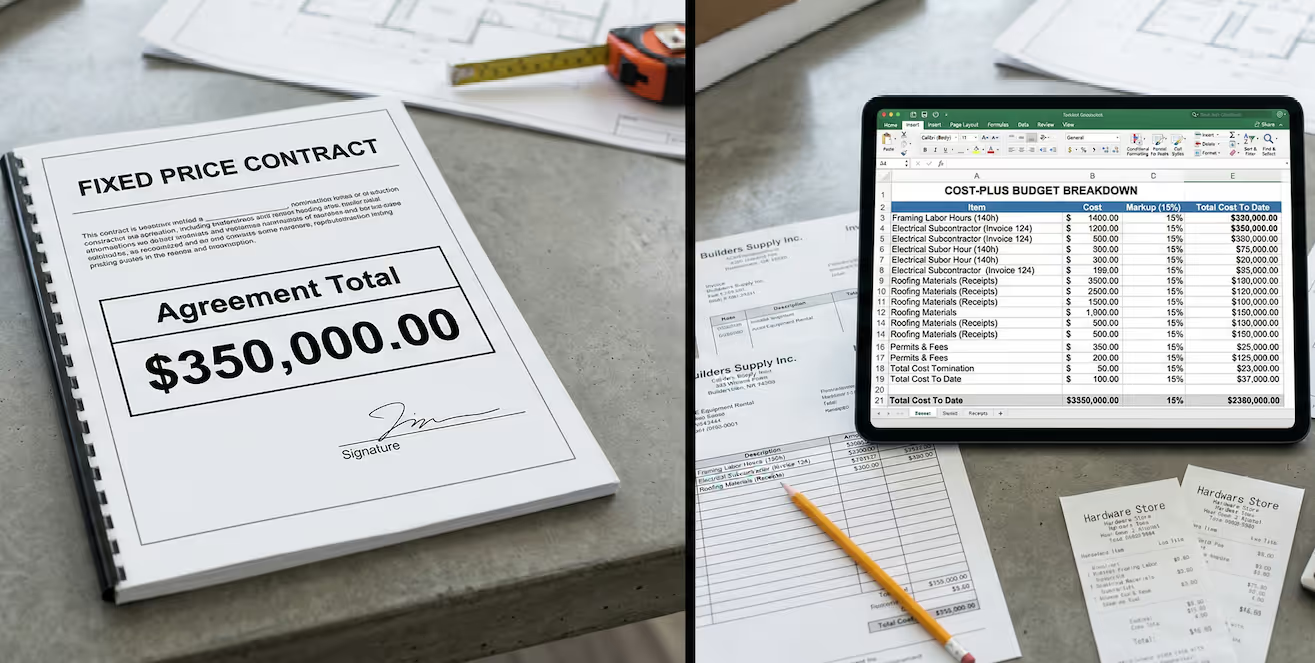
In a cost-plus contract, you pay for the real cost of labor, materials, subcontractors, and project expenses, plus a builder's fee for managing the work.
There is no fixed total price at the start. Instead, the total cost is the sum of actual project costs as they are incurred.
This creates transparency and flexibility, but also requires a structured process to track and manage the budget.
How this works step by step
The process begins with a budget developed during preconstruction. This may include a conceptual estimate followed by a more detailed control estimate based on subcontractor bids and defined scope.
Once construction begins, the builder hires subcontractors, orders materials, and manages the work. All costs are tracked and documented.
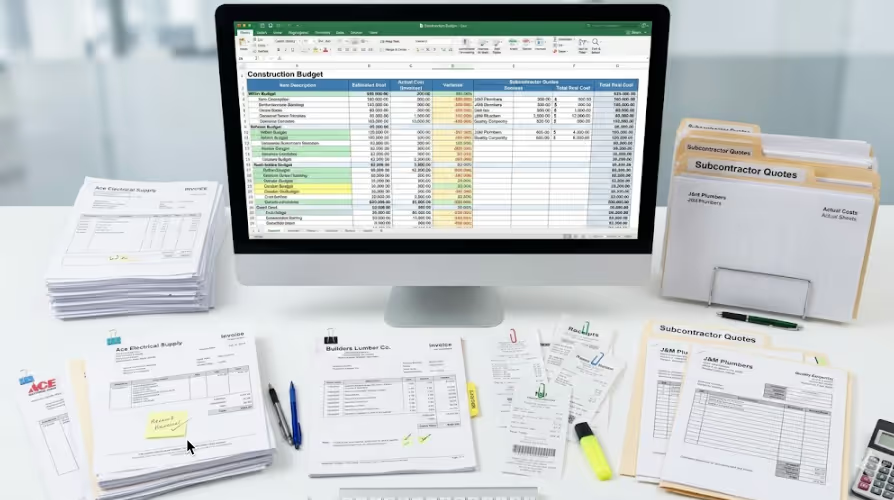
The homeowner receives regular billing, typically monthly, showing what has been spent, what has been committed, and what remains. Supporting documentation such as invoices and receipts is often included.
The builder's fee is applied according to the agreement. This may be a percentage of construction cost, a fixed fee, or a combination of both depending on the structure of the contract.
- Actual costs: Labor, materials, subcontractors, and project expenses are billed at real cost.
- Builder's fee: Compensation for management, coordination, and oversight.
- Ongoing billing: Regular updates showing current and projected costs.
- Documentation: Transparency through invoices, receipts, and reporting.
Impact on cost and schedule
A cost-plus contract allows for flexibility in both design and execution. Changes can be incorporated without the need to renegotiate a fixed price contract, which can help maintain project momentum.
It also provides more accurate cost tracking. Because costs are based on actual pricing rather than assumptions, the budget can be updated continuously to reflect current conditions.
However, this model requires active management. Without clear tracking and communication, it can be difficult to understand how decisions impact the overall budget.
Schedule can also benefit from this approach. Work can begin before every detail is finalized, allowing overlap between design and construction phases.
Common misunderstandings
One common misunderstanding is that cost-plus means the budget is uncontrolled. In reality, control comes from the process used to develop and track the budget, not from fixing the price upfront.
Another misconception is that builders are incentivized to increase costs. In a well-structured agreement, transparency and documentation create accountability, and the focus is on delivering value rather than minimizing line items.
Some also assume that cost-plus is always more expensive. In practice, the final cost depends on design decisions, market conditions, and how the project is managed.
The key difference is visibility. Cost-plus exposes real costs rather than embedding assumptions into a fixed number.
- Not uncontrolled: Requires structured budgeting and tracking to maintain control.
- Not inherently more expensive: Final cost depends on scope and decisions.
- Not vague: Relies on detailed documentation and transparency.
- Not passive: Homeowners benefit from staying engaged in decisions.
What to prepare
Homeowners entering a cost-plus contract should be prepared to engage with the process. This includes reviewing budget updates, making timely decisions, and understanding how selections impact cost.
It is also important to work with a team that provides clear documentation and communication. Transparency is a core benefit of this model, but it depends on how information is shared.
Understanding the structure of the builder's fee is also important. Knowing what is included and how it is applied helps clarify how costs are managed.
Finally, having realistic expectations about how budgets evolve will make the process more predictable and less stressful.
The Clarity perspective: how Clarity Building Group handles this
At Clarity, cost-plus contracts are paired with a structured preconstruction and budgeting process. Early estimates establish direction, but they are refined through detailed design development and subcontractor bidding.
Budget transparency is central. Homeowners have access to invoices, receipts, and detailed reporting so they can see exactly where money is being spent .
Multiple trade bids are obtained to validate pricing and ensure competitiveness. This helps replace assumptions with real market data before construction begins.
During construction, ongoing tracking provides visibility into committed costs, remaining scope, and projected final cost. This allows decisions to be made with a clear understanding of their financial impact.