Cost-plus vs fixed price: what is the real difference?
Comparing two fundamentally different approaches to construction pricing
Cost-plus and fixed price contracts represent two fundamentally different approaches to construction pricing. The difference is not just how you pay, but how risk, uncertainty, and decision-making are handled throughout the project.
Understanding this distinction is critical. The wrong contract type can create friction, cost surprises, or misaligned expectations if it does not match the nature of the project.
In this article
- The core difference between cost-plus and fixed price
- How each model handles risk and uncertainty
- Where each approach works best
- How to evaluate which is right for your project
Context
Most homeowners are initially drawn to fixed price contracts because they offer a single, defined number. This creates a sense of certainty and simplicity.
However, that certainty depends on how well the project is defined upfront. In custom residential construction, where design and scope often evolve, this can create challenges.
Cost-plus contracts take a different approach. Instead of fixing the price early, they provide transparency into actual costs as the project develops.
The short answer
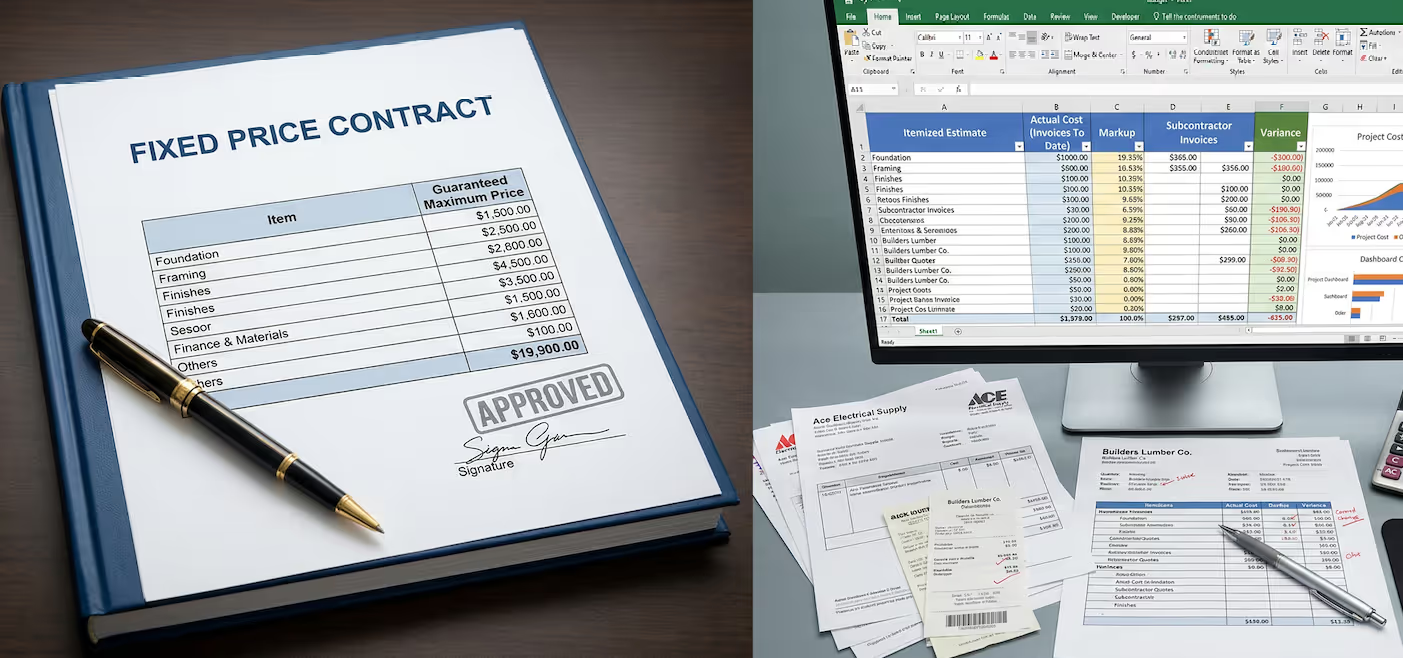
Fixed price contracts lock in a total cost upfront based on defined scope and assumptions. Cost-plus contracts bill actual costs plus a builder's fee, with the total determined over time.
Fixed price prioritizes upfront certainty. Cost-plus prioritizes transparency and flexibility.
Neither is inherently better. The right choice depends on how defined the project is and how much flexibility is needed.
How these options differ
The key difference is how each model handles unknowns. In a fixed price contract, the builder must anticipate risks and include them in the price. This often leads to contingencies or assumptions built into the number.
In a cost-plus contract, unknowns are not priced upfront. Instead, costs are tracked as they occur, and the budget evolves with real information.
This affects how decisions are made. Fixed price contracts tend to require more decisions upfront, while cost-plus allows decisions to continue as the project progresses.
It also affects transparency. Cost-plus typically provides more visibility into individual costs, while fixed price focuses on the total.
- Pricing structure: Fixed price is a single total, cost-plus is actual cost plus fee.
- Risk handling: Fixed price embeds risk, cost-plus manages it in real time.
- Decision timing: Fixed price requires early decisions, cost-plus allows flexibility.
- Transparency: Cost-plus provides detailed cost visibility.
Where each works best
Fixed price contracts work best when the project is fully designed and unlikely to change. This includes simpler projects or standardized construction where scope can be clearly defined.
Cost-plus contracts are better suited to complex or custom projects where design is evolving and conditions may not be fully known at the start.
In these situations, flexibility and transparency often outweigh the benefit of locking in a number early.
The level of design development is a key factor in determining which approach is appropriate.
Where each breaks down
Fixed price contracts can break down when the scope changes after the contract is signed. Changes often require formal change orders, which can add cost and complexity.
They can also become less transparent. It may be difficult to understand how costs are allocated or whether the price reflects current market conditions.
Cost-plus contracts can break down if there is insufficient structure or communication. Without clear tracking, it can be harder to maintain confidence in the budget.
Both models require discipline, but the risks are different.
- Fixed price limitations: Sensitive to scope changes and evolving design.
- Change order pressure: Adjustments can increase cost and complexity.
- Cost-plus risks: Requires strong financial tracking and transparency.
- Process dependency: Success depends on how the contract is managed.
How to evaluate
Choosing between cost-plus and fixed price starts with understanding your project. If the design is complete and unlikely to change, fixed price may provide the simplicity you are looking for.
If the project is complex, custom, or still evolving, cost-plus may provide better alignment with how the work will actually unfold.
It is also important to evaluate the builder's process. A well-managed cost-plus project includes detailed budgeting, multiple trade bids, and ongoing cost tracking.
Finally, consider your own preferences. Some homeowners prioritize certainty, while others value transparency and flexibility.
The best choice is the one that aligns with both the project and the people managing it.
The Clarity perspective: how Clarity Building Group handles this
At Clarity, cost-plus is used for most projects because it aligns with the complexity of architect-led residential construction. Early budgets are developed during preconstruction and refined through detailed design and subcontractor bidding.
Multiple trade bids are obtained to validate pricing and reduce reliance on assumptions. This creates a more accurate financial baseline before construction begins.
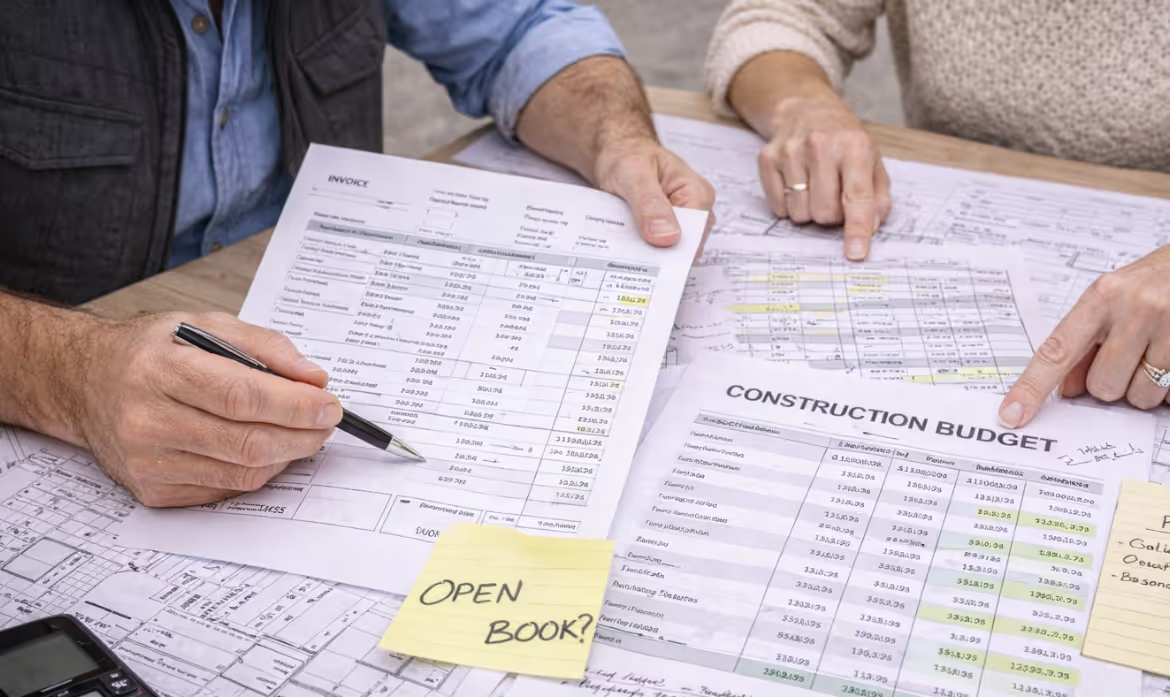
Transparency is maintained through open-book accounting, with access to invoices, receipts, and detailed budget updates .
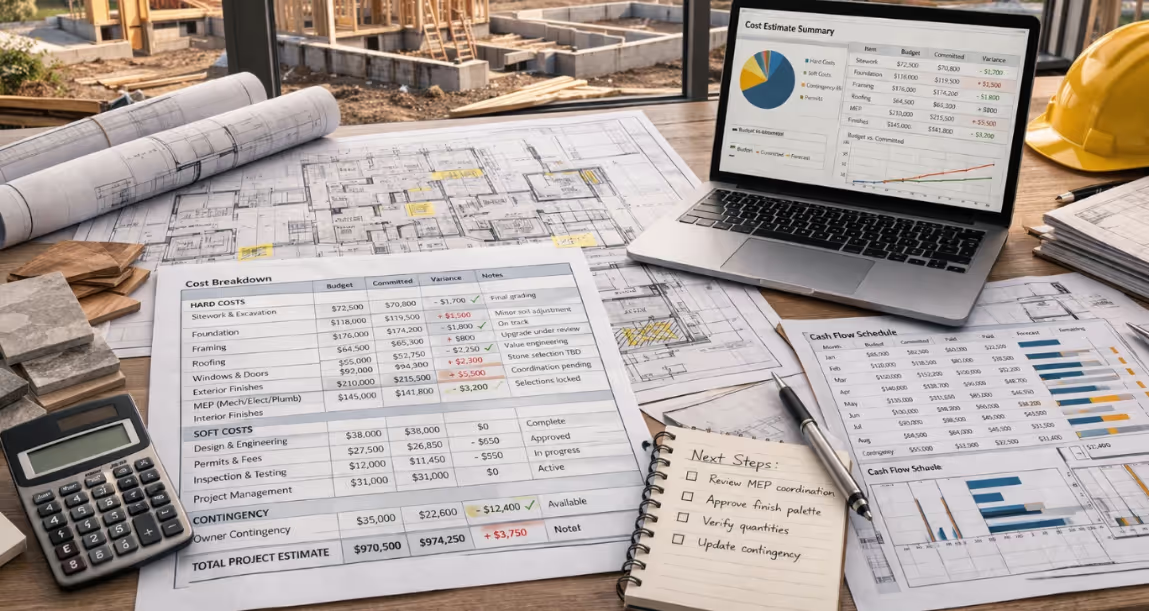
Ongoing tracking continues through construction, showing committed costs, remaining scope, and projected final cost. This allows the project to adapt while maintaining control over financial outcomes.