Why clarity and transparency matter more than initial price
Redefining value in construction projects
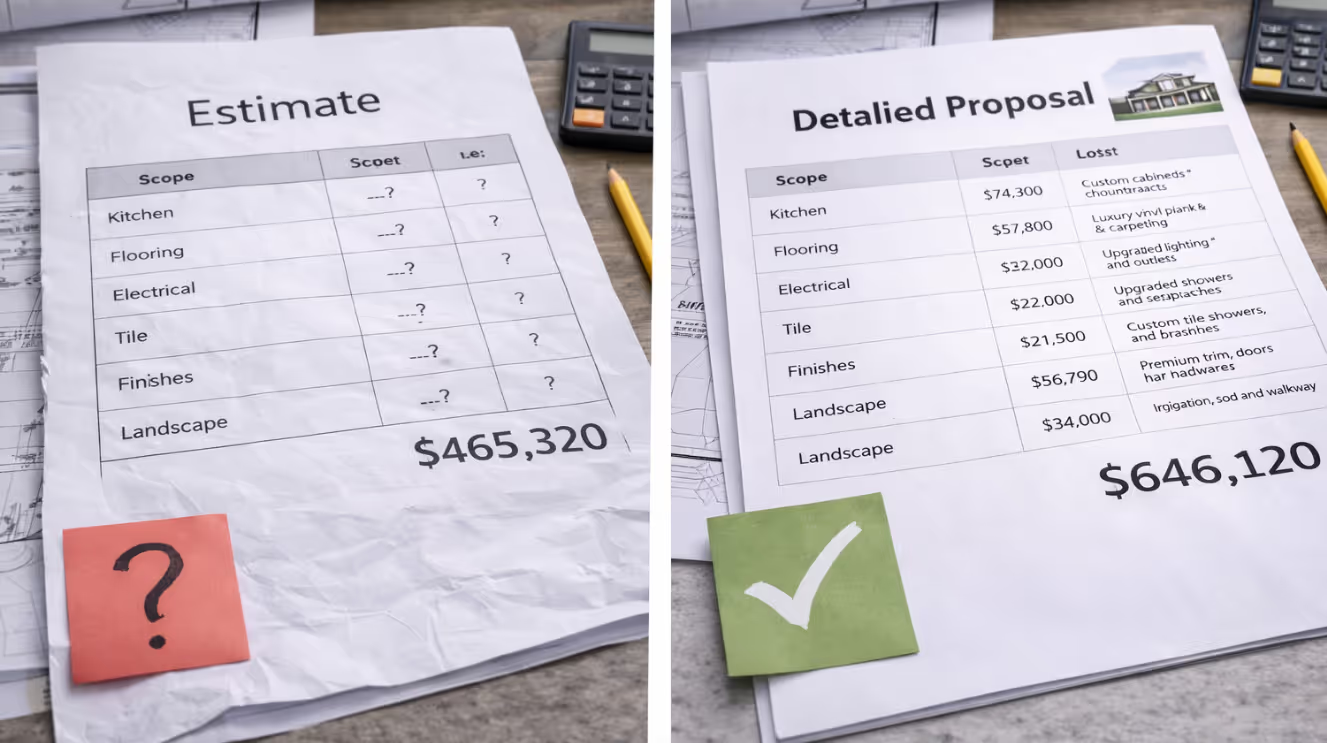
Initial price is often the first thing homeowners focus on when evaluating a project. It feels like the most concrete and comparable number.
In reality, that number is often the least reliable indicator of what the project will actually cost.
In this article
- Why initial pricing can be misleading
- How transparency changes decision-making
- Where hidden costs come from
- What clarity looks like in practice
- How to evaluate true value
Construction projects evolve as decisions are made and details are refined. A low initial price often reflects incomplete information rather than true cost.
Clarity and transparency provide a more accurate framework for understanding and managing that evolution.
The short answer
Clarity and transparency matter more than initial price because they reveal the true cost of a project over time, not just an early estimate based on assumptions.
Without transparency, the initial number often changes as real decisions are made.
Why this happens
Early pricing is typically based on incomplete drawings, allowances, and assumptions. Builders must fill in gaps when information is missing.
Those assumptions vary, which is why initial prices can differ significantly between proposals.
- Allowances: Placeholder numbers for selections not yet defined
- Incomplete scope: Missing details that will be resolved later
- Different assumptions: Each builder interprets gaps differently
These factors make early pricing inherently unstable.
Common causes
Cost increases are often perceived as overruns, but they are frequently the result of moving from assumptions to real decisions.
- Selection upgrades: Choosing higher-quality materials than originally assumed
- Scope clarification: Adding items that were not fully defined
- Unforeseen conditions: Discoveries made during construction
- Design evolution: Refinements that improve the project but increase cost
Without transparency, these changes can feel unexpected and difficult to track.
How to reduce risk
Transparency allows you to see how and why costs are changing, giving you the ability to make informed decisions.
Instead of focusing on a single number, the focus shifts to understanding the components of that number.
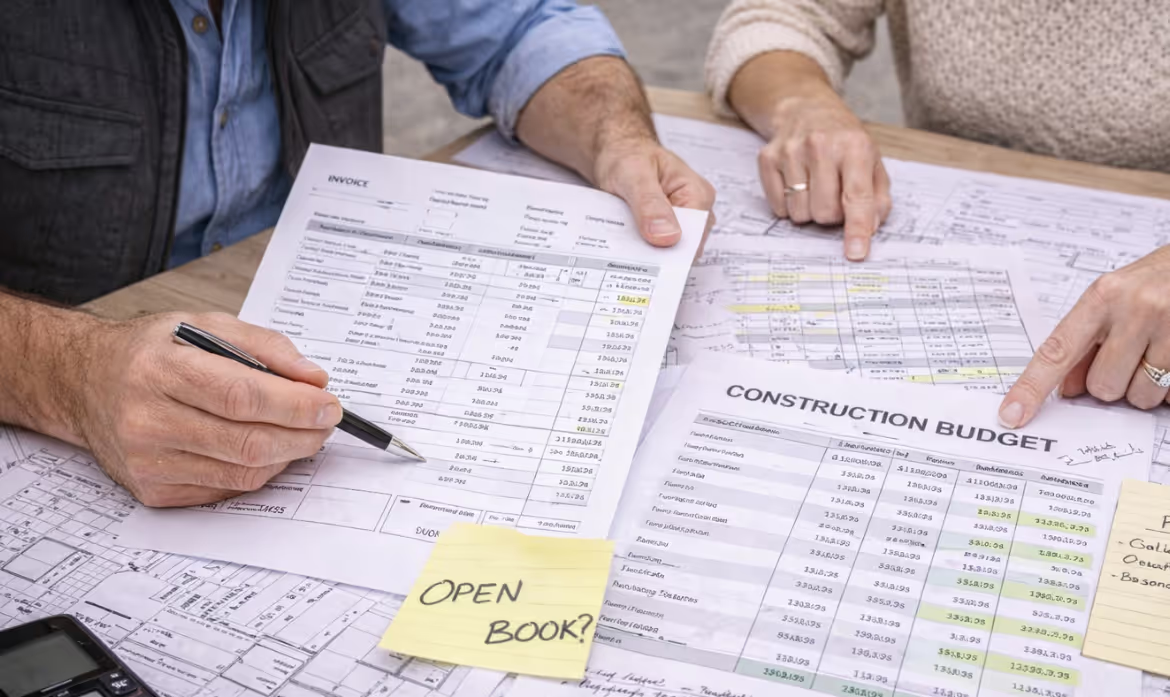
- Open cost information: Access to subcontractor bids, invoices, and material pricing
- Detailed scopes: Clear definition of what is included in each trade
- Ongoing tracking: Regular updates showing how decisions impact the budget
- Informed tradeoffs: Ability to adjust scope based on real cost data
This level of clarity turns cost management into an active process rather than a reactive one.
What to look for early
You can identify transparency in how a builder communicates and structures information before construction begins.
- Breakdown of costs: Detailed estimates rather than lump-sum numbers
- Explanation of assumptions: Clear identification of allowances and unknowns
- Willingness to share data: Openness about how pricing is developed
- Structured updates: Defined process for tracking changes over time
These indicators suggest that the project will be managed with visibility and control.
The Clarity perspective: how Clarity Building Group handles this
Transparency is built into every stage of the process. Early conceptual budgets establish a baseline using historical data, but are clearly identified as preliminary.
During preconstruction, detailed scopes are developed and multiple subcontractor bids are obtained. This replaces assumptions with real pricing.
Throughout construction, clients have access to invoices, receipts, and ongoing budget updates. Each decision is tracked so its impact on the total cost is visible.
This approach shifts the focus from an initial number to a continuously managed and clearly understood budget, allowing for more informed decisions and fewer surprises.