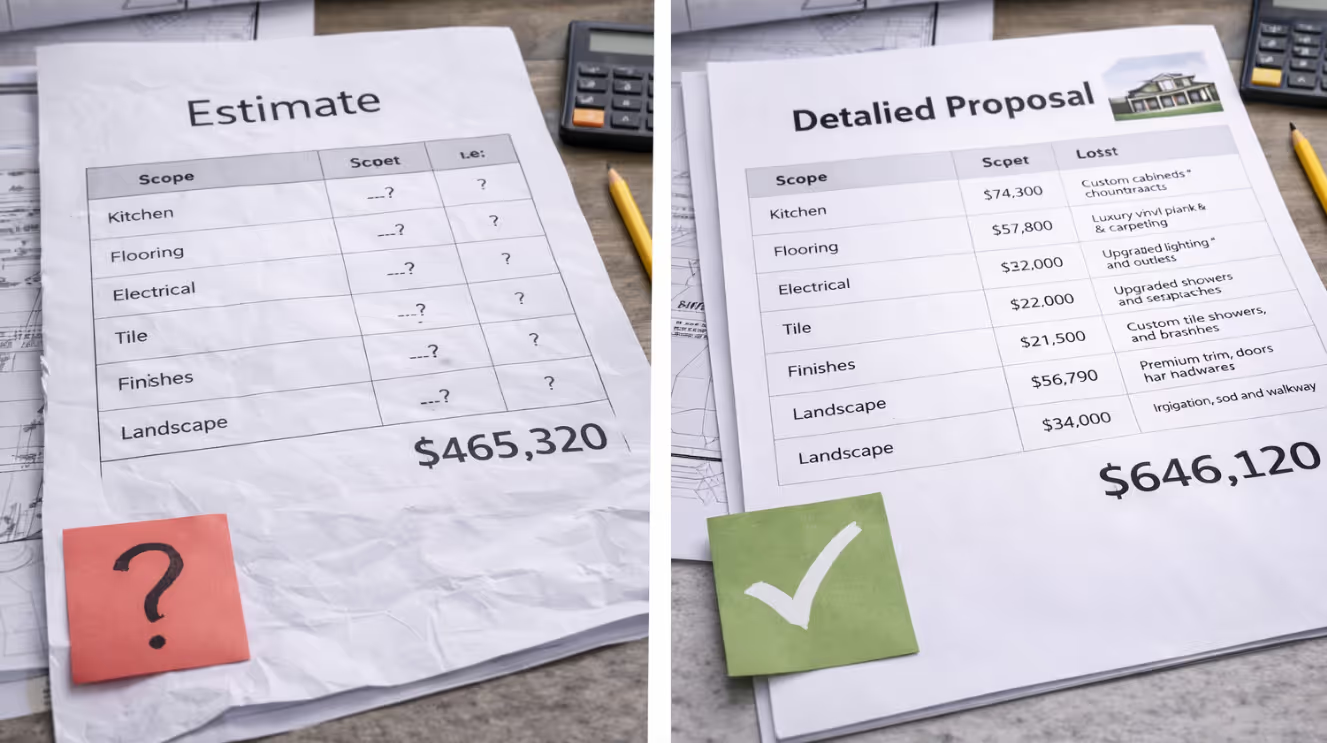
How to compare construction proposals side by side
A structured approach to evaluating competing bids

Comparing construction proposals is not about lining up totals. It is about understanding what each number represents and whether the underlying scope is truly the same.
In high-end residential construction, proposals often differ in assumptions, level of detail, and included scope. Without a structured approach, comparisons can quickly become misleading.
In this article
- Why proposals are difficult to compare
- Where the biggest pricing risks occur
- How experienced owner's representatives evaluate bids
- How to structure a meaningful comparison
Context
Homeowners often request multiple proposals to compare pricing. While this seems logical, it can create false clarity when scope is not fully defined.
Large-scale custom projects are particularly difficult to compare because each builder interprets incomplete information differently. This leads to variations that are not always visible in the total cost.
Experienced owner's representatives focus less on the number of bids and more on the quality and alignment of the information behind them.
The short answer
To compare proposals accurately, scope, assumptions, and pricing structure must be normalized. Without this, differences in detail can distort the comparison.
Many large projects are better served by selecting a builder early and developing a detailed budget rather than comparing incomplete bids.
The goal is clarity, not just competition.
How these options differ
Construction proposals can vary significantly in how they are assembled. Some are based on detailed scope and subcontractor input, while others rely on allowances or general assumptions.
This creates a situation where two proposals may appear comparable but are fundamentally different in what they include.
Owner's representatives recognize that these differences must be resolved before any meaningful comparison can be made.
Without alignment, the lowest number often reflects missing scope rather than real savings.
- Detailed proposals: Based on defined scope and real pricing.
- Assumption-based proposals: Rely on allowances and generalizations.
- Scope variation: Items included in one proposal may be excluded in another.
- Presentation differences: Format can obscure true cost differences.
Where the biggest risks occur
Certain categories are more likely to create apples-to-oranges comparisons. These areas often carry significant cost variability depending on assumptions and level of detail.
Experienced owner's representatives focus closely on these categories because they can swing the total project cost substantially.
Understanding these risks helps prioritize where to look when comparing proposals.
The larger the project, the more impactful these differences become.
- Site work: Can vary widely based on assumptions about conditions and infrastructure. High potential cost swing.
- Structural systems: Framing, steel, and foundation details can differ significantly. High potential cost swing.
- Mechanical systems: HVAC, plumbing, and electrical scope can be interpreted differently. Moderate to high swing.
- Finishes and allowances: Fixtures, cabinetry, and materials often vary in quality assumptions. Moderate swing.
- General conditions: Project management, supervision, and temporary conditions may be structured differently. Moderate swing.
Where each approach breaks down
Requesting multiple bids early in the process often leads to unreliable comparisons. Without fully developed drawings and specifications, each builder fills in gaps differently.
This creates a situation where proposals are not truly comparable. Attempting to normalize them after the fact can be time-consuming and still incomplete.
Even experienced professionals find it difficult to fully align multiple early-stage proposals.
As a result, the process can create confusion rather than clarity.
- Incomplete scope: Leads to inconsistent assumptions.
- Time inefficiency: Significant effort required to align proposals.
- False conclusions: Lower bids may not reflect actual cost.
- Decision risk: Choosing based on incomplete information.
How to evaluate
The most effective way to evaluate proposals is to break them down into consistent categories and identify differences in scope and assumptions.
Focus first on high-risk categories where cost variation is greatest. Confirm what is included, excluded, or assumed in each proposal.
It is also important to understand the basis of pricing. Proposals built from subcontractor bids and defined scope are generally more reliable than those based on allowances.
For complex comparisons, structured tools can help. Some homeowners use large language models to assist in organizing and analyzing proposals.
One effective approach is to ask the model to generate a custom comparison prompt, then input each proposal using that structure. This can help identify gaps, inconsistencies, and areas requiring clarification.
- Normalize categories: Align scope across proposals.
- Focus on risk areas: Prioritize high-cost variability items.
- Validate assumptions: Identify hidden differences.
- Use structured tools: Assist analysis with consistent frameworks.
- Compare inputs, not totals: Understand what drives the number.
The Clarity perspective: how Clarity Building Group handles this
At Clarity, the focus is on developing a single, well-defined budget rather than comparing multiple incomplete proposals. The process begins with preconstruction, where scope is developed in detail and aligned with the homeowner's goals.
Detailed bid packages are created and issued to multiple subcontractors, ensuring that pricing is based on clearly defined work. This creates an apples-to-apples comparison at the trade level rather than at the builder level.
Multiple bids are used strategically to determine market value for each scope category, rather than to compare entire project proposals.
This approach reduces ambiguity, improves cost accuracy, and allows homeowners to make decisions based on clear, reliable information rather than competing assumptions.