
What questions to ask a builder before hiring them
A practical checklist for evaluating custom builders
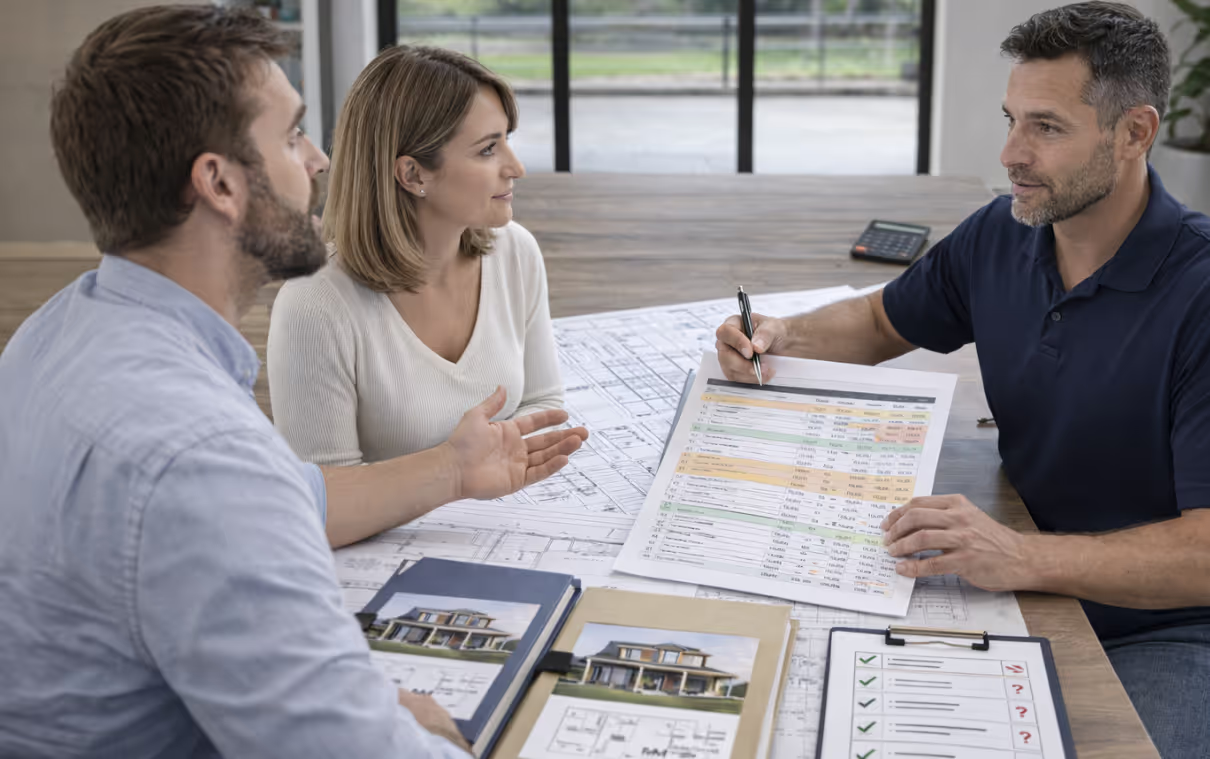
Hiring a builder is one of the most important decisions in a custom construction project. The right choice depends on more than cost. It requires understanding how the builder operates, communicates, and manages complexity.
Asking the right questions helps reveal how a builder thinks, how they manage risk, and whether they are aligned with your project goals.
In this article
- What to ask about experience and team structure
- How to evaluate process and communication
- What to ask about pricing assumptions
- How to assess long-term reliability
Context
Most homeowners focus on pricing when evaluating builders. While cost matters, it is only one part of the decision.
The builder's process, team, and relationships often have a greater impact on the outcome. These factors influence how smoothly the project runs and how issues are handled.
A structured set of questions helps uncover these factors and provides a clearer basis for comparison.
The short answer
You should ask builders about their experience, team structure, subcontractor relationships, pricing assumptions, and communication process.
The goal is to understand how they work, not just what they charge.
A strong builder will answer clearly and consistently across these areas.
Who it is for
This process is important for homeowners undertaking custom or high-end residential projects where complexity and coordination are significant.
It is particularly valuable when selecting between multiple qualified builders, where differences are not immediately obvious.
Clients who want transparency and a collaborative process benefit most from a deeper evaluation.
The more complex the project, the more important these questions become.
- Custom projects: Require deeper evaluation beyond price.
- Multiple candidates: Helps differentiate qualified builders.
- Complex scope: Increases importance of process and team.
- Long-term engagement: Builder relationship spans months or years.
Who it is not for
For smaller or highly standardized projects, a simplified evaluation process may be sufficient. In those cases, pricing and availability may carry more weight.
Projects with limited customization may not require the same level of detailed vetting.
However, for most architect-led residential projects, a deeper review is still beneficial.
The level of evaluation should match the complexity of the project.
What it requires
Evaluating a builder requires time and thoughtful conversation. These questions are not meant to be a checklist completed quickly, but a framework for meaningful discussion.
It is also important to listen for clarity and consistency in responses. Strong builders tend to explain their process in a structured and transparent way.
References and past experience should support what is presented in conversation.
The goal is to understand how the builder operates in real conditions.
- Time investment: Meaningful evaluation takes effort.
- Active listening: Look for clarity and consistency.
- Verification: Confirm answers through references.
- Process focus: Understand how work is managed.
How to decide
The following categories represent key areas to explore when interviewing a builder. Together, they provide a comprehensive view of capability, fit, and reliability.
Each category reveals different aspects of how the builder will perform during the project.
No single answer determines the outcome. The goal is to build a complete picture.
Consistency across these areas is a strong indicator of a well-managed operation.
- Experience and relationships: Ask how many projects they have completed with your architect. Familiarity can improve coordination.
- References: Request past client references and subcontractor references. How a builder treats subcontractors often reflects how the project will run.
- Team structure: Ask who your field manager will be and what their background and tenure is. This is the person managing day-to-day work.
- Employee tenure: Long-term staff suggests stability and consistent processes.
- Pricing assumptions: Ask what assumptions were made in their estimate and where uncertainty exists.
- Schedule: Understand how they plan and manage timelines, and what risks could affect duration.
- Technology use: Ask about their tech stack, including project management and financial tracking tools.
- AI usage: Ask how they use AI to support their work and how they manage the risks of relying on it too heavily.
- Communication: Understand how often updates are provided and how decisions are tracked.
- Problem-solving: Ask how they handle unexpected conditions or changes during construction.
The Clarity perspective: how Clarity Building Group handles this
At Clarity, these questions are addressed through a structured and transparent process. The team is introduced early, including the field manager who will be responsible for daily coordination.
Preconstruction provides clarity around pricing assumptions, scope, and schedule, ensuring that expectations are aligned before construction begins.
Technology and reporting systems are used to maintain visibility into progress, costs, and decisions throughout the project.
Subcontractor relationships and team stability are treated as core components of project success, reinforcing consistency and accountability from start to finish.