How to compare budgets from different builders accurately
A framework for evaluating competing cost proposals

Comparing construction budgets is not just about looking at the total number. Two proposals can appear similar on the surface while being built on very different assumptions, scopes, and levels of detail.
Accurate comparison requires breaking each budget down, aligning scope, and understanding what is included, excluded, or assumed. Without this, lower numbers can be misleading.
In this article
- Why budget comparisons are often misleading
- How proposals differ beneath the surface
- A step-by-step framework for comparison
- What to look for before making a decision
Context
Homeowners often receive multiple proposals when selecting a builder. These proposals may vary in format, level of detail, and pricing structure, making direct comparison difficult.
The natural instinct is to focus on the bottom-line number. However, this approach can overlook critical differences in scope, assumptions, and quality that ultimately determine the true cost of the project.
In custom residential construction, where projects are highly individualized, these differences are amplified. A meaningful comparison requires more than a side-by-side total.
The short answer
To compare budgets accurately, you must normalize them. This means aligning scope, assumptions, allowances, and level of detail so that each proposal reflects the same project.
Without normalization, lower-priced proposals often exclude items, rely on optimistic assumptions, or use broad allowances that will change later.
The goal is not to find the lowest number, but to understand which proposal most accurately reflects the true cost of your project.
How these options differ
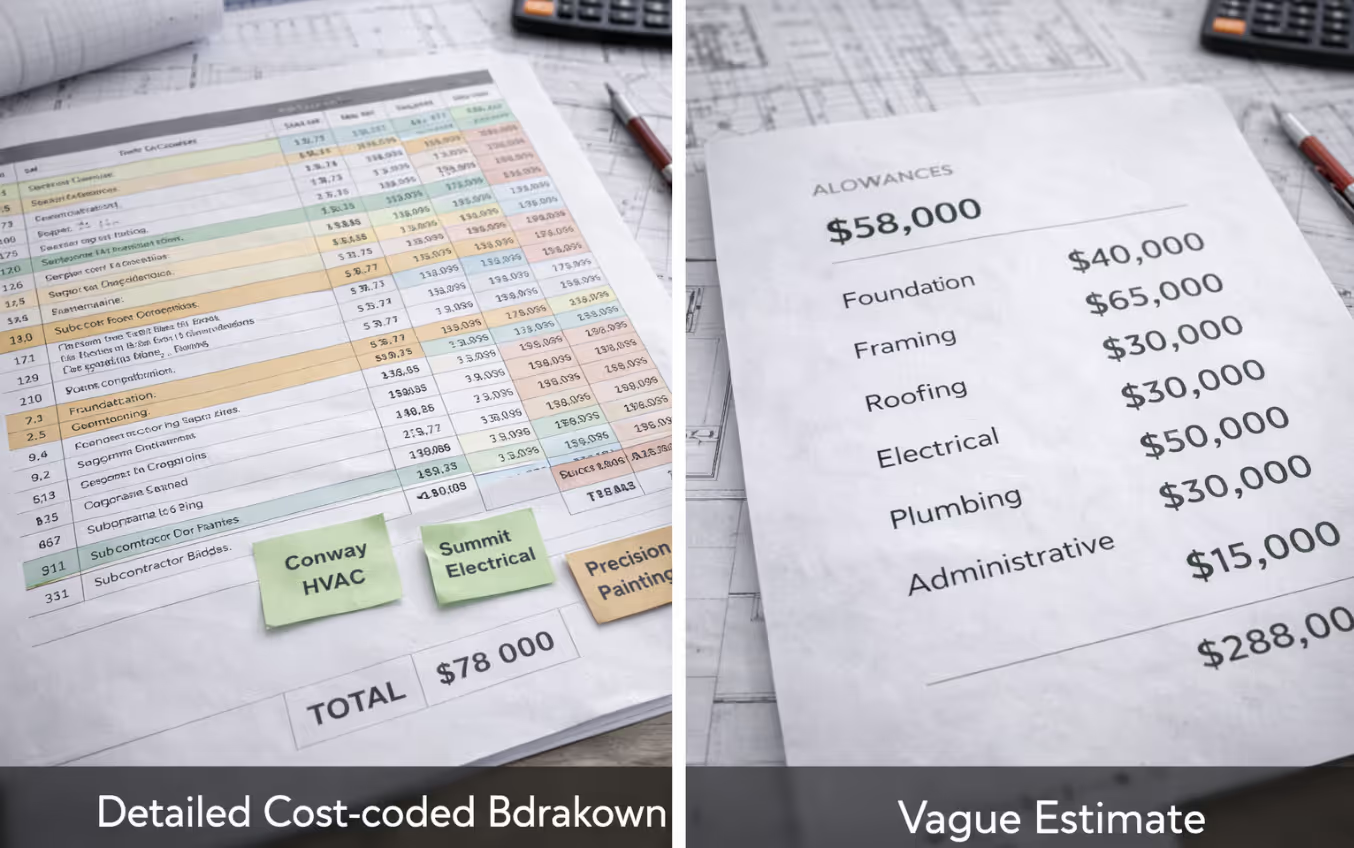
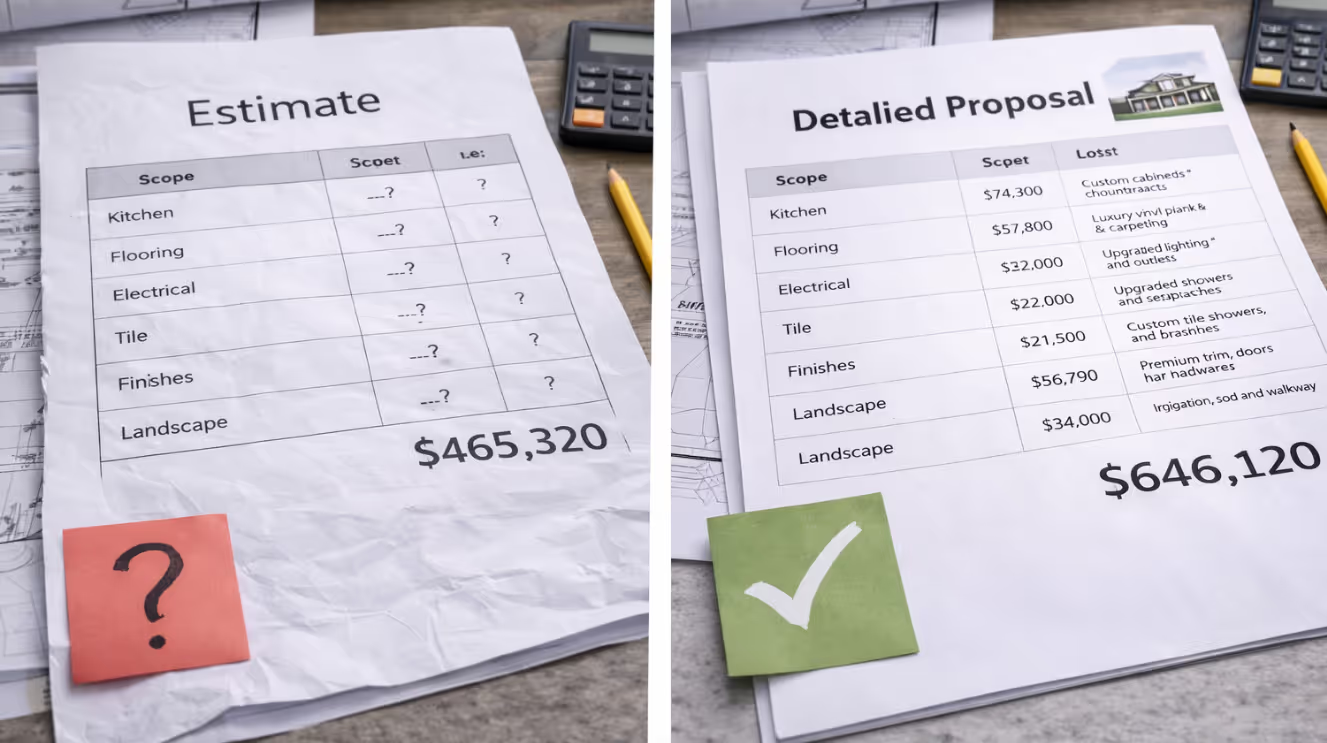
Different builders structure budgets in different ways. Some provide highly detailed breakdowns with clear scope definitions and subcontractor input. Others may present simplified summaries with fewer details and broader assumptions.
These differences can significantly impact how reliable the budget is. A more detailed proposal may appear higher because it includes items that another proposal has not fully accounted for.
Allowances also vary. One builder may include realistic placeholder values based on the expected level of finish, while another may use lower allowances to keep the total number down.
Even the definition of scope can differ. Items such as site work, permits, supervision, or temporary conditions may be included in one proposal and excluded in another.
- Level of detail: Detailed budgets provide clearer insight into scope and cost.
- Allowance values: Placeholder numbers may vary widely between proposals.
- Scope inclusion: Some items may be included, excluded, or assumed differently.
- Pricing basis: Estimates may be based on historical data or actual subcontractor bids.
Where each works best
Simplified budgets can be useful in early planning stages. They provide a quick sense of feasibility and help guide initial decisions. However, they are less reliable for final decision-making.
Detailed budgets are more appropriate when selecting a builder and preparing for construction. They provide a clearer understanding of scope, cost drivers, and potential risks.
Neither approach is inherently wrong. The key is to recognize what stage the budget represents and how much certainty it provides.
Comparisons are most meaningful when proposals are at a similar level of development and detail.
Where each breaks down
Budget comparisons break down when proposals are not aligned. A lower number may reflect missing scope rather than actual savings.
They also break down when allowances are not realistic. If one proposal includes low placeholder values, it may appear more competitive but result in higher final costs.
Another issue is incomplete documentation. Without clear descriptions of what is included, it is difficult to determine whether two budgets are truly comparable.
Finally, differences in process matter. A proposal that includes detailed preconstruction, bidding, and ongoing cost tracking may offer more control than one that does not, even if the initial number is higher.
- Missing scope: Lower numbers may exclude necessary work.
- Unrealistic allowances: Placeholder values that do not reflect actual selections.
- Lack of detail: Makes it difficult to compare categories accurately.
- Process differences: Impacts how costs are managed over time.
How to evaluate
The first step is to break each proposal into comparable categories. This allows you to see where costs differ and identify any gaps in scope.
Next, review allowances carefully. Determine whether the values are realistic for your project and whether they align with your expected level of finish.
It is also important to identify exclusions. Ask each builder to clarify what is not included so you can account for those costs separately.
Understanding the basis of pricing is critical. Proposals based on subcontractor bids and defined scopes are generally more reliable than those based on broad assumptions.
Finally, consider how each builder manages the budget over time. A clear process for tracking costs, handling changes, and updating projections is essential for maintaining control.
- Normalize scope: Align categories and definitions across proposals.
- Validate allowances: Ensure placeholder values match expected quality.
- Identify exclusions: Account for missing items.
- Understand pricing basis: Determine whether numbers are estimates or bids.
- Evaluate process: Consider how costs will be managed during construction.
The Clarity perspective: how Clarity Building Group handles this
At Clarity, budget comparison is approached through transparency and structure. Detailed budgets are developed during preconstruction, with clear scope definitions and realistic allowances based on the project's design intent.
Multiple subcontractor bids are obtained to validate pricing and ensure that each category reflects current market conditions. This reduces reliance on assumptions and improves accuracy.
Budgets are presented in a way that makes it easier to understand and compare categories. This helps homeowners evaluate proposals on a like-for-like basis rather than relying on total cost alone.
Ongoing tracking continues through construction, with updates that show committed costs, remaining scope, and projected final cost. This ensures that the comparison process extends beyond initial proposals and into actual project performance.