The risks of choosing a builder based on price alone
Why lowest cost often leads to highest risk
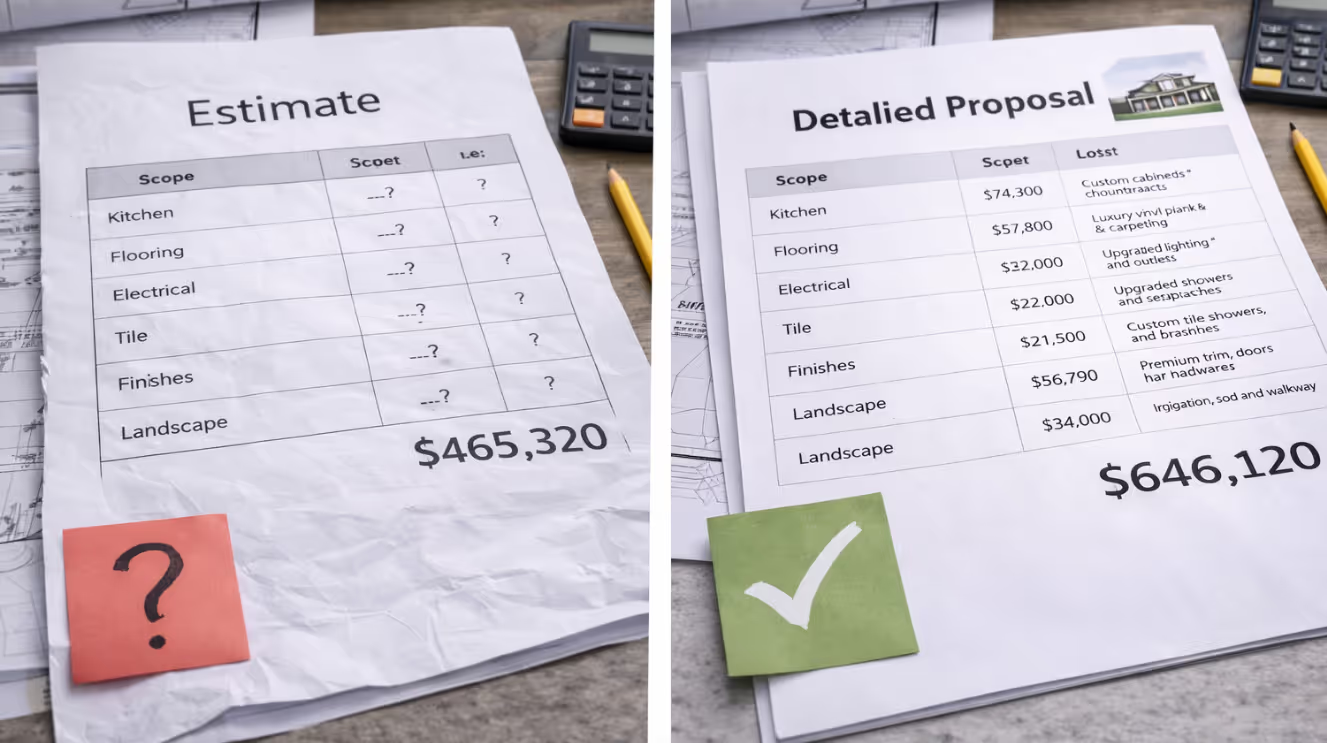
Choosing a builder based on price alone is one of the most common and most costly mistakes in custom construction. A lower number may appear attractive at first, but it often does not reflect the true cost of the project.
In many cases, the lowest bid introduces the highest level of risk, leading to cost increases, delays, and a more difficult construction experience.
In this article
- Why low bids can be misleading
- What is often missing from cheaper proposals
- How risk shows up during construction
- How to evaluate value instead of price
Context
Construction proposals are not always created equally. Differences in scope, assumptions, and level of detail can result in wide variations in price.
Without understanding these differences, it is easy to assume that a lower price represents better value.
In reality, lower pricing often reflects missing information or optimistic assumptions rather than actual savings.
The short answer
The lowest bid is often lower because it includes less scope, lower allowances, or incomplete assumptions.
These gaps typically lead to cost increases during construction.
Evaluating how a price is built is more important than the number itself.
Why this happens
Builders must make decisions about how to handle incomplete information. Some include realistic allowances and detailed scope, while others may minimize these to present a more competitive number.
There is also a market dynamic at play. Builders who are busy may price higher, while others may lower their price to secure work.
Estimating quality varies as well. Incomplete or rushed estimates can miss important items.
These factors contribute to differences in pricing that are not always obvious at first.
- Low allowances: Placeholder values that underestimate real cost.
- Missing scope: Items not included in the estimate.
- Optimistic assumptions: Best-case pricing scenarios.
- Market pressure: Pricing influenced by workload.
Where risk shows up
The risks associated with low bids typically appear during construction, when real decisions are made and actual costs replace assumptions.
Items that were not fully included in the original estimate must be added. Allowances that were set too low are exceeded.
This creates a pattern of ongoing cost increases, often through change orders or budget adjustments.
What initially appeared to be savings becomes additional cost over time.
- Allowance overruns: Actual selections exceed placeholders.
- Scope additions: Missing items added later.
- Change orders: Adjustments during construction.
- Budget drift: Gradual increase in total cost.
What this means in practice
Choosing the lowest price often shifts the project into a reactive mode. Instead of making informed decisions upfront, costs are addressed as they arise.
This can create tension between the homeowner and builder, especially when expectations are not aligned.
It also reduces the ability to control the budget, as many decisions are made after construction has already begun.
The overall experience becomes less predictable.
Common mistakes
A common mistake is comparing proposals based only on the final number without reviewing how that number is constructed.
Another issue is assuming that all builders are pricing the same scope. In many cases, they are not.
Homeowners may also underestimate the impact of allowances and exclusions, which can significantly affect final cost.
These patterns lead to decisions based on incomplete information.
- Comparing totals only: Ignoring underlying structure.
- Assuming equal scope: Believing all bids include the same work.
- Overlooking allowances: Missing hidden variability.
- Ignoring process: Not evaluating how the budget is built.
How to evaluate
To evaluate builders effectively, focus on the completeness and transparency of their proposals. Look for detailed cost breakdowns and clearly defined scope.
Ask about assumptions, allowances, and how missing information is handled. This provides insight into how reliable the estimate is.
It is also important to consider the builder�s process, communication, and track record, not just their price.
Value is determined by accuracy, clarity, and execution, not just cost.
- Scope clarity: Detailed and well-defined work.
- Cost structure: Organized and transparent breakdown.
- Assumptions: Clearly explained unknowns.
- Process quality: Structured approach to budgeting and execution.
The Clarity perspective: how Clarity Building Group handles this
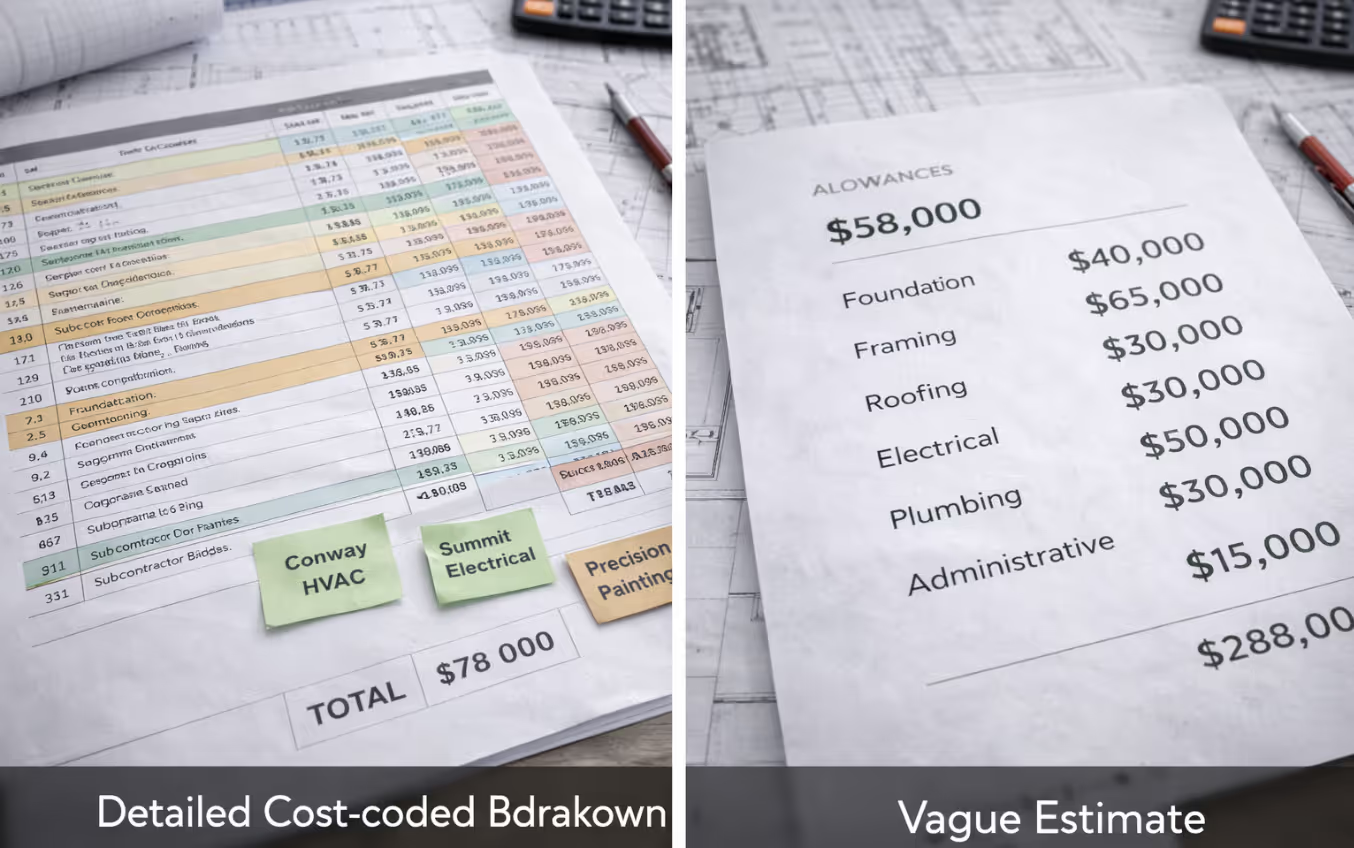
At Clarity, pricing is developed through a structured preconstruction process that emphasizes completeness and transparency. Detailed scope development and subcontractor bidding reduce reliance on assumptions.
Budgets are organized using cost-coded categories, allowing homeowners to understand how costs are built and tracked.
Rather than competing on lowest price, the focus is on providing a clear and accurate representation of the project cost.
This approach supports better decision-making and reduces the risk of unexpected cost increases during construction.