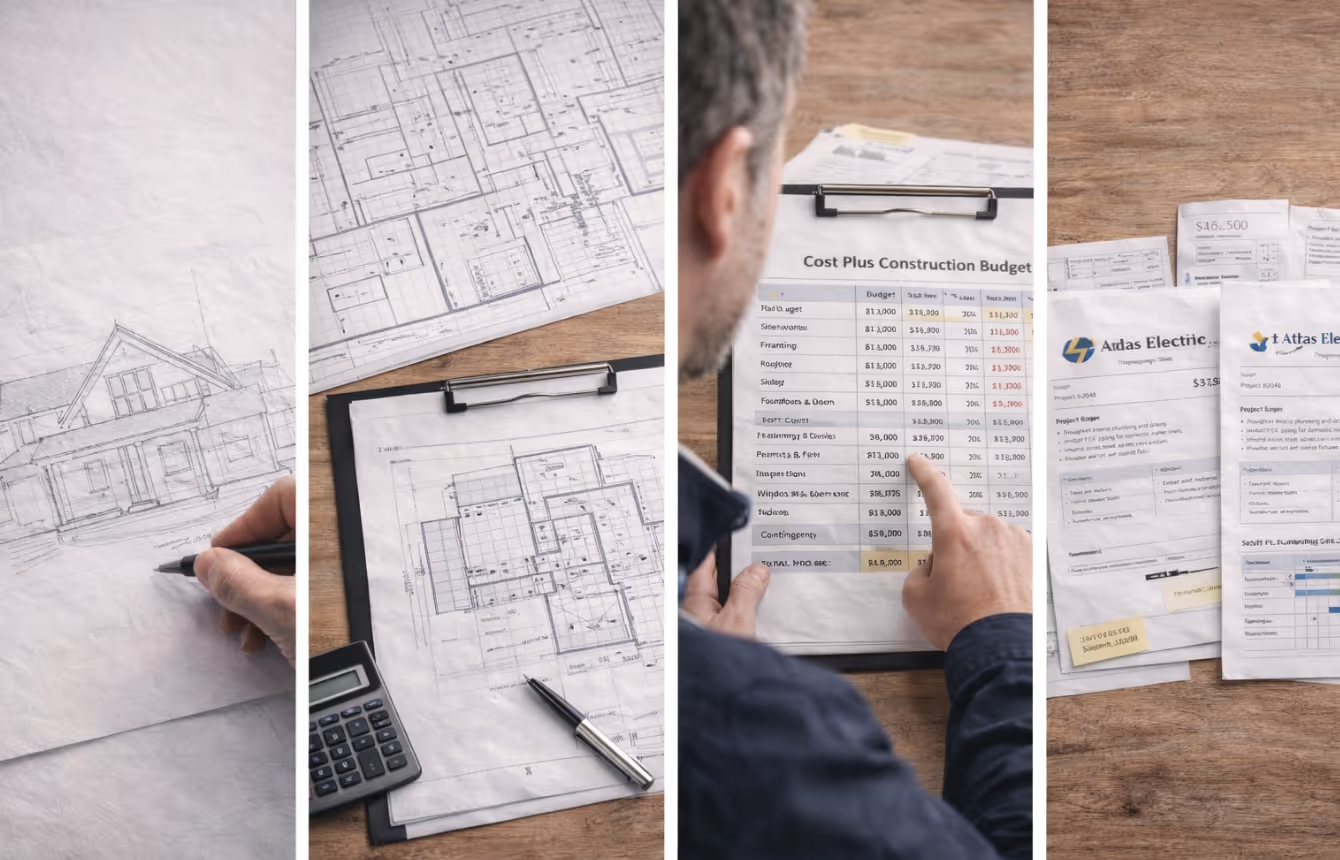
When should a builder be brought into the design process?
Early collaboration leads to better outcomes
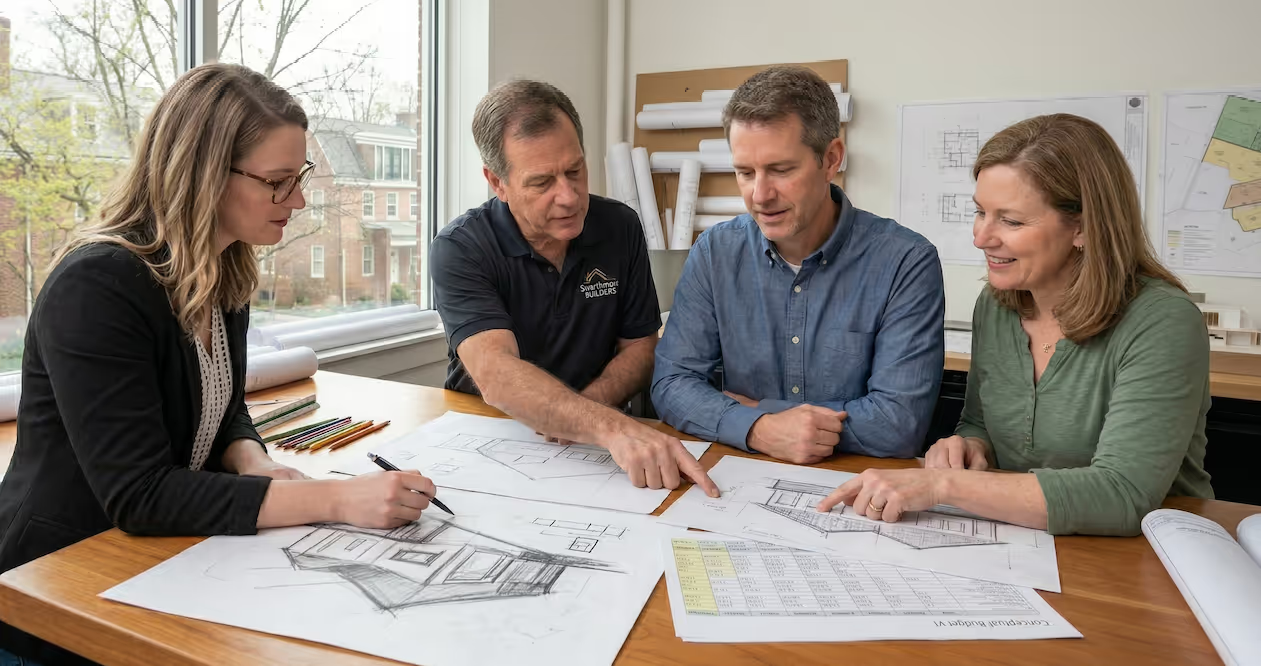
A builder should be brought into the design process early, typically once initial concepts are being developed with the architect. This allows cost, constructability, and design to evolve together rather than separately.
In a cost-plus structure, early involvement works because the builder is not just pricing the project. They are acting as an advisor, helping guide decisions in alignment with your budget and goals.
In this article
- When a builder should be introduced into the process
- Why early involvement improves outcomes
- How cost-plus supports early collaboration
- What happens when builders are brought in too late
Context
The traditional approach many homeowners consider is to complete design first, then bring in multiple builders to provide pricing. While this may seem logical, it often leads to inconsistent and unreliable numbers because the scope is not fully defined.
Architect-led residential projects benefit from a different approach. Design and cost are developed together, with the builder contributing insight as decisions are made.
This approach is supported by the proven process for clarity, where early collaboration reduces uncertainty and creates a more predictable path to construction.
The short answer
A builder should be brought in during early design, not after drawings are complete.
This allows the builder to act as a cost consultant, helping guide decisions before they become expensive to change.
In a cost-plus project, this early involvement is aligned with the client's interests because all pricing remains transparent.
Who it is for
This approach is best for homeowners pursuing custom or architect-led projects where design flexibility and quality are priorities.
It is particularly valuable when the project includes complex design elements, detailed finishes, or evolving scope. In these cases, early cost input helps maintain alignment between vision and budget.
Clients who want to make informed decisions throughout the process will benefit the most from early builder involvement.
This structure supports a collaborative process where the builder is part of the team rather than an external bidder.
- Custom projects: Design evolves and requires cost guidance.
- Detail-driven work: Early input helps manage complexity.
- Collaborative clients: Value input from the full team.
- Budget-aware decisions: Want clarity before committing.
Who it is not for
This approach may not suit homeowners who prefer to fully design a project independently before engaging a builder. In those cases, pricing often becomes a separate step after design is complete.
It is also less aligned with clients who want to compare multiple builders based on early pricing. Without defined scope, those comparisons are often misleading.
Projects that prioritize a fixed price above all else may lean toward later builder involvement, although this can limit flexibility.
The key difference is whether the project values collaboration during design or separation between design and pricing.
What it requires
Bringing a builder in early requires trust in the process and in the builder's role as an advisor. In a cost-plus structure, this trust is supported by transparency.
You will see all subcontractor bids, vendor quotes, and cost information as it develops. The builder is not holding pricing privately. They are helping you evaluate options and make informed decisions.
This also requires a shift in mindset. Instead of using the builder to generate a price, you are using them to help guide how your money is spent.
The builder becomes part of the decision-making process, not just the execution phase.
- Transparency: Full visibility into bids and costs.
- Advisory role: Builder helps guide financial decisions.
- Trust-based process: Collaboration replaces competition.
- Active participation: Ongoing engagement in decisions.
How to decide
The decision comes down to how you want the project to be managed. If you prefer to design first and price later, builder involvement can happen after drawings are complete.
If you want cost and design to stay aligned throughout the process, bringing a builder in early is the more effective approach.
It is also important to consider how pricing will be validated. In a cost-plus project, subcontractor bids provide market-based pricing later in the process, reducing the need for early builder competition.
Early selection of a builder allows the team to focus on building the right project rather than comparing incomplete numbers.
The goal is to create alignment, not just gather estimates.
The Clarity perspective: how Clarity Building Group handles this
At Clarity, builders are brought into the process early, typically during initial design development. This allows the team to begin aligning cost with design from the outset.
Clarity acts as a cost consultant during preconstruction, helping guide decisions as the architect develops the design. Because the project operates under a cost-plus structure, all pricing remains transparent and tied to actual subcontractor bids.
There is no need to involve multiple builders for early pricing. Instead, Clarity develops detailed bid packages once drawings are ready and obtains competitive bids from subcontractors. This ensures that pricing is based on clearly defined scope and current market conditions.
The builder's role is to help the homeowner make informed decisions about how to allocate their budget. This advisory role, combined with transparent pricing, creates a collaborative process that leads to more predictable outcomes and a project that reflects the client's priorities.