What happens during the bidding and subcontractor selection phase
How trade partners are evaluated and selected

The bidding and subcontractor selection phase is where project scope is translated into real market pricing. It is a structured process that defines exactly what each trade will do before any work begins.
This phase is critical because it aligns expectations, eliminates ambiguity, and ensures that costs are based on clearly defined work rather than assumptions.
In this article
- How scope is developed in detail
- Why bid packages are critical to accuracy
- How subcontractor bids are compared
- How final trade partners are selected
Context
Many construction issues originate from incomplete or unclear scope. When details are not defined upfront, subcontractors are forced to make assumptions, which can lead to cost increases later.
The bidding phase is designed to prevent this. It brings together the homeowner and builder to define the project at a detailed level before pricing is finalized.
This process reflects the principles outlined in a strong preconstruction approach, where clarity replaces uncertainty before construction begins.
The short answer
During the bidding phase, detailed scope documents are created, multiple subcontractors provide pricing based on that scope, and bids are compared to determine market value and select the best-fit trade partner.
This ensures that costs are understood before contracts are awarded.
The result is a more predictable and controlled construction process.
How this works step by step
The process begins with scope development. This is a collaborative effort between the homeowner and builder to define the details of each trade's work.
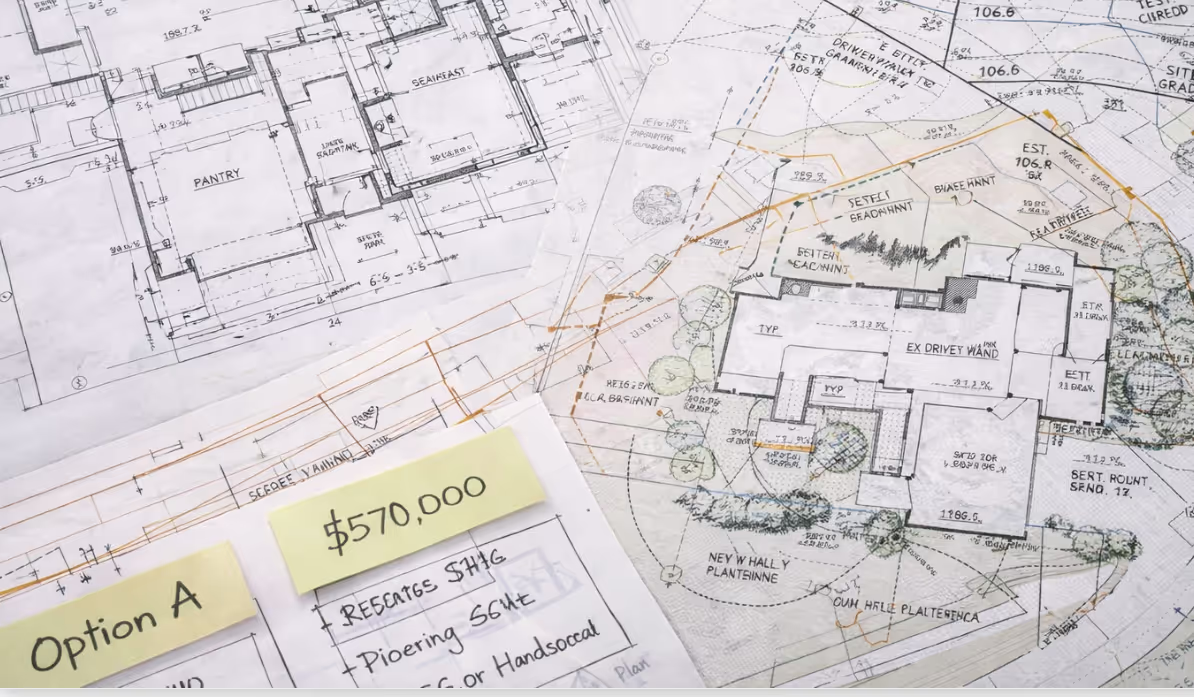
These details often go beyond architectural drawings. For example, plumbing scope may include decisions such as the number and location of hose bibs, fixture preferences, or system configurations. These are not always fully defined in drawings but have a direct impact on cost.
Using detailed bid packages, each of these elements is documented clearly. This ensures that subcontractors are pricing the same work, not making individual assumptions.
Once the bid packages are complete, they are issued to multiple subcontractors for pricing.
- Scope development: Detailed definition of each trade's work.
- Client collaboration: Preferences and expectations are incorporated.
- Bid packages: Clear documents used for consistent pricing.
- Bid solicitation: Multiple subcontractors invited to price the work.
Why detail matters
The level of detail in bid packages directly affects cost accuracy. A well-developed package ensures that all required work is included in the initial pricing.
For example, plumbing systems require numerous small but important decisions. If items like exterior water connections or fixture specifications are not defined early, they can lead to additional costs later.
By addressing these details upfront, the project avoids what are known as scope gaps. These are missing elements in the original pricing that later require change orders.
A thorough preconstruction process minimizes these gaps by aligning scope with the homeowner's expectations before subcontractors are hired .
- Defined expectations: Reduces ambiguity in pricing.
- Scope completeness: Limits missing items.
- Fewer change orders: Reduces unexpected costs.
- Better alignment: Matches work to client preferences.
How bids are compared
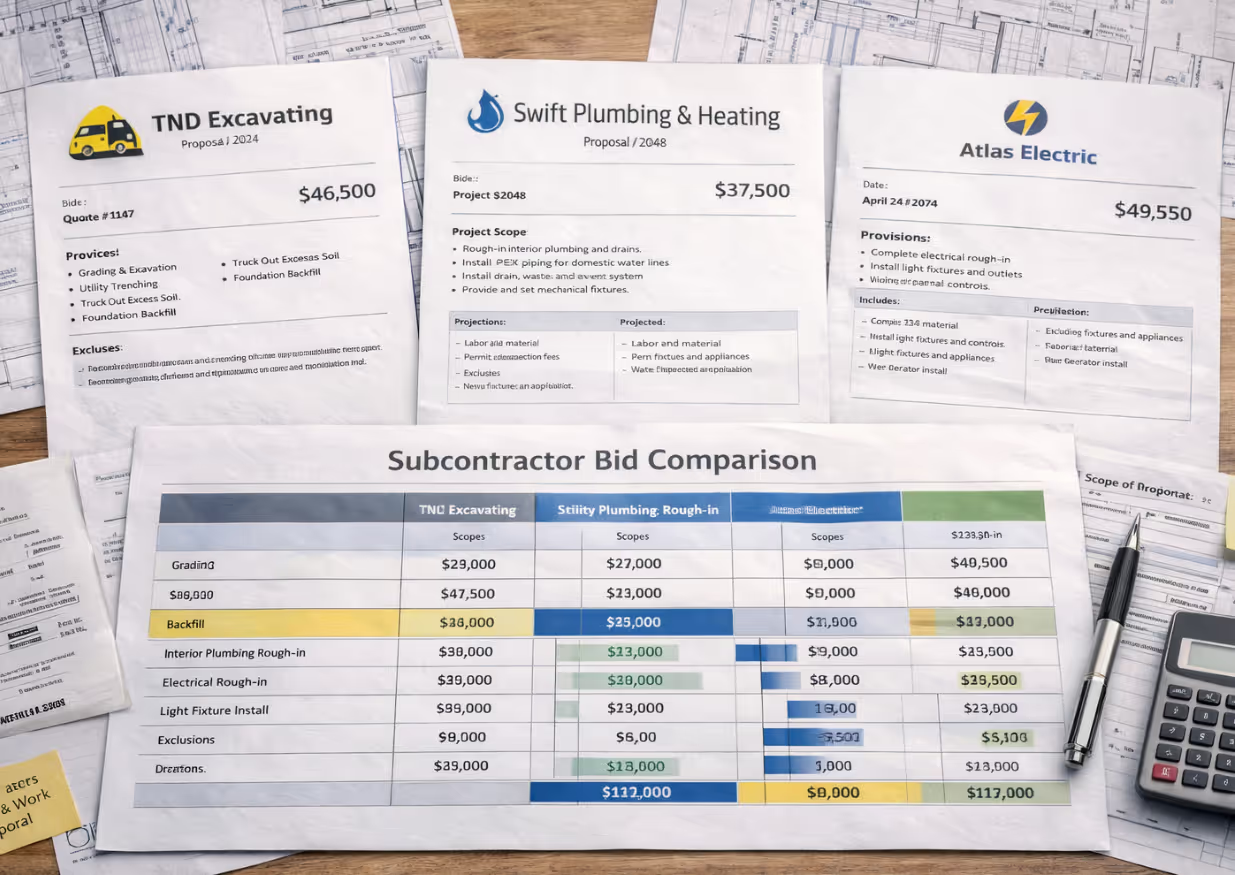
Once bids are received, they are organized into a structured comparison. Because all subcontractors are pricing the same defined scope, the comparison becomes meaningful.
This is often referred to as an apples-to-apples comparison. Differences in pricing can be evaluated based on approach, assumptions, and completeness rather than unclear scope.
The range of bids provides insight into the market value of the work. Since each subcontractor brings a different perspective, pricing reflects real-world conditions rather than a single estimate.
This process allows both the builder and homeowner to understand where costs fall and why.
- Aligned scope: Ensures consistent pricing basis.
- Market insight: Multiple bids reveal price range.
- Clarity: Differences are easier to evaluate.
- Transparency: Results are shared and reviewed.
How trade partners are selected
Selecting a subcontractor is not based on price alone. While cost is important, it is evaluated alongside experience, reliability, and overall fit for the project.
The builder prepares a bid comparison and reviews it with the homeowner. This allows for a collaborative decision that considers both financial and qualitative factors.
Because no subcontractor is guaranteed the work, each one must earn it through competitive pricing and demonstrated capability.
Once a subcontractor is selected, their scope and pricing are clearly defined, reducing the likelihood of changes later.
- Not price-only: Selection considers quality and reliability.
- Client involvement: Decisions made collaboratively.
- Competitive process: Trades earn the work.
- Defined contracts: Scope is clear before work begins.
The Clarity perspective: how Clarity Building Group handles this
At Clarity, the bidding phase is built around detailed scope development and transparency. Bid packages are created in collaboration with the homeowner to define each trade's work at a granular level.
This includes decisions that may not appear on drawings but are critical to the project, such as specific system configurations or installation preferences. By addressing these details early, Clarity minimizes scope gaps and reduces the risk of change orders.
Multiple subcontractors are invited to bid on each package, creating competitive pricing. The resulting bids are organized into a clear comparison that is shared with the homeowner.
Selections are made collaboratively, based on both cost and capability. This process ensures that subcontractors are chosen with full visibility and that the project moves into construction with a well-defined and reliable scope.