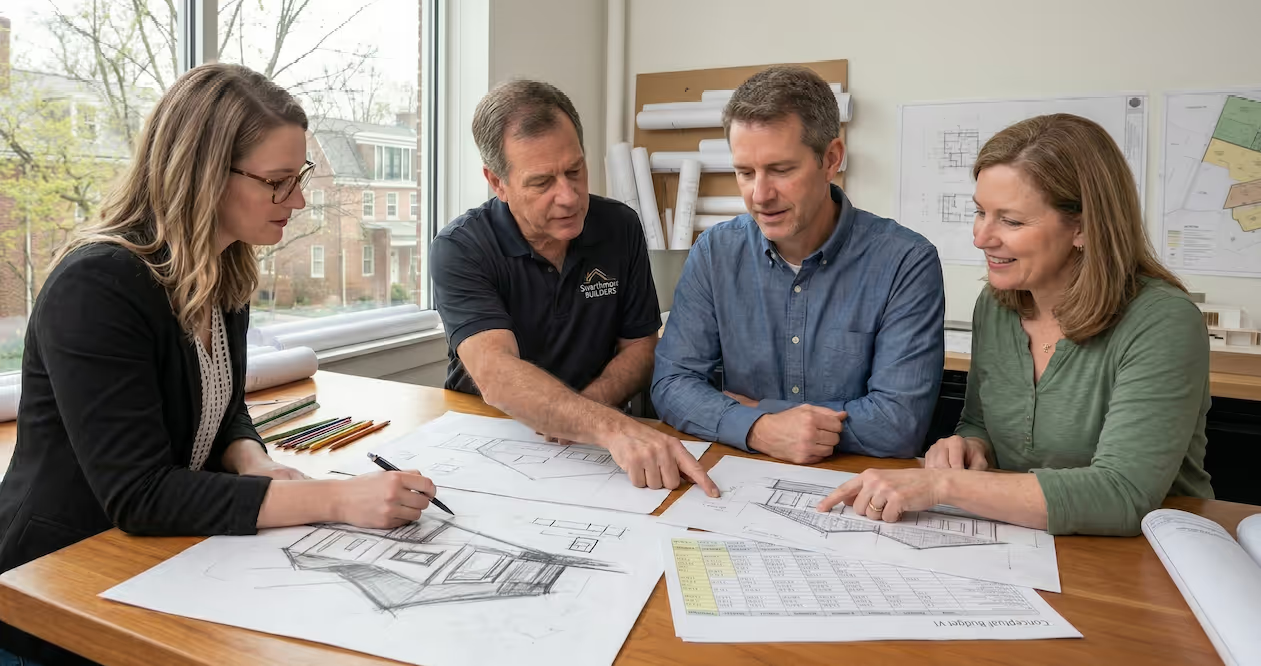
How detailed should construction drawings be before bidding?
The level of detail required for accurate pricing
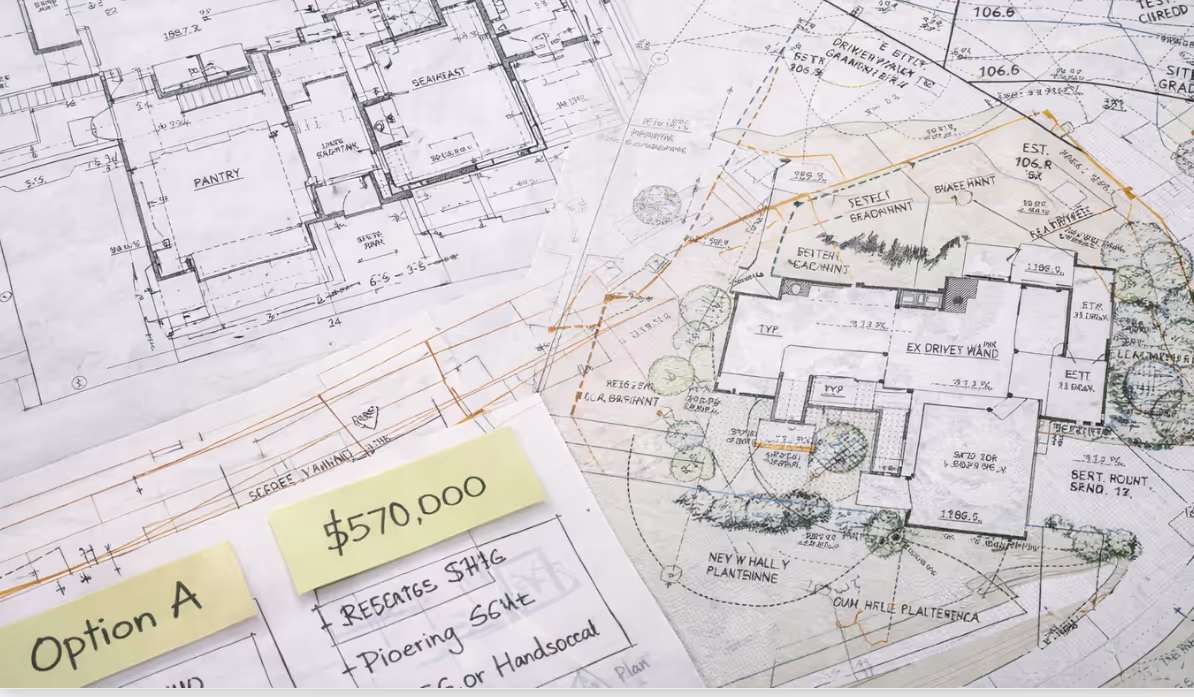
The level of detail in construction drawings directly determines how accurate and reliable project pricing will be. When drawings are well developed, bids reflect real scope. When they are vague, bids rely on assumptions.
For custom homes and large renovations, detailed documentation is essential before bidding begins. It defines the project clearly and reduces uncertainty.
In this article
- What level of detail is required before bidding
- Why site planning is the starting point
- How different design disciplines contribute
- How drawing quality impacts pricing accuracy
Context
Construction pricing is only as accurate as the information it is based on. Early-stage drawings are often incomplete, which is appropriate for conceptual design but not for bidding.
As the project develops, more detail is added by multiple design professionals. This progression moves the project from assumptions to defined scope.
The goal is to reach a level of clarity where subcontractors can price the work consistently.
The short answer
Construction drawings should be detailed enough to clearly define scope, materials, and coordination between systems before bidding.
This reduces reliance on allowances and assumptions.
More detail leads to more accurate and consistent pricing.
How this works step by step
The process begins with defining the site. A detailed site plan establishes grading, drainage, and layout constraints that affect the entire project.
Once the site is understood, the architect develops the building design in alignment with these conditions.
Additional consultants then contribute their expertise, refining the design further and adding layers of detail.
This progression creates a complete set of documents suitable for bidding.
- Site definition: Grading, drainage, and layout established.
- Architectural design: Building aligned with site conditions.
- Consultant input: Structural, landscape, and interiors.
- Coordinated documents: Ready for subcontractor pricing.
Why the site plan comes first
The site plan is one of the most critical early documents. It defines grading, impervious coverage, access, and stormwater management, all of which are required for permitting.
This work is typically led by a civil engineer, but in custom projects it is coordinated closely with the architect and often a landscape architect.
The landscape architect contributes to how outdoor spaces function and connect, influencing layout decisions such as terraces, driveways, and site features.
Once the site is clearly defined, the building can be designed to fit it properly.
- Grading plan: Establishes elevations and slopes.
- Stormwater management: Required for approvals.
- Site layout: Drives building placement.
- Outdoor design: Integrated with architecture.
How design disciplines add detail
As the architect develops the building design, other professionals contribute to refining the project. Each discipline adds information that improves clarity and reduces assumptions.
Structural engineers define how the building stands. Landscape architects shape the exterior experience. Interior designers begin organizing interior layouts, finishes, and fixture requirements.
These layers of input create a more complete picture of the project.
The more coordination that occurs before bidding, the more accurate the pricing will be.
- Structural design: Defines building systems.
- Landscape design: Coordinates exterior spaces.
- Interior planning: Guides finishes and layouts.
- System coordination: Aligns all disciplines.
Impact on cost accuracy
Detailed drawings allow subcontractors to price work based on clearly defined scope. This leads to more consistent and comparable bids.
When drawings lack detail, subcontractors must fill in gaps with assumptions or allowances. This creates variability in pricing.
Accurate pricing depends on reducing these unknowns before bids are requested.
The goal is to move from conceptual estimates to real market pricing.
- Defined scope: Clear instructions for pricing.
- Reduced allowances: Fewer placeholders.
- Consistent bids: Comparable pricing across trades.
- Improved accuracy: Budget reflects real conditions.
Common mistakes
A common mistake is bidding a project too early, before drawings are sufficiently developed. This leads to unreliable pricing and future cost increases.
Another issue is underestimating the importance of coordination between disciplines, which can leave gaps in the documents.
Some projects also prioritize speed over completeness, moving into bidding without the necessary detail.
These approaches increase risk.
- Early bidding: Incomplete drawings used for pricing.
- Missing coordination: Gaps between disciplines.
- Overreliance on allowances: Replacing detail with estimates.
- Rushed process: Skipping critical development steps.
What to ask before bidding
Homeowners should ask whether the drawings fully define the scope of work and how much of the budget is based on allowances versus real pricing.
It is also important to understand which design disciplines have contributed to the documents and whether coordination has been completed.
Asking how bids will be normalized helps ensure that pricing is comparable.
These questions help determine readiness for bidding.
The Clarity perspective: how Clarity Building Group handles this
At Clarity, bidding is not initiated until the project has reached a sufficient level of detail. The process begins with a fully developed site plan, coordinated with civil engineering and landscape design.
Detailed bid packages are then created for each trade, expanding on the drawings to define scope clearly and eliminate ambiguity.
Multiple subcontractor bids are obtained based on this consistent information, allowing for accurate comparison and selection.
This approach ensures that the resulting control estimate reflects real scope and market pricing, reducing uncertainty before construction begins.