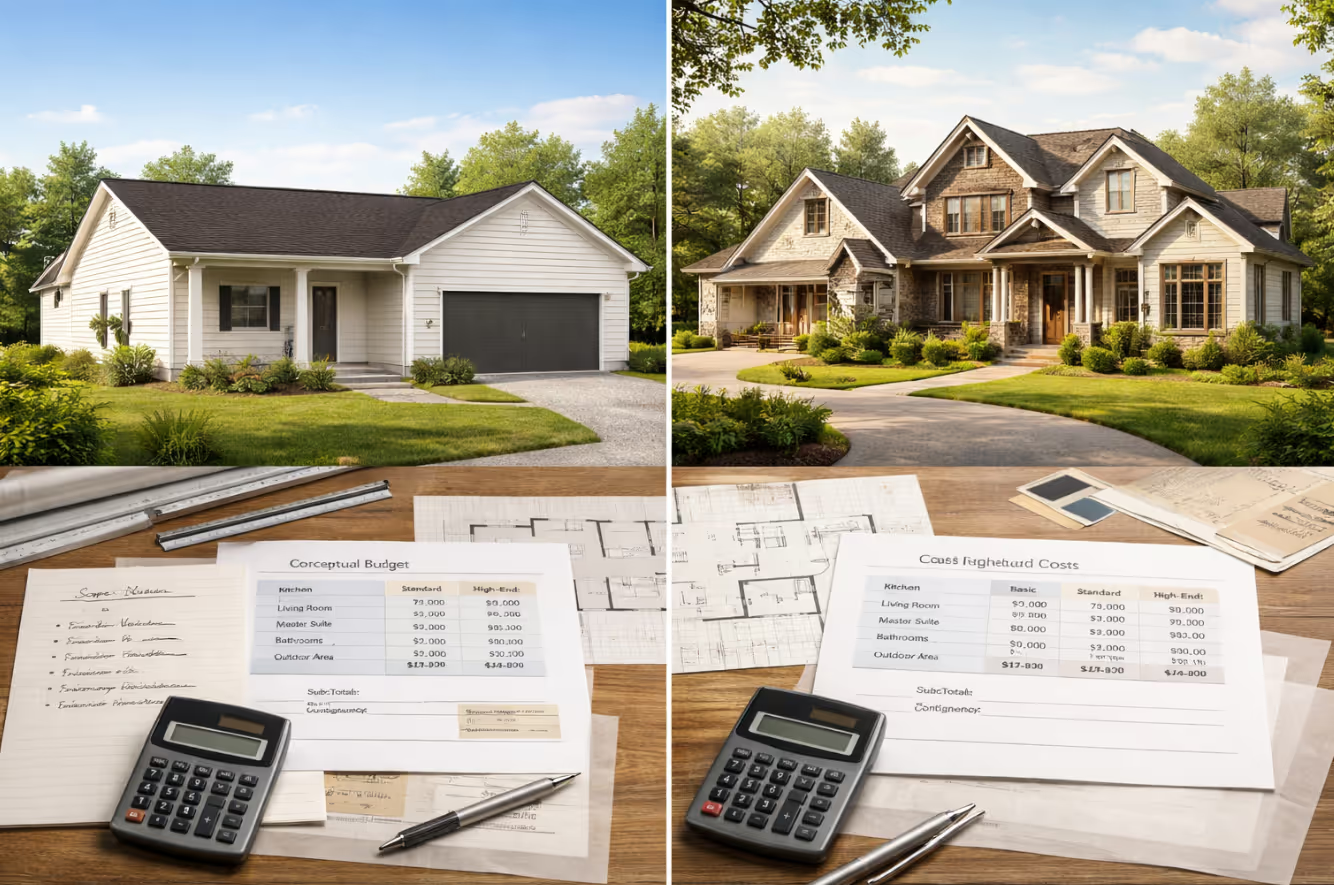
Why two projects of the same size can have vastly different costs
Understanding how complexity and detail impact pricing
Two residential projects with the same square footage can differ significantly in cost. Size is only one variable, and in high-end construction it is often not the most important one.
What matters more is how that square footage is designed, detailed, and built. Complexity, materials, systems, and conditions all shape the final cost in ways that are not visible in a simple area comparison.
In this article
- Why square footage is an incomplete measure of cost
- The key factors that create cost variation between similar-sized projects
- How design and detailing influence construction effort
- Common misconceptions that lead to inaccurate comparisons
- How to evaluate projects more realistically
The context: why this is a common question and why it's complicated
Homeowners often try to compare projects using simple metrics like square footage because it feels objective and easy to understand. It provides a quick way to estimate cost without needing to analyze drawings or specifications.
The problem is that high-end residential construction is not standardized. Every project is shaped by design intent, site conditions, and the level of customization involved. Two homes may share the same area but differ entirely in how they are built.
This creates a disconnect between expectations and reality when cost is reduced to a single number.
The short answer
Projects of the same size can have vastly different costs because square footage does not capture complexity, detailing, or quality level. A simple, efficient design will generally cost less than a highly customized one, even if both occupy the same area.
Cost is driven by how difficult the project is to build, not just how large it is. The more intricate the design and the higher the level of finish, the more labor, coordination, and specialized work is required.
In practical terms, size sets a baseline, but design and execution determine where the project ultimately lands.
How these options differ
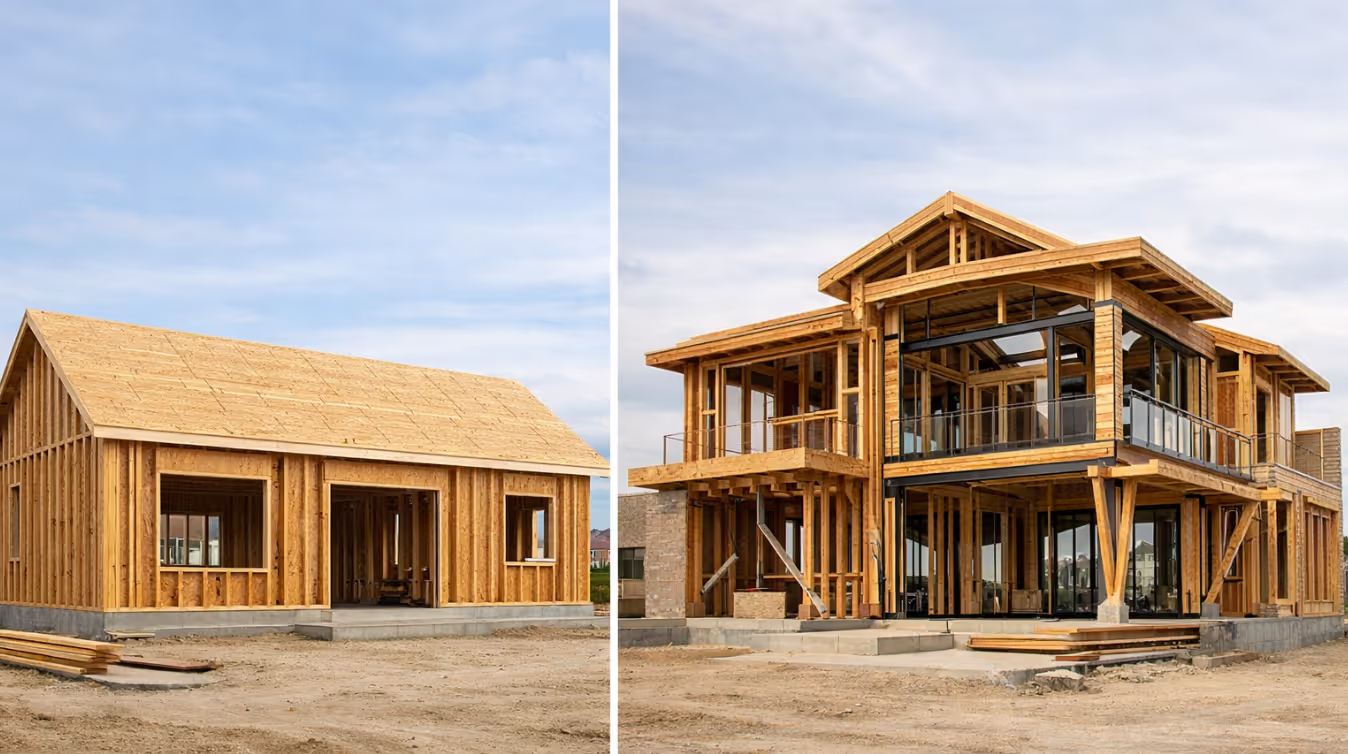
When comparing two projects of equal size, the differences usually come from how that space is organized and constructed. These differences are often not visible in a simple plan view or square footage calculation.
- Simple vs complex geometry: Rectangular layouts with standard spans are more efficient to build than homes with offsets, curves, cantilevers, or large open spans.
- Standard vs custom components: Stock windows, doors, and cabinetry cost less than custom-fabricated elements that require design coordination and specialized installation.
- Basic vs high-end finishes: Material selections can vary widely in cost, even when covering the same amount of area.
- Conventional vs advanced systems: Standard mechanical systems differ significantly in cost from high-performance or fully integrated systems.
- Favorable vs challenging site conditions: Flat, accessible lots are more predictable than sloped sites or properties with limited access.
Each of these differences affects labor, materials, and coordination. When combined, they can create substantial cost variation between projects that appear similar on the surface.
Understanding these distinctions is essential for making meaningful comparisons.
Where each approach works best
Simpler projects tend to perform well when efficiency and predictability are priorities. They are often easier to price, schedule, and build because they rely on familiar construction methods and standard components.
More complex projects are appropriate when architectural intent, customization, and performance are the primary goals. These projects often require more detailed coordination and a higher level of craftsmanship.
- Simpler designs: Best suited for clients prioritizing efficiency, speed, and cost control.
- Highly detailed designs: Best suited for clients prioritizing architectural expression, customization, and long-term performance.
Neither approach is inherently better. The key is understanding the cost implications of each.
Where each approach breaks down
Problems arise when expectations do not align with the level of complexity in the design. A highly customized project paired with an efficiency-based budget often leads to frustration and redesign.
Similarly, assuming that all square footage should cost the same can result in unrealistic comparisons between builders or proposals.
- Oversimplified comparisons: Relying on cost per square foot ignores critical differences in scope and detailing.
- Incomplete design information: Early comparisons made without detailed drawings often miss important cost drivers.
- Unrealistic expectations: Expecting high-end detailing at entry-level pricing creates tension during design and bidding.
These breakdowns are usually not caused by a single mistake, but by a mismatch between assumptions and reality.
How to evaluate which is right
The most effective way to evaluate projects is to look beyond size and focus on the underlying components that drive cost.
This means reviewing design intent, level of finish, and construction complexity rather than relying on simplified metrics.
- Compare scope, not just size: Look at what is included in each project, including systems and detailing.
- Understand quality levels: Identify where materials and finishes differ.
- Evaluate design complexity: Consider how difficult the project will be to build.
- Review documentation: More complete drawings lead to more reliable comparisons.
- Ask about assumptions: Clarify what is included or excluded in each estimate.
These steps provide a more accurate basis for comparison than square footage alone.
The Clarity perspective: how Clarity Building Group handles this
At Clarity, cost comparisons are grounded in detailed understanding rather than simplified metrics. During preconstruction, the focus is on defining scope clearly so that pricing reflects actual design intent.
Budget transparency allows clients to see how different components contribute to total cost. This makes it easier to understand why one project may cost more than another, even if the size is similar.
Multiple subcontractor bids are used to test assumptions and align pricing with current market conditions. This helps ensure that cost differences are based on real factors rather than incomplete information.
Ongoing cost tracking continues this clarity during construction. As decisions are made and conditions evolve, the budget is updated to reflect current information, reducing the risk of unexpected variation.
This approach does not eliminate differences between projects. It makes those differences visible early, which allows for more informed decision-making.