Why "price per square foot" is misleading for custom homes
Why this common metric breaks down in high-end construction
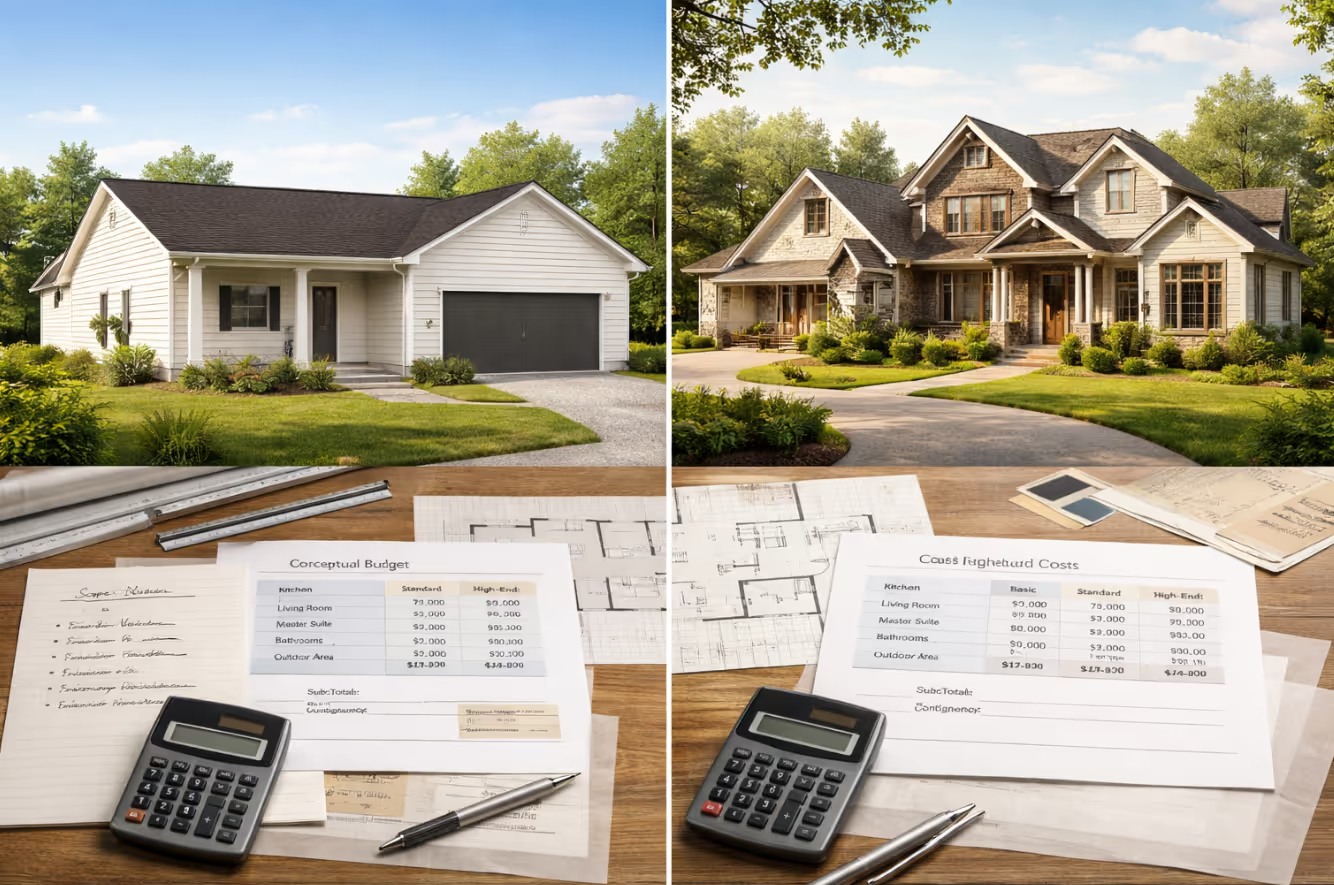
Price per square foot is often used as a shortcut to estimate construction cost, but it breaks down quickly in custom residential projects. It can provide a very rough range, but it does not account for the specific design, materials, or conditions that actually determine cost.
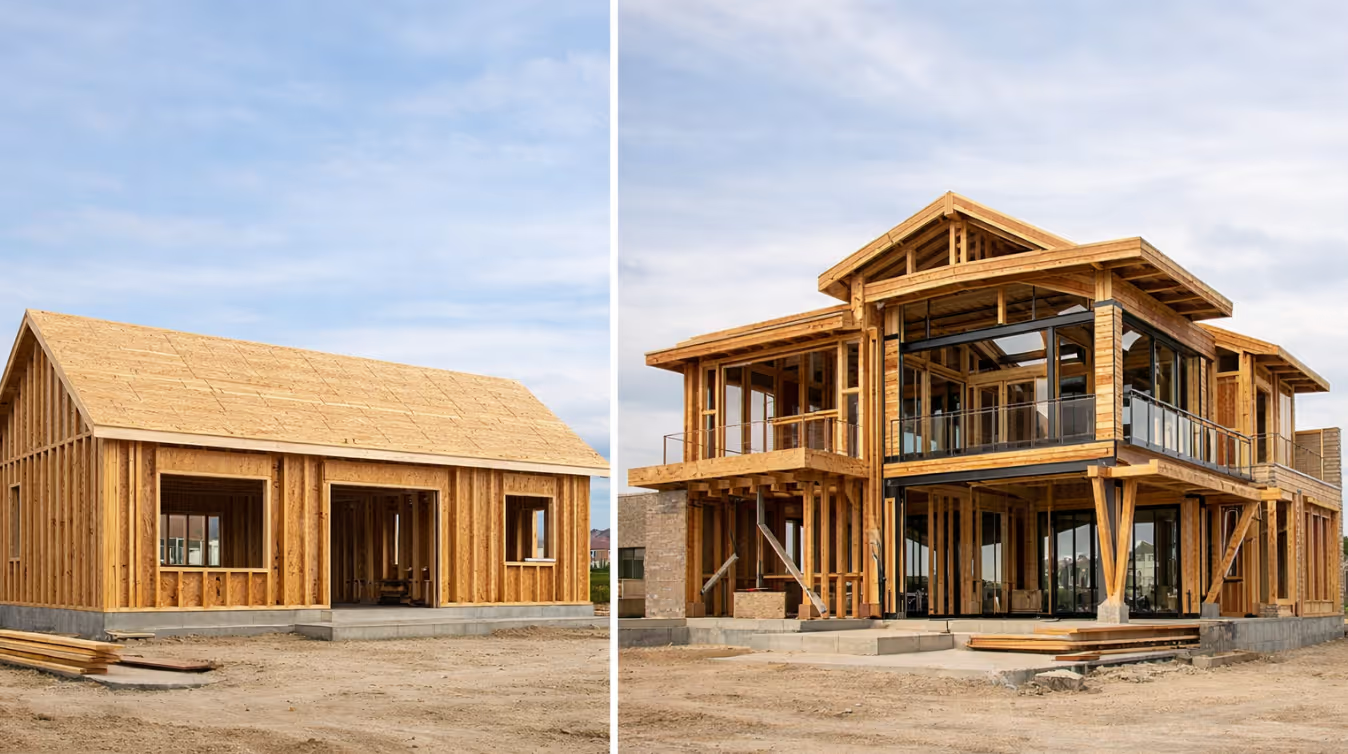
In high-end construction, two homes with the same square footage can vary dramatically in price. The metric creates a false sense of predictability by flattening complex decisions into a single number.
In this article
- Why price per square foot is commonly used
- What this metric fails to capture in custom homes
- Where it can still be useful
- How to evaluate cost more accurately
Context
Homeowners are often introduced to construction cost through simplified metrics. Price per square foot is widely used in real estate, speculative building, and production housing, where homes are more standardized and variations are limited.
Custom residential construction operates differently. Architect-led projects involve unique layouts, structural conditions, material selections, and detailing. These variables are not evenly distributed across square footage, which makes the metric increasingly unreliable as complexity increases.
The appeal of price per square foot is that it feels objective and easy to compare. The reality is that it removes the very factors that define cost in a custom project.
The short answer
Price per square foot is misleading because it averages cost across an entire building without recognizing where money is actually spent.
High-cost areas like kitchens, bathrooms, structural work, and detailed finishes are blended together with lower-cost areas like bedrooms or open living space. The result is a number that hides more than it reveals.
For custom homes, cost is driven by scope, detail, and decision-making, not just size. Square footage is only one input, and often not the most important one.
How these differences show up
Two homes with identical square footage can have completely different cost structures depending on how that space is used. A house with multiple bathrooms, complex rooflines, custom millwork, and high-end finishes will cost far more than a simpler layout with standard materials.
Even within the same home, not all square footage carries equal cost. Kitchens, bathrooms, and specialty spaces often have a much higher cost per square foot than bedrooms, hallways, or unfinished areas. The average masks these differences.
Structural complexity also plays a role. Additions, renovations, and projects with challenging site conditions often require more labor, coordination, and problem-solving than new construction on a clear site.
- Program density: More kitchens, bathrooms, and specialty rooms increase cost without increasing overall size proportionally.
- Finish level: Material quality and customization can shift cost significantly within the same footprint.
- Structural complexity: Steel, spans, foundations, and framing conditions vary widely.
- Existing conditions: Renovations introduce unknowns that are not tied to square footage.
Where price per square foot breaks down
The metric works best when projects are consistent and repeatable. In speculative or production housing, where layouts, materials, and construction methods are similar across multiple homes, price per square foot can provide a useful benchmark.
In custom work, that consistency disappears. Each project reflects different design priorities, site constraints, and owner decisions. The more customized the project becomes, the less meaningful the average cost per square foot becomes.
It also breaks down when comparing builders. One builder�s number may include design coordination, detailed scopes, and realistic allowances, while another may rely on simplified assumptions or omit key costs. The square foot number alone does not reveal those differences.
This is why two proposals with similar price per square foot can produce very different final costs once the project is fully defined and built.
How to evaluate cost more accurately
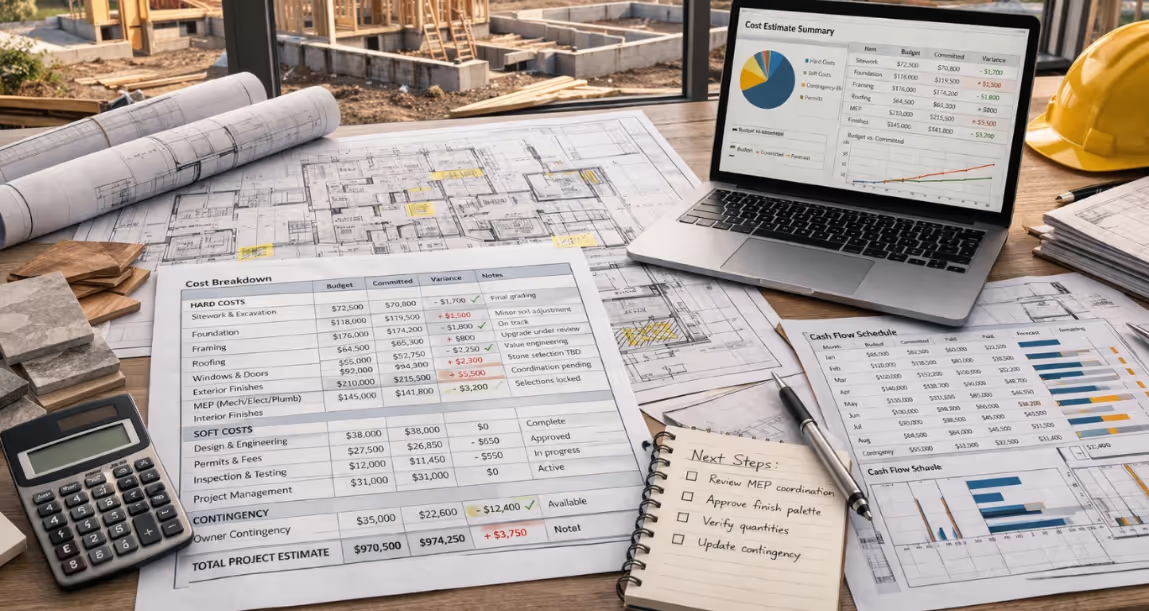
A more reliable approach is to look at how the budget is structured rather than reducing it to a single number. A detailed estimate should break the project into clearly defined categories with real scope descriptions.
Understanding cost drivers is more useful than comparing averages. Identifying where the project is investing in structure, finishes, systems, and complexity gives a clearer picture of how the budget aligns with the design.
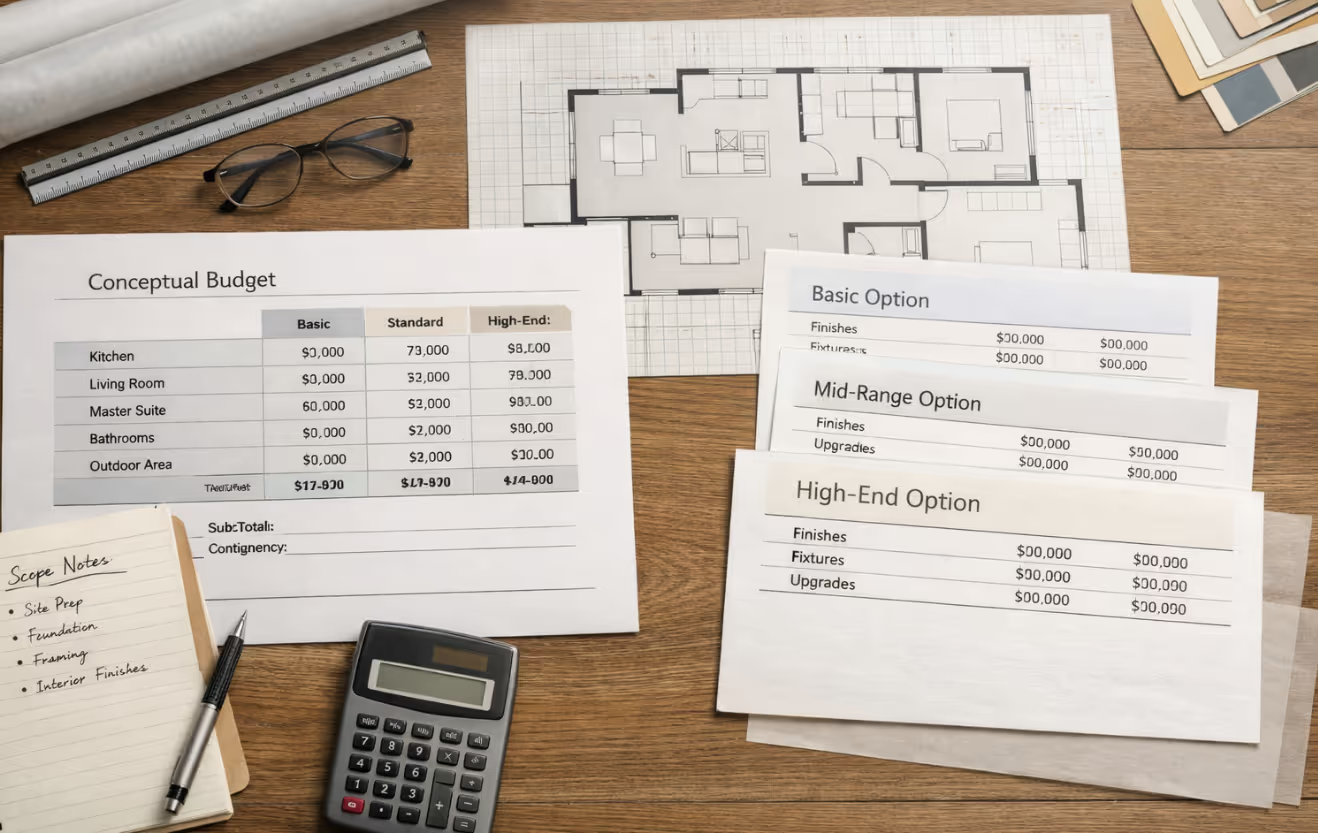
It is also important to distinguish between early-stage estimates and detailed pricing. A conceptual budget may use historical data and allowances, while a more advanced estimate incorporates subcontractor bids and defined scopes of work.
Comparing builders should involve reviewing scope completeness, assumptions, allowances, and level of detail. The goal is not to find the lowest average cost, but to understand what is actually included and how reliable the number is.
- Break down the scope: Review costs by category rather than relying on a single average.
- Understand assumptions: Identify allowances, exclusions, and estimated values.
- Compare like-for-like: Ensure different proposals are based on similar scope and quality levels.
- Track evolution: Follow how the budget develops from concept to detailed estimate.
The Clarity perspective: how Clarity Building Group handles this
At Clarity, price per square foot is not used as a decision-making tool for custom projects. Early budgets may reference historical ranges to establish feasibility, but the focus is on building a structured, transparent estimate tied to the actual design.
During preconstruction, the budget evolves from conceptual assumptions to detailed pricing as drawings are refined and subcontractor bids are obtained. This replaces broad averages with real numbers connected to defined scope.
Budget transparency is central to this process. Each cost category is broken down so homeowners can see where money is being allocated and how design decisions impact cost. Allowances are identified and reduced over time as selections are finalized.
Ongoing tracking continues through construction, with updates that show committed costs, remaining scope, and projected final cost. This approach reflects how custom projects actually behave, rather than relying on simplified metrics that can obscure reality.