What drives cost in a high-end residential project?
The key variables that influence budget from design through construction

The biggest cost drivers in a high-end residential project are not usually one single line item. Budget is shaped by the combined effect of design complexity, site conditions, level of finish, documentation quality, project timing, and how decisions are made before and during construction.
That is why two projects with similar square footage can land in very different budget ranges. In custom residential work, cost is a result of thousands of decisions, not a simple formula.
In this article
- Why cost questions are so common and why the answer is rarely simple
- The major variables that influence price from design through construction
- How those variables affect real project decisions
- Common misunderstandings that lead to budget surprises
- What to clarify before moving forward
The context: why this is a common question and why it's complicated
Most homeowners want to understand cost early, and that is reasonable. Budget affects whether a project moves forward, how the design develops, and what level of finish or complexity is realistic.
The complication is that high-end residential construction is not priced like a commodity. A custom home or major renovation is shaped by architecture, existing conditions, municipal requirements, trade availability, and the quality of information available at the time pricing is prepared.
That means cost can only be understood accurately when the underlying project is defined clearly enough to price. Until then, any number is partly a projection and partly an assumption.
The short answer
Cost in a high-end residential project is primarily driven by scope, complexity, quality level, and uncertainty. The more custom the design, the less standardized the work becomes, and the more important planning and coordination become.
Some of the biggest cost increases come from factors that are easy to underestimate at the beginning: difficult site conditions, incomplete drawings, specialty systems, late design decisions, and finish selections that carry secondary labor or installation requirements.
In practical terms, budget is influenced both by what you choose to build and by how clearly and early those choices are defined.
What drives the outcome
Several variables consistently move the budget more than homeowners expect. Some relate to the design itself, while others relate to process, conditions, and timing.
- Size and scope: Larger projects usually cost more, but total area alone does not explain much. A compact house with highly detailed construction can cost more than a larger but simpler one.
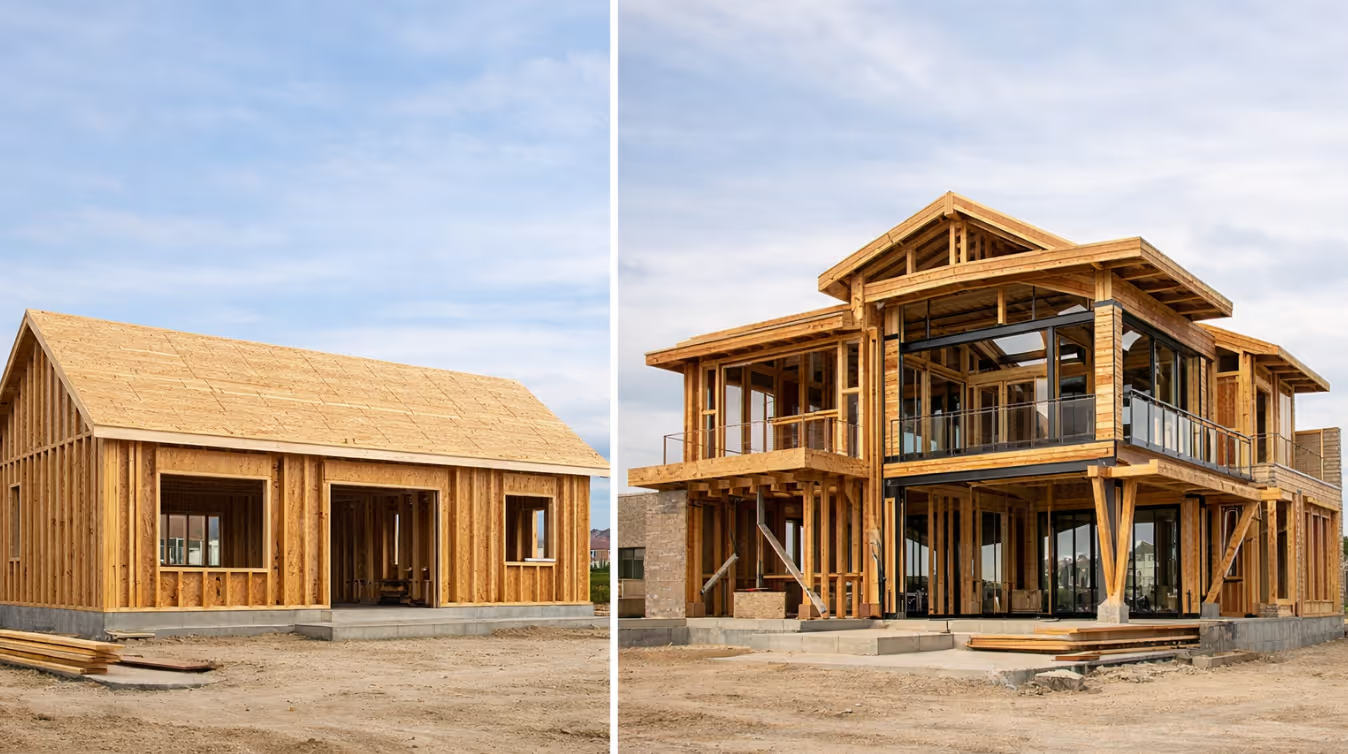
- Architectural complexity: Irregular forms, long spans, large openings, curved elements, intricate rooflines, and custom detailing increase labor, engineering, and coordination.
- Level of finish: Cabinetry, windows, doors, millwork, appliances, stone, tile, lighting, and hardware can shift a budget substantially even when the layout stays the same.
- Site conditions: Sloping grades, access limitations, poor soils, drainage work, retaining structures, utility upgrades, and difficult demolition conditions can add major cost before visible progress begins.
- Existing conditions in renovations: Hidden structural issues, outdated systems, hazardous materials, and mismatches between old and new construction often create uncertainty and added work.
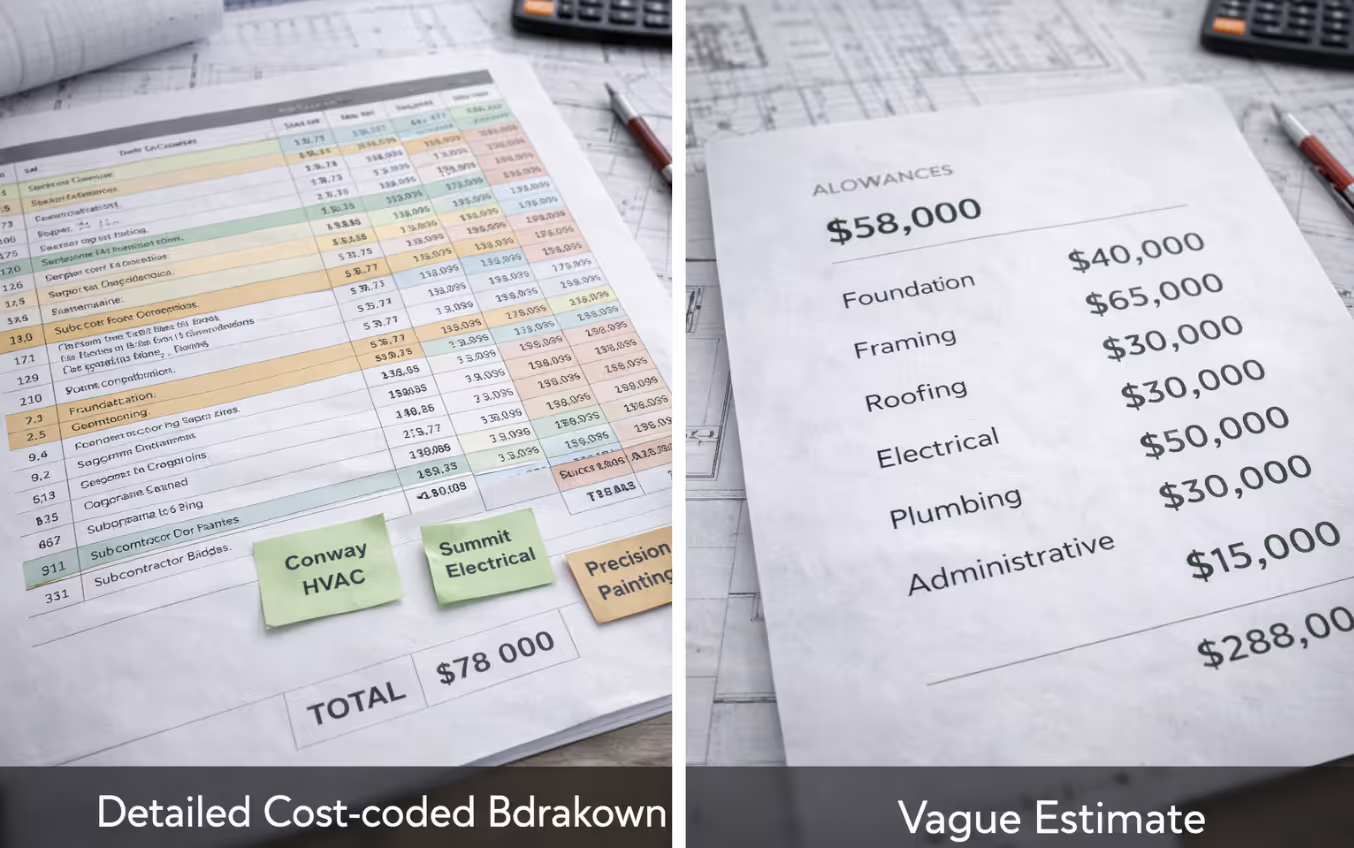
- Drawing and specification quality: Clear, coordinated documentation leads to more reliable pricing. Incomplete information forces assumptions, allowances, and later revisions.
- Mechanical and specialty systems: Advanced HVAC, integrated lighting controls, backup power, audio visual systems, water management, and high-performance enclosure requirements can materially affect cost.
- Project timing and market conditions: Trade availability, lead times, and material pricing can shift the budget depending on when bids are obtained and when purchasing occurs.
These drivers do not operate independently. A highly detailed design on a constrained site with incomplete documentation will carry more cost pressure than any one of those conditions alone would suggest.
That is why reliable budgeting requires not just numbers, but context.
What this means in practice
In real projects, budget movement often starts during design rather than during construction. Early design choices determine structure, enclosure, systems, and finish expectations. Once those decisions are embedded in the documents, they shape the trade pricing that follows.
For example, a change from standard-sized openings to large custom steel and glass assemblies does not just affect window cost. It may also affect structural engineering, waterproofing details, crane access, installation labor, and schedule coordination.
Likewise, site conditions can affect a project before framing begins. A house on a steep site may require more excavation, shoring, drainage, retaining walls, and foundation complexity. None of those elements change the visible square footage, but all of them change cost.
Finish selections work the same way. Higher-end materials do not only cost more to purchase. They often require more substrate preparation, more skilled installation, tighter tolerances, and longer procurement windows.
- Design decisions influence construction cost: Form, detailing, and systems determine how difficult the work is to execute.
- Documentation influences pricing confidence: The more complete the information, the fewer assumptions are built into the budget.
- Decision timing influences efficiency: Selections and revisions made late tend to cost more because they disrupt procurement and sequencing.
Common mistakes or misconceptions
A common misconception is that price per square foot is the best way to predict cost. It can be a rough shorthand at the broadest level, but it breaks down quickly in custom residential work because it ignores complexity, site conditions, and quality level.
Another mistake is assuming that early budgets are fixed commitments. Early budgets are useful, but they are only as accurate as the information behind them. When design evolves, cost often evolves with it.
Homeowners also sometimes focus on visible finish upgrades while overlooking less visible cost drivers such as structure, waterproofing, temporary protection, utility work, or code-required improvements.
- Misconception: Similar size means similar cost. Reality: Complexity, detailing, and site conditions can create major differences between projects of the same size.
- Misconception: Finish upgrades are the only things that move the budget. Reality: Structure, systems, logistics, and hidden conditions often have equal or greater impact.
- Misconception: Incomplete drawings can still produce dependable pricing. Reality: Missing information usually creates allowances, exclusions, and later cost changes.
- Misconception: A lower initial estimate means a lower final cost. Reality: Lower early numbers may simply reflect less complete scope or more aggressive assumptions.
The underlying issue is that uncertainty itself has a cost. The less defined a project is, the more room there is for variance.
What to ask before moving forward
If you want to understand what will actually move your budget, the best next step is not to chase a single average number. It is to clarify the variables that matter most for your project.
That means asking targeted questions during preconstruction and design development, when changes are still manageable and before assumptions harden into expectations.
- How complete is the current design information? This affects how much confidence anyone should place in the budget.
- What site or existing-condition risks are still unknown? Unknowns should be identified early because they often become cost drivers later.
- Which finish and systems decisions are still unresolved? Large unresolved categories make budgets look more stable than they really are.
- What assumptions are built into the pricing? A budget is only meaningful if the assumptions behind it are visible.
- How will budget feedback be integrated into design decisions? Cost control works best when pricing informs design before the drawings are finalized.
Those questions create a more useful conversation than asking for a number in isolation. They reveal whether the budget is grounded in real project information or still dependent on broad estimates.
The Clarity perspective: how Clarity Building Group handles this
At Clarity, cost is treated as something to be managed through process, not guessed at from a distance. That starts with preconstruction discipline, where the goal is to define scope clearly enough that pricing becomes progressively more reliable as the project develops.
Budget transparency is central to that approach. Instead of treating cost as a black box, the budget is broken into understandable components so clients can see what is driving it and where decisions are having an effect.
Multiple subcontractor bids are an important part of that process. Competitive trade pricing helps test assumptions, expose scope gaps, and ground the estimate in current market conditions rather than generalized allowances.
Ongoing cost tracking continues that discipline during construction. As selections are finalized, trade costs are updated, and changes occur, the financial picture stays visible so decisions can be made with current information rather than after-the-fact surprises.
That does not remove every variable from a complex residential project. It does make the major cost drivers more visible early, which is usually the difference between a budget that is merely hopeful and one that is genuinely useful.