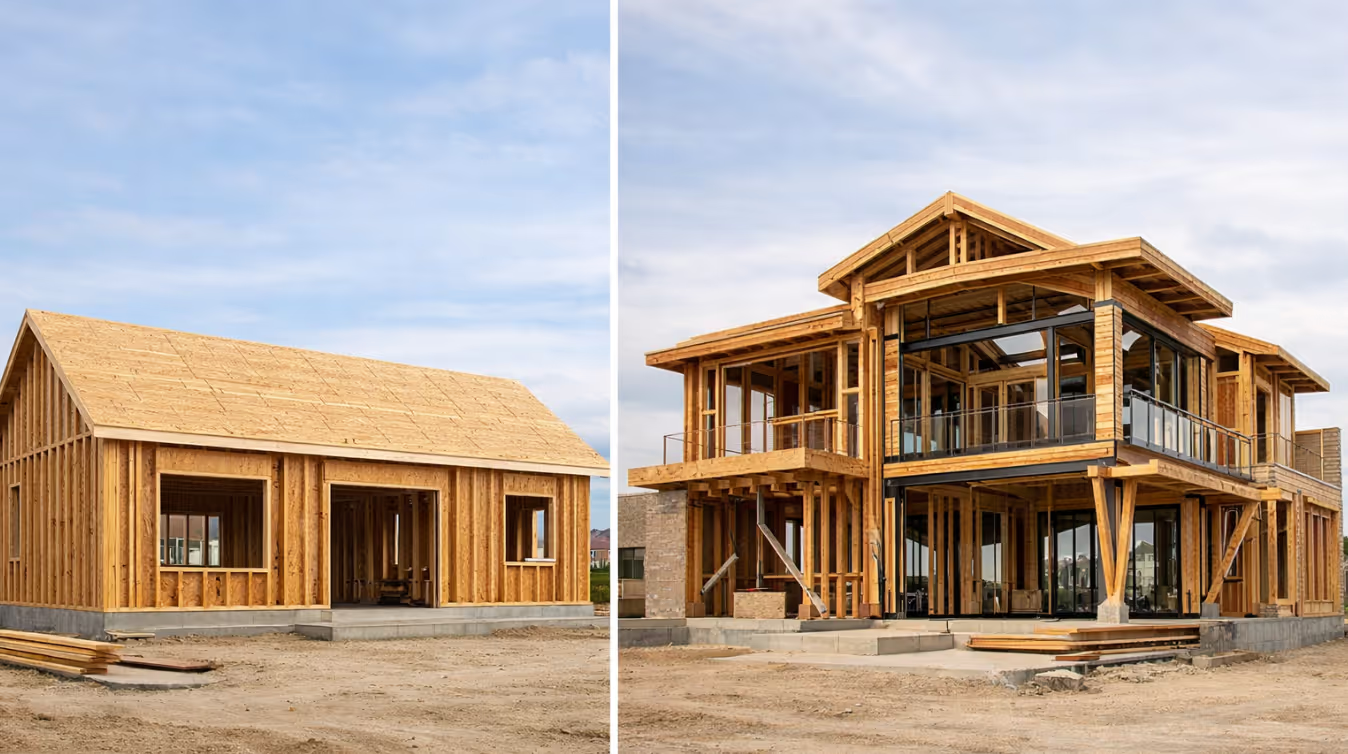
How much does a custom home or major renovation cost on the Main Line?
Realistic cost ranges for architect-led residential projects in the Philadelphia region

On the Main Line, high-end custom homes and major renovations typically fall within a broad range rather than a single predictable number. Most architect-led projects land somewhere between mid six figures and several million dollars depending on scope, complexity, and level of finish.
The key is not just the total number, but whether your expectations align with the type of project you are planning. Understanding realistic ranges early helps avoid misalignment as design progresses.
In this article
- Typical cost ranges for custom homes and renovations in the Main Line region
- What drives projects toward the lower or higher end of the range
- How these costs translate into real project decisions
- Common misunderstandings about early pricing
- How to evaluate whether your expectations are aligned
The context: why this is a common question and why it's complicated
Cost is often the first question homeowners ask, especially in a region like the Main Line where construction standards, municipal requirements, and architectural expectations are consistently high.
The challenge is that residential construction is not priced as a fixed product. Two homes with similar square footage can have dramatically different costs depending on design intent, site conditions, and the level of customization involved.
That means any cost range must be understood as a framework, not a guarantee. The more clearly a project is defined, the more precise the pricing becomes.
The short answer
For architect-led residential projects on the Main Line, new custom homes commonly range from approximately $600 to $1,200 per square foot or more depending on complexity and finish level.
Major renovations and additions often fall between $300 and $800 per square foot, with wide variation based on how much of the existing structure is altered and how integrated the new work is with the old.
Highly complex projects, historic renovations, or homes with extensive custom detailing and systems can exceed these ranges.
What drives the outcome
Where a project falls within these ranges depends on several key variables. These factors often matter more than total square footage.
- Architectural design: Simple, efficient forms tend to cost less than complex geometries, large spans, or highly detailed assemblies.
- Level of finish: Cabinetry, windows, appliances, millwork, and materials can significantly shift overall cost without changing the size of the home.
- Site conditions: Sloped lots, poor soil, limited access, and drainage requirements can add substantial cost before vertical construction begins.
- Extent of renovation: Projects that involve structural changes, full system replacement, or integration with older construction tend to cost more than surface-level updates.
- Mechanical and specialty systems: High-performance HVAC, integrated controls, and specialty installations increase both material and labor cost.
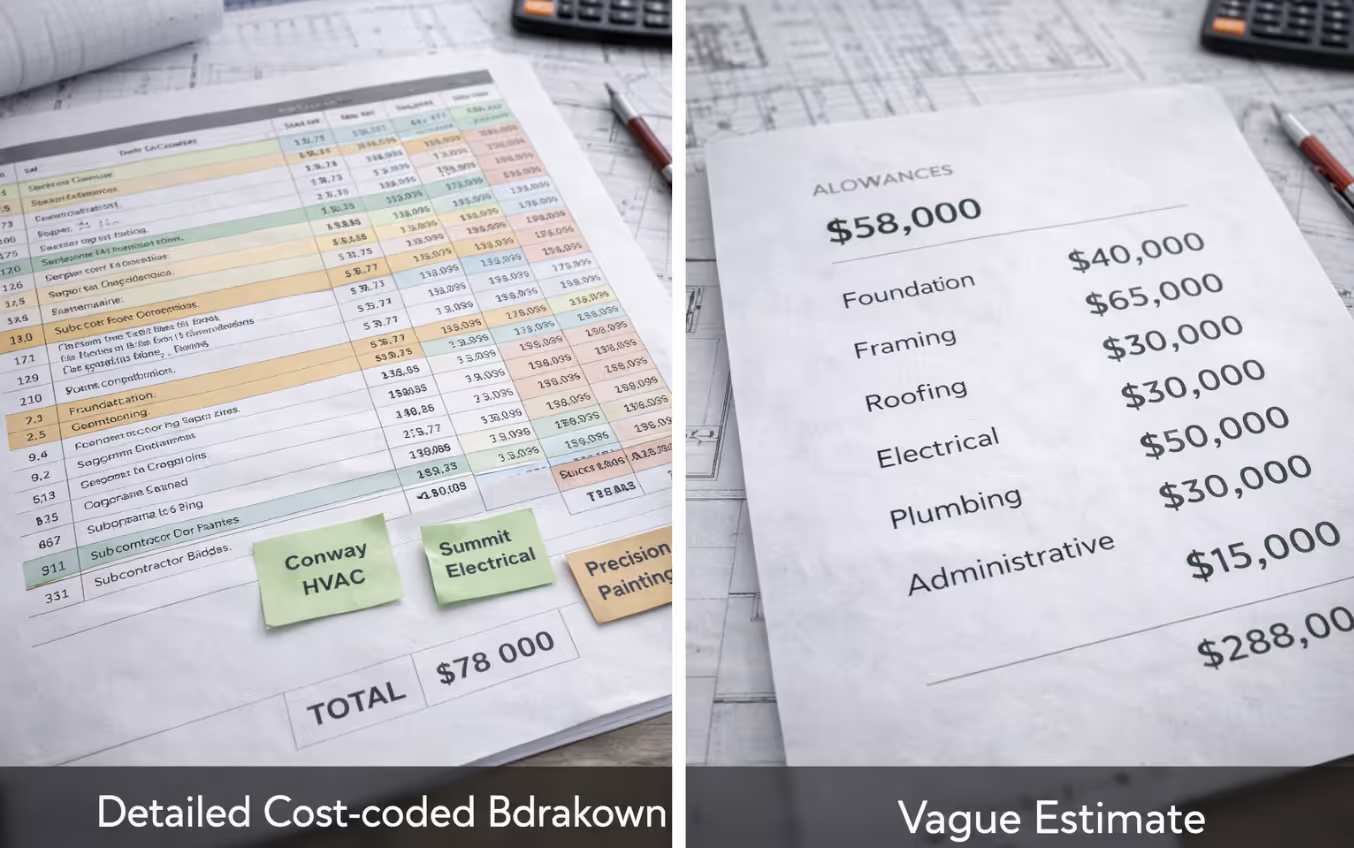
- Documentation quality: Well-developed drawings and specifications produce more reliable pricing, while incomplete documents introduce allowances and uncertainty.
- Project timing: Market conditions, labor availability, and material lead times can influence trade pricing and overall cost.
These factors interact with each other. A highly detailed design on a difficult site with incomplete documentation will trend toward the higher end of the range.
Understanding these drivers is more useful than focusing on an average number alone.
What this means in practice
Cost ranges are most useful when they are used to guide early decisions rather than define final budgets. During initial planning, they help establish whether the scale and quality of a project align with available resources.
As design develops, those ranges should narrow into more specific budgets based on real drawings, specifications, and subcontractor input.
For example, a homeowner considering a 5,000 square foot custom home might initially estimate a wide range based on square footage. As the design evolves, decisions about structure, enclosure, finishes, and systems will determine where within that range the project ultimately lands.
- Early ranges guide feasibility: They help determine whether a project is viable before significant design investment.
- Detailed design refines cost: The more decisions that are made, the more accurate the budget becomes.
- Selections and systems matter: Final cost is heavily influenced by choices that are often made later in the process.
Common mistakes or misconceptions
One of the most common mistakes is treating price per square foot as a fixed rule. While it provides a general benchmark, it does not account for complexity, detailing, or site-specific conditions.
Another misconception is assuming that early estimates are firm commitments. Early numbers are based on limited information and are meant to guide planning, not define final cost.
Homeowners also sometimes underestimate the cost of renovations relative to new construction. Working within an existing structure often introduces unknown conditions and coordination challenges that increase cost.
- Misconception: Price per square foot predicts final cost. Reality: It is only a broad guideline and becomes less reliable as customization increases.
- Misconception: Renovations are always cheaper than new construction. Reality: Complex renovations can approach or exceed new construction costs.
- Misconception: Early estimates are fixed. Reality: They evolve as the project becomes more defined.
- Misconception: All square footage costs the same. Reality: Kitchens, bathrooms, and complex spaces cost more than simple areas.
These misunderstandings often lead to unrealistic expectations if not addressed early.
What to ask before moving forward
Before relying on a cost range, it is important to understand how well it applies to your specific project.
That means asking questions that clarify scope, assumptions, and level of detail rather than focusing only on the number itself.
- What level of design detail supports this range? More developed information leads to more reliable pricing.
- What assumptions are included? Understanding what is and is not included prevents misinterpretation.
- Where could the project move up or down in cost? Identifying cost-sensitive areas helps guide decisions.
- How will the budget be refined over time? A clear process for updating cost is critical to maintaining control.
- What comparable projects inform this range? Relevant examples provide useful context.
These questions shift the conversation from a static number to a more accurate understanding of how cost will develop.
The Clarity perspective: how Clarity Building Group handles this
At Clarity, early cost discussions are framed as ranges tied to project type, level of finish, and known conditions. The goal is to establish realistic expectations without presenting early numbers as fixed commitments.
Preconstruction is used to refine those ranges into detailed budgets. As drawings and specifications develop, the budget is updated to reflect actual scope rather than assumptions.
Multiple subcontractor bids are used to validate pricing and align the budget with current market conditions. This helps reduce reliance on allowances and improves confidence in the numbers.
During construction, ongoing cost tracking maintains visibility into how the project is performing against the budget. As selections are finalized and conditions evolve, updates are made so decisions are based on current information.
This process does not eliminate variability, but it creates a structured way to understand and manage it from early planning through completion.