How to decide between renovating and building new
Evaluating the pros and cons of each path

Deciding between renovating an existing home and building new is not a simple cost comparison. Each path comes with different types of challenges, risks, and tradeoffs.
The right choice depends on what you value more: flexibility and control, or efficiency and existing infrastructure.
In this article
- The core differences between renovation and new construction
- Where each option has advantages
- Where each option creates challenges
- How to evaluate tradeoffs
- What to consider before deciding
Many homeowners assume one option is clearly more cost-effective. In reality, both paths can be expensive for different reasons.
Understanding those reasons helps you make a more informed decision.
The short answer
New construction offers maximum design freedom but includes significant site and infrastructure costs. Renovations reuse existing elements but introduce constraints and unknown conditions.
Neither option is universally better. The right choice depends on your priorities and tolerance for tradeoffs.
How these options differ
The biggest difference lies in what already exists versus what needs to be created from scratch.
New construction starts with a blank slate, while renovations must work within an existing structure.
- New construction: Full control over layout, structure, and systems
- Renovation: Existing structure provides a starting point but limits flexibility
This difference affects nearly every aspect of cost, design, and execution.
Where each works best
Each approach has situations where it performs better.
New construction is often better when the goal is a fully customized home without compromise.
- Complete design freedom: Room layouts, ceiling heights, and structure are fully customizable
- Modern systems: Mechanical, electrical, and structural systems designed from the ground up
- Long-term alignment: The home is built specifically for how you want to live
Renovation is often more efficient when the existing home already meets many of your needs.
- Existing infrastructure: Utilities, driveways, and site improvements already in place
- Established site: Landscaping and hardscaping may already exist
- Potential cost savings: Avoiding some of the major upfront site costs
These advantages can make renovation appealing, especially in established neighborhoods.
Where each breaks down
Both options have challenges that are often underestimated.
New construction includes a range of costs that are not visible in the finished home.
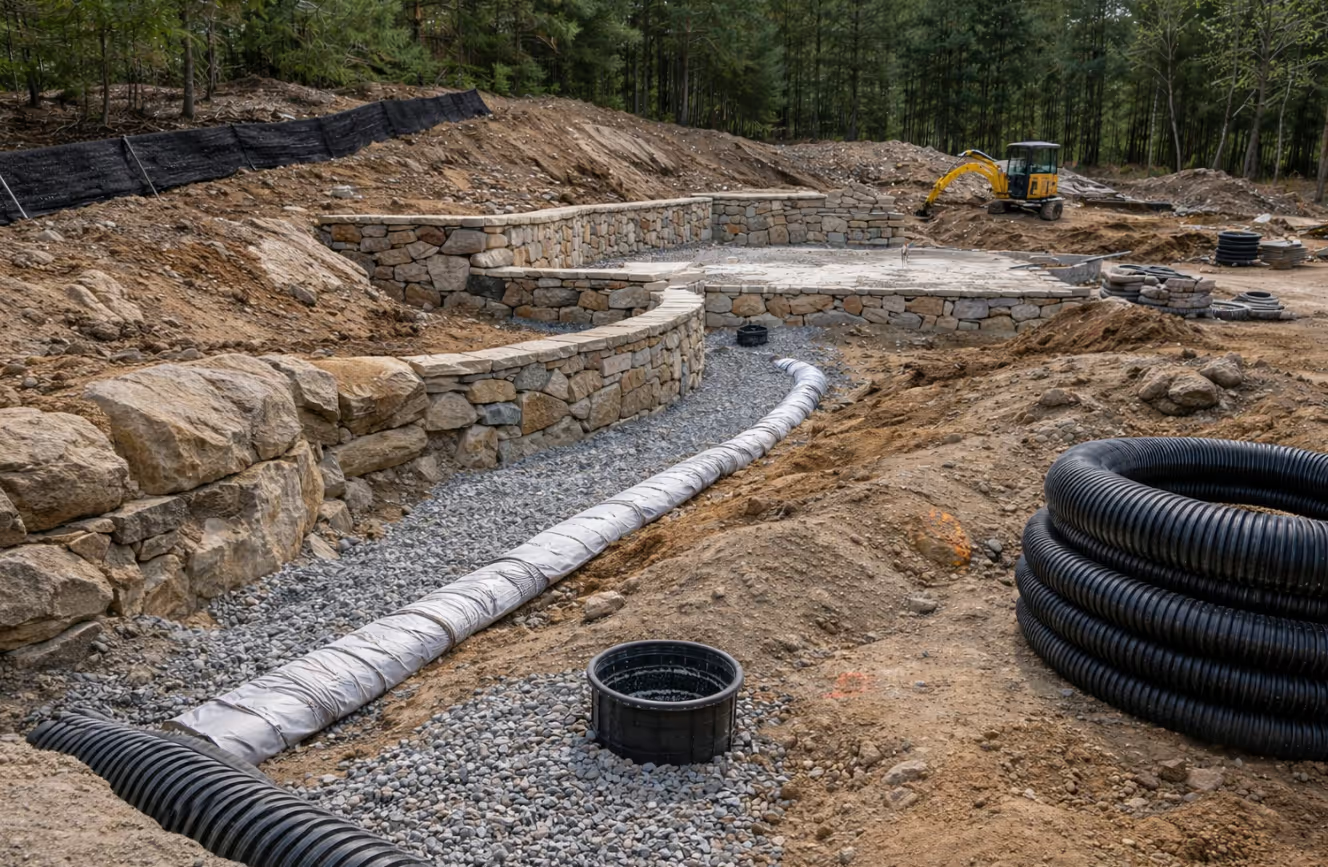
- Sitework and utilities: Excavation, utility connections, and infrastructure are expensive and often buried
- Driveways and access: New paving and site access add significant cost
- Stormwater and regulations: Requirements that are dictated by municipalities and not easily reduced
- Landscaping and hardscaping: Full site development required from scratch
These costs are necessary and often outside of direct control, making new construction more expensive than expected.
Renovations, on the other hand, introduce a different type of complexity.
- Design constraints: Existing structure may limit layout options or prevent ideal features
- Unknown conditions: Hidden issues discovered during construction
- Construction inefficiency: Working around existing conditions slows progress
- Inconsistent structure: Walls, floors, and ceilings are often not level or straight
Renovation projects often take longer because the existing house introduces resistance at every stage.
What appears simpler at the start can become more complex during construction.
How to evaluate
The decision should be based on priorities rather than assumptions about cost.
- How important is design freedom: New construction allows full customization
- How valuable is existing infrastructure: Renovation avoids rebuilding site systems
- Tolerance for unknowns: Renovations carry more hidden risk
- Willingness to compromise: Existing homes may not support every design goal
There is no perfect option. Each path involves tradeoffs that should be understood early.
The Clarity perspective: how Clarity Building Group handles this
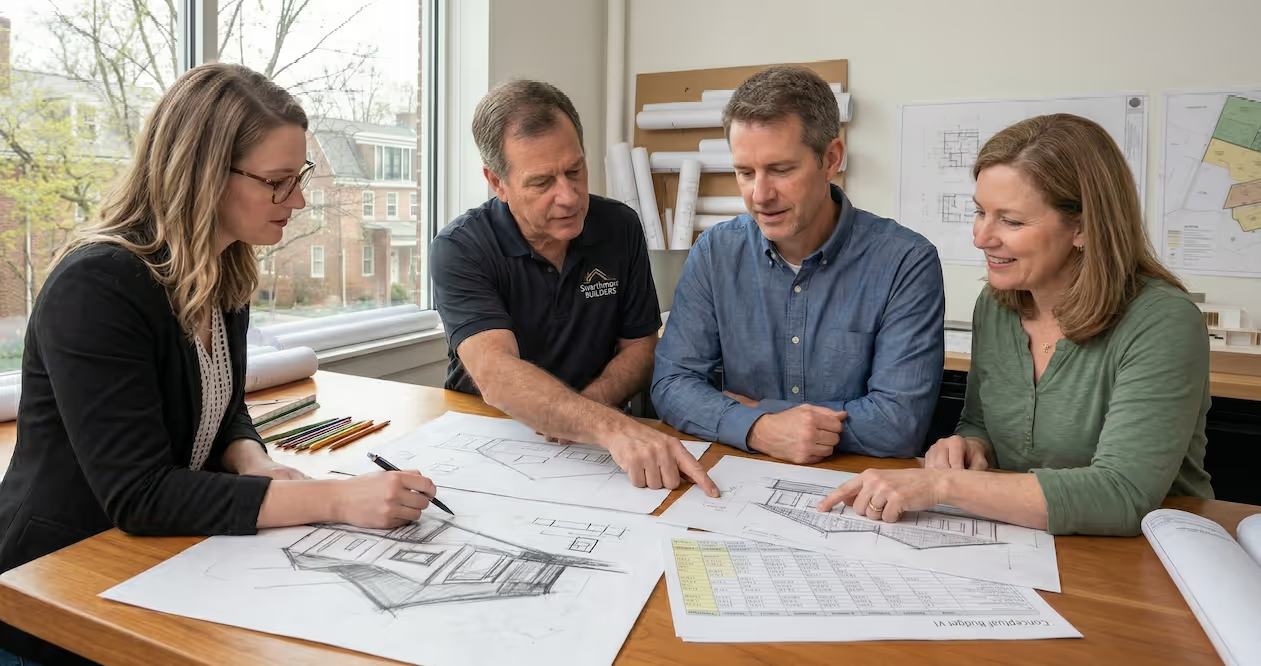
Both renovation and new construction projects begin with a structured evaluation during preconstruction. The goal is to understand the specific conditions of the property and the client's priorities.
Conceptual budgets are developed for each scenario where appropriate, allowing for a side-by-side comparison based on real assumptions.
Sitework, utilities, and regulatory requirements are carefully evaluated for new construction, while renovation projects are assessed for structural constraints and unknown conditions.
As the project develops, detailed estimates are built using subcontractor input. This helps clarify the true cost of each path and supports an informed decision based on complete information.