What "open book" actually means in construction
What transparency looks like in practice
Open book construction is often described as transparency in pricing, but in practice it is much more than access to invoices. It is a structured system that gives homeowners visibility into how decisions are made, how costs are built, and how the project is managed day to day.
True open book means you can see not just what is being spent, but why it is being spent and how the work is being executed. It is as much about process as it is about accounting.
In this article
- What open book construction actually includes
- How transparency works beyond invoices
- What systems support real visibility
- How to evaluate whether a builder is truly open book
Context
Many builders describe their approach as transparent, but the level of transparency can vary significantly. In some cases, it may simply mean providing summary cost updates or occasional documentation.
In custom residential construction, where projects are complex and decisions evolve, partial visibility is often not enough. Homeowners benefit from understanding both the financial and operational aspects of the project.
This is where true open book differs. It provides a clear view into the full lifecycle of the project, from budgeting and bidding through construction and final accounting.
The short answer
Open book construction means full access to project financials, including invoices, receipts, and detailed budget tracking, along with visibility into how the project is planned and executed.
It includes systems for tracking costs, documenting decisions, and coordinating work, not just reporting totals.
The goal is to create clarity and accountability throughout the entire project, not just at billing milestones.
How this works in practice
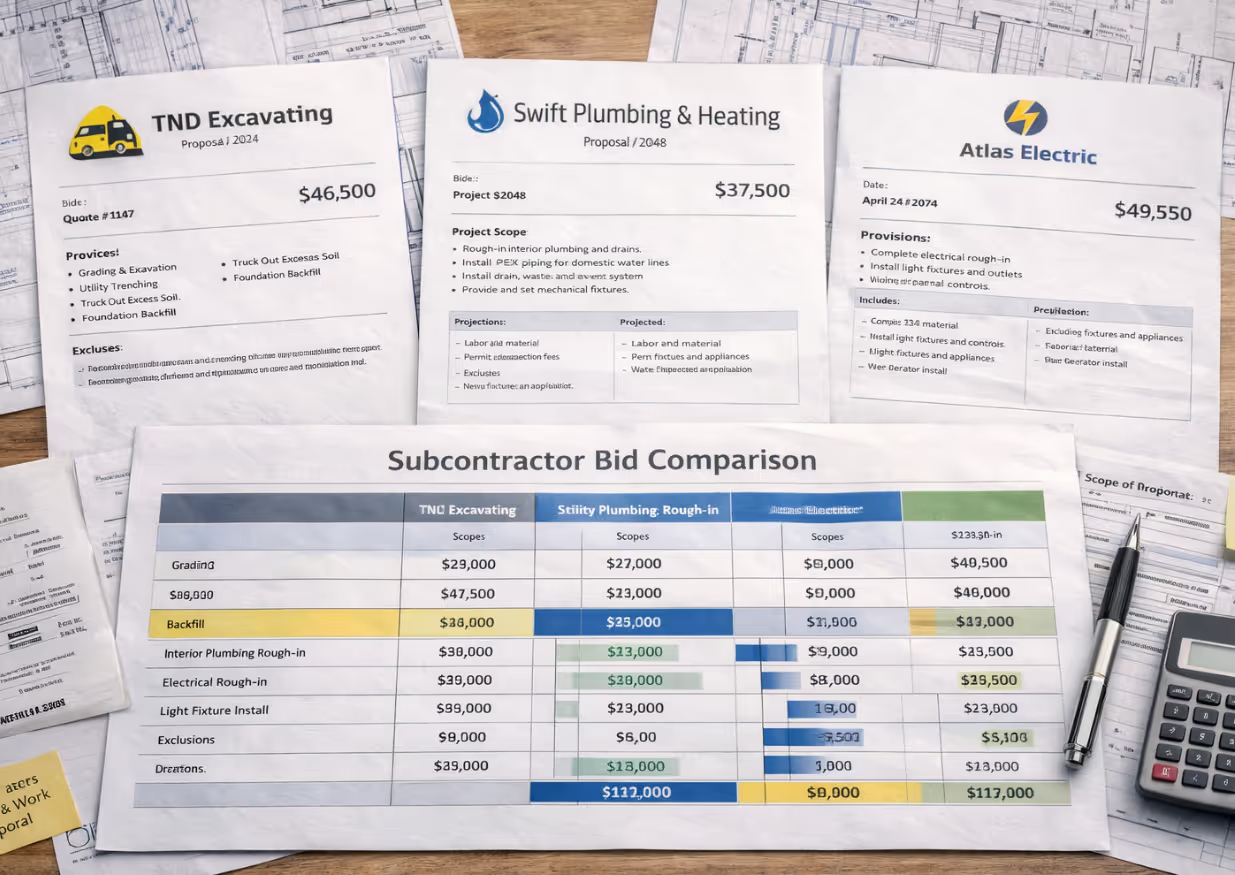
At a practical level, open book construction begins with how the budget is built. Detailed estimates are created using defined scope and real subcontractor input, not just high-level assumptions.
Before bids are obtained, a comprehensive bid package is developed for each trade. This package clearly defines the scope, specifications, and expectations for the work. It is shared with the homeowner so they can review and provide input before pricing is requested.
This step is critical. It ensures that all subcontractors are pricing the same defined scope, reducing confusion and improving the reliability of the bids.
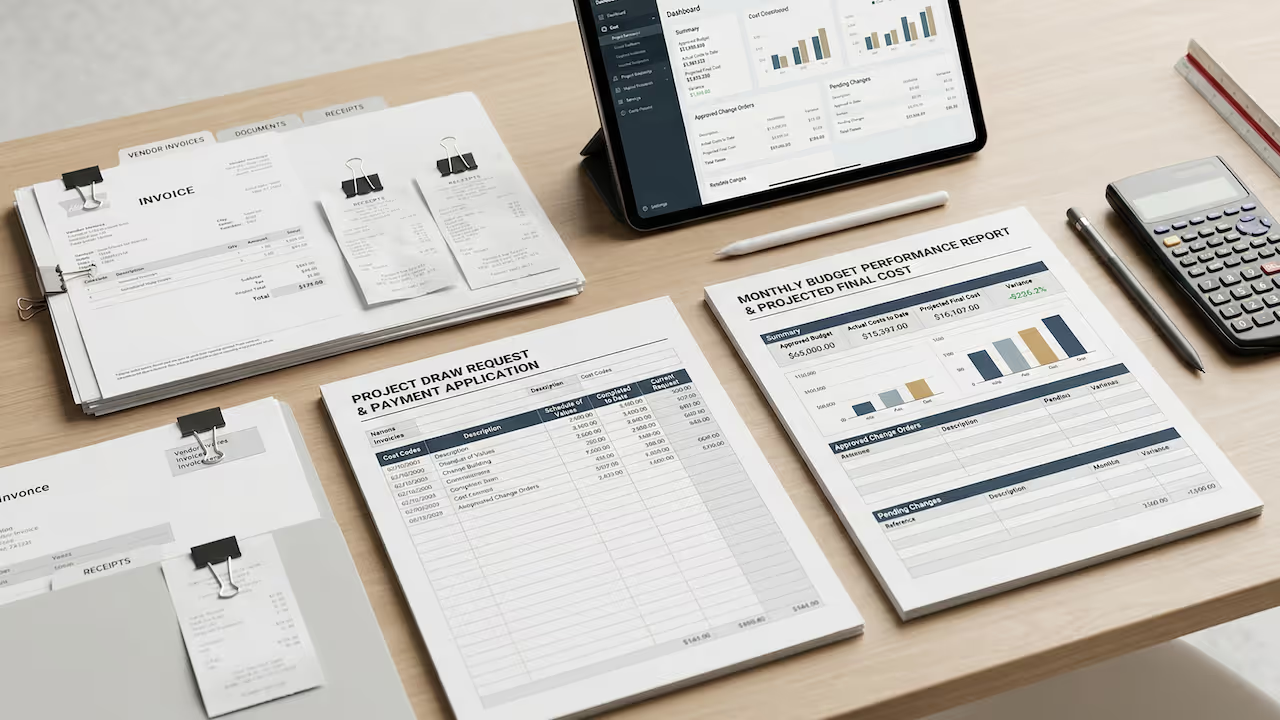
Once construction begins, costs are tracked in real time. Homeowners can review invoices, receipts, and budget updates that show committed costs, remaining scope, and projected final cost.
- Detailed bid packages: Clearly defined scopes created and reviewed before bidding.
- Shared decision-making: Homeowners can weigh in on trade-level details before pricing.
- Real-time tracking: Costs are updated continuously as the project progresses.
- Full documentation: Access to invoices, receipts, and supporting information.
What this includes beyond accounting
Open book is not just about financial records. It also includes visibility into the operational side of the project. This is where many transparency claims fall short.
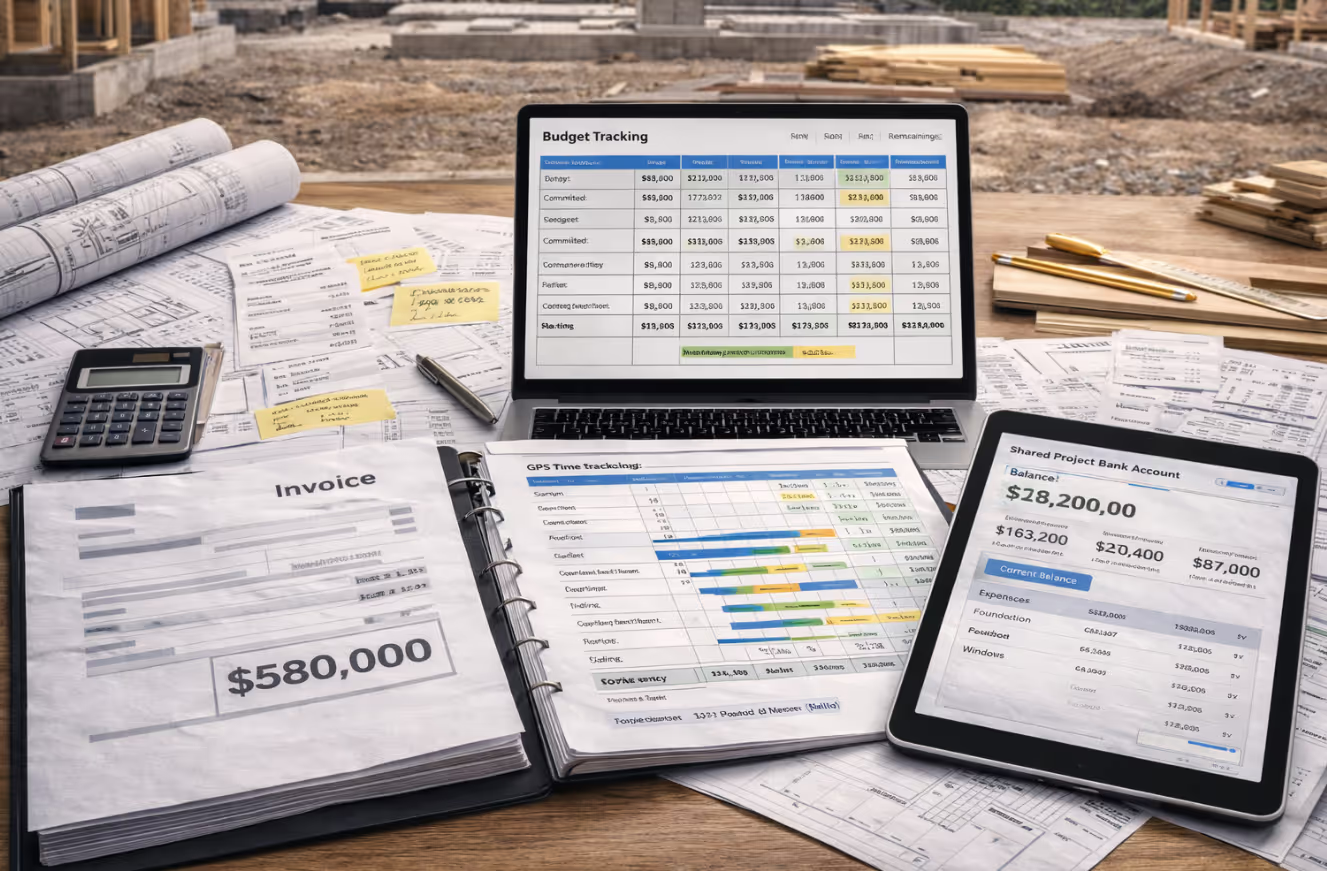
Project supervision is a key example. In a true open book system, supervision hours are tracked and documented. This may include GPS-enabled timesheets that record when and where time is spent on the jobsite.
These records are shared with the homeowner, providing a clear view of the effort involved in coordinating the project. This reinforces that supervision is an active, measurable component of the work.
Open book can also extend to financial structure. Some builders establish a dedicated bank account for each project. In certain cases, this can be set up as a joint account with the homeowner, providing direct visibility into all financial transactions.
- Supervision tracking: GPS-enabled timesheets document jobsite oversight.
- Shared records: Time tracking and reports are available for review.
- Dedicated accounts: Project-specific bank accounts improve financial clarity.
- Direct visibility: Homeowners can see how funds are managed in real time.
Where it works best
Open book construction works best in projects where complexity, customization, and collaboration are high. Architect-led residential projects are a strong fit because they involve ongoing decisions and coordination.
It is particularly valuable for homeowners who want to understand and participate in the process. Transparency allows for informed decision-making and clearer communication.
Projects with evolving scope also benefit. Open book systems make it easier to track changes and understand their impact on cost and schedule.
The more complex the project, the more valuable full visibility becomes.
Where it breaks down
Open book can break down if the systems behind it are not robust. Simply providing documents without structure or context can create confusion rather than clarity.
It can also be less effective if homeowners prefer minimal involvement. The value of transparency depends on engagement and understanding.
Another risk is inconsistency. If documentation, tracking, or communication is not maintained throughout the project, confidence in the system can erode.
True open book requires discipline, consistency, and clear communication.
- Lack of structure: Raw data without context can be difficult to interpret.
- Low engagement: Transparency is less useful without active participation.
- Inconsistent tracking: Gaps in reporting reduce confidence.
- Process dependency: Success depends on how well systems are maintained.
How to evaluate
To evaluate whether a builder is truly open book, look beyond marketing language. Ask how budgets are built, how bids are obtained, and how costs are tracked.
Review what documentation is shared and how often. Transparency should be consistent and structured, not occasional.
It is also important to understand how operational elements are handled. Supervision tracking, scheduling, and coordination should be visible, not hidden.
Finally, consider how financial systems are set up. Dedicated accounts and clear reporting structures can significantly improve visibility and trust.
The goal is to understand not just what information is available, but how it is generated and maintained.
The Clarity perspective: how Clarity Building Group handles this
At Clarity, open book construction is treated as a full project management system, not just an accounting method. It begins in preconstruction with detailed bid packages that are shared with homeowners before subcontractor pricing is obtained. This ensures clarity in scope and alignment across all trade bids.
Financial transparency includes access to invoices, receipts, and ongoing budget reporting. A dedicated project bank account is established for each project, and can be structured as a joint account if the homeowner prefers, providing direct visibility into all financial activity.
Project supervision is also fully transparent. Time spent on site is tracked using GPS-enabled timesheets, which are shared as part of the reporting process. This makes supervision a visible and accountable part of the project, not an abstract cost.
Throughout construction, ongoing tracking shows committed costs, remaining scope, and projected final cost. This integrated approach ensures that open book is not just about seeing the numbers, but understanding the entire system behind how the project is delivered.