What happens when there is no clear project management system
How lack of structure impacts outcomes
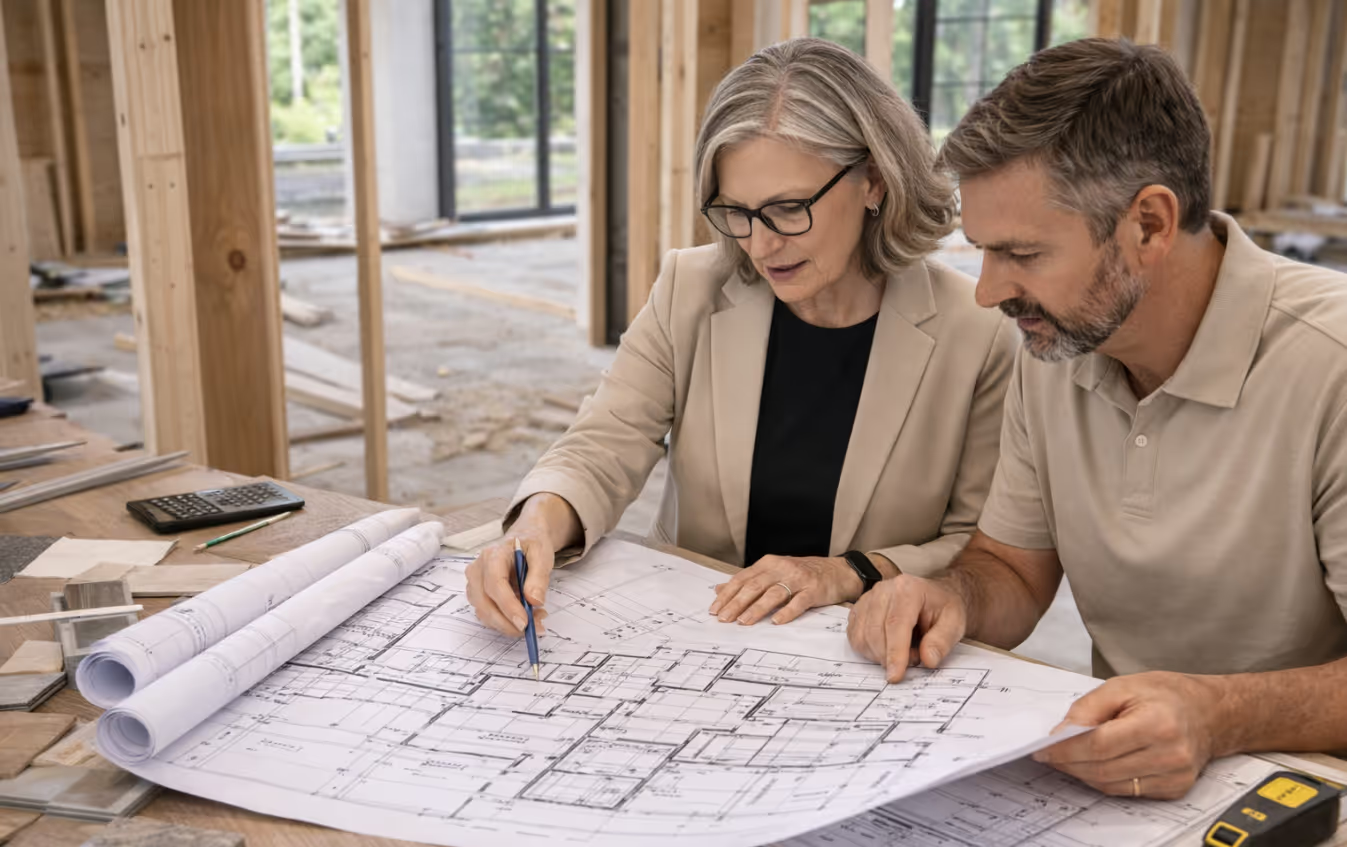
Construction projects rely on coordination between many moving parts. Without a clear project management system, that coordination breaks down quickly.
What replaces structure is inconsistency. Information is lost, decisions are delayed, and the project becomes reactive instead of organized.
In this article
- Why systems are critical in construction
- What breaks down without structure
- How this impacts cost and schedule
- What a well-managed system includes
Context
Modern custom construction involves a high volume of decisions, documentation, and financial tracking. Managing this manually or through scattered tools is difficult.
Without a centralized system, each part of the project operates independently, making it hard to maintain alignment.
This lack of structure often leads to confusion and inefficiency.
The short answer
Without a project management system, communication becomes fragmented, costs are harder to track, and decisions are missed or delayed.
This leads to budget overruns, schedule issues, and a more stressful project experience.
Structured systems create clarity, accountability, and control.
Why this happens
Construction requires constant information flow between the homeowner, builder, architect, and subcontractors. Without a system, that information is shared inconsistently.
Emails, texts, and conversations are not reliable tracking tools. Important details can be overlooked or forgotten.
Financial tracking is also affected. Without a structured system, it is difficult to maintain an accurate and current view of the budget.
This creates a disconnect between what is happening and what is understood.
- Fragmented communication: Information spread across platforms.
- No central record: Decisions not consistently documented.
- Financial gaps: Costs not tracked in real time.
- Coordination issues: Teams not aligned.
Where breakdowns occur
The absence of a system becomes most visible in communication, financial tracking, and procurement. These are the areas that require the most coordination.
Without a client-facing portal, homeowners may not have clear visibility into progress or decisions. This creates uncertainty and delays.
Without financial tracking tools, budget updates may be infrequent or incomplete. This leads to surprises later in the project.
Procurement can also suffer, with materials not ordered on time or tracked properly.
- Client communication: No centralized project portal.
- Budget tracking: Limited visibility into costs.
- Procurement: Materials not tracked or scheduled properly.
- Documentation: Daily activity not recorded.
Impact on cost and schedule
When systems are not in place, cost control becomes reactive. Changes may not be tracked in real time, leading to budget drift.
Schedule is affected because coordination between trades depends on accurate and timely information. Without it, delays are more likely.
Procurement delays can also impact schedule, especially when long-lead items are not managed properly.
These issues often compound, creating larger problems over time.
- Untracked costs: Budget not updated consistently.
- Schedule delays: Poor coordination between trades.
- Procurement issues: Late or missing materials.
- Compounding problems: Small issues build over time.
What a structured system looks like
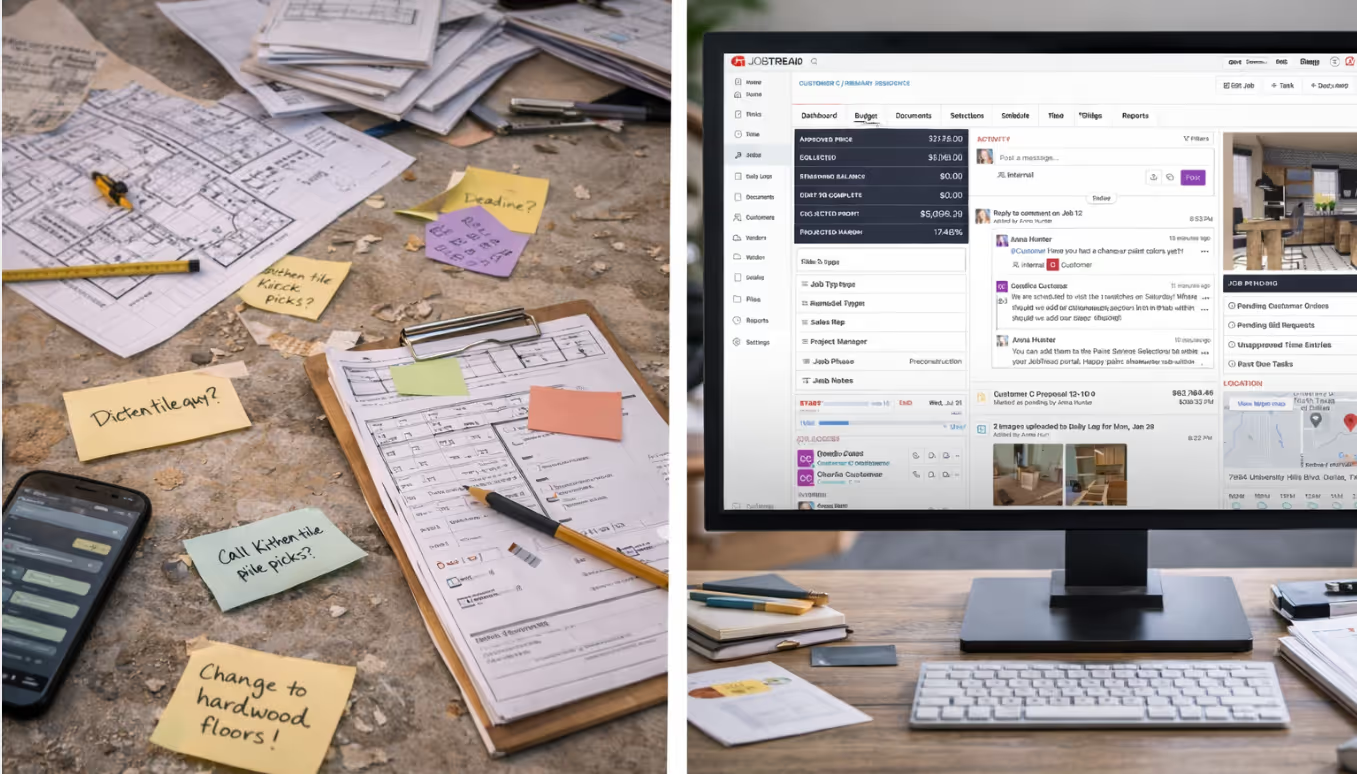
A well-managed project uses integrated systems to track communication, finances, and procurement in one place. This creates a single source of truth.
A client project portal provides visibility into progress, decisions, and documentation. Financial tracking software updates budgets in real time, including projected final cost.
Procurement systems track selections, orders, and delivery timelines. Daily logs document site activity and decisions as they occur.
These systems work together to maintain alignment and accountability.
- Client portal: Central hub for communication and updates.
- Financial tracking: Real-time budget visibility.
- Procurement tracking: Managing selections and orders.
- Daily logs: Ongoing documentation of activity.
Common mistakes
A common mistake is assuming that basic tools are sufficient for managing a complex project. Spreadsheets and email alone are not enough to maintain full visibility.
Another issue is underestimating the importance of documentation. Without consistent records, it is difficult to track decisions and changes.
Some builders rely on informal processes that work for smaller projects but do not scale to custom work.
These approaches increase risk and reduce control.
- Informal systems: No structured process in place.
- Limited tools: Relying on email and spreadsheets.
- Poor documentation: Missing records of decisions.
- Scalability issues: Systems not suited for complexity.
The Clarity perspective: how Clarity Building Group handles this
At Clarity, project management is supported by an integrated technology stack designed for transparency and coordination. A client project portal provides real-time access to updates, decisions, and documentation.
Financial tracking systems maintain a current view of the budget, including committed costs and projected final cost. Procurement tracking ensures that selections and materials are managed in alignment with the schedule.
Daily logs document site activity and decisions, creating a consistent record throughout the project.
This structured approach creates clarity, reduces risk, and supports a more predictable and organized construction experience.