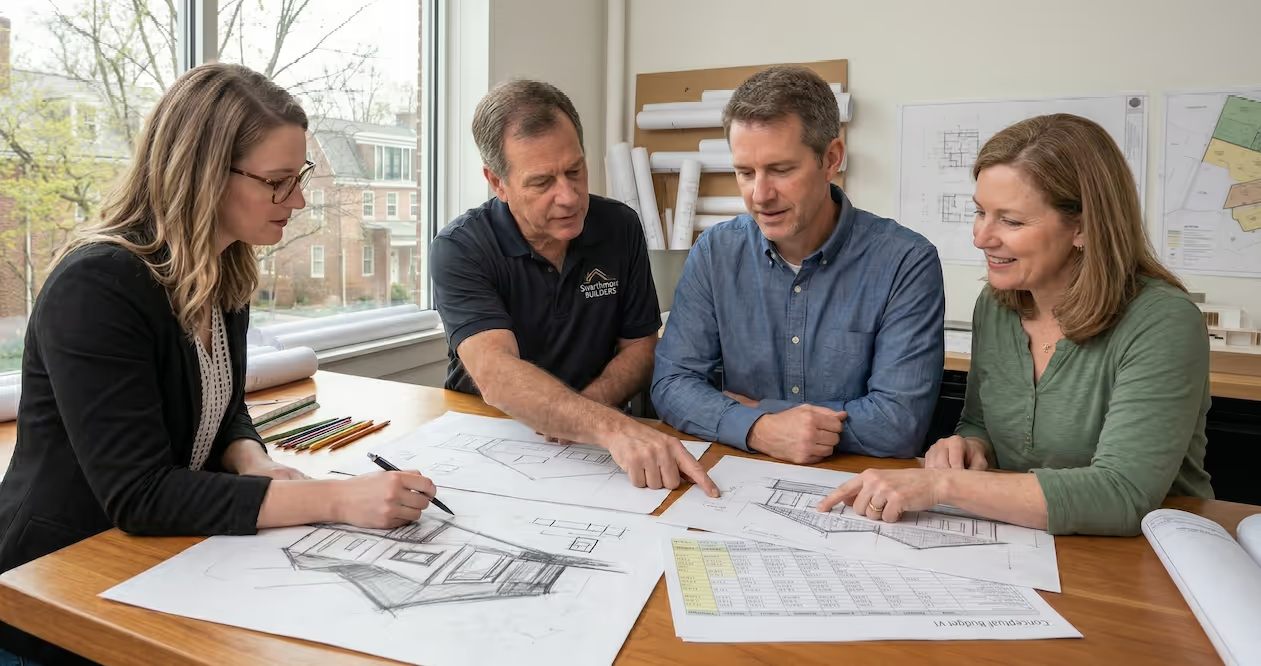
How architects and builders collaborate during construction
Ongoing coordination throughout the build phase
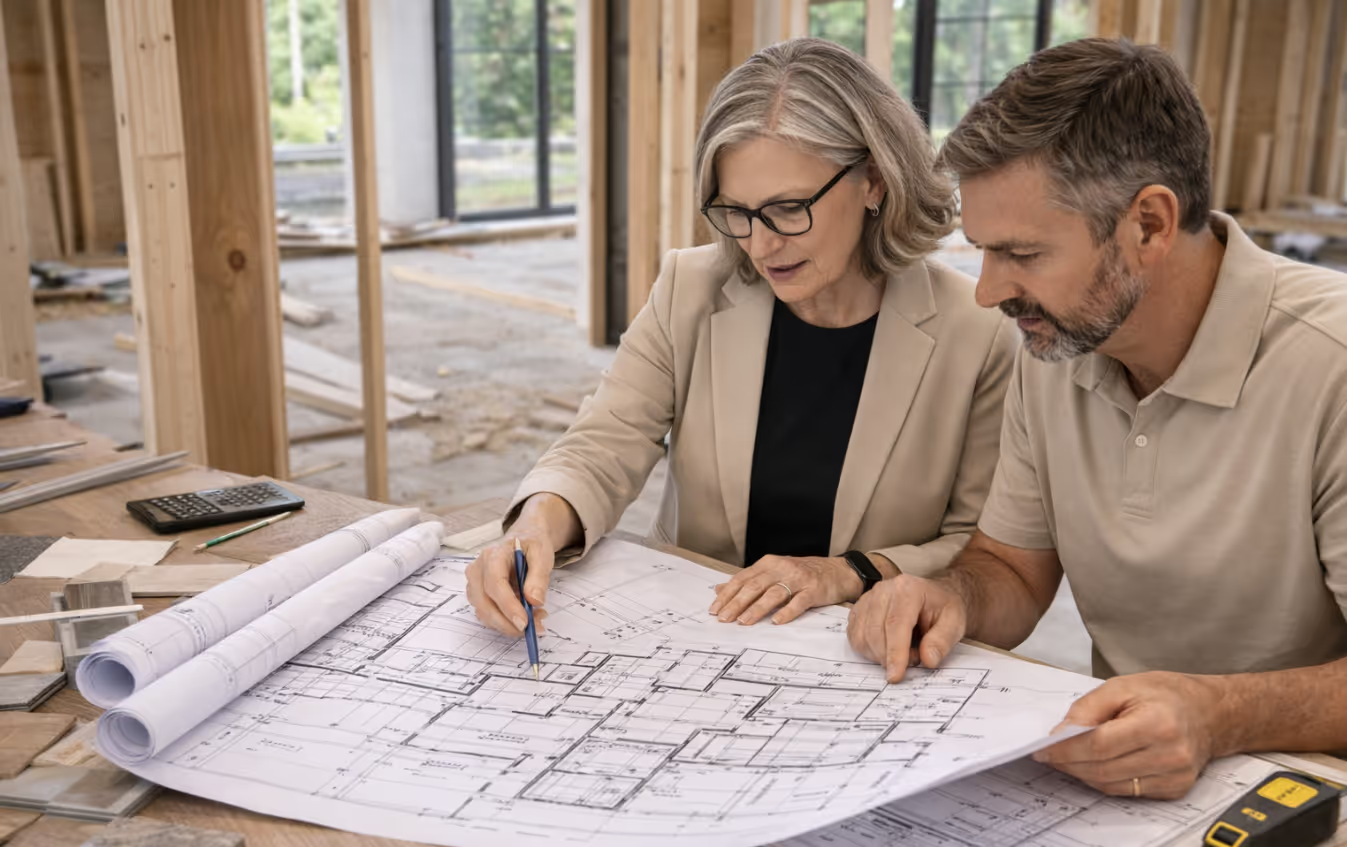
Even the most detailed set of drawings cannot fully define every condition encountered during construction. As a result, ongoing collaboration between the architect and builder is essential once work begins.
This collaboration ensures that design intent is maintained while adapting to real-world conditions, decisions, and opportunities that arise in the field.
In this article
- Why collaboration continues during construction
- How field decisions are handled
- What communication looks like in practice
- How cost and design are balanced
Context
Construction drawings are comprehensive, but they cannot capture every detail of a custom home. There are always conditions that require interpretation once the project takes shape in the field.
These moments are not failures of design. They are a natural part of building complex, custom projects with many unique conditions.
How the architect and builder respond to these situations determines the quality of the final outcome.
The short answer
Architects and builders collaborate throughout construction to interpret drawings, resolve field conditions, and refine details.
This ongoing dialogue ensures that the project stays aligned with the design while adapting to real-world conditions.
It is a continuous, problem-solving process.
How this works step by step
As construction progresses, the builder encounters conditions that require clarification or refinement. These are communicated to the architect for input.
The architect reviews the condition and provides direction, often refining the design to address the specific situation.
These decisions are then implemented by the builder, with coordination across the relevant trades.
This loop continues throughout the project, ensuring alignment at each stage.
- Field condition identified: Builder recognizes a detail needing clarification.
- Architect review: Design intent is evaluated.
- Refinement: Detail is adjusted or clarified.
- Execution: Builder implements the solution.
Where interpretation happens
Interpretation typically occurs in areas where drawings cannot fully define every condition. This includes transitions between materials, unique architectural features, and complex intersections of systems.
These are often the most design-sensitive parts of the project, where small decisions have a meaningful impact on the final result.
Rather than being fully predefined, these areas are refined through collaboration during construction.
This allows the project to respond to actual conditions rather than assumptions.
- Material transitions: How different finishes meet.
- Custom details: Unique architectural elements.
- System intersections: Coordination between trades.
- Site conditions: Real-world variations from plans.
What communication looks like
Communication between the architect and builder takes many forms during construction. It is not limited to formal meetings.
Quick decisions may be handled through phone calls or emails. More complex issues may require site meetings to review conditions in person.
In some cases, video calls or marked-up drawings are used to clearly communicate ideas and solutions.
This flexibility allows the team to respond efficiently while maintaining clarity.
- Phone and email: Quick clarifications.
- Site meetings: Reviewing conditions in person.
- Video calls: Remote visual coordination.
- Marked-up drawings: Clear documentation of decisions.
Balancing design and cost
During construction, situations may arise where adjustments could reduce cost or improve efficiency. In these cases, the builder may propose alternatives to the architect.
The architect evaluates these proposals to determine whether they align with the design intent. Some adjustments may be accepted, while others may be rejected if they compromise the design.
This is a collaborative process that balances the homeowner's budget with the architectural vision.
Most projects involve some level of compromise, guided by clear priorities.
- Cost-saving ideas: Proposed by the builder.
- Design review: Architect evaluates impact.
- Balanced decisions: Aligning budget and vision.
- Client priorities: Guiding final choices.
Common mistakes
A common mistake is assuming that all decisions are finalized before construction begins. In reality, many details are refined during the build phase.
Another issue is limiting communication between architect and builder, which can lead to decisions being made without full context.
Some projects also treat field conditions as problems rather than opportunities to refine the design.
These approaches reduce the quality of the final outcome.
- Assuming completeness: Expecting drawings to define everything.
- Limited communication: Not engaging the architect during construction.
- Reactive decisions: Solving issues without collaboration.
- Missed opportunities: Not refining details in the field.
The Clarity perspective: how Clarity Building Group handles this
At Clarity, collaboration with the architect continues throughout construction. Field conditions are documented and communicated clearly, allowing the architect to provide input on how details should be resolved.
Multiple communication methods are used, including site meetings, marked-up drawings, and real-time discussions, depending on the situation.
When cost-saving opportunities arise, they are presented to the architect and homeowner for evaluation, ensuring that decisions are made with full context.
This ongoing coordination helps preserve design intent while adapting to real-world conditions, resulting in a more refined and cohesive final project.