How to identify missing scope in a Custom Builder's estimate
Spotting gaps before they become change orders

Missing scope is one of the most common causes of cost increases in custom construction. It occurs when required work is not clearly defined or included in the original estimate.
These gaps are not always obvious. They often appear later as change orders, when the work becomes necessary but was never accounted for upfront.
In this article
- Why scope gaps occur in estimates
- Where missing scope is most common
- How to review proposals effectively
- Tools and strategies to identify gaps early
Context
Construction estimates are built from drawings, specifications, and assumptions. When any of these are incomplete, builders must interpret what is required.
Different builders interpret missing information differently. Some include allowances, others exclude items, and some make optimistic assumptions.
This creates variation between proposals and increases the risk that important scope is not fully captured.
The short answer
Missing scope occurs when project details are not fully defined and are either excluded or underestimated in the estimate.
It is identified by reviewing assumptions, allowances, and exclusions across proposals.
The earlier these gaps are found, the easier they are to correct.
Why this happens
Scope gaps are typically the result of incomplete information during the design phase. Not every detail is resolved early, especially in custom projects.
Builders must decide how to handle these unknowns. Some include realistic allowances, while others minimize them to keep the overall price lower.
There is also a practical consideration. Including every possible cost upfront can make a proposal appear higher than competitors, even if it is more accurate.
This dynamic often leads to inconsistent treatment of missing information across bids.
- Incomplete drawings: Details not fully defined.
- Assumptions: Builders interpret missing information differently.
- Allowance strategy: Values may be optimistic or realistic.
- Competitive pressure: Lower numbers may omit scope.
Where to look for missing scope
Certain categories are more prone to scope gaps, especially where design details are still evolving or where coordination between trades is required.
These areas often involve both design intent and execution details, making them harder to fully define early.
Experienced reviewers focus on these categories first when evaluating an estimate.
Gaps in these areas can have a meaningful impact on total cost.
- Site work: Utilities, drainage, and unforeseen conditions.
- Mechanical systems: HVAC zoning, equipment, and controls.
- Custom millwork: Level of detail and fabrication scope.
- Finish selections: Fixtures, appliances, and materials.
- Coordination items: Work that spans multiple trades.
How to evaluate
The most effective way to identify missing scope is to review proposals line by line and compare how each builder has addressed the same categories.
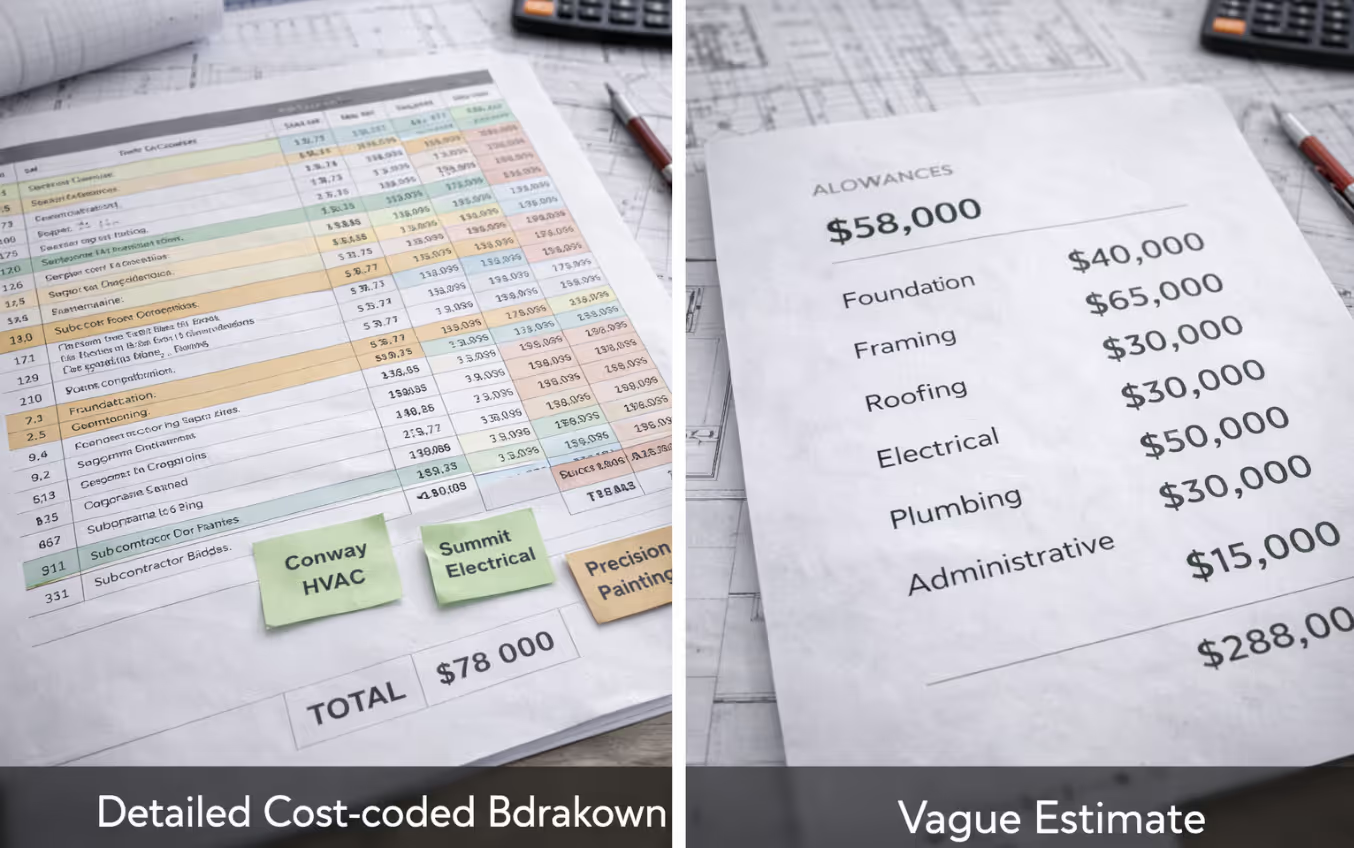
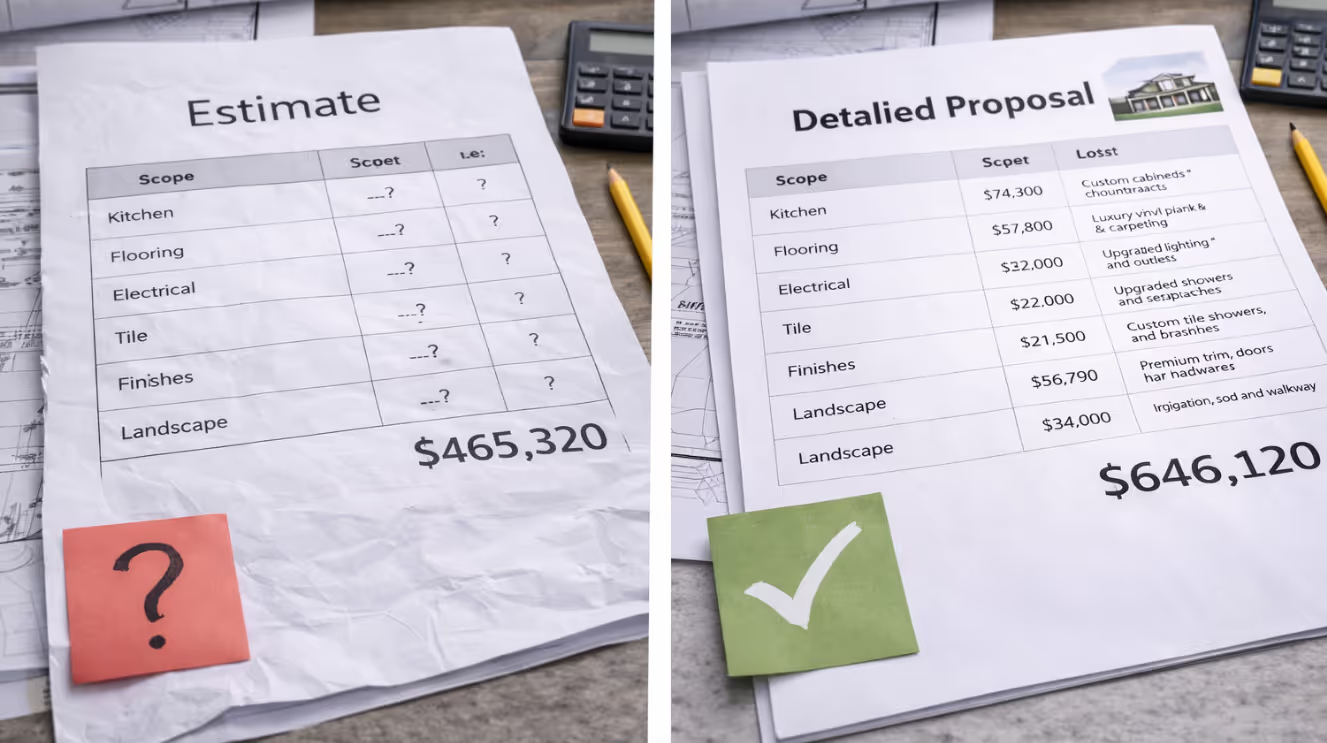
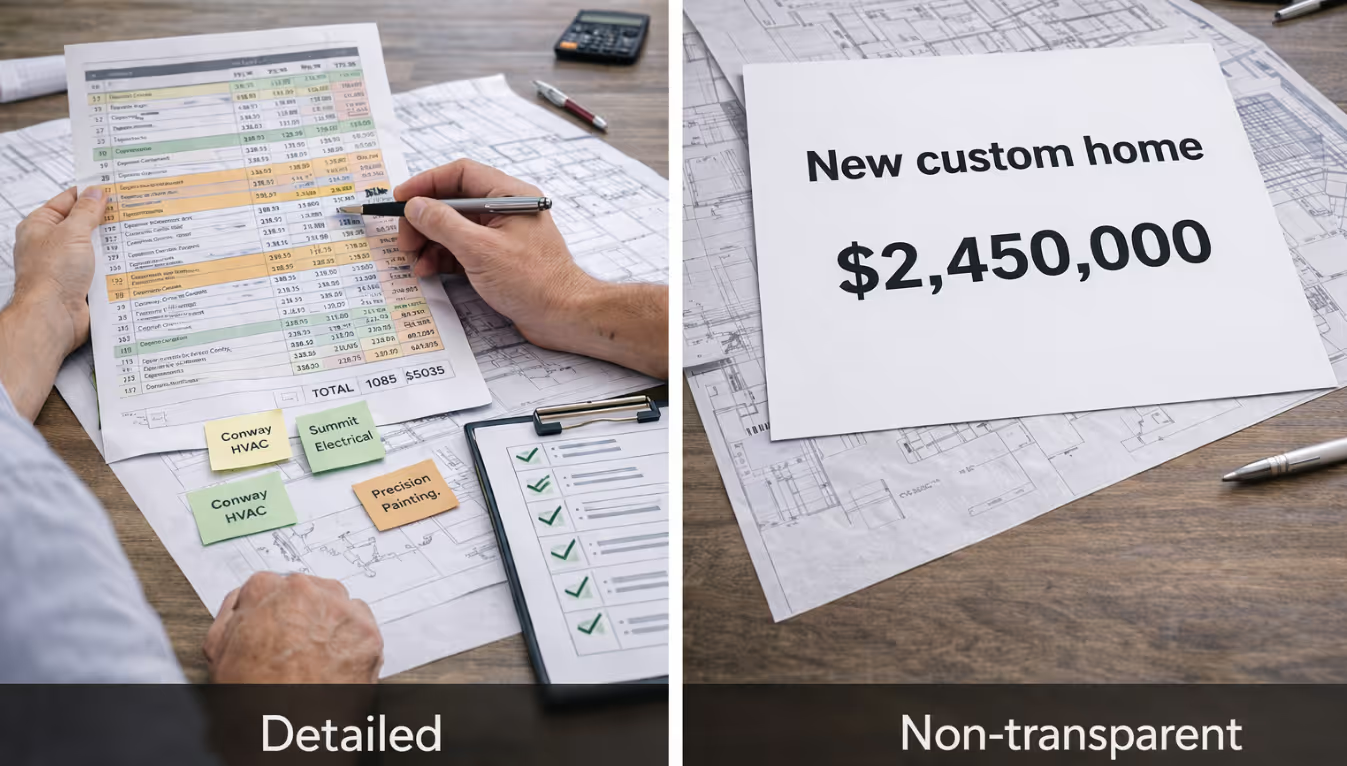
Look for inconsistencies in allowances, exclusions, and level of detail. If one proposal includes a detailed scope and another does not, that difference should be understood.
This process can be time-consuming, which is why experienced professionals play an important role.
Clarity comes from understanding the inputs behind the numbers, not just the totals.
- Compare categories: Align proposals side by side.
- Review allowances: Identify unrealistic values.
- Check exclusions: Confirm what is not included.
- Assess detail: More detail usually means fewer gaps.
Leaning on expert review
Your architect is one of the most valuable resources in this process. They understand the design intent, the level of detail in the drawings, and the areas where information may still be developing.
Architects also have experience reviewing builder proposals. They know which categories are commonly handled with assumptions and where costs may be understated.
Asking your architect to perform a bid comparison can help identify gaps that may not be obvious to a homeowner.
This adds an additional layer of expertise and helps ensure that the estimate aligns with the design.
- Design insight: Architect understands intent and scope.
- Experience: Familiar with common estimating gaps.
- Bid comparison: Structured review of proposals.
- Alignment: Ensures pricing matches design.
Using structured tools to assist
For additional support, some homeowners use large language models to help analyze proposals. These tools can assist in organizing information and identifying inconsistencies.
A practical approach is to input proposals and ask the model to act as an experienced owner's representative for high-end residential construction.
You can also ask the model to generate a custom prompt that structures the comparison, helping to identify missing scope and apples-to-oranges differences.
While these tools are not a replacement for professional judgment, they can provide an additional layer of analysis.
- Structured review: Organizes proposal information.
- Gap identification: Highlights inconsistencies.
- Custom prompts: Improves comparison quality.
- Supplemental tool: Supports expert evaluation.
The Clarity perspective: how Clarity Building Group handles this
At Clarity, missing scope is addressed during preconstruction through detailed scope development and bid package creation. Each trade is defined clearly before pricing is obtained, reducing the need for assumptions.
Multiple subcontractor bids are used to validate scope and pricing at the trade level. This creates alignment and minimizes gaps before construction begins.
By focusing on clarity and completeness early, the process reduces the likelihood of change orders caused by missing scope.
The goal is to ensure that the project enters construction with a well-defined scope and a realistic understanding of cost.