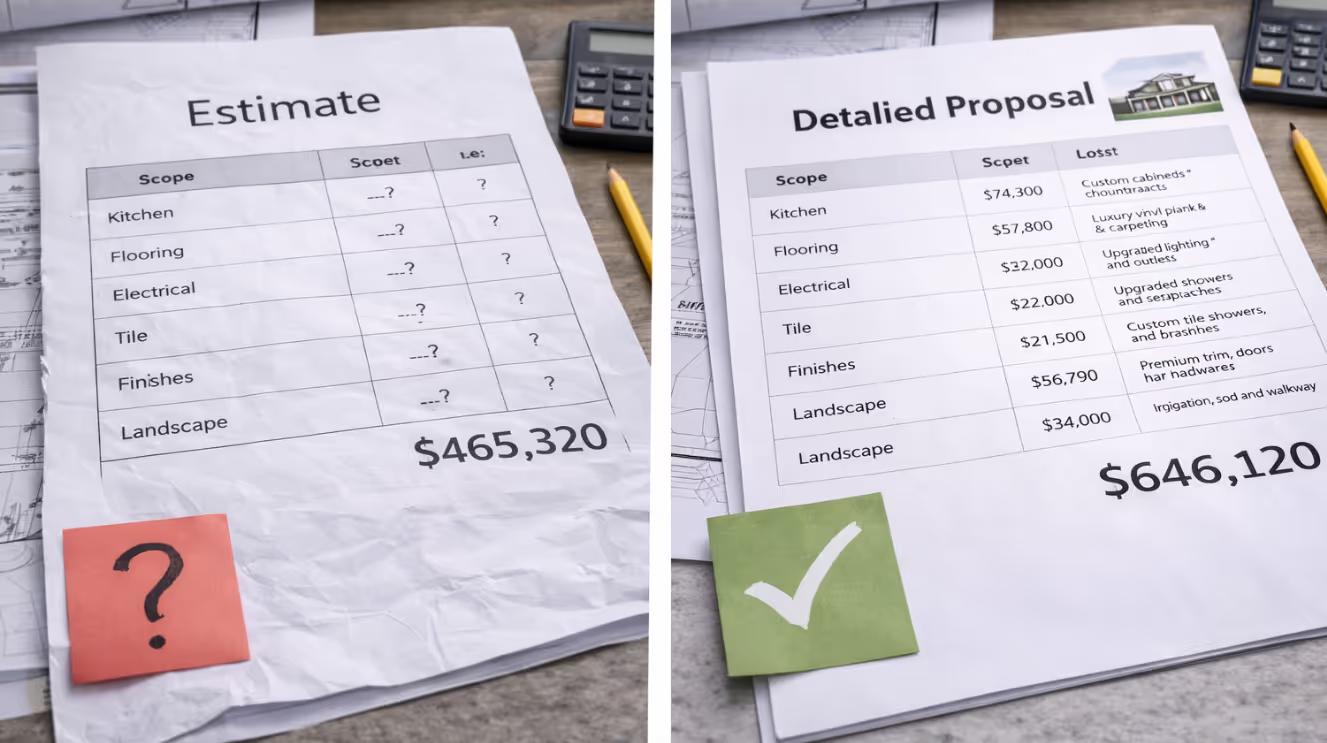
What transparency actually looks like in different builders
Distinguishing real openness from marketing language
Transparency is one of the most commonly used terms in construction, but it is also one of the least consistently defined. Different builders use the word to describe very different processes.
Understanding what transparency actually looks like in practice helps distinguish between a structured, open process and a more limited interpretation that may rely on selective visibility.
In this article
- What true transparency includes
- How different builders interpret transparency
- Why company structure affects openness
- How to evaluate transparency in practice
Context
Most builders describe their process as transparent, but the level of detail and access behind that claim can vary significantly.
In custom residential construction, transparency is not just about sharing numbers. It is about how decisions are made, how scope is defined, and how information flows throughout the project.
The structure of a builder's business and their underlying philosophy often determine how transparent they can actually be.
The short answer
True transparency includes full visibility into scope, subcontractor pricing, budgeting, and decision-making processes.
Some builders provide partial transparency, such as summary costs or limited documentation.
The difference is not what is said, but what is consistently shown.
How this works in practice
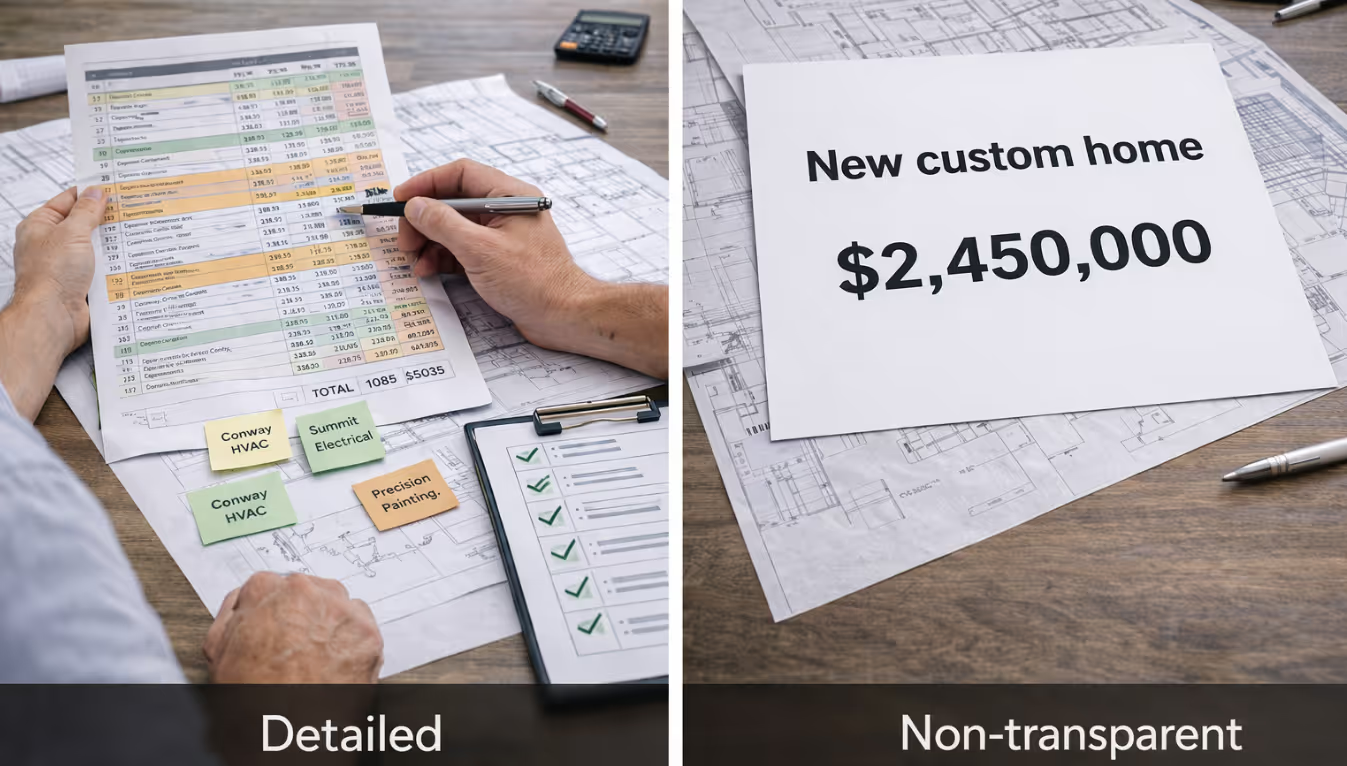
In a fully transparent process, homeowners can see how costs are developed, how subcontractors are selected, and how decisions affect the budget.
This includes access to detailed estimates, bid comparisons, invoices, and ongoing budget tracking. It also includes visibility into the operational side of the project, such as scheduling and coordination.
Transparency is not a single document. It is a system that operates throughout the entire project lifecycle.
When done well, it allows homeowners to understand both the financial and practical aspects of the build.
- Cost visibility: Detailed budgets and real pricing.
- Bid transparency: Multiple subcontractor bids shared.
- Process clarity: Defined steps and documentation.
- Ongoing reporting: Continuous updates during construction.
How different builders interpret transparency
Not all builders approach transparency in the same way. Some provide high-level summaries rather than detailed breakdowns, which can limit understanding.
Others may share selected information, such as final costs or periodic updates, without exposing the underlying structure of how those numbers were developed.
There are also builders who rely heavily on internal processes that are not visible to the client. While this may work in some cases, it reduces the homeowner's ability to evaluate decisions.
These differences are often subtle at first but become more apparent as the project progresses.
- Full transparency: Open access to detailed information.
- Partial transparency: Summary-level reporting.
- Selective sharing: Limited visibility into decisions.
- Closed systems: Internal processes not shared.
Why company culture matters
Transparency is not just a process. It is a reflection of company culture. Builders who are structured around open-book, cost-plus work tend to design their systems around visibility and collaboration.
In contrast, builders who primarily operate in fixed price models often structure their processes differently. Their systems are designed around delivering a final number, not necessarily exposing how that number is built.
Some companies attempt to offer both models under one structure. This can create tension in how the business operates, because the underlying philosophies are different.
Cost-plus requires ongoing client engagement, detailed reporting, and a high level of communication. Fixed price models typically do not require the same level of interaction.
- Cost-plus culture: Built around openness and collaboration.
- Fixed price culture: Focused on delivering a defined number.
- Mixed models: Can create conflicting priorities.
- Client experience: Shaped by how the business is structured.
Where differences become visible
The differences between these approaches often become most visible during key moments in the project. This includes budgeting, subcontractor selection, and change management.
In a transparent process, these steps are documented and shared. Homeowners can see how decisions are made and how costs are affected.
In less transparent systems, these same steps may happen behind the scenes, with only the results communicated.
This distinction affects how informed the homeowner can be throughout the project.
- Budget development: Open vs internal process.
- Subcontractor selection: Competitive bidding vs preselection.
- Change tracking: Documented vs reactive.
- Communication: Continuous vs periodic.
How to evaluate
To evaluate transparency, look beyond statements and ask for examples of how information is shared. Request sample budgets, reports, and documentation.
Ask how subcontractor bids are handled and whether they are shared. Understand how decisions are tracked and communicated.
It is also helpful to observe how clearly the builder explains their process. Transparency often shows up in how information is presented and discussed.
The goal is to determine whether transparency is a core system or a general description.
The Clarity perspective: how Clarity Building Group handles this
At Clarity, transparency is built into the structure of the business. The process is based on cost-plus delivery, where all costs, bids, and decisions are visible and documented.
Detailed bid packages are created and shared before pricing, and multiple subcontractor bids are obtained and reviewed collaboratively. Budgeting is organized through cost-coded estimates and ongoing updates that track projected final cost.
Because the company operates within a consistent framework, the systems, communication, and expectations are aligned around transparency.
This approach emphasizes visibility and collaboration throughout the project, ensuring that homeowners understand both the financial and operational aspects of the build.