How many bids should you get for a custom home project?
Balancing due diligence with efficiency

In custom residential construction, the number of bids you should get is often misunderstood. More bids do not necessarily lead to better decisions, especially early in the process.
At the high end of the market, the focus is less on collecting multiple prices and more on selecting the right builder to develop the project with.
In this article
- How many builders you should meet
- Why early bids are often misleading
- How builder selection should work
- When pricing becomes meaningful
Context
Homeowners often approach construction like other purchases, where comparing multiple quotes leads to the best outcome. In custom construction, this approach can break down.
Early in the process, the project is not fully defined. Without clear scope, different builders will interpret the project differently, leading to inconsistent and unreliable pricing.
This is why architects and experienced professionals guide clients toward a more focused selection process.
The short answer
You should typically meet with two to three builders to evaluate fit, but only proceed with one builder for detailed pricing.
Early bids from multiple builders are often not comparable and can create confusion.
The goal is to select the right partner, then develop accurate pricing through a structured process.
Who it is for
This approach is best suited for custom or architect-led projects where design is evolving and requires coordination with cost.
It is particularly relevant for high-end residential work, where scope complexity makes early pricing unreliable.
Homeowners who value process, collaboration, and clarity benefit most from this strategy.
The more customized the project, the more important it is to focus on fit rather than early pricing.
- Custom projects: Require collaboration during design.
- High complexity: Scope not fully defined early.
- Process-driven clients: Value clarity over quick numbers.
- Architect-led work: Design evolves over time.
Who it is not for
This approach may not apply to smaller or highly standardized projects where scope is clearly defined upfront.
In those cases, multiple bids may be easier to compare because the work is more uniform.
Projects that prioritize a fixed price above all else may also lean toward broader bidding.
However, even in those cases, the quality of scope definition remains critical.
What it requires
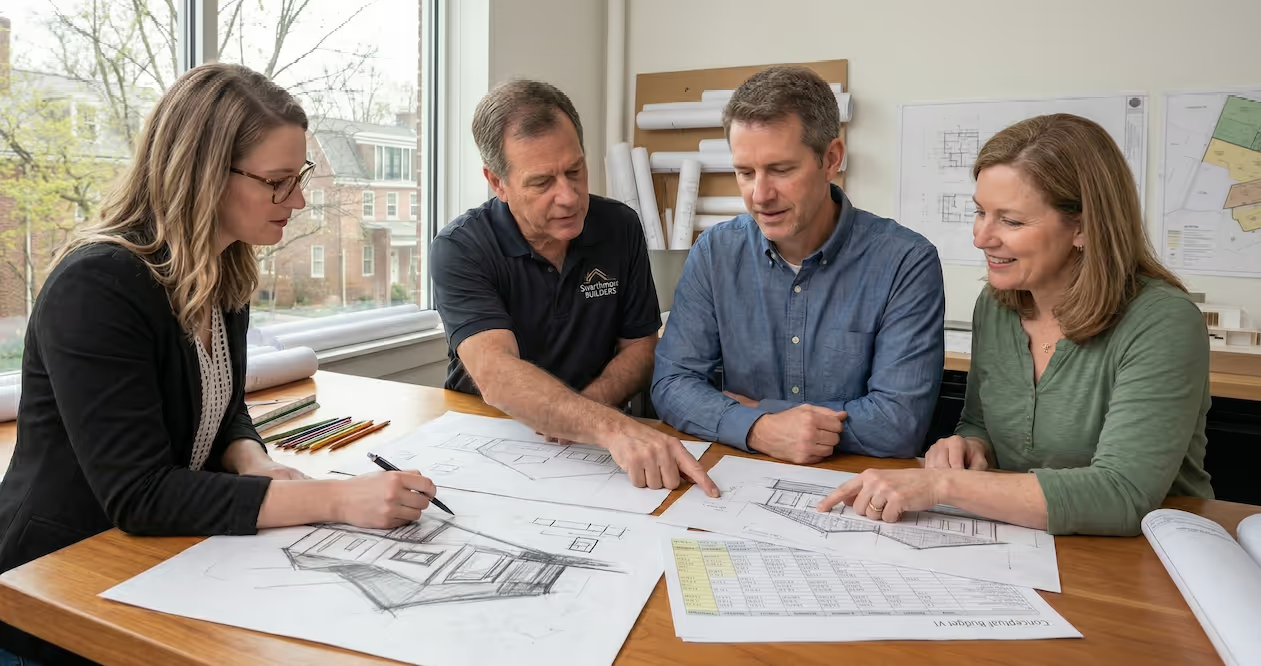
Homeowners should be prepared to evaluate builders based on factors beyond price. This includes personality fit, communication style, and confidence in the builder's process.
Initial meetings are an opportunity to understand how each builder approaches projects, including their pricing structure and methodology.
This stage is not about determining the total cost of the project. It is about selecting the right partner.
Once a builder is selected, a structured preconstruction process begins, where pricing becomes more accurate.
- Builder interviews: Meet two to three candidates.
- Fit evaluation: Assess communication and trust.
- Process understanding: Learn how pricing is developed.
- Single selection: Choose one builder to proceed.
How to decide
The decision should be based on alignment, not just cost. Consider how comfortable you are with the builder's communication, transparency, and approach.
Confidence in the builder's ability to guide the project is critical. This includes their role as a cost advisor during design development.
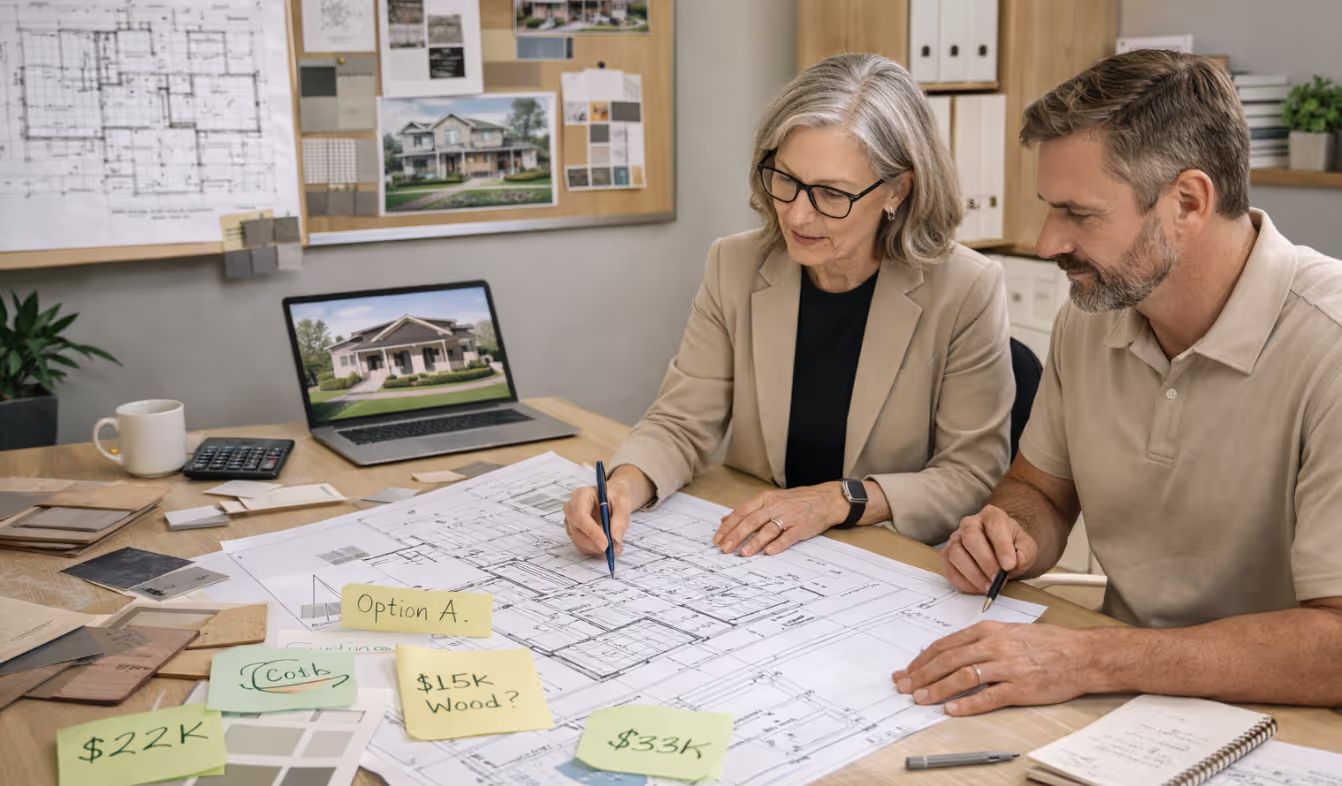
It is also important to understand how pricing will be developed after selection. A structured preconstruction process should replace assumptions with real data.
Once this process begins, the project will typically result in a single, well-developed budget rather than multiple competing bids.
The Clarity perspective: how Clarity Building Group handles this
At Clarity, the process begins with initial meetings where homeowners can evaluate fit and understand how the team works. This stage is focused on alignment, not pricing.
Once selected, Clarity engages in a detailed preconstruction process, providing cost guidance as the design develops. This replaces early assumptions with informed decision-making.
Pricing is ultimately developed through detailed bid packages and subcontractor input, resulting in a control estimate that reflects real scope and market conditions.
This approach emphasizes clarity and collaboration, ensuring that the final budget is accurate and aligned with the homeowner's goals rather than based on incomplete early comparisons.