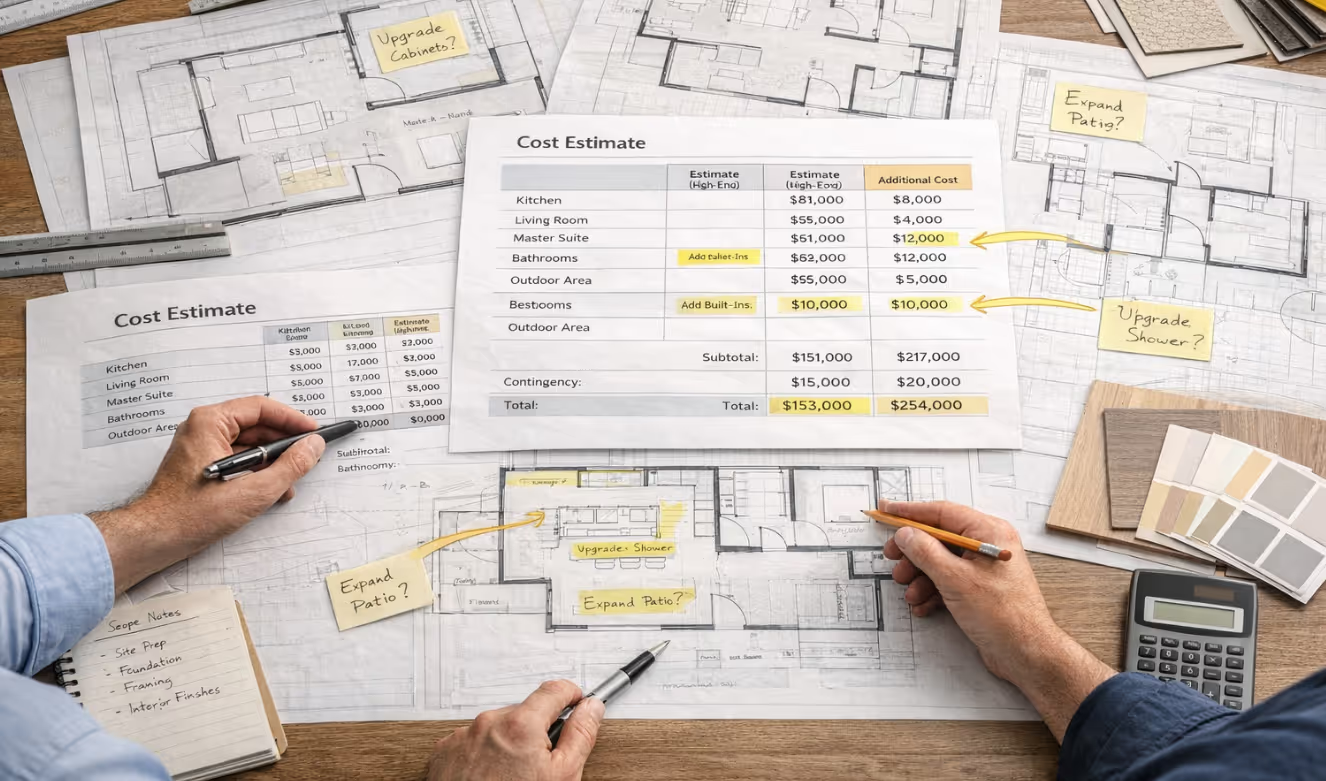
What kind of budget flexibility should you plan for?
Preparing for change in complex projects
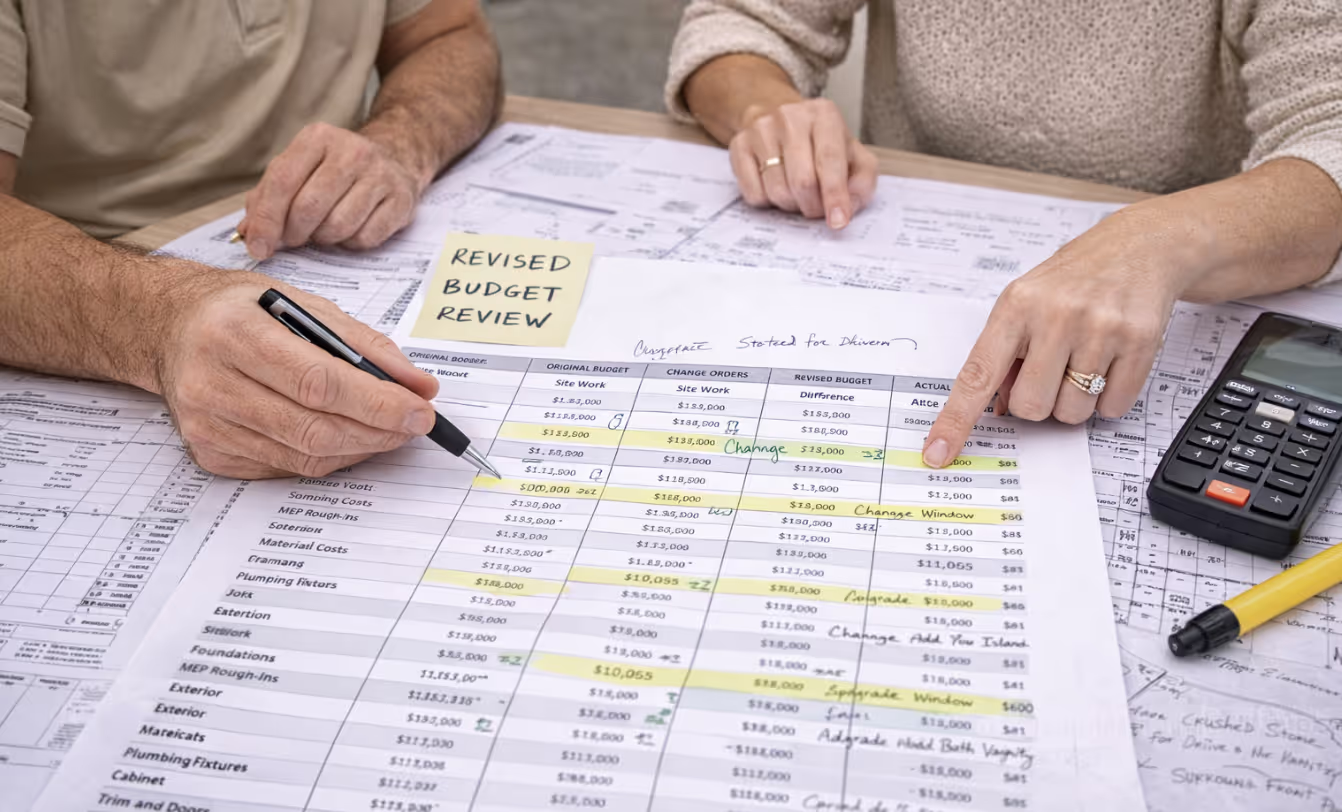
Budget flexibility is not optional in a custom home or major renovation. It is a necessary part of managing a complex and evolving process.
Even well-planned projects experience cost movement as decisions are made and details are refined. The key is preparing for that reality upfront.
In this article
- Why budgets change during projects
- How small decisions add up
- The role of contingency planning
- Where flexibility is most needed
- How to stay in control
Many homeowners assume budget overruns come from one large mistake. In reality, they are usually the result of many small decisions made over time.
Understanding this helps shift the focus from reacting to problems to managing the process proactively.
The short answer
You should plan for meaningful budget flexibility, especially if this is your first project. Unknowns, evolving decisions, and real-world selections will almost always increase costs beyond initial expectations.
Without a contingency buffer, even small changes can create pressure on the overall budget.
What drives the outcome
Budget variability is driven by both unknown conditions and ongoing decision-making.
- Unknowns: Conditions that are not fully understood at the start of the project
- Selections: Actual material and fixture choices replacing early assumptions
- Scope evolution: Adjustments made as the design is refined
- Cumulative decisions: Small upgrades across many categories
Each of these factors contributes incrementally, but together they can significantly shift the total cost.
What this means in practice
One of the most common patterns is that homeowners gravitate toward higher-end options when making selections. Showrooms are designed to present a range of choices, and the most appealing options are often more expensive than expected.
This does not typically affect just one category. It happens repeatedly across the project.
- Appliances: Upgrading features and finishes
- Plumbing fixtures: Higher-quality or more complex systems
- Lighting: Decorative fixtures replacing basic assumptions
- Finishes: Flooring, tile, and millwork upgrades
Individually, these decisions may seem minor. Collectively, they create meaningful cost increases.
A useful way to think about this is cumulative impact. A few hundred dollars added per day during active decision-making periods can translate into thousands over the course of a month.
This is how budgets shift. Not through one major change, but through consistent upward pressure across many decisions.
Common mistakes
Budget challenges are often the result of underestimating how decisions affect the total.
- No contingency planning: Starting without a buffer for unknowns and changes
- Focusing on individual costs: Evaluating decisions in isolation rather than cumulatively
- Assuming early numbers are fixed: Treating conceptual budgets as final
- Lack of cost awareness: Making selections without understanding their broader impact
These issues can be avoided with better preparation and ongoing tracking.
What to ask before moving forward
Before starting, it is important to understand how budget flexibility will be managed.
- What contingency is included: How much buffer is planned for unknowns
- How decisions are tracked: Visibility into cost impact as selections are made
- How tradeoffs are handled: Process for adjusting scope to stay aligned
- Who is guiding decisions: Builder and team helping evaluate cost implications
These questions help establish whether the project is set up to manage variability effectively.
The Clarity perspective: how Clarity Building Group handles this
Budget flexibility is built into the process from the beginning. Early conceptual budgets include allowances and contingencies based on experience, acknowledging that not all decisions are finalized.
During preconstruction, these assumptions are replaced with real numbers through subcontractor bids and detailed selections. This reduces uncertainty and clarifies where flexibility is still needed.
Throughout construction, ongoing budget tracking shows how each decision affects the overall cost. This allows for informed tradeoffs rather than reactive adjustments.
The goal is not to eliminate change, but to manage it transparently so that the project remains aligned with the client�s priorities.