What happens before construction begins on a custom home project
The critical planning work that sets the foundation for success
Before construction begins on a custom home, a significant amount of planning, coordination, and financial validation takes place. This phase, often called preconstruction, is where the foundation for the entire project is established.
The quality of this work directly impacts cost control, schedule reliability, and overall project success. A well-structured process reduces uncertainty and ensures that construction starts with clarity rather than assumptions.
In this article
- What happens during preconstruction
- How budgets and design are aligned
- Why bidding and planning matter before building
- What homeowners should expect before construction starts
Context
Many homeowners think of construction as the point where work begins on site. In reality, the most important decisions are often made before any physical work starts.
Custom residential projects involve layers of complexity, including design development, budgeting, permitting, and coordination with multiple trades. Without a structured process, these elements can remain unresolved as construction begins.
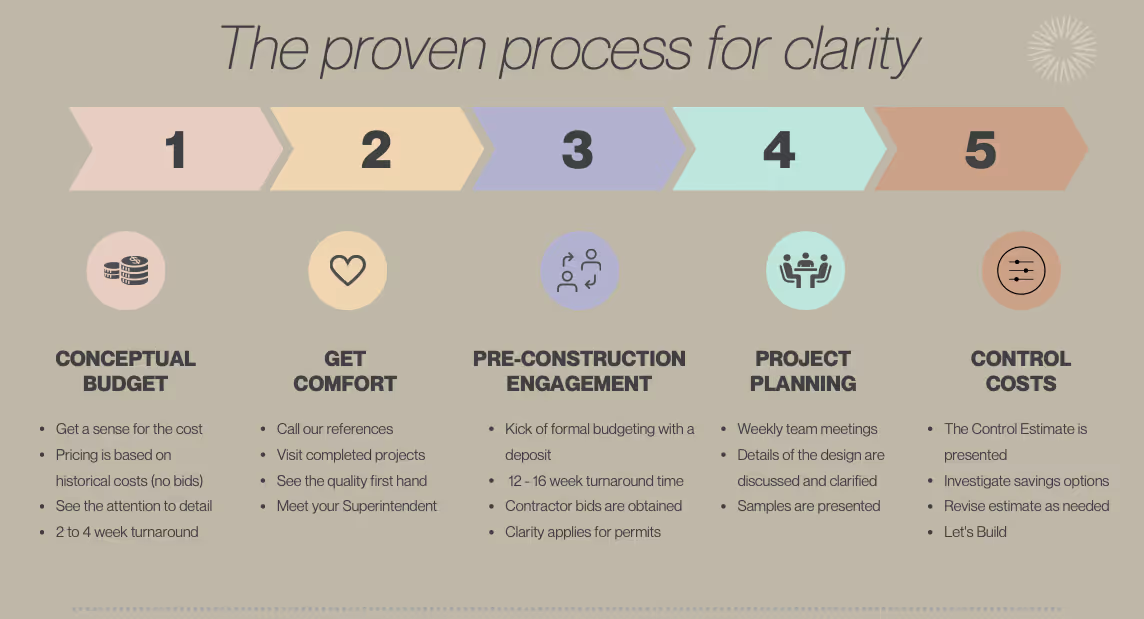
The proven process for clarity outlines a phased approach that moves from early cost exploration to detailed planning and control. Each step builds on the previous one, reducing risk and improving predictability.
The short answer
Before construction begins, the project moves through conceptual budgeting, preconstruction engagement, detailed planning, and a control estimate built from real subcontractor bids.
This process aligns design with budget, defines scope, and prepares the project for execution.
The goal is to replace assumptions with clear decisions before work starts on site.
How this works step by step
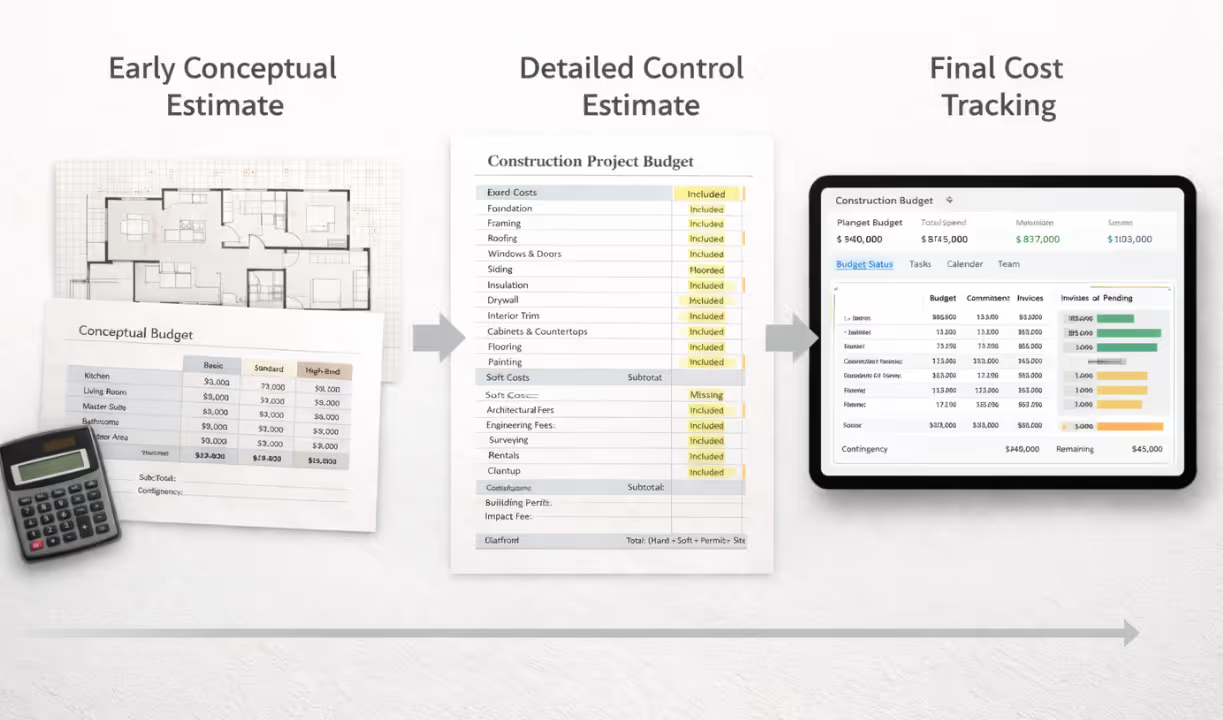
The process typically begins with a conceptual budget. This early estimate is based on historical data and provides a general understanding of project cost. It helps determine whether the project is financially feasible.
Next is preconstruction engagement. During this phase, the project moves into more detailed budgeting and planning. Design documents are refined, and the builder begins coordinating with subcontractors.
As the design develops, detailed bid packages are created and issued to multiple trades. These packages define scope clearly so that subcontractors can provide accurate pricing.
The result of this effort is the control estimate. This is a comprehensive budget built from real bids and defined scope, forming the financial baseline for construction.
- Conceptual budget: Early cost framework based on historical data.
- Preconstruction engagement: Formal planning and budget development.
- Bid development: Detailed scopes issued to subcontractors.
- Control estimate: Finalized budget based on real pricing.
Impact on cost and schedule
A structured preconstruction process improves both cost and schedule outcomes. By resolving key decisions early, it reduces the likelihood of changes during construction.
Accurate budgeting allows for better financial planning. When costs are based on real bids rather than assumptions, the project starts with a clearer understanding of total investment.
Schedule reliability also improves. With defined scope and coordinated trades, construction can proceed more efficiently.
While this phase requires time upfront, it typically reduces delays and cost increases later in the project.
Common delays
Delays before construction often stem from incomplete design information or delayed decision-making. Without clear drawings and specifications, it is difficult to obtain accurate bids.
Another common issue is rushing the process. Skipping or compressing preconstruction can lead to unresolved scope and increased uncertainty.
Permitting can also impact timing. Approval processes vary by municipality and must be coordinated with the overall schedule.
Clear communication and a structured process help manage these challenges effectively.
- Incomplete drawings: Limits the ability to define scope and pricing.
- Delayed decisions: Slows progress and increases uncertainty.
- Permitting timelines: Can affect project start dates.
- Rushed planning: Leads to gaps that surface during construction.
What to prepare
Homeowners should be prepared to engage in the planning process. This includes reviewing budgets, making early selections, and providing input on design and scope.
Understanding that the budget will evolve during this phase is important. Early estimates are refined as more information becomes available.
It is also helpful to focus on major cost drivers early, such as structural systems, windows, and key finish elements. These decisions have a significant impact on the overall budget.
Working within a structured process ensures that each decision contributes to a clear and coordinated plan for construction.
The Clarity perspective: how Clarity Building Group handles this
At Clarity, preconstruction follows a defined, multi-stage process outlined in the proven process for clarity . The process begins with a conceptual budget to establish direction, followed by a formal preconstruction engagement where detailed planning and coordination take place.
During this phase, bid packages are developed and issued to multiple subcontractors to obtain competitive pricing based on clearly defined scope. This replaces assumptions with real data.
The control estimate is then assembled, providing a detailed and transparent financial baseline before construction begins. This allows homeowners to evaluate options and make informed decisions.
By the time construction starts, the project has been thoroughly planned, budgeted, and aligned. This structured approach reduces uncertainty and creates a clear path forward for execution.