Who is responsible for what: architect vs builder
Clarifying roles and responsibilities
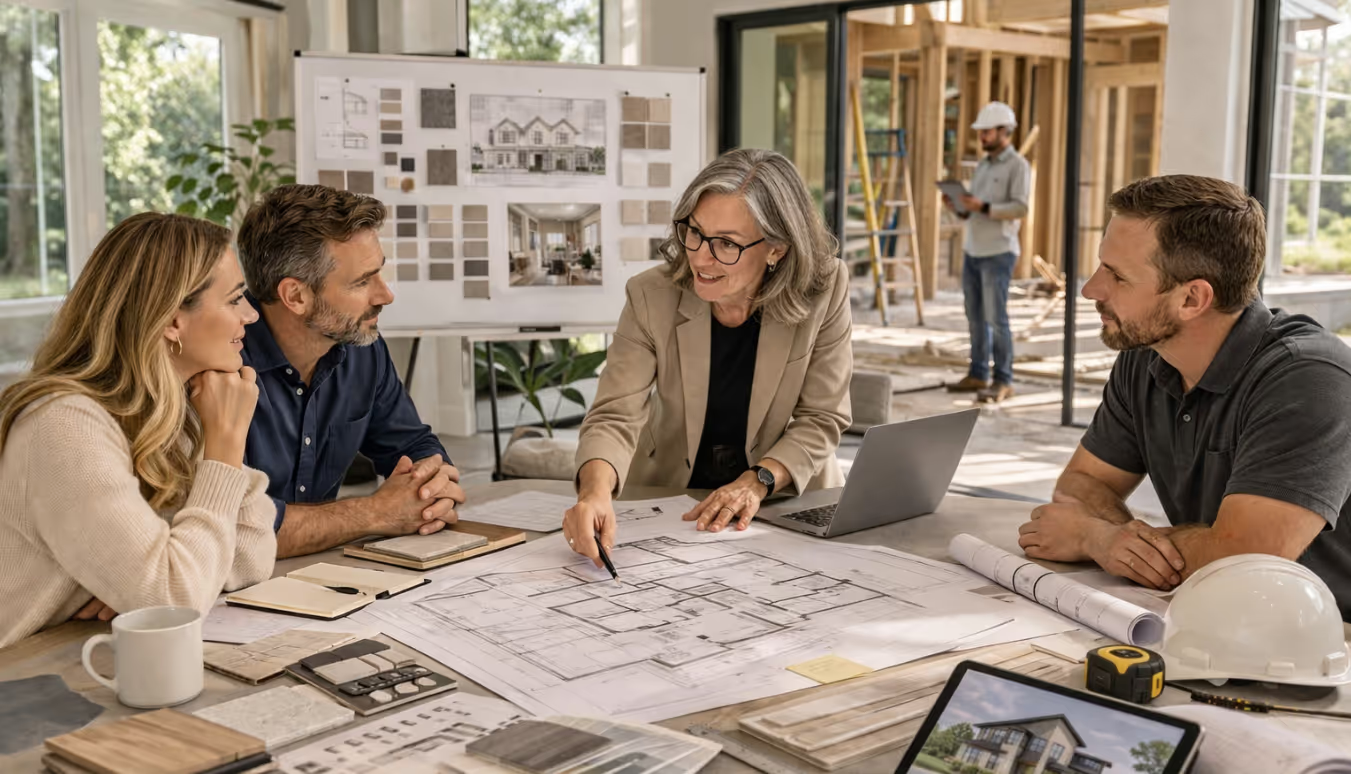
In a custom residential project, the architect and builder each play critical but different roles. When these roles are clearly defined, the project runs smoothly. When they are not, confusion and misalignment can occur.
Understanding who is responsible for what helps homeowners know where to direct questions, how decisions are made, and how the team works together.
In this article
- The core responsibilities of the architect
- The core responsibilities of the builder
- How the roles overlap and support each other
- Why clarity prevents project issues
Context
Custom construction is a collaborative process involving multiple professionals. The architect and builder are the two primary leaders, each responsible for different aspects of the project.
Homeowners often assume these roles overlap more than they actually do, which can lead to confusion during decision-making.
Clear role definition ensures that each responsibility is handled by the right expertise.
The short answer
The architect is responsible for design, design intent, and quality oversight related to the design.
The builder is responsible for cost, construction, coordination, and execution.
Both act as advisors to the homeowner, but in different areas of expertise.
How these roles differ
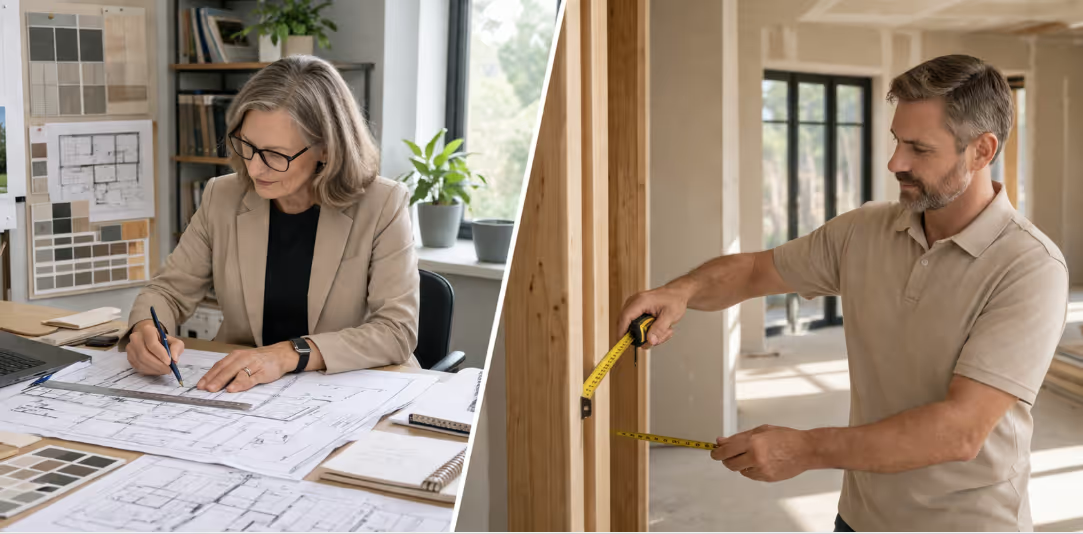
The architect leads the creative and functional aspects of the project. They develop the design, refine details, and ensure that the final result aligns with the original vision.
The builder focuses on turning that design into reality. This includes managing cost, coordinating trades, and overseeing construction activities.
While both roles collaborate closely, their responsibilities are distinct and complementary.
This separation allows each professional to focus on their area of expertise.
- Architect: Design leadership and intent.
- Builder: Execution and construction management.
- Collaboration: Shared input on decisions.
- Specialization: Each role focused on its domain.
What the builder is responsible for
The builder manages all aspects of construction and project execution. This includes planning, coordination, and financial management.
They are responsible for obtaining permits, developing and managing the budget, and maintaining cost control throughout the project.
The builder also oversees scheduling, procurement, and purchasing, ensuring that materials and labor are aligned with the project timeline.
In addition, the builder supervises the job site, manages quality control during construction, and organizes meetings to keep the team aligned.
- Permits: Securing approvals to build.
- Budget and cost control: Managing project finances.
- Project supervision: Overseeing daily construction.
- Quality control: Ensuring proper execution.
- Scheduling: Coordinating timeline and trades.
- Procurement and purchasing: Managing materials and vendors.
- Meeting coordination: Organizing communication.
- Advisor role: Providing input on design feasibility and architect performance.
What the architect is responsible for
The architect is responsible for the design of the project and maintaining the integrity of that design throughout construction.
They develop drawings, specify materials, and make final decisions related to design intent.
During construction, the architect provides quality oversight from a design perspective and responds to questions from the builder.
They also act as an advisor to the homeowner, helping evaluate how construction decisions align with the design.
- Design: Creating and refining the project.
- Final design decisions: Authority on design intent.
- Quality oversight: Ensuring design is followed.
- Construction support: Responding to builder questions.
- Advisor role: Providing input on construction quality.
Where roles overlap
There are areas where the architect and builder collaborate closely. This includes reviewing details, evaluating changes, and aligning decisions with both design and cost.
Both parties provide input to the homeowner, who ultimately makes decisions based on their combined expertise.
This overlap is intentional and beneficial, as it brings multiple perspectives to each decision.
The key is that responsibilities remain clear even as collaboration occurs.
- Decision support: Both provide input to the owner.
- Detail coordination: Aligning design and execution.
- Change evaluation: Assessing impact on cost and design.
- Communication: Ongoing collaboration.
Common mistakes
A common mistake is assuming that one party is responsible for everything. This can lead to gaps in communication and missed responsibilities.
Another issue is directing questions to the wrong party, which can slow down decision-making.
Some projects also lack clear communication between architect and builder, leading to misalignment.
These issues can be avoided with a clear understanding of roles.
- Role confusion: Unclear responsibilities.
- Miscommunication: Questions directed incorrectly.
- Lack of coordination: Poor collaboration between teams.
- Unclear expectations: Misaligned assumptions.
The Clarity perspective: how Clarity Building Group handles this
At Clarity, roles are clearly defined from the start. The architect leads design, while Clarity manages cost, construction, and coordination.
During preconstruction, Clarity works alongside the architect to align design with budget and constructability. This collaboration continues throughout construction.
Weekly meetings and structured communication ensure that decisions are made with input from both parties.
This clarity of roles supports a coordinated process where design intent is preserved and execution is managed effectively.