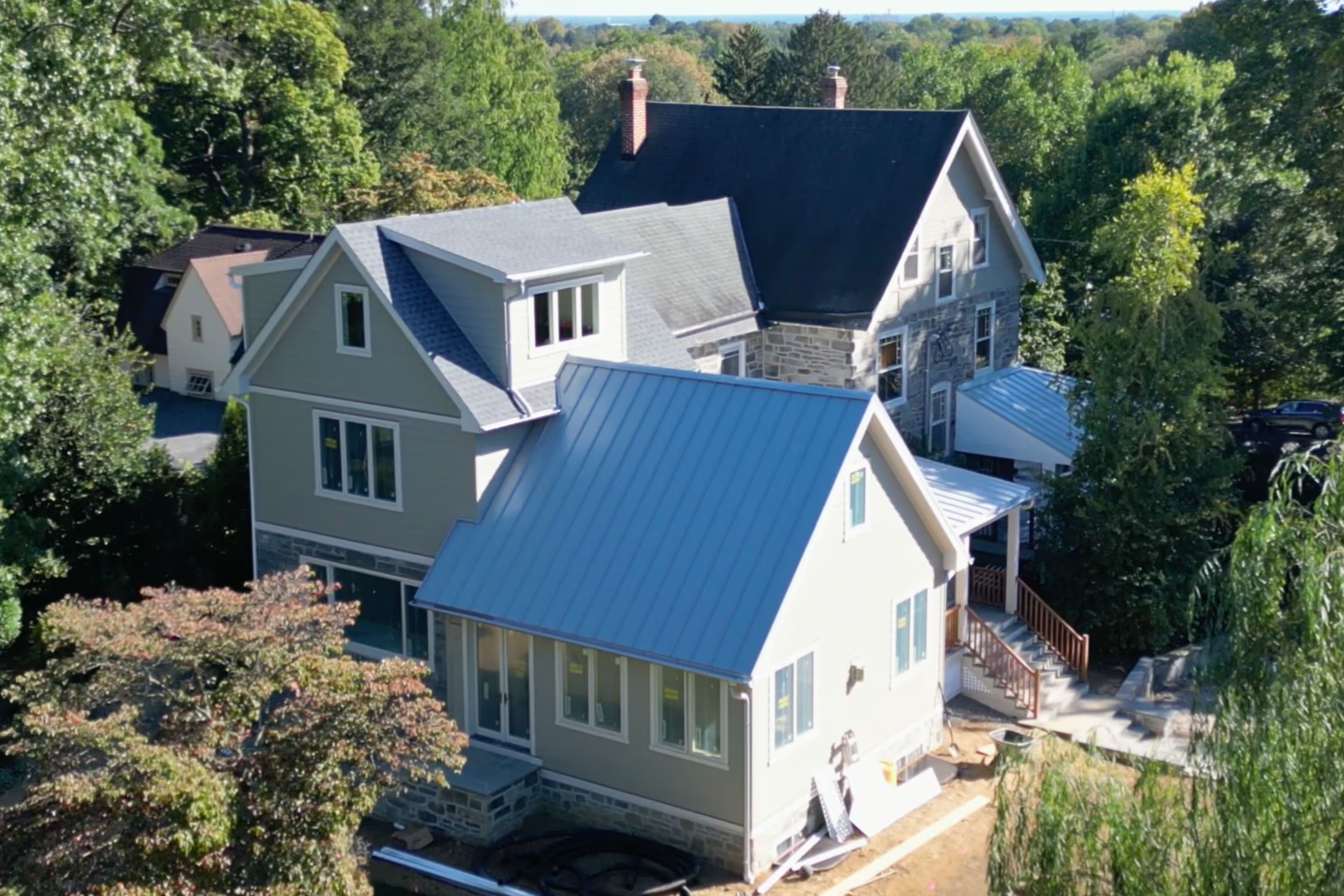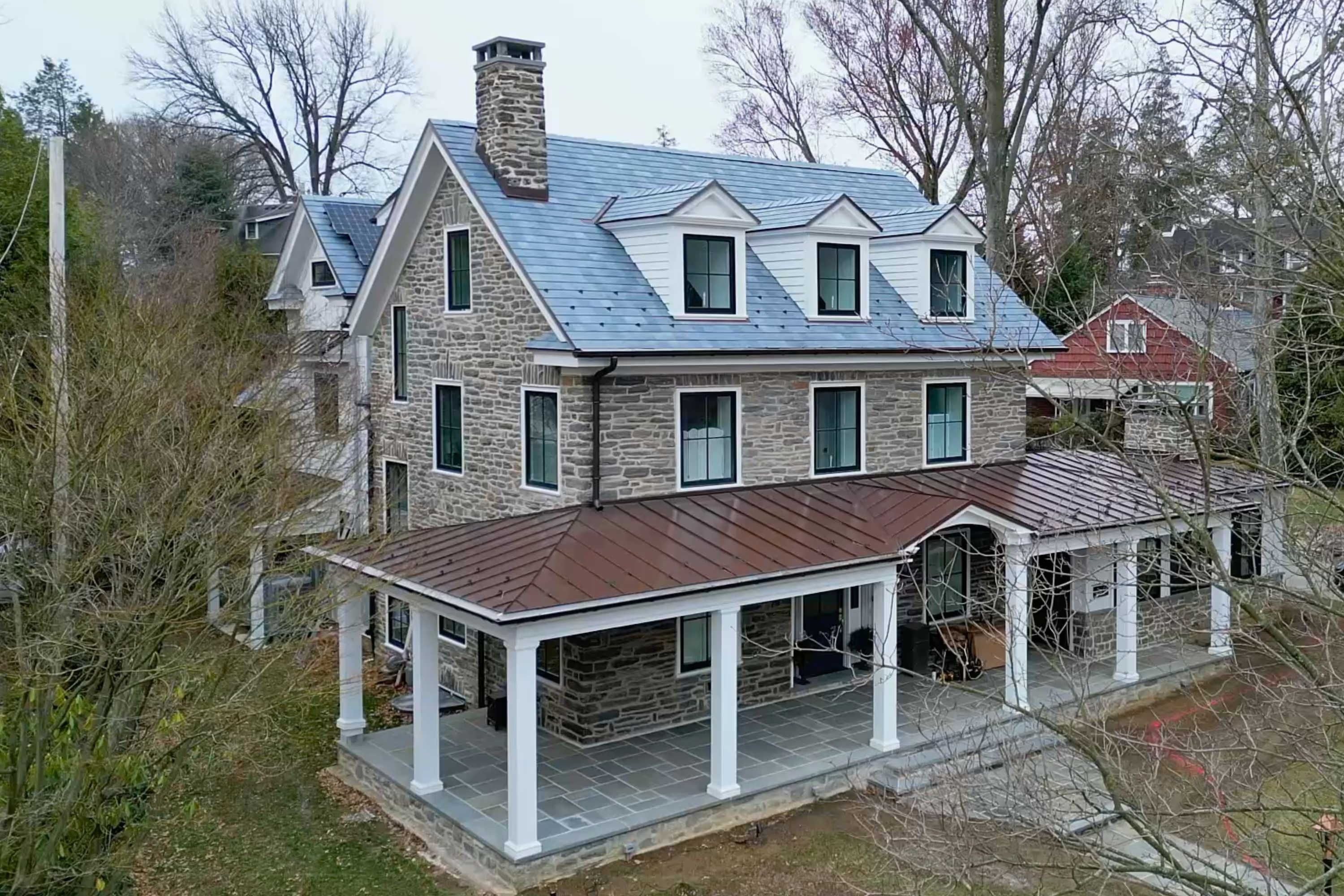
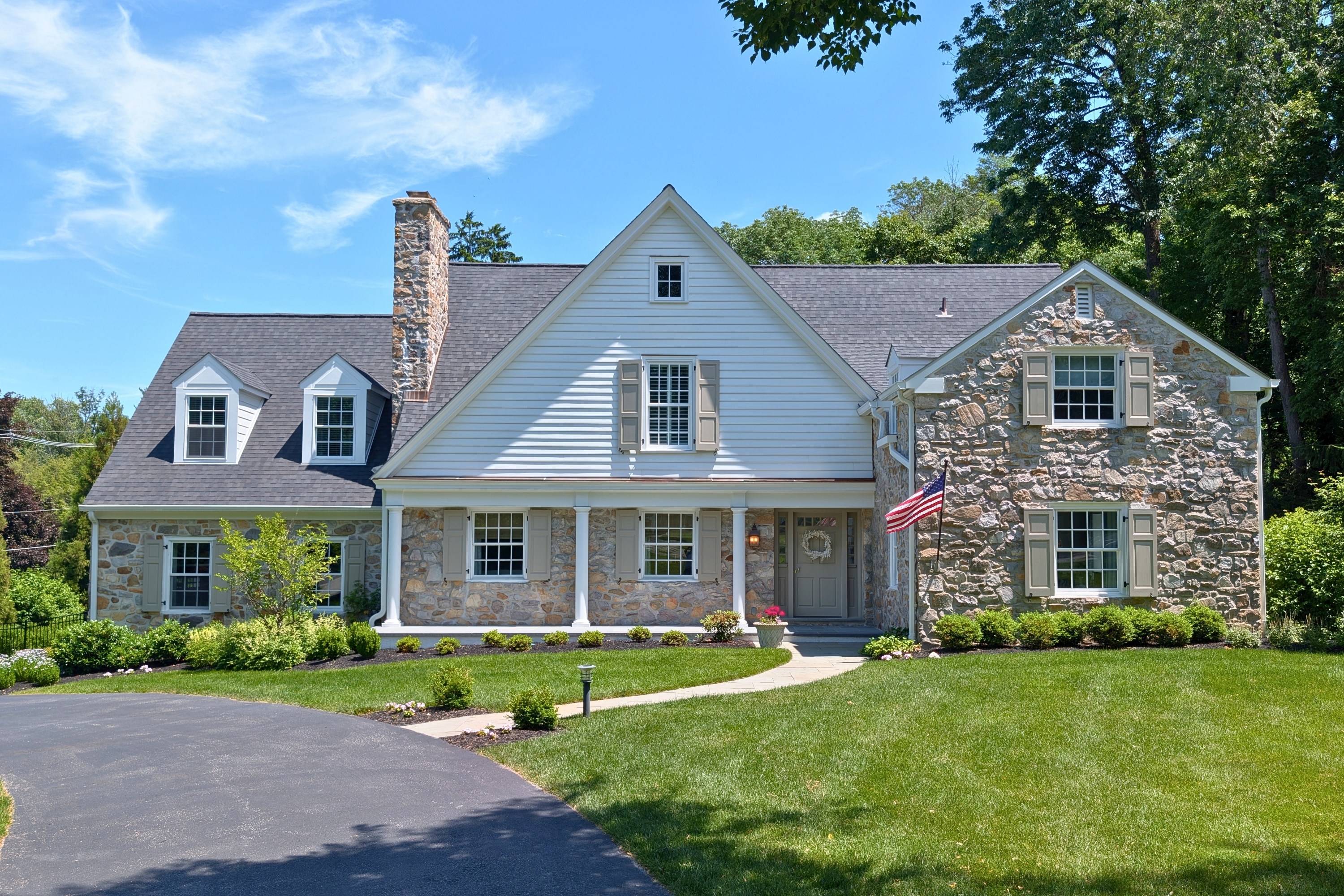
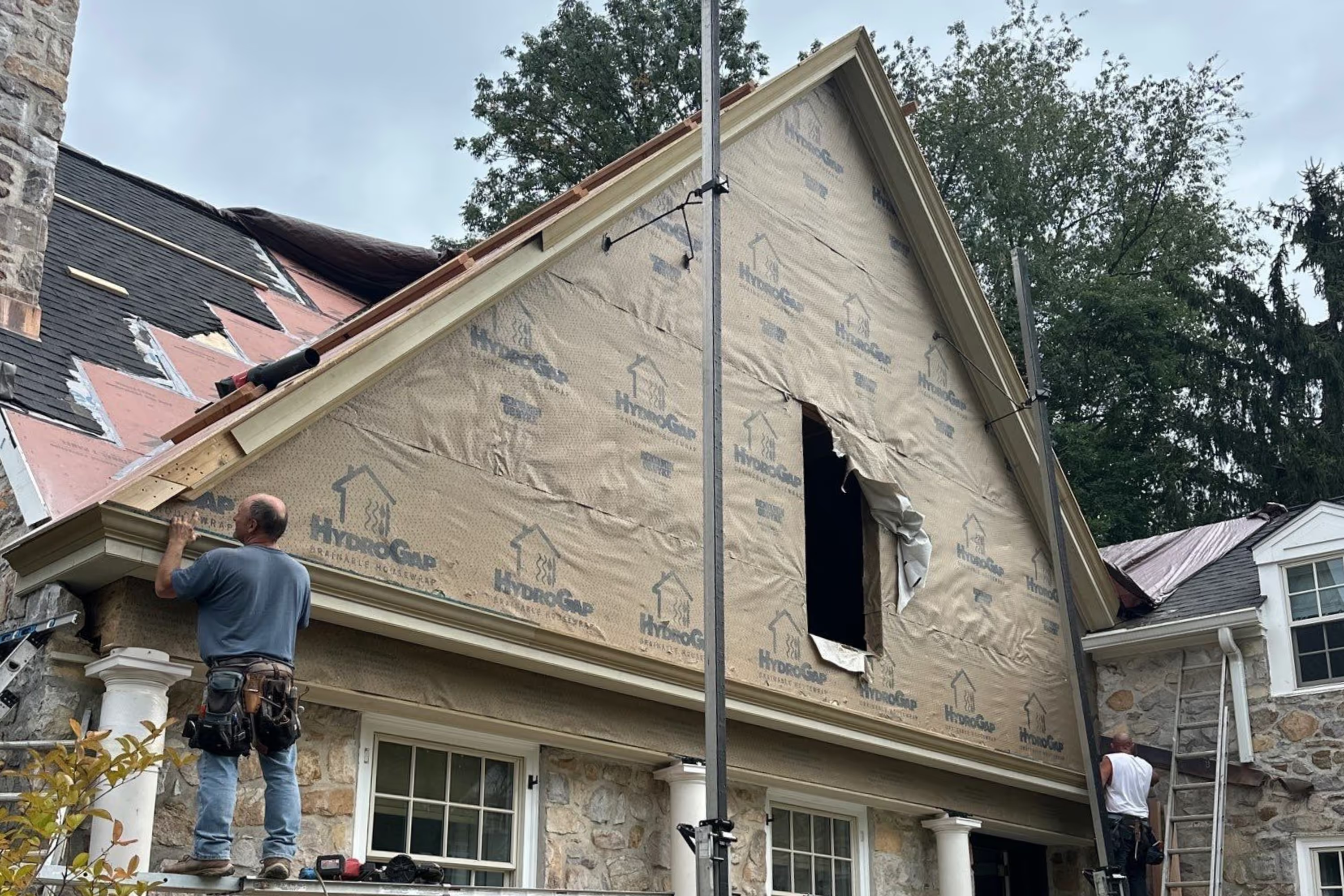
High Gable
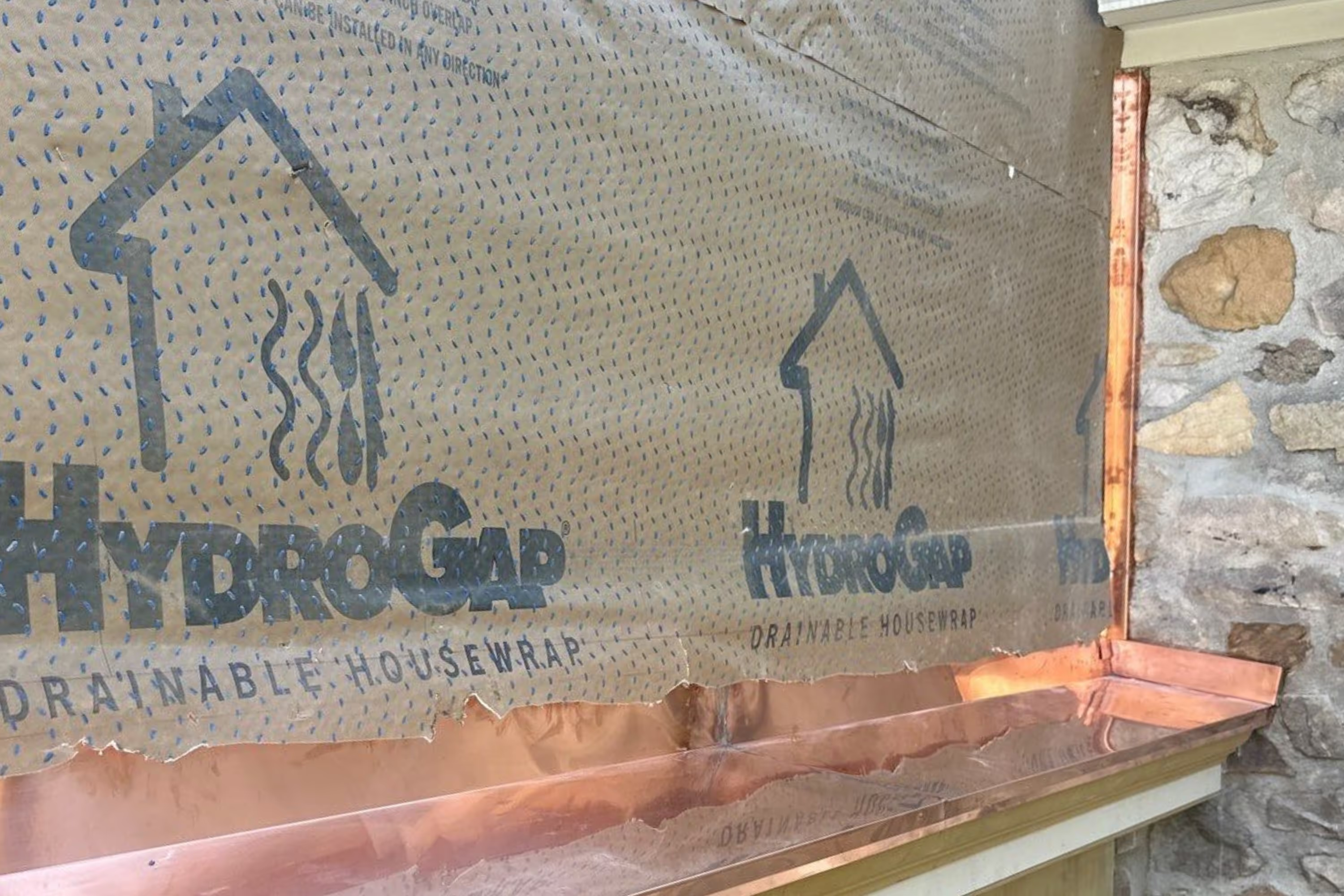
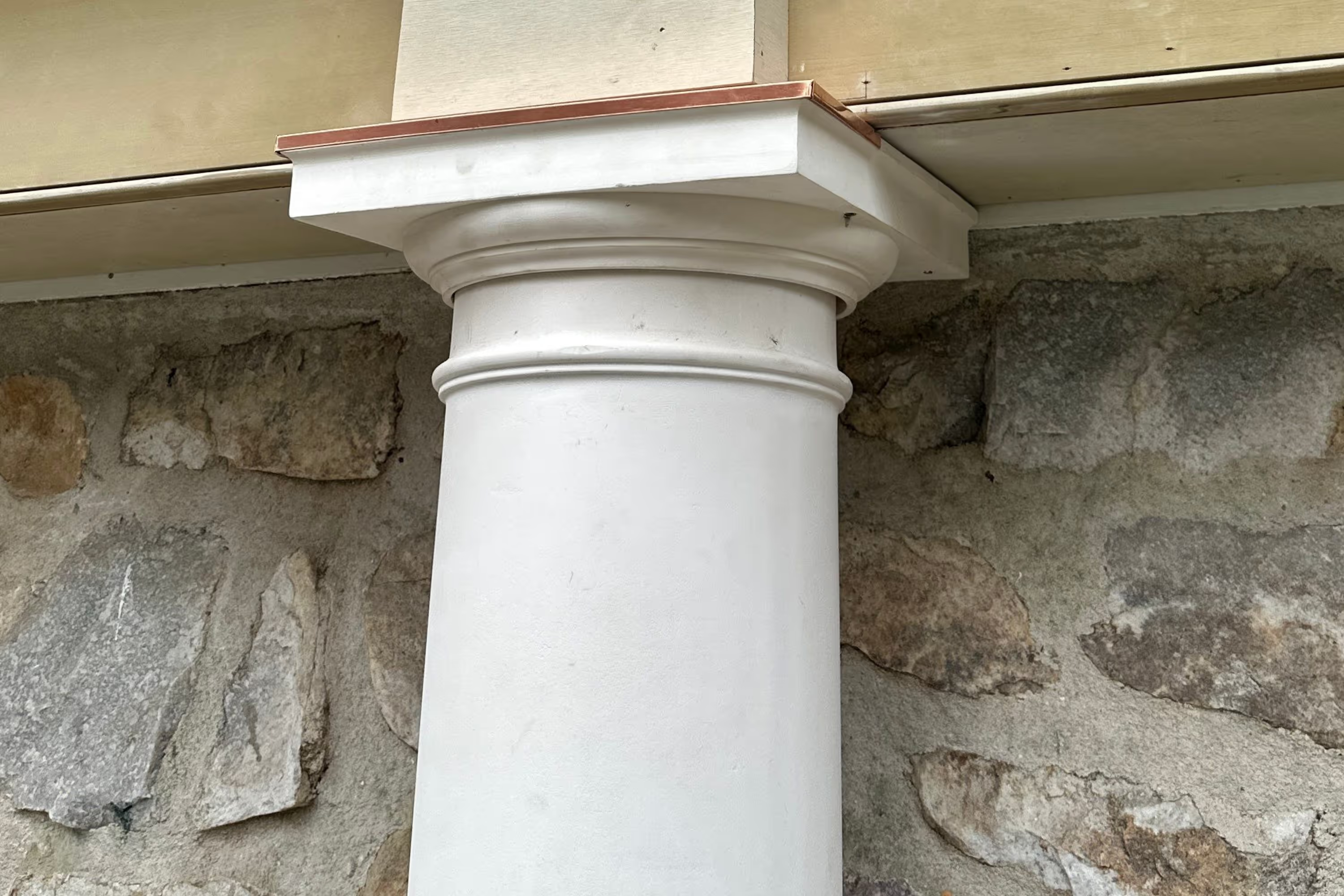
This wall was built to shed water away
What you're looking at:
A section of exterior wall showing a newly installed copper through-wall flashing integrated into a stone façade, with a breathable housewrap behind it and the copper edge neatly turned out to direct water away.
Why it matters:
This detail manages water at a critical transition between new construction and existing masonry. By kerfing the copper into the stone, the flashing is physically locked in place and prevents water from slipping behind the assembly. The housewrap provides a drainage plane, while the copper acts as a durable exit point, ensuring any infiltrating moisture is directed out and away from the structure.
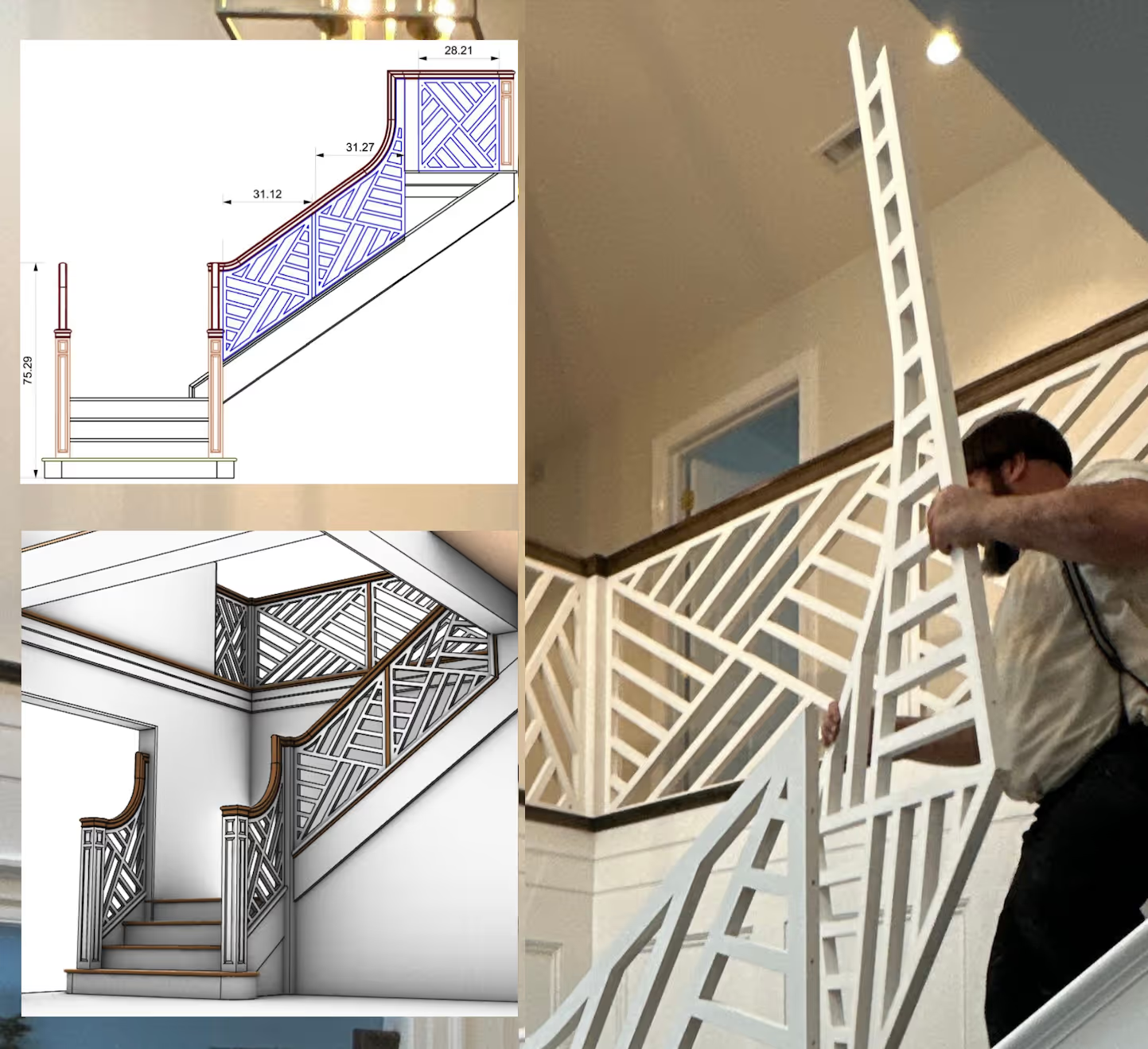
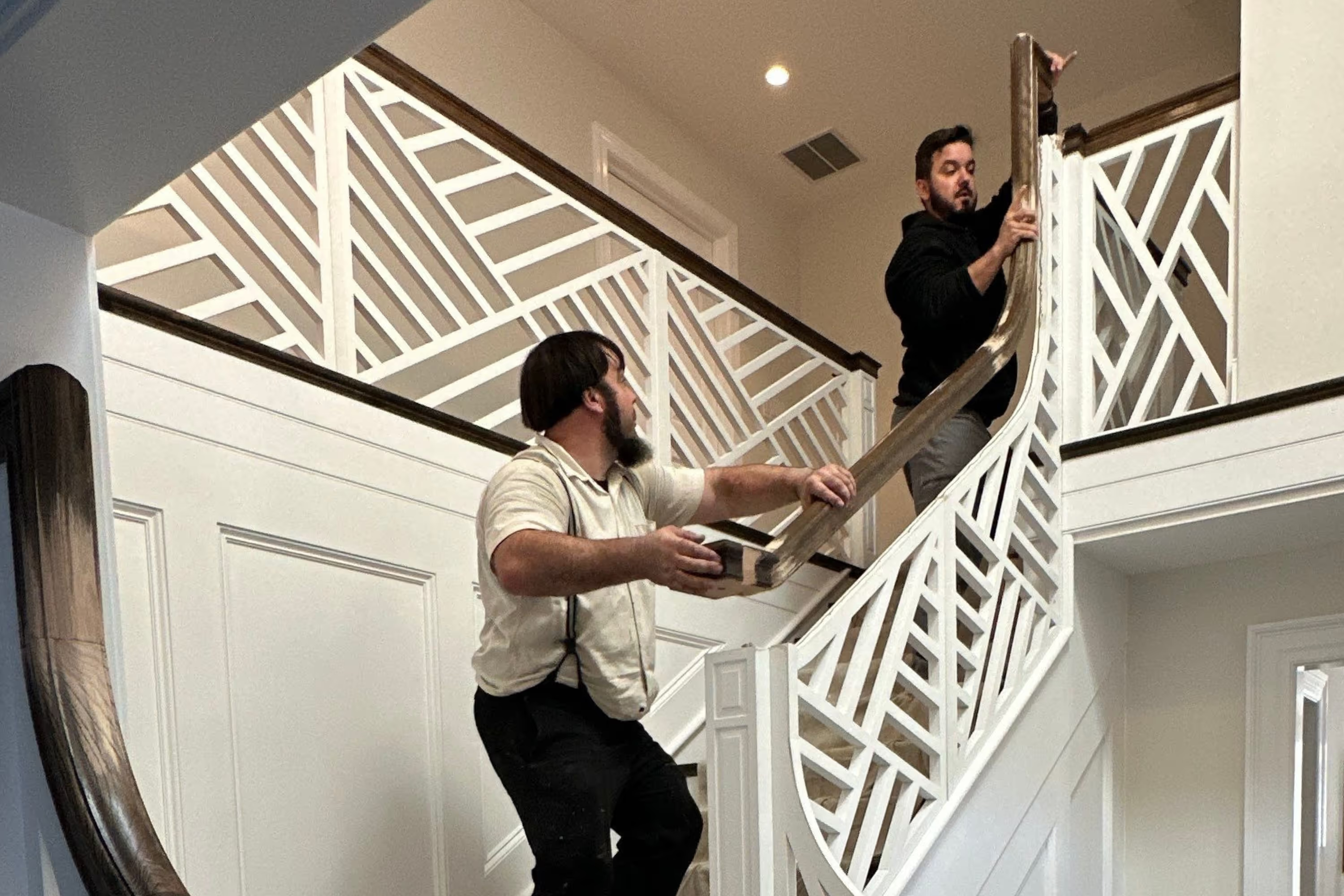
Every transition is planned and executed cleanly
What you're looking at:
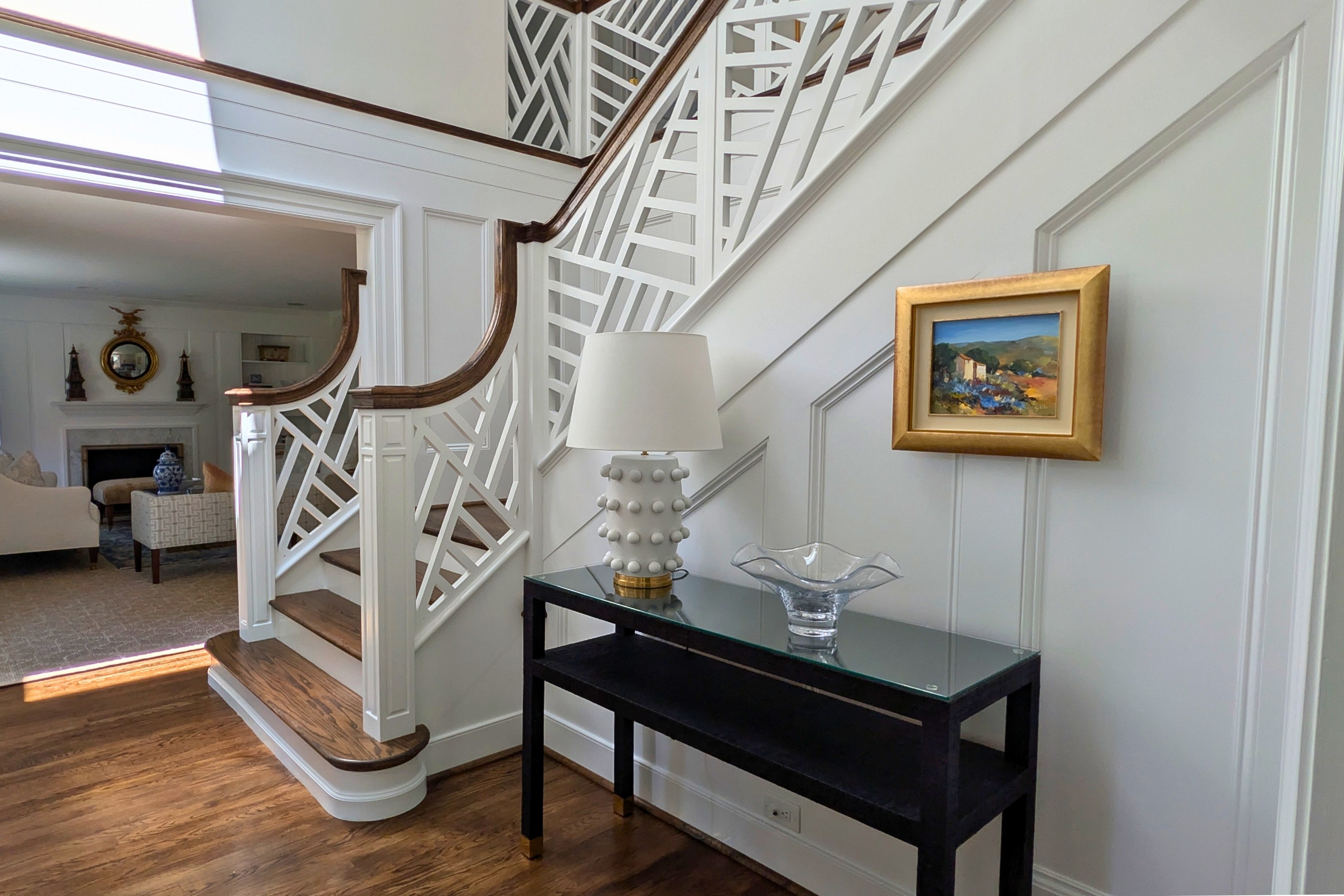
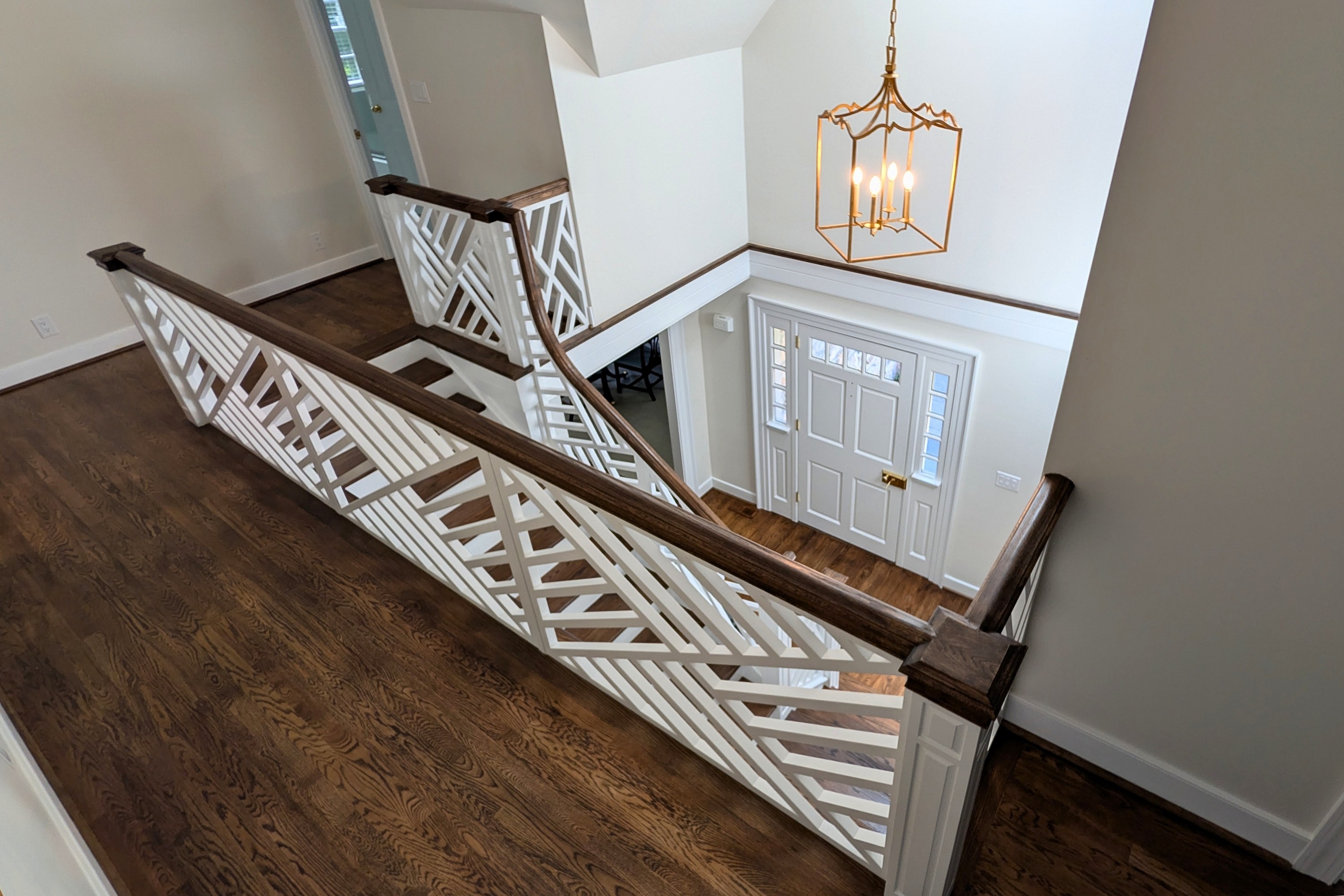
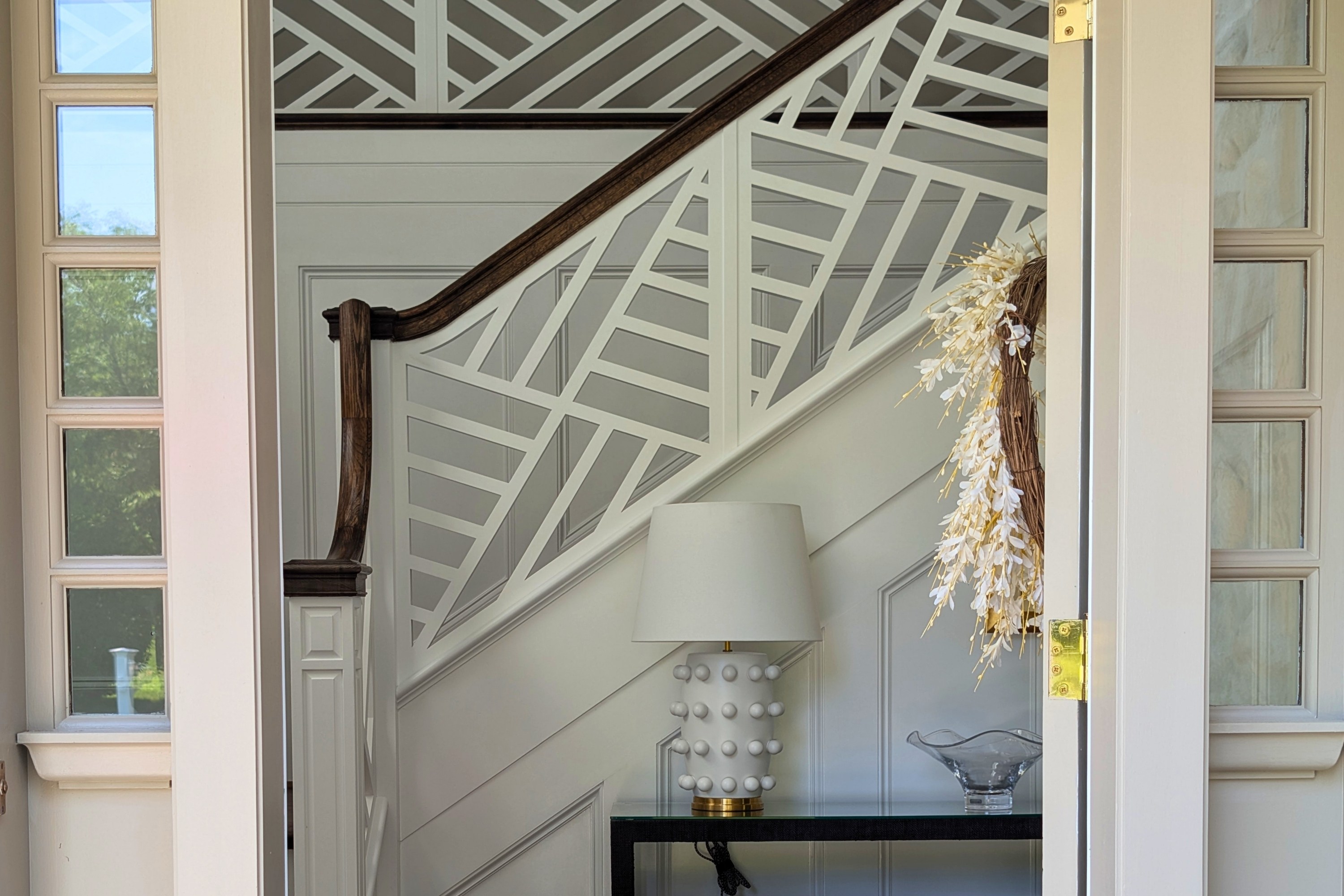
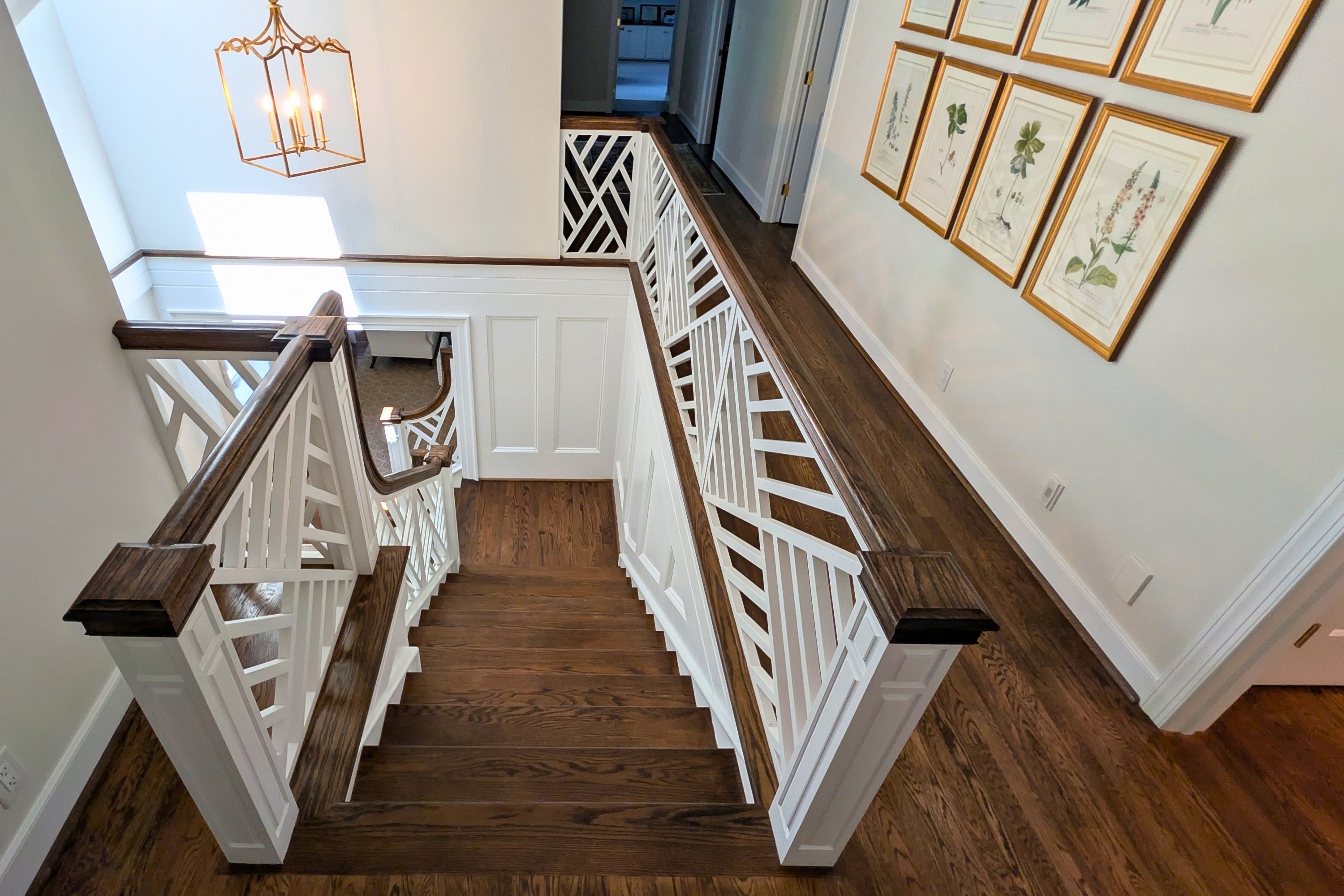
A custom Chippendale-style stair and guardrail system being installed, with a complex geometric pattern fabricated off-site and carefully aligned to a sloped stair run and adjoining upper landing.
Why it matters:
This type of patterned railing demands precise coordination between digital design, fabrication, and field conditions, especially where angles shift at landings and rake transitions. Small deviations compound quickly, so templating and preplanning are critical to maintain consistent reveals and intersections. Proper installation ensures not just visual continuity, but also code-compliant spacing, structural rigidity, and long-term durability at connection points.
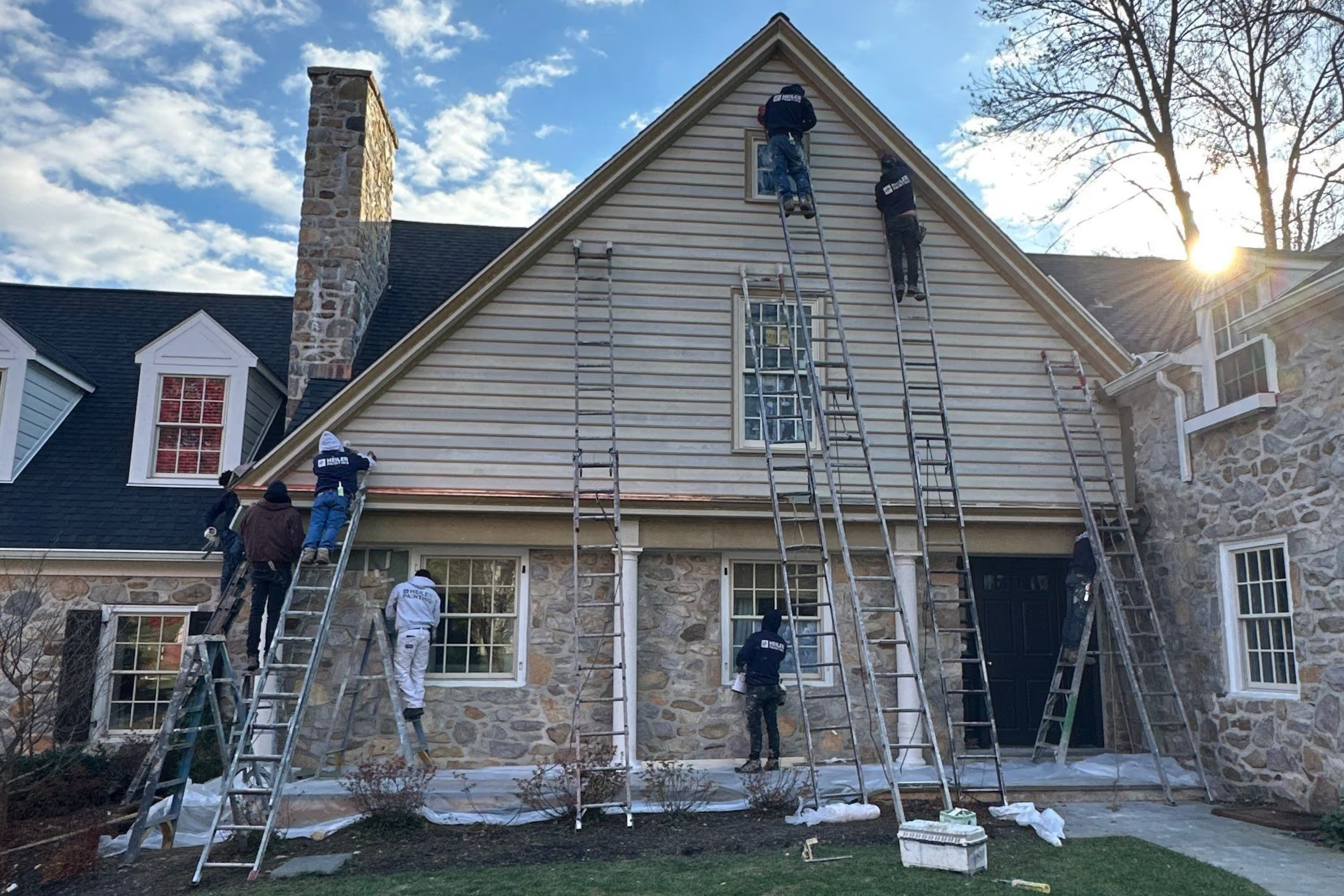
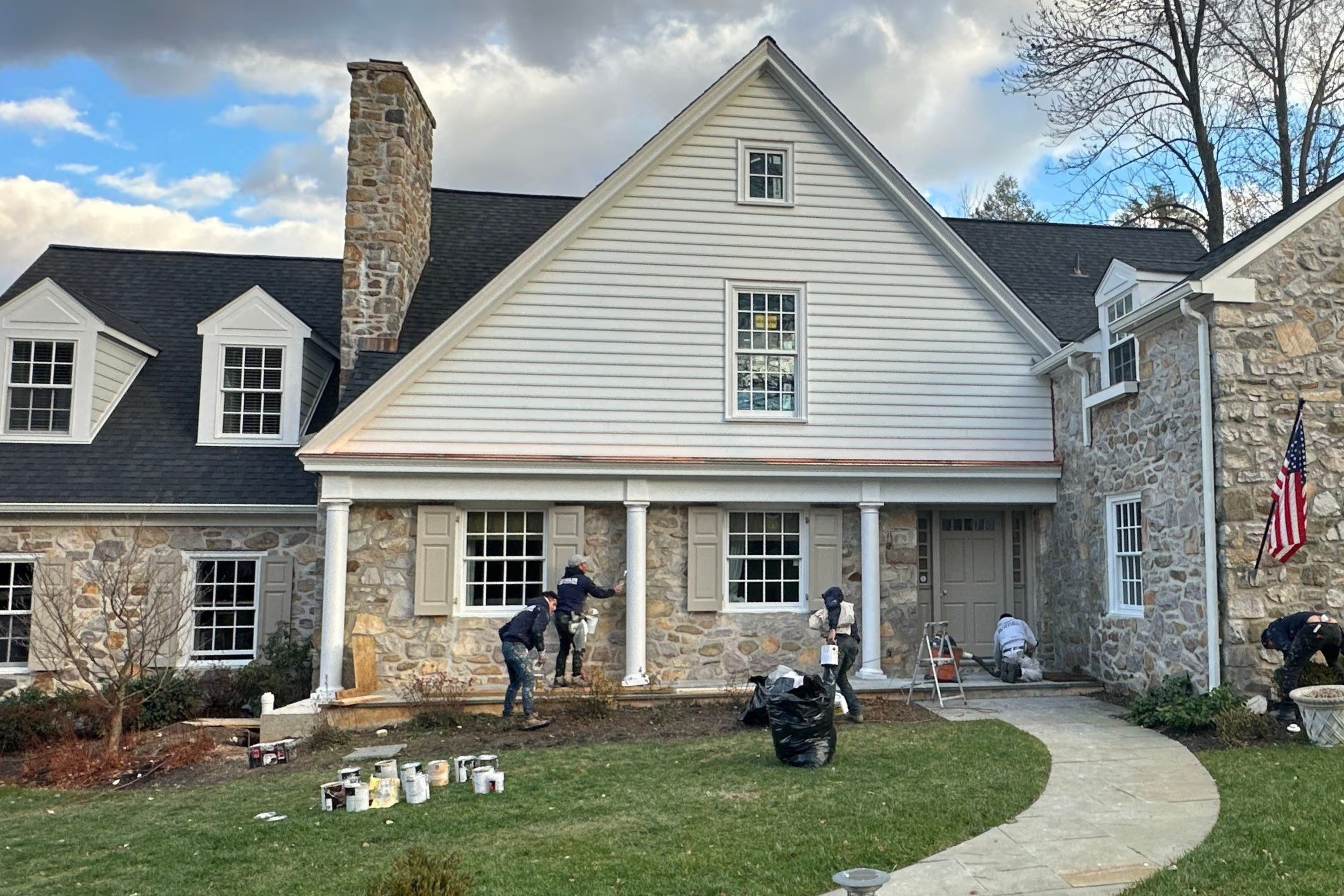
Time spent prepping is never wasted
What you're looking at:
A crew of painters is staged across the front gable using multiple ladders, working simultaneously on siding and fine trim around windows and eaves. Drop cloths protect the base while surfaces are being prepped.
Why it matters:
Exterior painting is less about the topcoat and more about preparation, cleaning, sanding, spot-priming, and tightening loose joints so coatings bond properly. Working in a coordinated sequence across elevations keeps wet edges consistent and reduces lap marks on long runs of siding and trim. Attention at eaves and window casings limits water entry at vulnerable joints and extends the life of both paint and underlying wood.
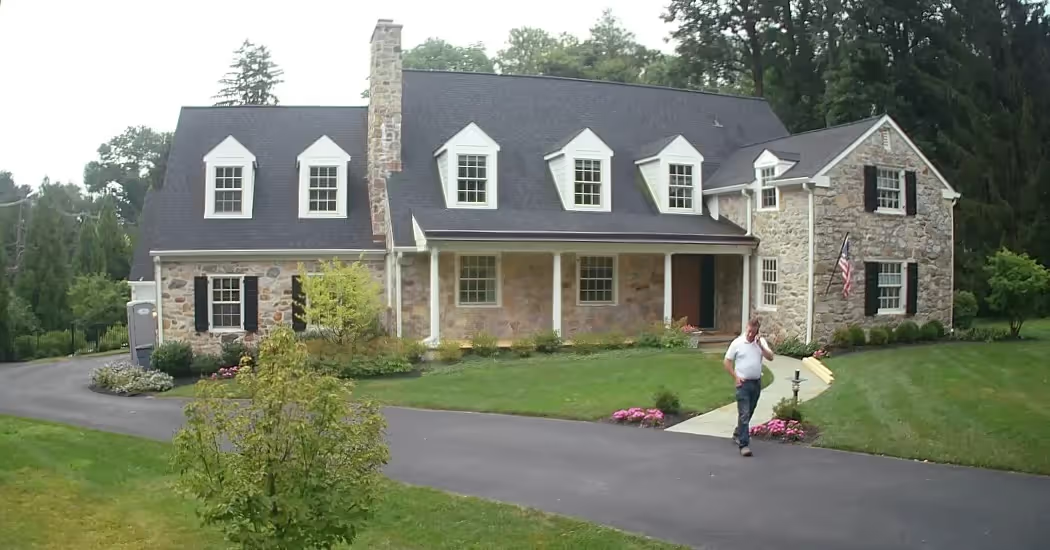
Before and after
Gallery Collection
View Construction Archive
Video Series