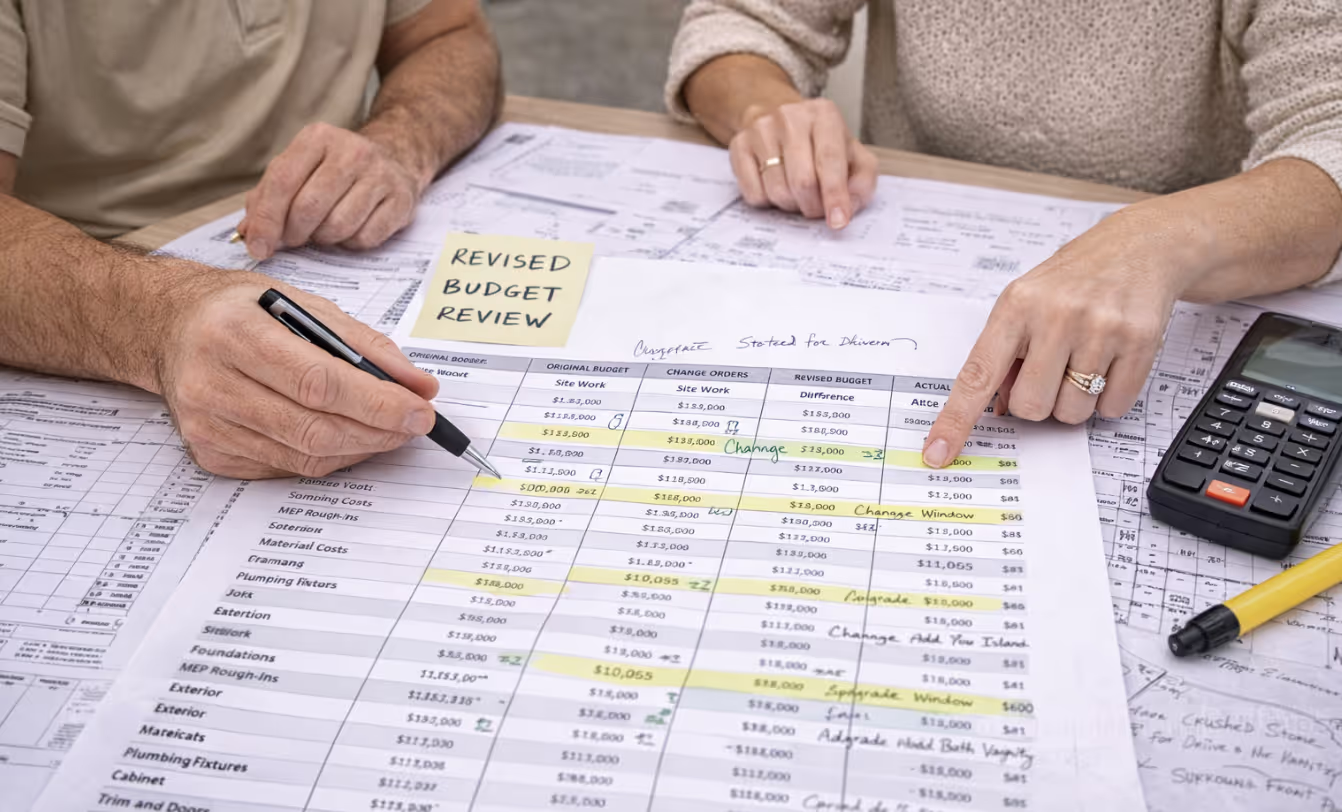
When is the right time to start your project?
Timing considerations for design and construction
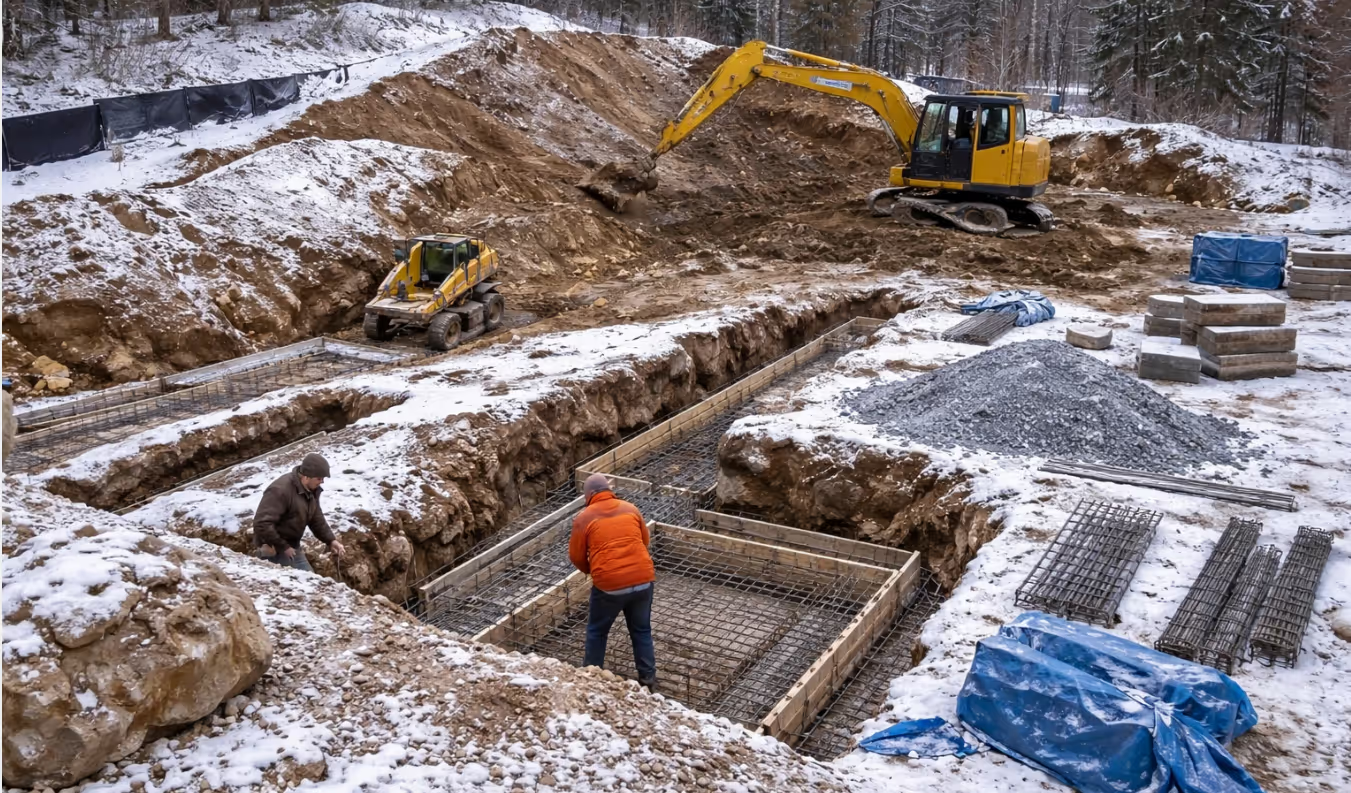
Many homeowners assume there is a "best season" to start construction. In the Philadelphia region, that is rarely the deciding factor.
For large custom homes and renovations, projects can begin at almost any time of year. The more important question is whether you are ready to start.
In this article
- Why seasonality is not the main driver
- What actually determines timing
- The role of planning and team selection
- How readiness affects outcomes
- When to move forward
Focusing too much on calendar timing can delay projects unnecessarily. The better approach is to evaluate readiness across several key areas.
Projects that start at the right level of preparation tend to perform better regardless of the season.
The short answer
The right time to start is when you are mentally, financially, and logistically prepared, and when your design and construction team is in place.
Seasonal conditions have a minor impact compared to the importance of preparation and coordination.
Who it is for
This perspective applies to homeowners planning substantial projects where design, permitting, and coordination are the primary drivers of timeline.
These projects require months of preparation, making the exact construction start date less critical than overall readiness.
- Long planning timelines: Projects where preconstruction takes significant time
- Complex scope: Custom homes or major renovations
- Team-based approach: Involving architects, engineers, and builders early
In these cases, waiting for a specific season rarely improves outcomes.
Who it is not for
Smaller, simpler projects may still be influenced by weather or contractor availability, but that is not the focus here.
- Short-duration projects: Where timing is driven by convenience
- Minimal planning: Projects with limited design or coordination
For larger projects, these concerns are secondary.
What it requires
Starting at the right time means being prepared across several dimensions.
Construction can proceed through colder months. While there may be minor inefficiencies, such as slower productivity or weather-related interruptions, the ground in this region rarely freezes to a depth that prevents excavation and foundation work.
- Mental readiness: Understanding the time, effort, and decision-making required
- Financial readiness: Budget alignment and comfort with the investment
- Team alignment: Architect, builder, and consultants selected and engaged
- Project definition: Design and scope developed enough to move forward
These factors have a far greater impact on success than the month construction begins.
How to decide
The decision to start should be based on readiness, not the calendar.
- Is your team in place: Have you selected your architect and builder
- Is the design progressing: Are drawings and selections being developed
- Are you financially prepared: Do you understand the likely cost range
- Are you ready to commit: Time, attention, and decision-making capacity
Another key factor is availability. High-quality architects and builders often have lead times. Engaging them early allows planning to begin even if construction starts later.
Waiting for the "perfect" time often results in lost time rather than better outcomes.
The Clarity perspective: how Clarity Building Group handles this
Projects are scheduled based on readiness, not season. The focus is on ensuring that design, budgeting, and team coordination are in place before construction begins.
Clients are encouraged to engage early so that preconstruction can begin. This includes conceptual budgeting, design coordination, and assembling the full consultant team.
Once the project is defined and aligned with the budget, construction can begin at the appropriate time based on permitting and scheduling, not seasonal constraints.
This approach prioritizes preparation and clarity, which ultimately has a greater impact on project success than the specific start date.