The biggest mistakes homeowners make before hiring a builder
Early decisions that impact the entire project

The decisions made before hiring a builder have a lasting impact on the entire project. Many of the most costly and frustrating issues can be traced back to this early stage.
These mistakes are often avoidable. They come from overlooking expert guidance, underestimating complexity, or failing to fully evaluate the builder and their proposal.
In this article
- The most common mistakes homeowners make early
- Why these mistakes create long-term issues
- How to properly evaluate builders and proposals
- What to do differently to avoid problems
Context
Custom residential construction is a specialized process. It requires coordination between design, budgeting, and execution at a high level of detail.
Many homeowners approach builder selection with good intentions, but without fully understanding what is required for a complex project.
This gap can lead to decisions that seem reasonable at the time but create significant challenges later.
The short answer
The biggest mistakes include ignoring the architect's recommendations, choosing builders without relevant experience, failing to review proposals in detail, and not verifying references.
These issues often lead to misalignment, missing scope, and cost increases.
Careful evaluation early can prevent most of these problems.
Why this happens
Homeowners often rely on familiarity or convenience when selecting a builder. This can include choosing someone they know or someone who has done smaller projects, even if they lack experience with complex custom homes.
There is also a tendency to assume that all builders operate at a similar level. In reality, custom construction requires a level of detail and coordination that much of the industry does not regularly perform.
Another factor is time pressure. Decisions made quickly without thorough review can overlook important details.
These conditions create an environment where early mistakes are more likely.
- Familiarity bias: Choosing someone known rather than qualified.
- Underestimating complexity: Custom homes require specialized experience.
- Time pressure: Rushed decisions reduce due diligence.
- Assumptions: Belief that all builders operate similarly.
Common mistakes
One of the most significant mistakes is not listening to the architect's recommendations. Architects typically suggest builders who have experience delivering projects of similar scale and complexity.
Choosing a builder outside of that group, especially one without relevant experience, introduces risk. Custom homes require a level of detail that many builders are not equipped to manage.
Another common issue is failing to call references. References provide insight into how a builder performs during real projects, including communication, organization, and follow-through.
Skipping this step removes an important layer of verification.
- Ignoring the architect: Overlooking experienced recommendations.
- Inexperienced builder: Lack of relevant project history.
- Not calling references: Missing real-world feedback.
- Assuming capability: Without verifying past performance.
The proposal review mistake
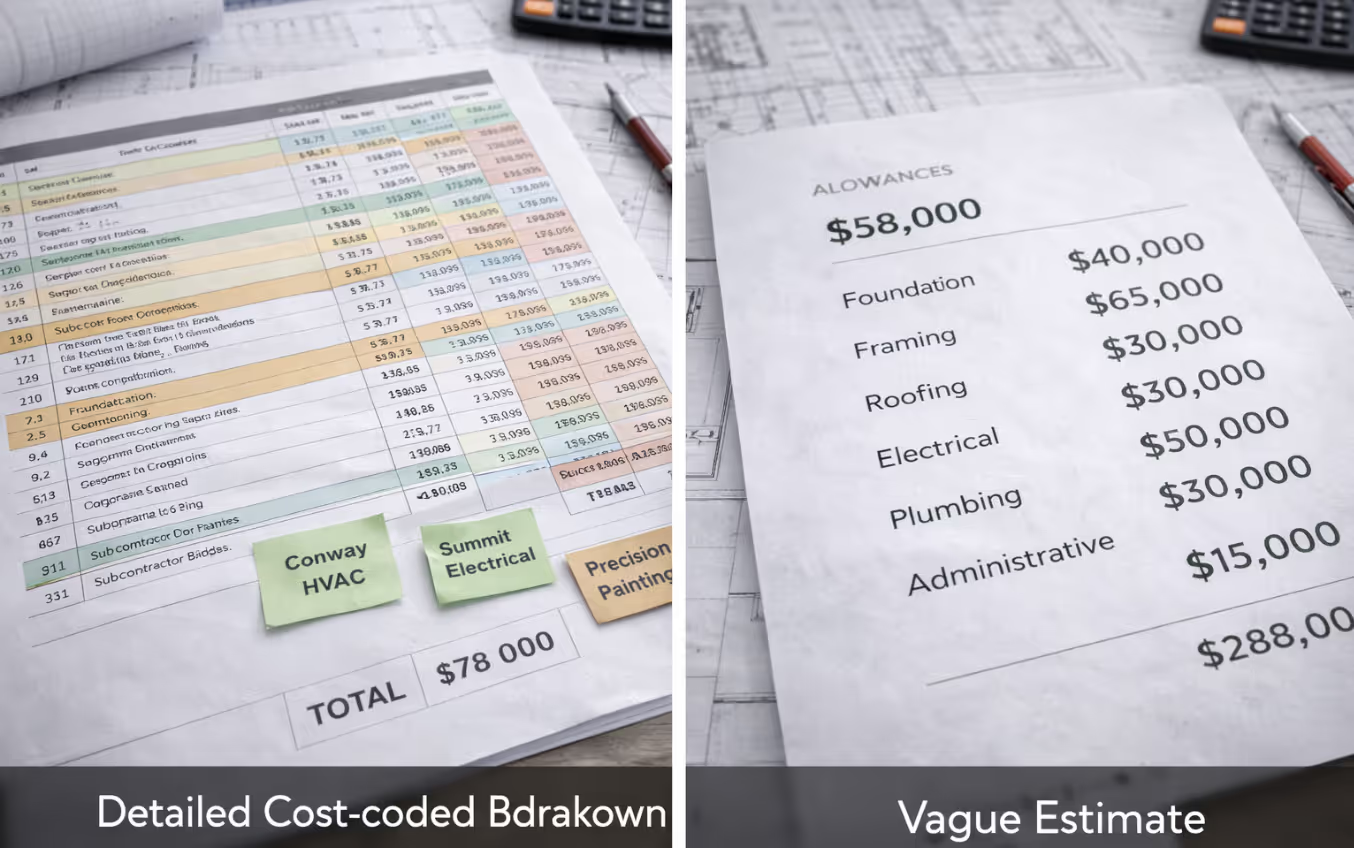
Another critical mistake is not reviewing the proposal in detail. A proposal should be examined line by line to confirm that it includes everything the homeowner expects.
If specific items are not included, they are not part of the budget. This creates an immediate gap between expectations and cost.
Homeowners should ask builders to clarify or revise the proposal to reflect their priorities. If something is missing, it should be addressed before moving forward.
Failure to do this often results in cost increases as those items are added later.
- Incomplete review: Missing details in the proposal.
- Unclear scope: Items not defined upfront.
- Assumed inclusion: Believing something is covered when it is not.
- Late additions: Costs added after construction begins.
What this means in practice
These early mistakes tend to compound. An inexperienced builder may miss details, an incomplete proposal may omit scope, and unverified assumptions may lead to cost increases.
By the time construction begins, the project may already be misaligned in terms of expectations and budget.
This often results in a reactive process, where issues are addressed as they arise rather than prevented in advance.
The result is a more difficult and less predictable project experience.
How to avoid these mistakes
Start by working closely with your architect. Their recommendations are based on experience with builders who can deliver similar projects.
Evaluate builders based on relevant experience, not just familiarity. Confirm their track record with projects of similar scale and complexity.
Call references and ask detailed questions about the builder's performance. This provides insight that proposals alone cannot offer.
Finally, review proposals thoroughly. Ensure that all desired elements are included and clearly defined before making a decision.
- Follow expert guidance: Use architect recommendations.
- Verify experience: Match builder to project complexity.
- Check references: Confirm real performance.
- Review thoroughly: Align proposal with expectations.
The Clarity perspective: how Clarity Building Group handles this
At Clarity, the process begins with alignment between the architect, homeowner, and builder. Projects are approached with an understanding of the level of detail required for custom construction.
During preconstruction, scope is developed collaboratively to ensure that homeowner expectations are clearly defined and incorporated into the project.
Proposals and budgets are structured to reflect this detail, reducing the risk of missing scope and unexpected costs.
This approach emphasizes preparation and clarity, helping homeowners avoid common early mistakes and supporting a more predictable project outcome.